Charles Musser

cultural historian/filmmaker/professor

  • About
    • Summary and Links
    • Filmmaking Bio
    • Current Research and Writing
    • Vita
  • Films
    • An American Potter
    • Before the Nickelodeon
    • Errol Morris: A Lightning Sketch
  • Books
  • Recent Essays
  • News
  • Short Pieces
    • Industry’s Disinherited (Union FIlms, 1949)
    • The Investigators (Union Films, 1948)
    • A People’s Convention (Union FIlms, 1948)
    • 1. A Feminist Moment in the Arts: 1910-1913
    • November 28, 2011 Panel Discussion: “Public Humanities, Documentary FIlmmaking and the Academe”
    • Panel Presentation at Yale on February 24, 2010: My Media-Related Research
  • On the Road: Future/Present/Past
  • Contact
  • On the Creative Side: A History of Film and Media Production Courses at Yale
  • Writing, Filmmaking, Scholarship: Working with Errol Morris
  • Posts to Come

Two Kinds of Cinema/Two Sets of Collaborators

Posted by chamus on February 16, 2013
Posted in: Uncategorized. Tagged: Expanded Cinema, Flo Jacobs, Hans Hofmann, Jehane Noujaim, Ken Jacobs, Mona Eldaief, Nervous Magic Lantern, Rafea: Solar Mama, Stranger Than Fiction, The Green Wave, Thom Powers, Times Squared, Yale University. Leave a Comment

It’s been an interesting week.  I’ll spare you the details except for my experience of two radically different screenings involving two sets of very different filmmakers.  Due to the snow storm, Yale cancelled classes on Monday and Tuesday and provided me with the opportunity to run into the city and see Jehane Noujaim and Mona Eldaief’s new film Rafea: Solar Moma (2012) at Stranger than Fiction/IFC.

rafea-solar-mama-jordanOf course, they were there for a Q & A afterwards:
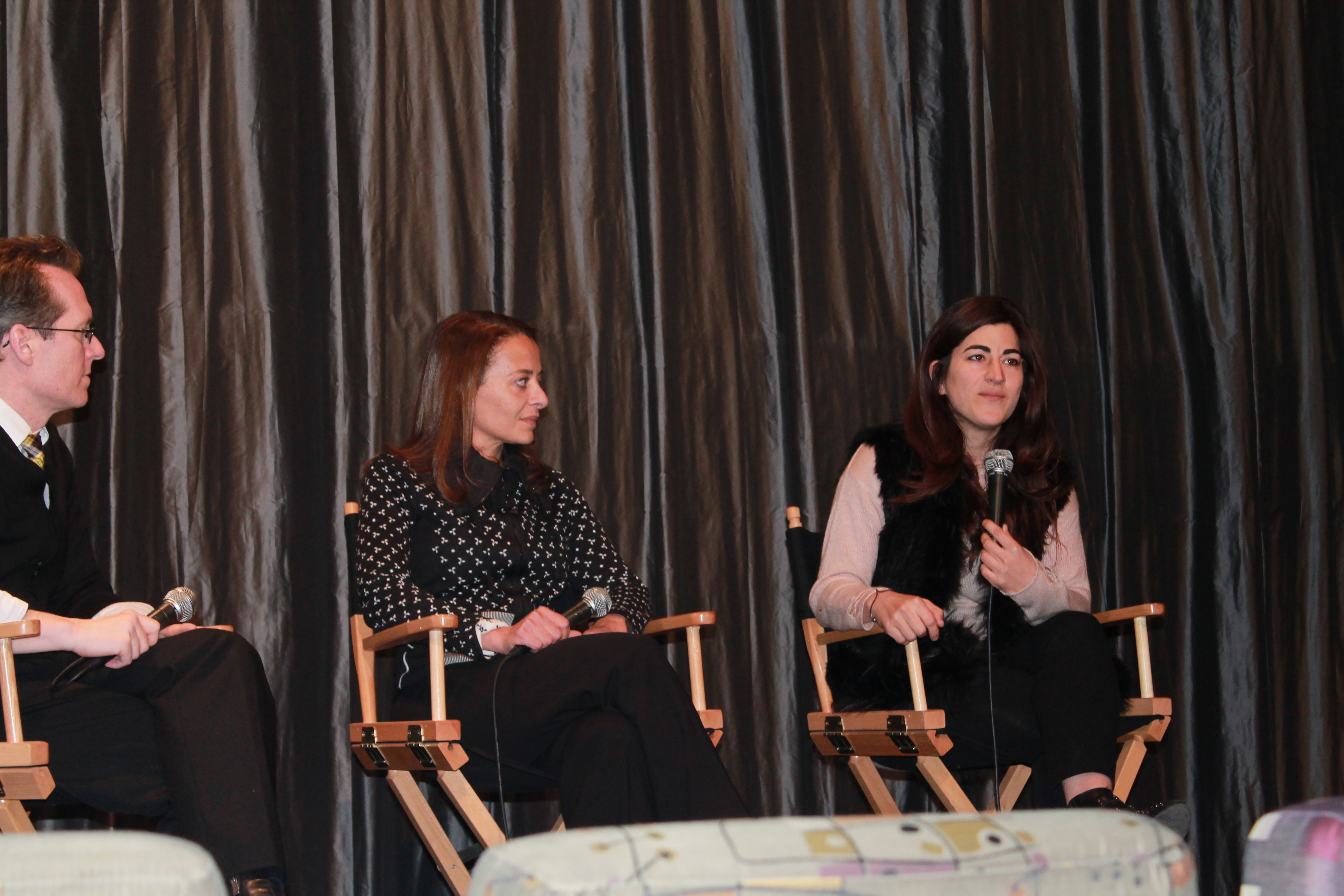
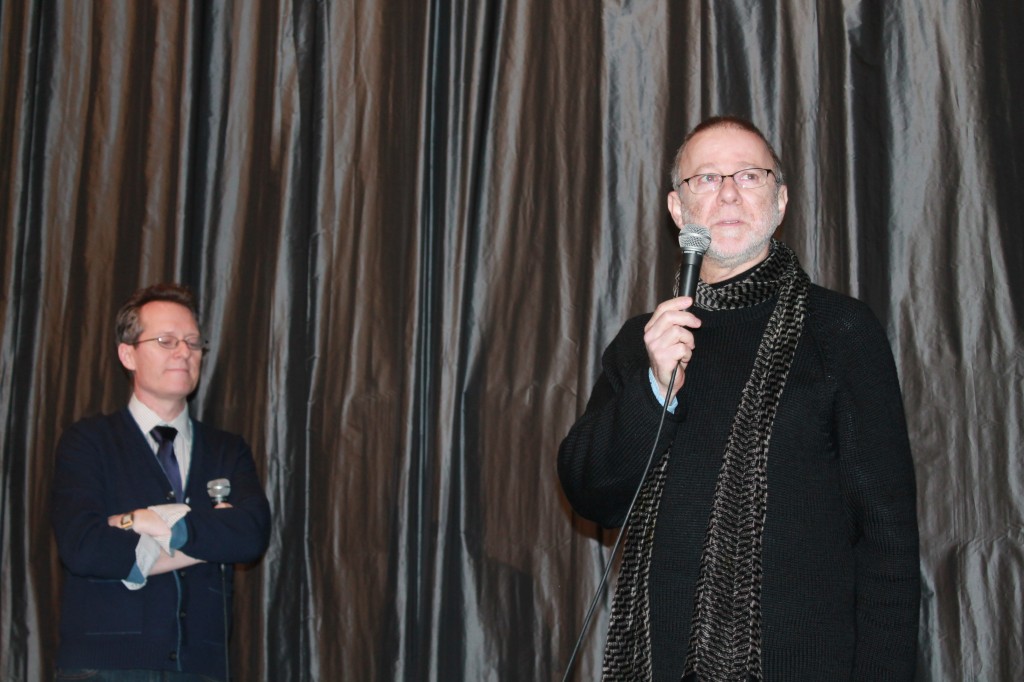
Thom Powers, Mona Eldaief & Jehane Noujaim

Thom Powers, Mona Eldaief & Jehane Noujaim

In fact, their editor Jean Tsein joined them on stage, while various producers and crew were in the audience.  It was an all-women support team.

The website for Rafea gives a bare bones description:

Rafea is a Bedouin woman who lives with her daughters in one of Jordan’s poorest desert villages on the Iraqi border.

She is given a chance to travel to India to attend the Barefoot College, where illiterate grandmothers from around the world are trained in 6 months to be solar engineers. If Rafea succeeds, she will be able to electrify her village, train more engineers, and provide for her daughters.

Rafea has the ability, confidence and determination to pull it off, but her husband continually tries to sabotage her efforts. One feels it from the film itself, and it was openly acknowledged by Noujaim and Eldaief: the filmmakers’ presence and even their active intervention on Rafea’s behalf enabled her to persevere and thus provide the film with its tentatively upbeat outcome.   This is Third World Feminism in action. The solidarity involves those in front of the camera with those behind it.  Noujaim and Eldaief help Rafea deflect her husband’s jealousy at her growing independence and sense of purpose.  His threats of divorce––which would mean taking her children (all daughters) away from her–are less and less credible.  Nevertheless, one has a sense that the film’s modestly uplifting conclusion may be difficult, perhaps even impossible, to sustain.

There are ways in which Rafea: Solar Mama has the quality of a reality TV program in which impoverished, illiterate women from all over the world are selected and brought together at a distant locale, then given a chance to escape poverty against long odds.  And nowhere do these odds seem longer than among a poor Bedouin village in Jordan. Yet the filmmakers’ activism as well as their persistence and filmmaking talents are essential parts of this story.  One should note that these co-directors are Egyptian-born women who undoubtedly faced related challenges and exemplify the possibilities of sucess.  Carol Chazin, who was in the audience, remarked after the screening that it reminded her of Barbara Kopple and Harlan County--that is an important moment of feminist breakthrough in the documentary field that happened some 40 years ago.

At the opposite end of the cinematic spectrum is Ken Jacobs and his Nervous Magic Lantern performance which he and his wife Flo Jacobs presented at Yale as part of a graduate student conference entitled Expanded Cinema.
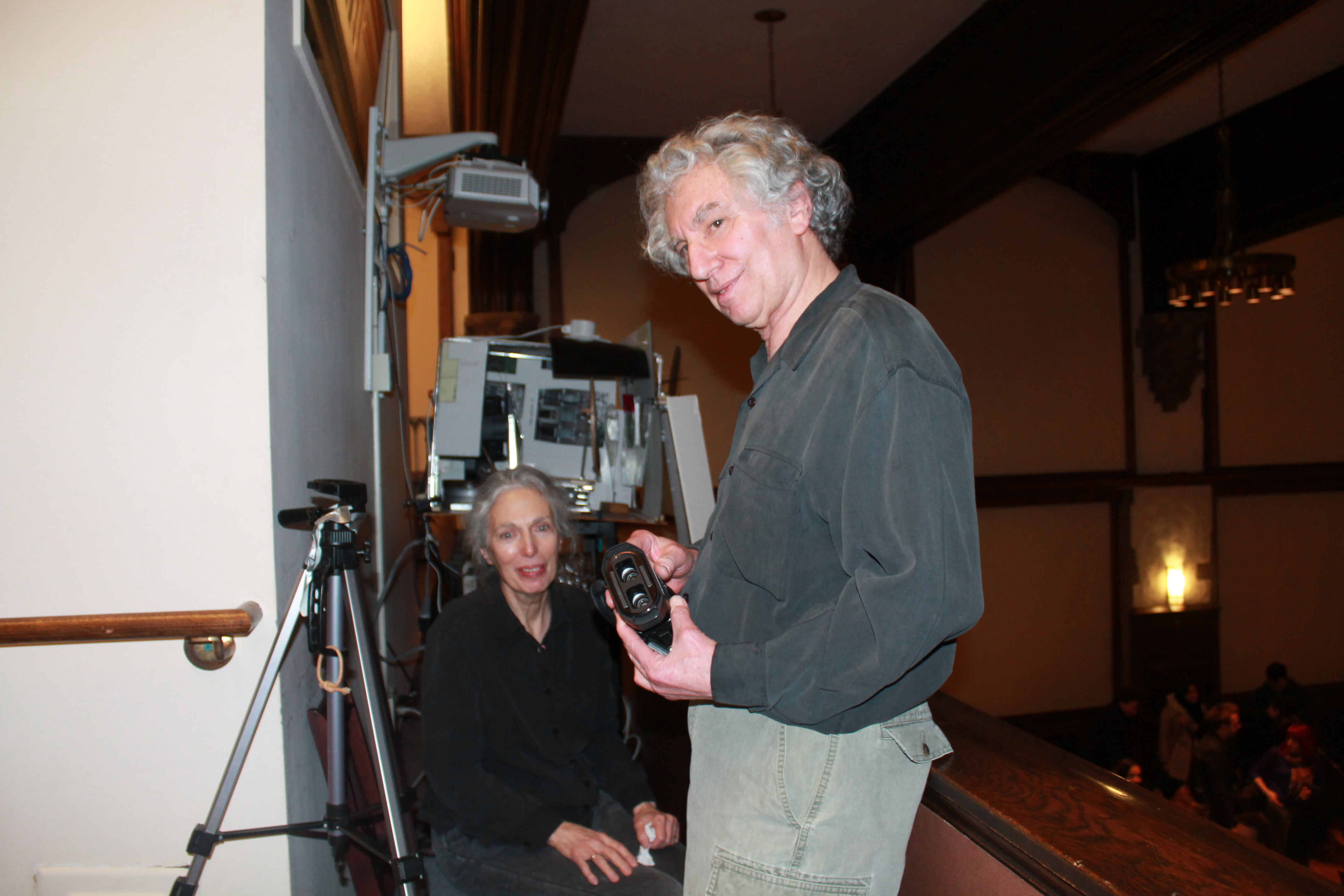
Flo and Ken Jacobs with the apparatus for their Nervous Magic Lantern Performance

Flo and Ken Jacobs with the apparatus for their Nervous Magic Lantern Performance

His short before the Nervous Magic Lantern was The Green Mile (2011), a five-minute tour de force that played with vision and made clear the ways in which digital media has liberated certain kinds of so-called experimental filmmaking.  What was once done painstakingly on an optical projector with all the challenges of multi-generational printing have been solved.   The picture is pristine and aggressive in the way it challenges us to think about optical illusions and perception more generally.
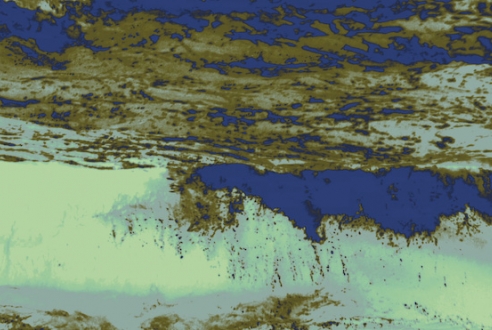
The Green Wave (2011)

The Green Wave (2011)

In some respects, The Green Wave is part of a genre of experimental film that goes back, at least, to Tony Conrad’s The Flicker (1965) with its aggressive assault on the spectator.  Conrad’s film begins with this title card:

WARNING. The producer, distributor, and exhibitors waive all liability for physical or mental injury possibly caused by the motion picture “The Flicker.” Since this film may induce epileptic seizures or produce mild symptoms of shock treatment in certain persons, you are cautioned to remain in the theatre only at your own risk. A physician should be in attendance.

With The Green Wave, I found myself engaged in an optical challenge that was caught between intellectual fascination and physical pain.  This was only intensified with the Nervous Magic Lantern, which Ken and Flo used to present the piece Times Squared.  The sound track was an audio recording that Ken made as he moved through the subway system, starting at Times Square.  The piece starts with a simple play of light on the screen that suggests the strobe effect one often encounters on the subway.  The exhibition then turns to the projection of “smudges” (Ken’s words) that have a powerful 3-D effect as well as a sense of motion and depth.
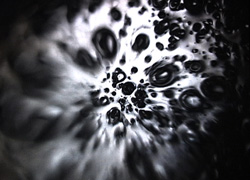
Image for The Nervous Magic Lantern

Image from The Nervous Magic Lantern

Again I found myself torn between a fascination with what I was seeing–the illusion of motion, the false sense of 3-D––and the visceral sense of being under assault.

The Whitney Humanities Center Auditorium was full–standing room only, and the Film Studies faculty were there in force.  I was sitting next to Brigitte Peucker who suggested that the piece might better be called “Torture the Spectator” and made an exit.  She was not alone.  I sympathized but decided to stay.  Others, like me, found ourselves simply closing our eyes at moments.  One way or the other the visual experience was being etched into our retina and nervous system to the point that I continued to feel its after effects all weekend. Ken characterized the sensation produced by his Nervous Magic Lantern as ecstasy, which is perhaps one reason why not a few people called him the Madman of the Cinema (always in a tone that conveys respect, wonder and appreciation, I should add).

When asked, Ken saw the Nervous Magic Lantern generating a powerful tension between the audio and the visual.  “The sound is gravity,” he asserted the the Q & A.  “The image is crazy, liberating.” This allowed for individual, nonstandardized responses.  Certainly the sound track is readily accessible and and offers an apparently simple audio record of movement through the subway. As a long-time New Yorker, I have had a wide-range of reactions to, sensations of and experiences in the subway.  Some are very much along the lines of D.A. Pennebaker’s Daybreak Express (1958).  There are times when the subway is a delight, when I am never happier to be a New Yorker as I am wisked through the city via this transportation system used by all the city’s denizens, from Wall Street brokers to the homeless.  I feel that the subway, populated by peoples whose roots are from all over the world, is almost my second home.  But there are other moments, often late at night when I have descended into the subway and felt I was descending into a hellish world of too bright florescent light.  The light pierces my eyes and the people seem remote, foreboding–– as if one has taken a bad trip. That is the feeling I had watching Times Squared. It made me wonder what my reaction would be to Jacob’s Celestial Subway Lines/Salvaging Noise (2005), a somewhat similar performance using “This is accompanied by industrial sound and music provided by John Zorn and Ikue Mori.”

Afterwards Ken participated in a Q & A:
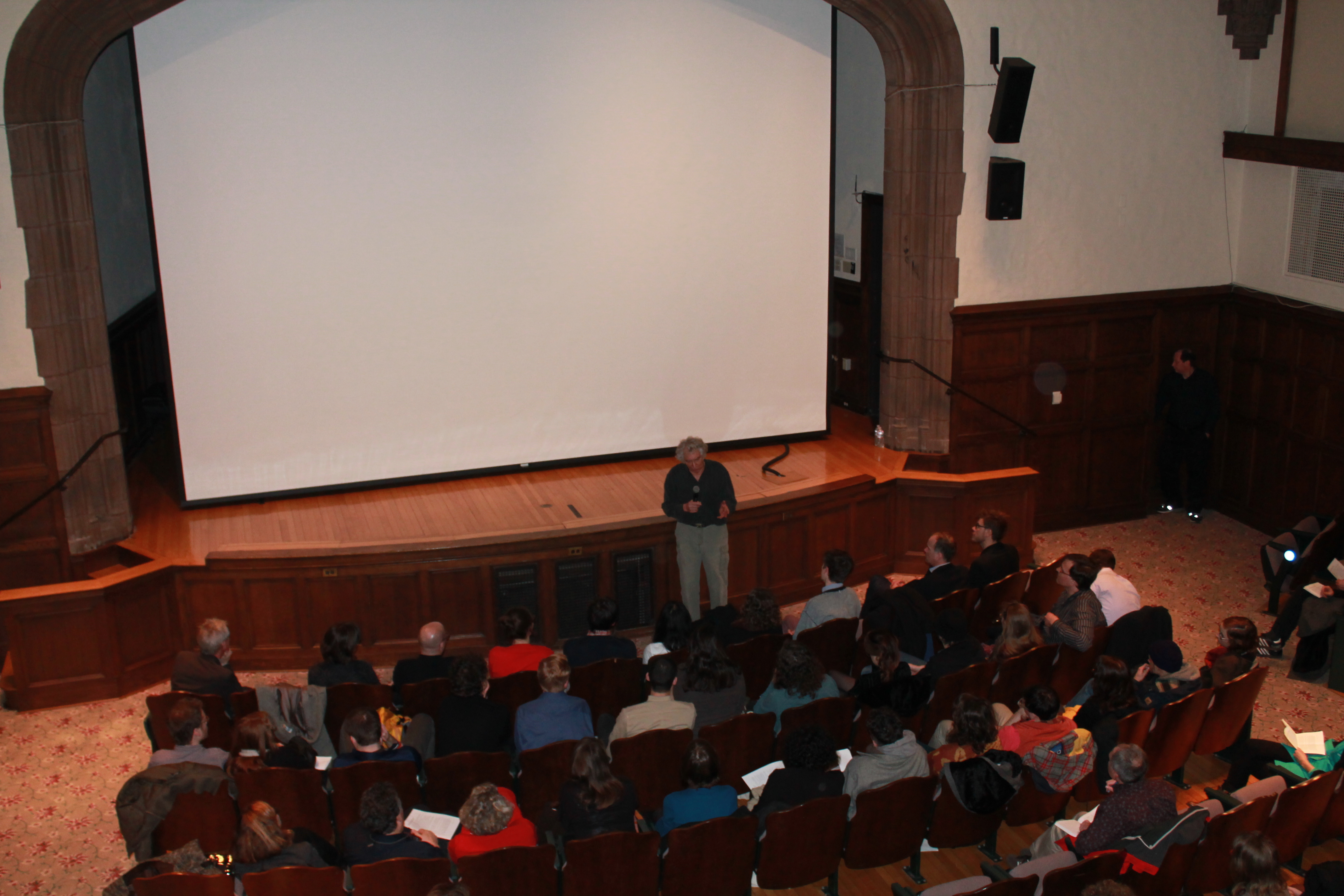
After the screening: Ken Jacobs at Yale

After the screening: Ken Jacobs at Yale

Ken repeatedly emphasized his debt and inspiration to abstract expressionist Hans Hoffmann (1880-1966). “His works gave me horrible standards to live up to.”  He’d encounter Hoffman in the village: “I considered myself unworthy of speaking to him.”  And yet he did–though never mentioning his interest in film except on one occasion when he “stupidly” told Hoffmann that he was working with film and that “I think film is the art form of the century.”

A critic on WetCanvas suggested some ways in which Hans Hofman’s paintings directly inspired Jacobs:

Hofmann believed fervently that a modern artist must remain faithful to the flatness of the canvas support. To suggest depth and movement in the picture – to create what he called “push and pull” in the image – artists should create contrasts of color, form, and texture.

Nature was the origin of art, Hofmann believed, and no matter how abstract his pictures seemed to become, he always sought to maintain in them a link to the world of objects. Even when his canvases seemed to be only collections of forms and colors, Hofmann argued that they still contained the suggestion of movement – and movement was the pulse of nature.

These became Jacobs’ preoccupations as well.

Asked “What cinema is?” Ken immediately replied that “Cinema is thought.” At the same time he finds in cinema both an erotic fascination and an intellectual fascination.  If one substitutes the term “somatic” or perhaps “optical” for “erotic”–it might be easier to accept but it also feels as if Jacobs’ passion for what he shows us has a strong erotic or visceral component for him.
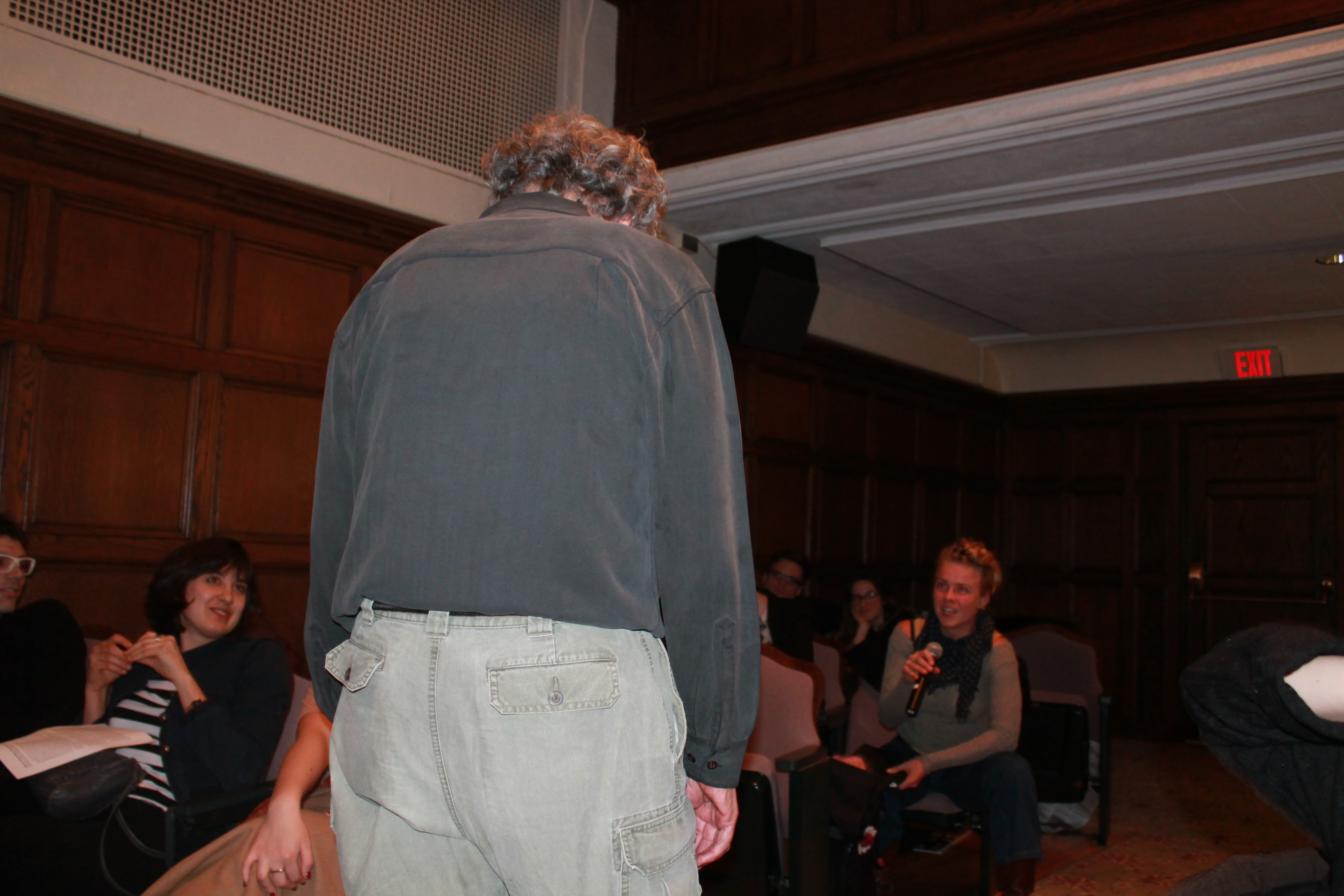
Ken Jacobs Gets a Question.

Ken Jacobs Gets a Question.

Ken Jacobs also distributed “Notes for a Nervous Magic Lantern Performance.” I asked him if I could add them to this blog and he agreed.  So here they are:
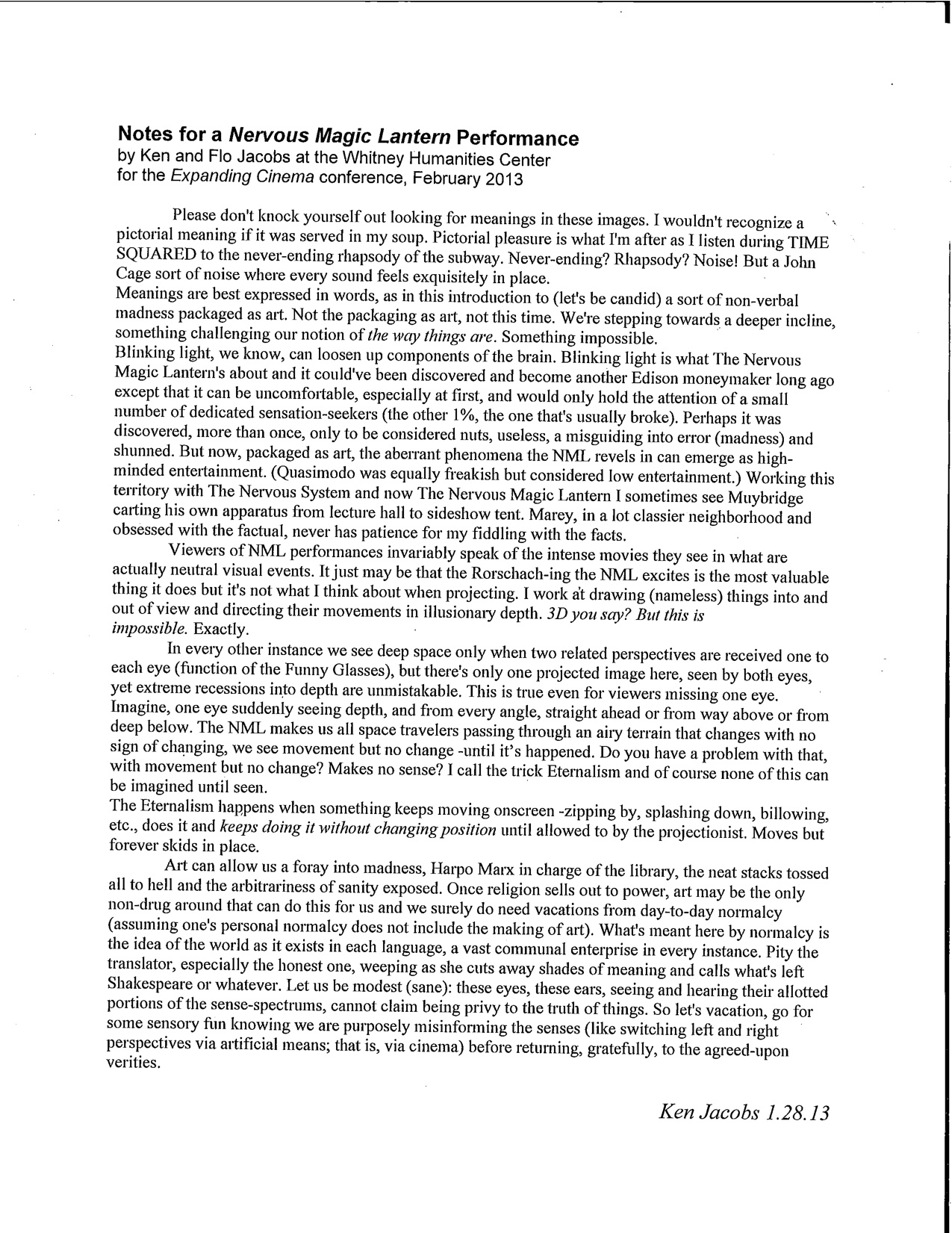
Jacobs,Notes


Caught in New Haven: The Blizzard of Feburary 8/9, 2013

Posted by chamus on February 10, 2013
Posted in: Uncategorized. Tagged: Charles Musser, New Haven. Leave a Comment

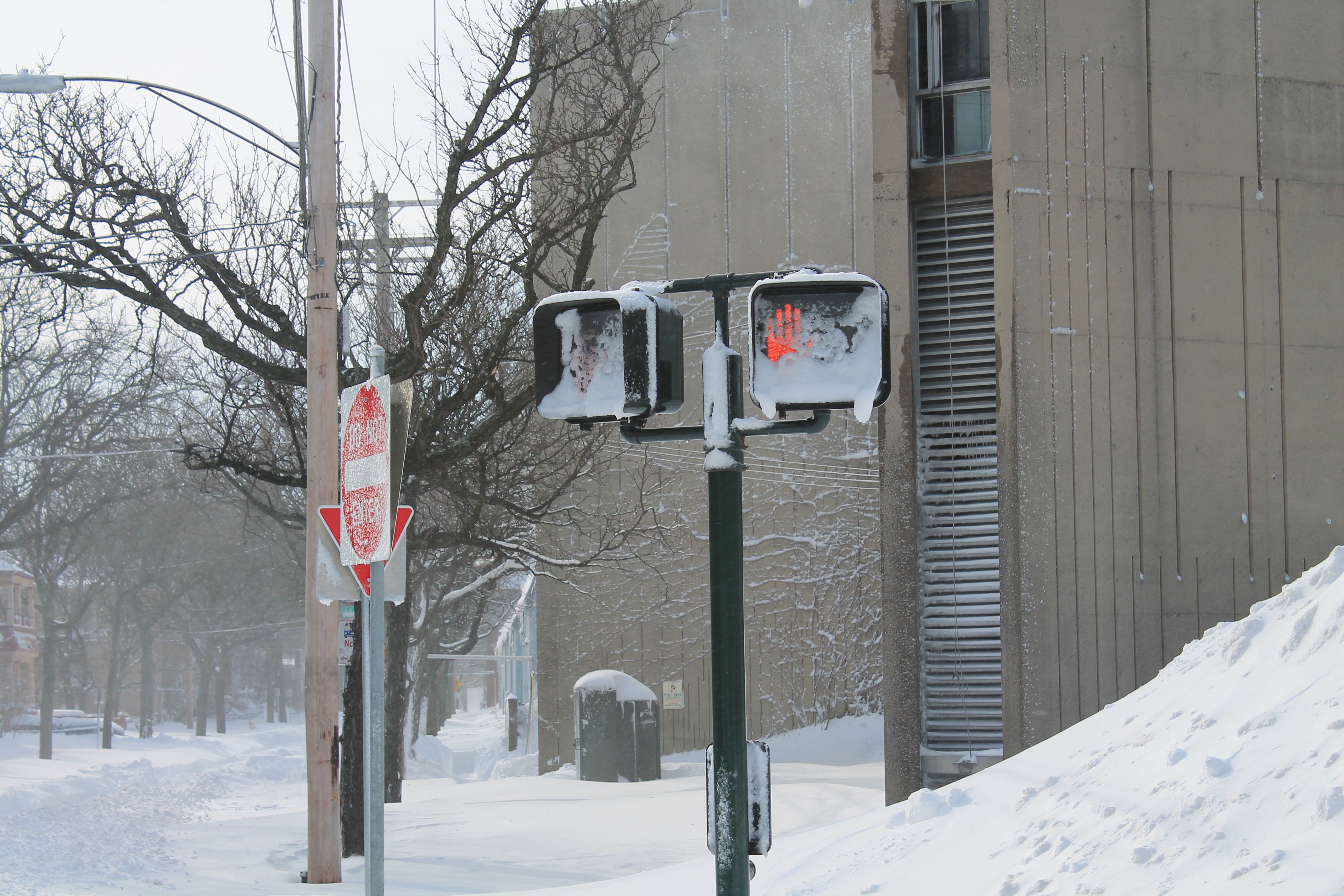
It needs to be commemorated.  34″ of snow in 24 hours.
Snowstorm-Don't Walk

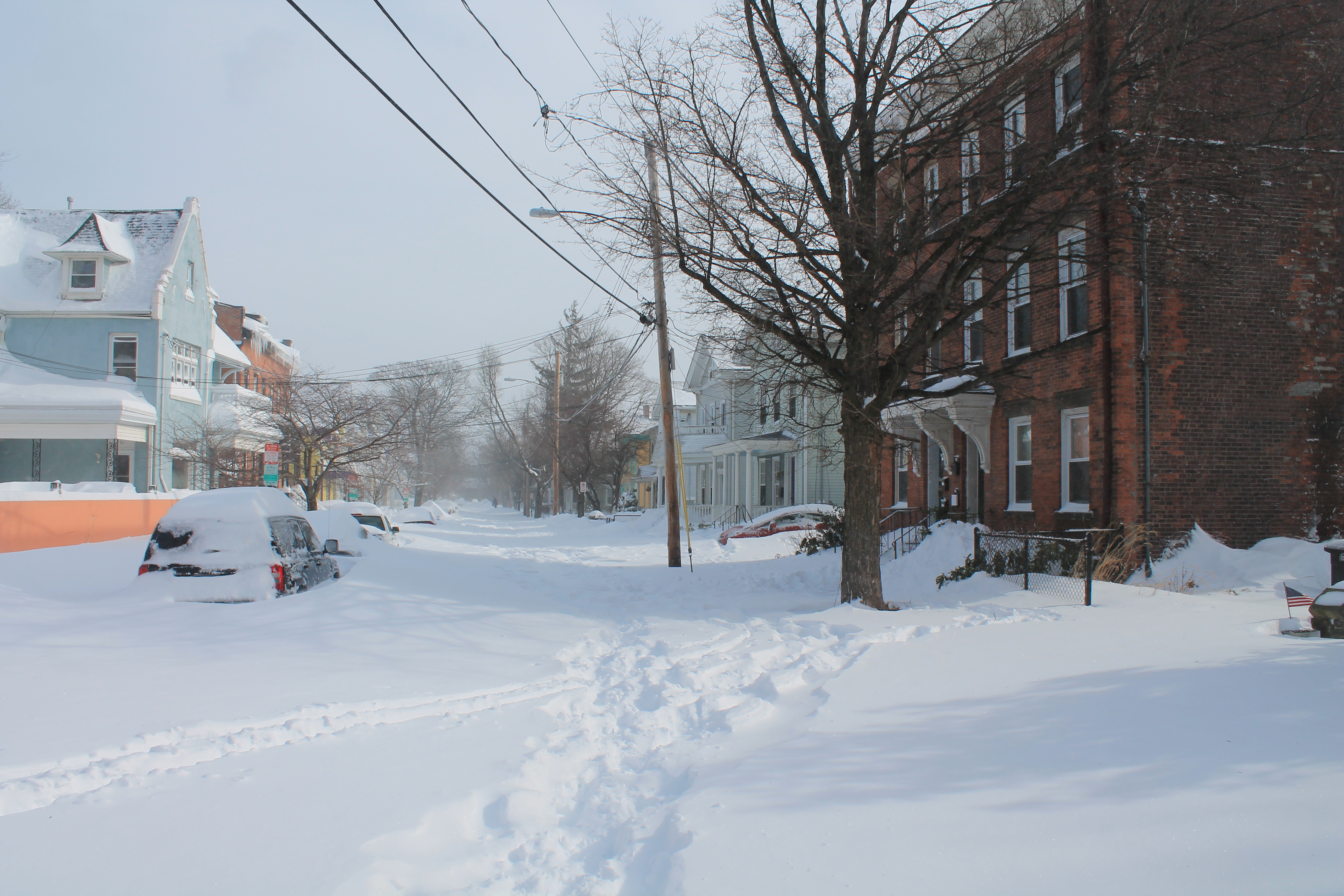
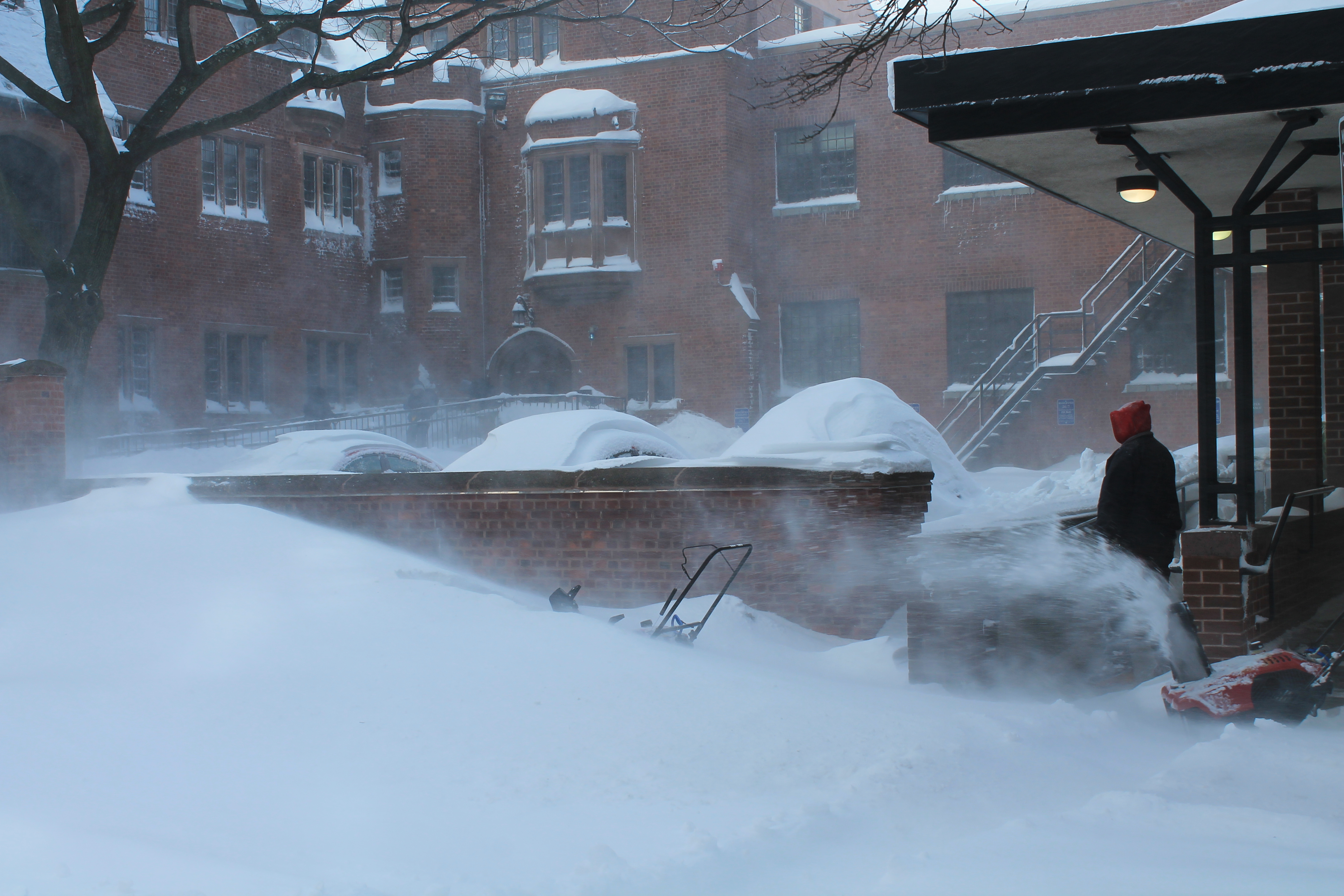
Ron Gregg escaped to New York, but we were caught in New Haven.   On the morning of February 9th, single lanes were open only on major thoroughfares.  Entrances to the local news station and the Whitney Humanities Center (where I work) were sealed by snow drifts. After digging out the front steps, I took a tour then returned to home base and grabbed a camera.  By the time I got back to my office, they were digging out.

Lyon Street after the storm.

Lyon Street after the storm.

Elm Street, just off the Green.

Elm Street, just off the Green.

Digging out the Whitney Humanities Center

Digging out the Whitney Humanities Center

A photo by neighbor Chris Randall

A photo of John Carlos by neighbor Chris Randall

 
And these are taking by housemate Caicai Zhang:

Threese and John Carlos at the New Haven Green.

Threese and John Carlos at the New Haven Green.

It is always interesting to see the stores that somehow manage to open up quickly (or as in the case of Gormet Heaven, never close).  For many people, of course, no work means no pay.  Dunkin’ Donuts was open, but John Carlos complained that they had no donuts (there were no deliveries, of course)–so they gave him a cookie.

At Dunkin' Donuts

At Dunkin’ Donuts

Two Catalog Essays: The Armory Show and Coney Island

Posted by chamus on February 10, 2013
Posted in: Uncategorized. Tagged: 1913, Abastenia St. Leger Eberle, Armory Show, Association of American Painters and Sculptors, Carroll Siskind, Charles Musser, Chris George, Claartje van Dijk, Coney Island, International Center of Photography, Josh Glick, Kimberly Orcut, Marilyn Kushner, Morris Engel, New-York Historical Society, Robin Frank, Weegee. Leave a Comment

I’ve been working on two catalog essays for art exhibitions.  They’re further distractions from ever finishing a book, but I am not complaining.  Done right, they’re intellectual challenges.  Early in 2012, I was approached by Casey Blake on behalf of the New-York Historical Society and was asked to write a contextualizing catalog essay for an upcoming exhibition on the 1913 Armory Show curated by Marilyn Kushner and Kimberly Orcutt. One suspects the kind of piece they had in mind:  cinema as a modern art that embodied the fragmentation of time and space.

Lois Weber's Suspense (1913)

Lois Weber’s film Suspense (1913)

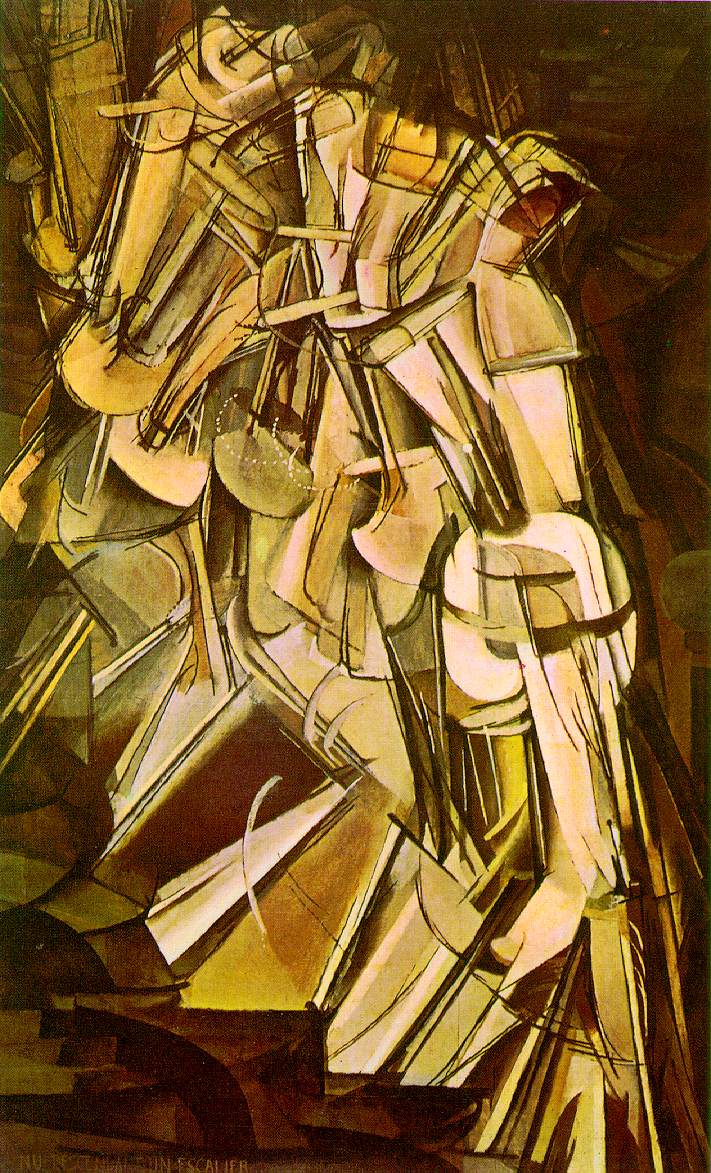
Therefore: Duchamp’s Nude Descending a Staircase (1912).
Marcel Duchamp's Nude Descending a Staircase (1911)

Marcel Duchamp’s Nude Descending a Staircase (1912)

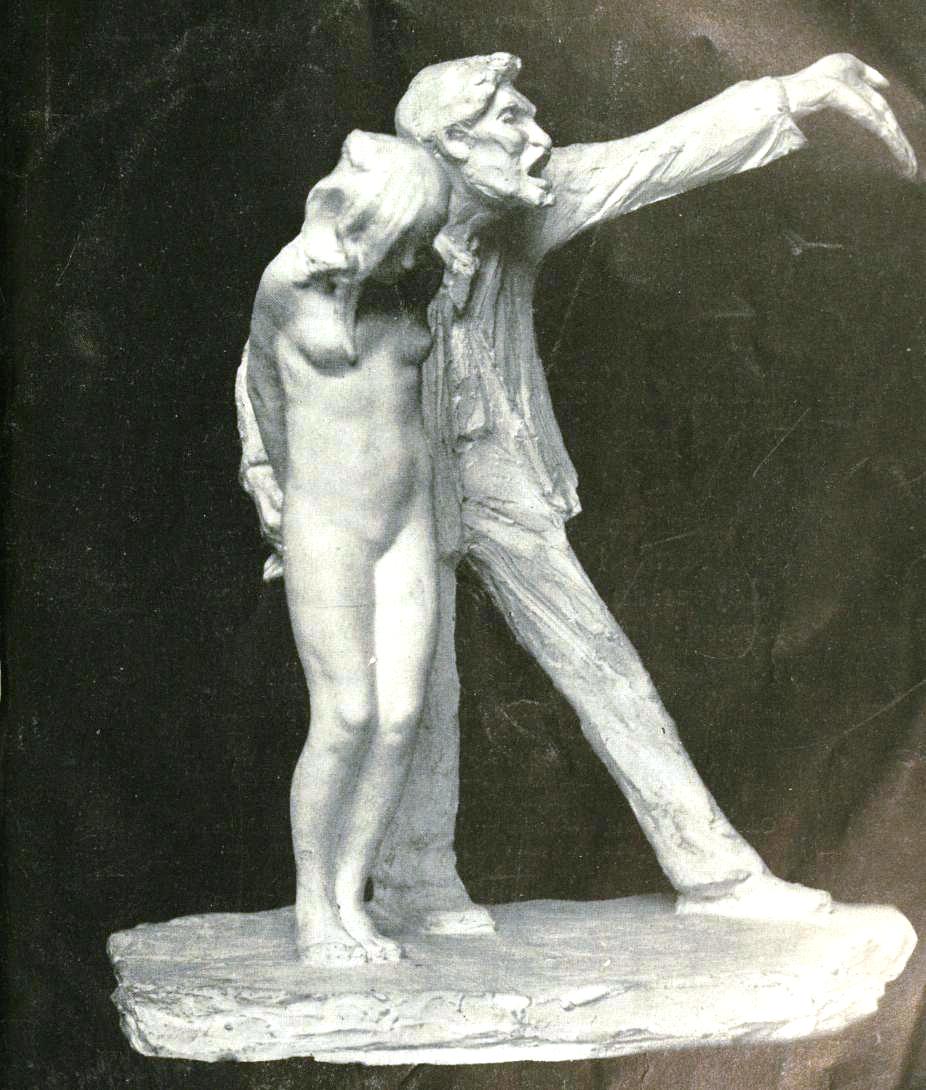
Instead, I began to wonder about the impact of emerging feminism on the Fine Arts and how it might compare to what was happening so dramatically in the motion picture industry, where women were moving into directing and starting their own companies.  It turns out that a lot was happening in the New York art world when it came to feminism but no one has paid much attention to it.  The Armory Show was organized by the Association of American Painters and Sculptors, which had an all-male membership.  The Woman’s Art Club and other organizations were not amused.  Predictably the situation was complex and fluid and many feminists had work in the Armory Show, including Abastenia St. Leger Eberle, who showed her sculpture The White Slave (1913), made especially for the International Exhibition of Modern Art.

Eberle's The White Slave (1913)

Eberle’s The White Slave (1913)

My essay “1913: A Feminist Moment in the Arts,” offers a new perspective on the Armory Show.  So look for  Marilyn Kushner and Kimberly Orcutt, eds.,  The Armory Show at 100: When New York Exploded into the Modern World (Yale University Press, 2013).  The New-York Historical Society exhibition is opening in October 2013.

I’ve also been working with Robin Jaffe Frank, who recently left the Yale Art Gallery to become Chief Curator and Krieble Curator of American Painting and Sculpture at the Wadsworth Atheneum, taking her show Coney Island: Visions of an American Dreamland with her. Robin has been employing Josh Glick, a recurrent figure on this blog.  In fact, Josh is writing a couple of essay for the catalog and we are planning to co-author another.

Josh Glick and Robin Frank

Josh Glick and Robin Frank

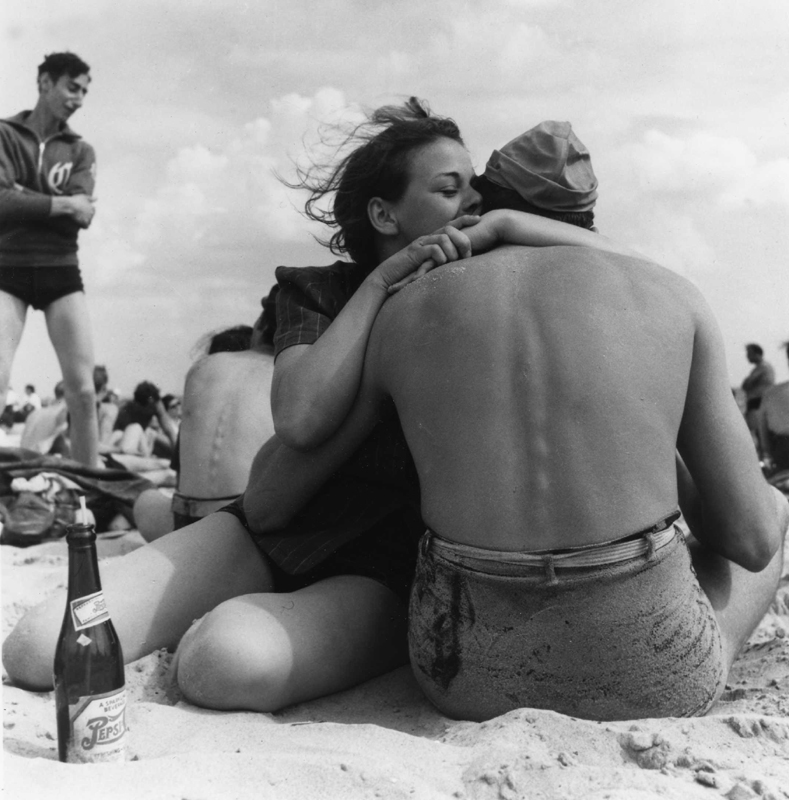
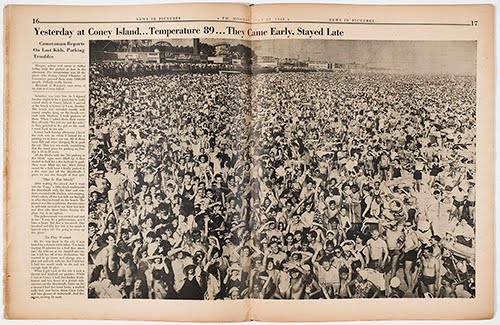
My own essay “Cameras at Coney, 1940-1962” starts from –but in fact concludes with–three films that feature Coney Island: Weegee’s New York (1948), Morris Engel’s Little Fugitive (1953) and Valentine Sherry’s Coney Island, USA (1951).  Weegee and Engel were prominent photographers whose still work often featured Coney Island in the 1940s. Coney Island, USA  was shot by still photographer Carroll Siskind. A version of the following photograph by Morris Engel appeared in the recently launched daily newspaper PM on July 21, 1940.

Morris Engel's Coney Island Embrace

Morris Engel’s Coney Island Embrace

The very day of its publication, Weegee went to Coney Island and took a large number of photographs, one of which appeared in the  July 22, 1940 issue of PM.

Coney Island, July 21, 1940.  Weegee's photograph appeared in PM in following day.

Coney Island, July 21, 1940. Weegee’s photograph appeared in PM in following day.

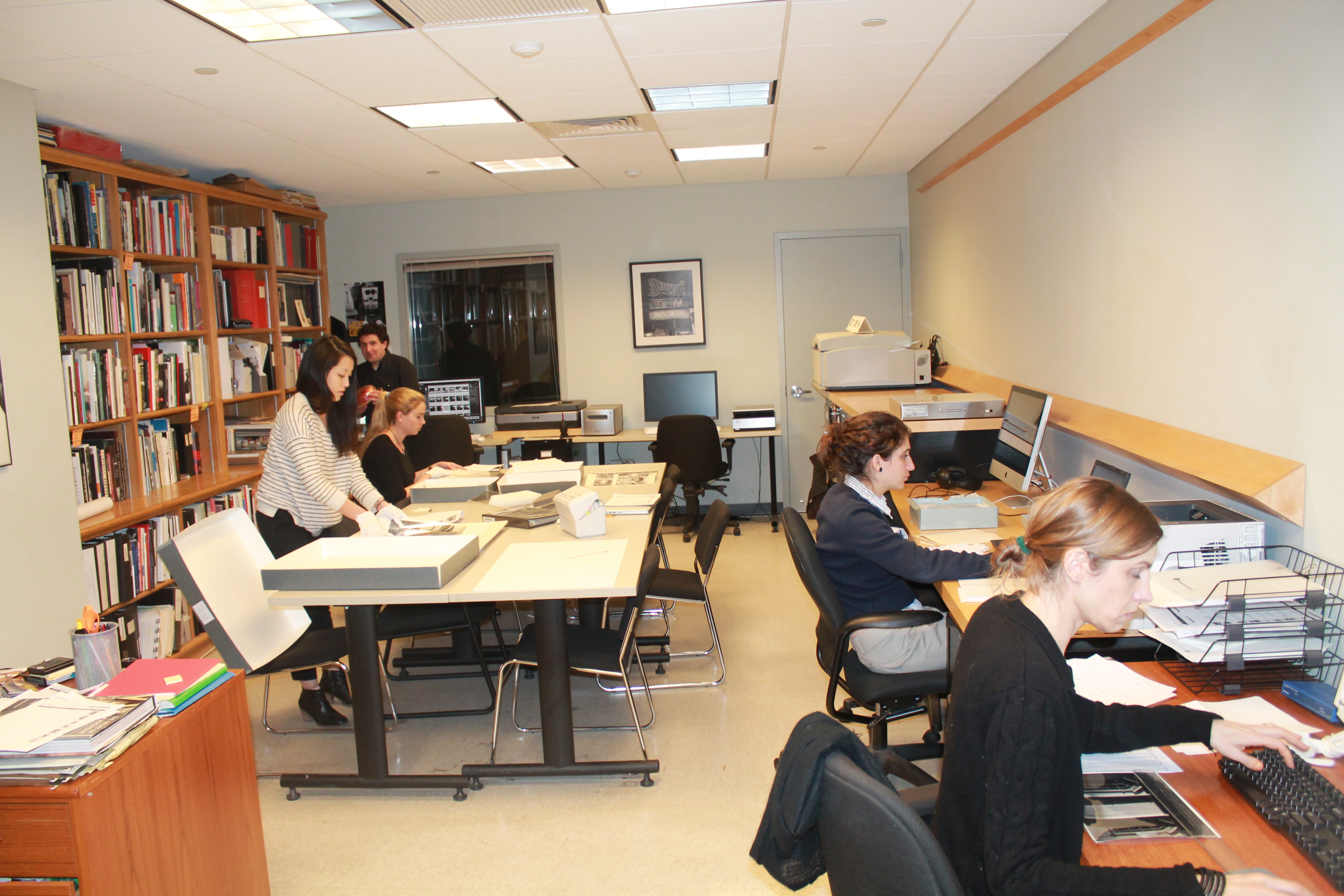
I’ve been doing research at the ICP (International Center of Photography), which has Weegee’s papers.  It’s a great place to work!

The ICP archive and reading room.

The ICP archive and reading room.

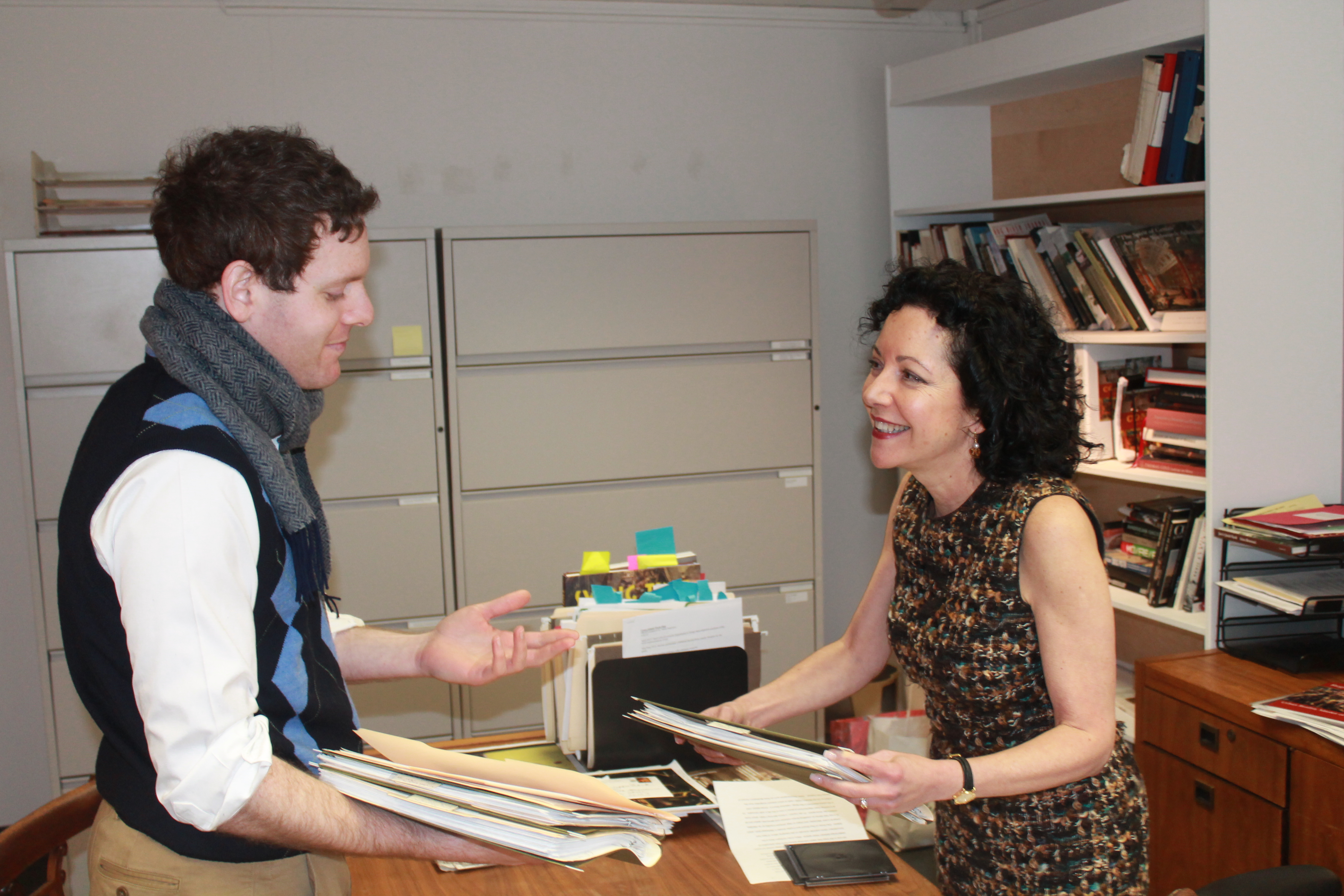
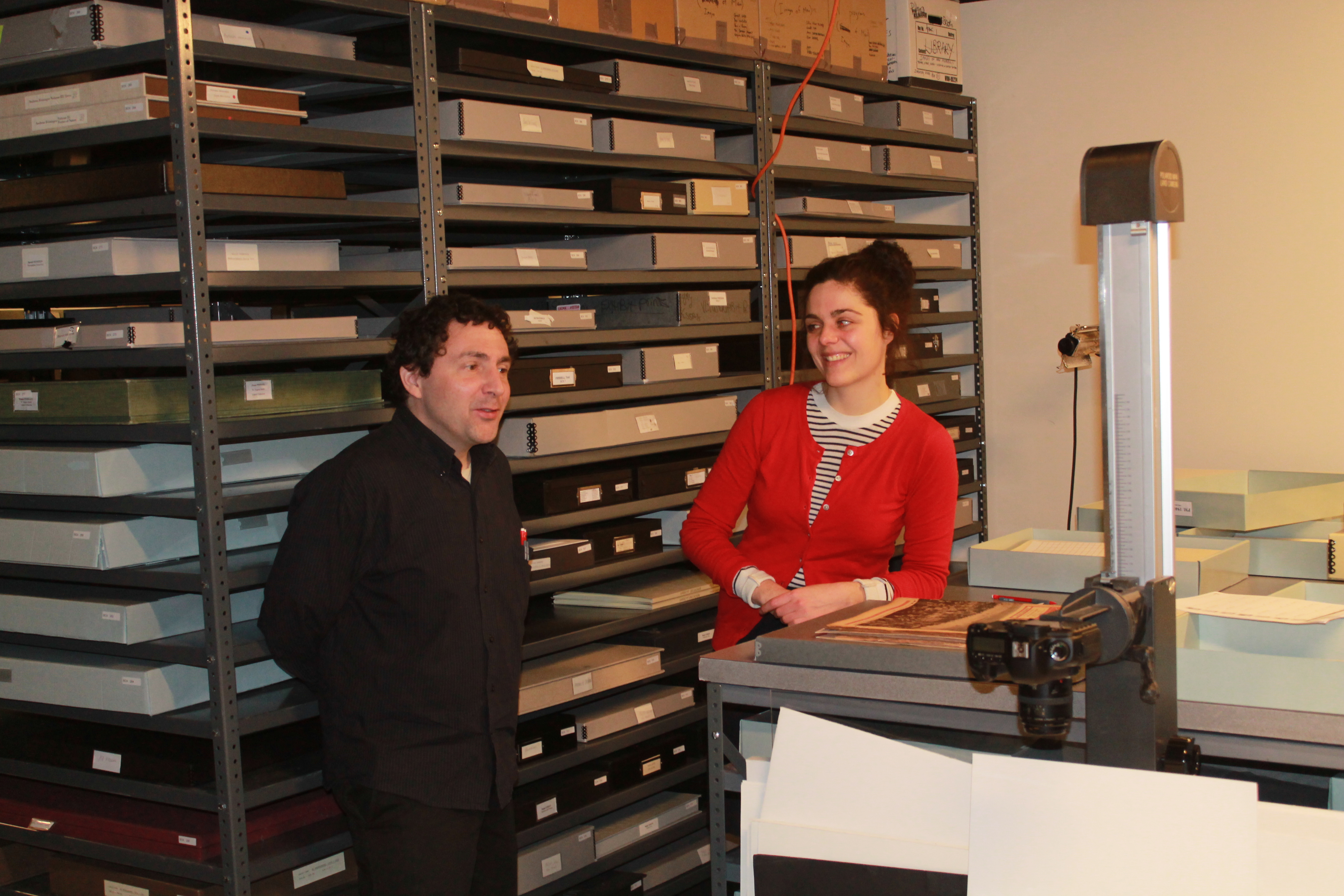
As always, that has to do with the people who run it: Claartje van Dijk and Chris George. Chris George also runs the wonderful Weegee blog.  Why are archivists always among my very favorite people?

Chris George and Claartje van Dijk

Chris George and Claartje van Dijk

This posting seems likely to have further updates.

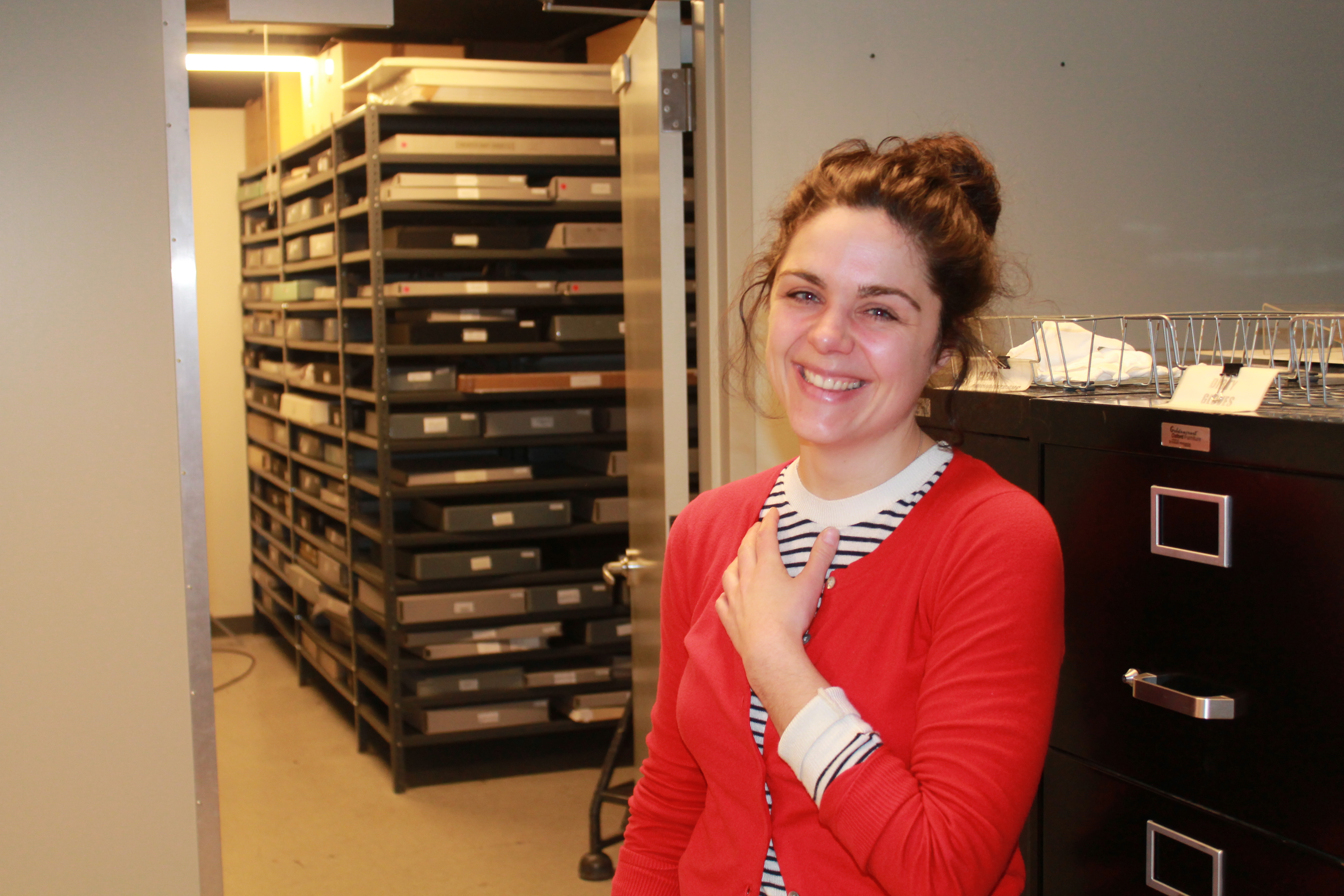
Research Associate Claartje van Dijk

Research Associate Claartje van Dijk


Memory on the Brain

Posted by chamus on January 18, 2013
Posted in: Uncategorized. Tagged: Alan Berliner, Alzheimer's disease, documentary, First Cousin Once Removed, Gerry Williams, Stranger Than Fiction, Thom Powers. Leave a Comment
Alan Berliner & Thom Powers @ STF

Alan Berliner & Thom Powers @ STF

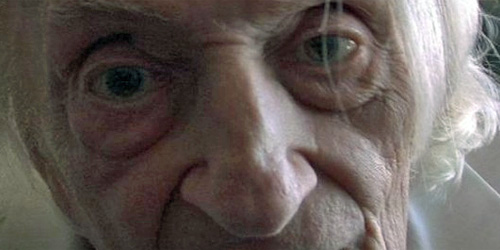
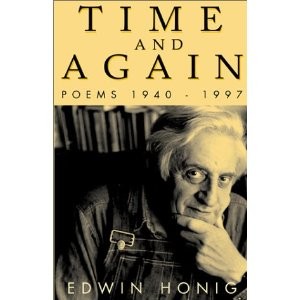
January 15th, 2013: Stranger Than Fiction at the IFC.   Alan Berliner discusses his fabulous new film  First Cousin Once Removed (2012).  The cousin is Edwin Honig, a poet and translator who taught creative writing at Brown–an extraordinary, complicated man who could not forget one incredibly painful incident of his childhood (the death of his younger brother) –even as he is overwhelmed by dementia at the end of his life. It might, in fact, be the last memory he has until his memory is all gone.  First Cousin is a film about memory and loss of memory, providing evidence that one can forget to the point that one never knew.  A dense and complex film that I should watch more than once before writing too much. Alan offered a series of insightful comments and I only can hope that someone recorded them. At some point I just took out a pencil and scribbled down a few of his remarks.  As he put it, “I have memory on the brain.” “Whatever the subject of my films, they contain layers and layers of subtext that are always about memory.” Despite Cousin Edwin’s frailties, Alan remarked that ” Everytime I met Edwin, it was a duet.  He was in many ways the co-author of the film.” 

film-firstcousinonceremoved-500

First Cousin celebrates a man’s life and achievements by insisting on his complexities and flaws.  Afterwards, Alan remarked that “poets are special citizens in our culture.  They are beacons of truth as translator of experience, by making the invisible, visible.”  It is a touching assertion that few Americans would stand by, but one that has a powerful credibility in the wake of First Cousin and its amazing excerpts of  Honig’s poetry.

51P8FT5Z9RL._SL500_AA300_

As Alan remarked, “Memory is not what happened but what you remember happened.”  And, he confessed that when working on this film and other things, he has to write things down or he forgets.  Me, too.  And I realize that this blog is a record of things I would like not to forget–like this evening.  In fact, those who occasionally encounter this blog may notice that it stopped for quite a few months.  This happened because someone broke into our house and stole everyone’s still camera (that and jewelry, nothing else).  With the loss of our camera–its own aid to memory, I stopped.  And then when we bought a new one, I was out of practice and would forget to bring it with me. Although I brought it to Alan’s screening, I almost left it at home.

Dan Steible

Dan Steible

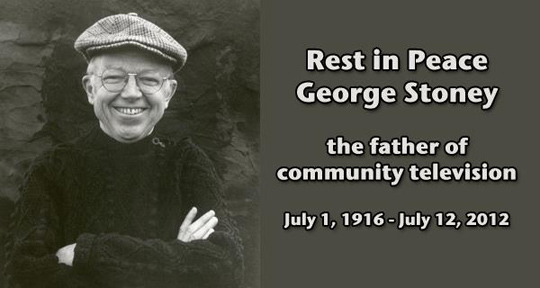
Anyway, here are a few more records of the evening.  The theater was full but not with so many people that I knew. I still miss seeing George Stoney at these events. In fact, I thought a lot about George on this occasion.  Someone at NYU finally told me what I had wanted to know. Faced with his failing eyesight and other physical ailments, George finally decided he had had enough and simply stopped eating. Two weeks later he was dead.

Carole Chazin and Alan Berliner

Carole Chazin and Alan Berliner


I also brought two students down from Yale.  In a way, they stand in for the two sides of my teaching.

Josh Glick, Alan Berliner, Eunju Namkung

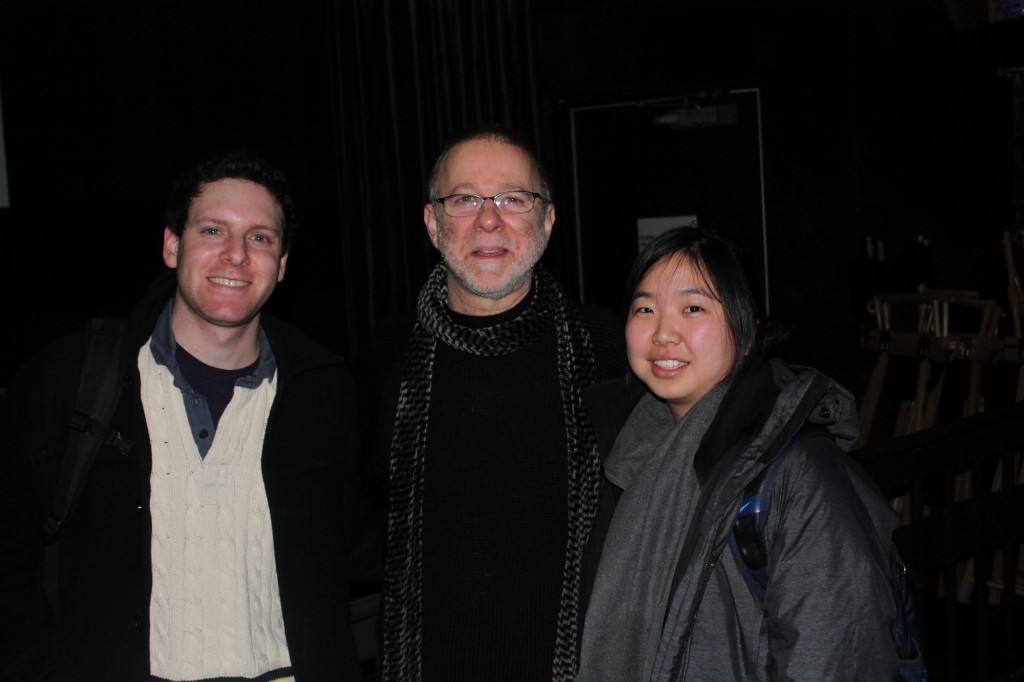
Josh Glick, Alan Berliner, Eunju Namkung

Eunju is making a documentary as her senior project on the people who live and work in the Yale library.  So Alan’s documentary resonated.  Should we be too surprised that he urged her to see Alain Resnais’ Toute la mémoire du monde  (1956).  Agreed.  It was one of several documentaries she has seen on libraries in preparation for making her film. Josh is immersed in writing his dissertation “Los Angeles Documentary and the Production of Public History, 1958-1977,” a project in which he was often interviewing important figures in the last years (or months) of their lives. Of course, public history is also very much about public memory.

Alan’s film resonated with me in a very personal way in that I made a documentary about an inspirational figure and surrogate father in my life, the studio potter Gerry Williams.  I made An American Potter more than 35 years ago but we have, of course, remained close.  Gerry has also been struggling with Alzheimer’s disease and was moved to a nursing facility since I last saw him.  There is a scene in Alan’s documentary when he brings his son to visit Honig.  I had already brought John Carlos to visit Gerry as well.

Visting Gerry Williams, December 26th, 2012.

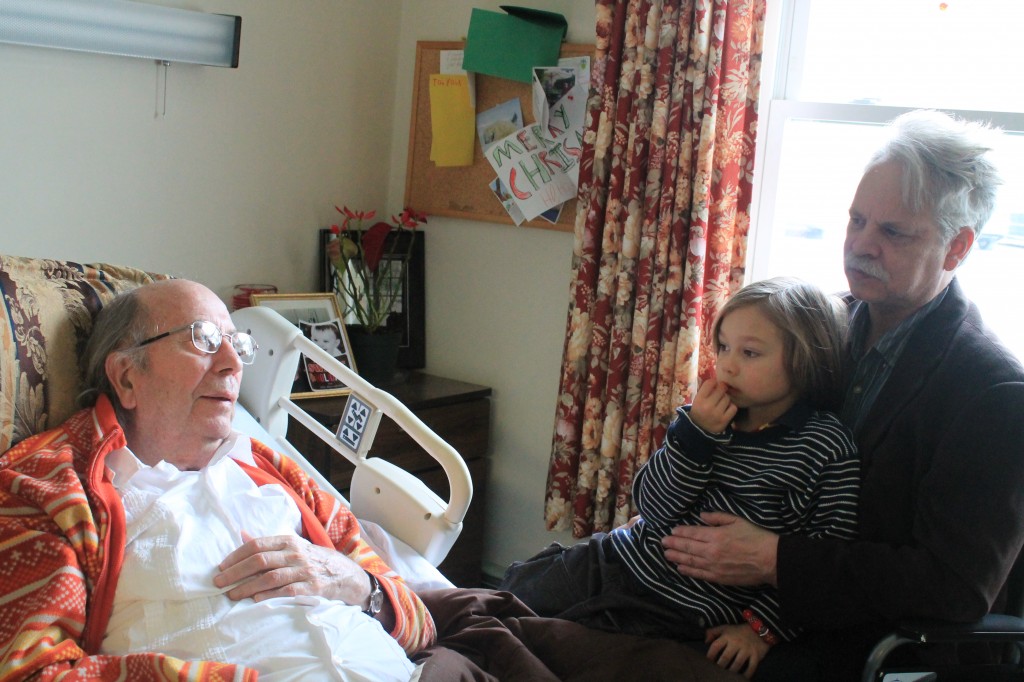
Visiting Gerry Williams, December 26th, 2012.


CCC

Posted by chamus on January 18, 2013
Posted in: Uncategorized. Leave a Comment

BBB

Posted by chamus on January 18, 2013
Posted in: Uncategorized. Leave a Comment

AAA

Posted by chamus on January 18, 2013
Posted in: Uncategorized. Leave a Comment

Pordenone 2012–Already a Fading Memory

Posted by chamus on January 18, 2013
Posted in: Uncategorized. Tagged: 2012, Andrew Erish, Anna Stein, Charles Musser, Giornate del Cinema Muto, Kevin Brownlow, Ned Thanhouser, Richard Koszarski, Sarah Bernhardt. Leave a Comment

As explained elsewhere, I went to Pordenone without my camera.  So the photos here are taken by others: a couple are grabbed off the web. Regretably I am writing about it months after the festival ended.

I became a Pordenone regular some years ago––specifically in October 2007. Don’t get me wrong; I had missed very few Giornates del Cinema Muto since the mid 1990s, but my son John Carlos was slightly less than a year old.  I thought I should be a good husband, a good father–-and stay home.  But none of my Yale colleagues were going.  And Silent Cinema really is my portfolio.  There were German silents, about which I needed to learn more.  Threese encouraged me to go–and so I went.  And I saw E. A. Dupont’s The Ancient Law (1923), a key film that enabled me to finally write a long wished for essay on The Jazz Singer.  In addition they screened some very early Passion Play films, shot in Palestine in the 1890s.   It was a great year, but I didn’t know that until I was there.
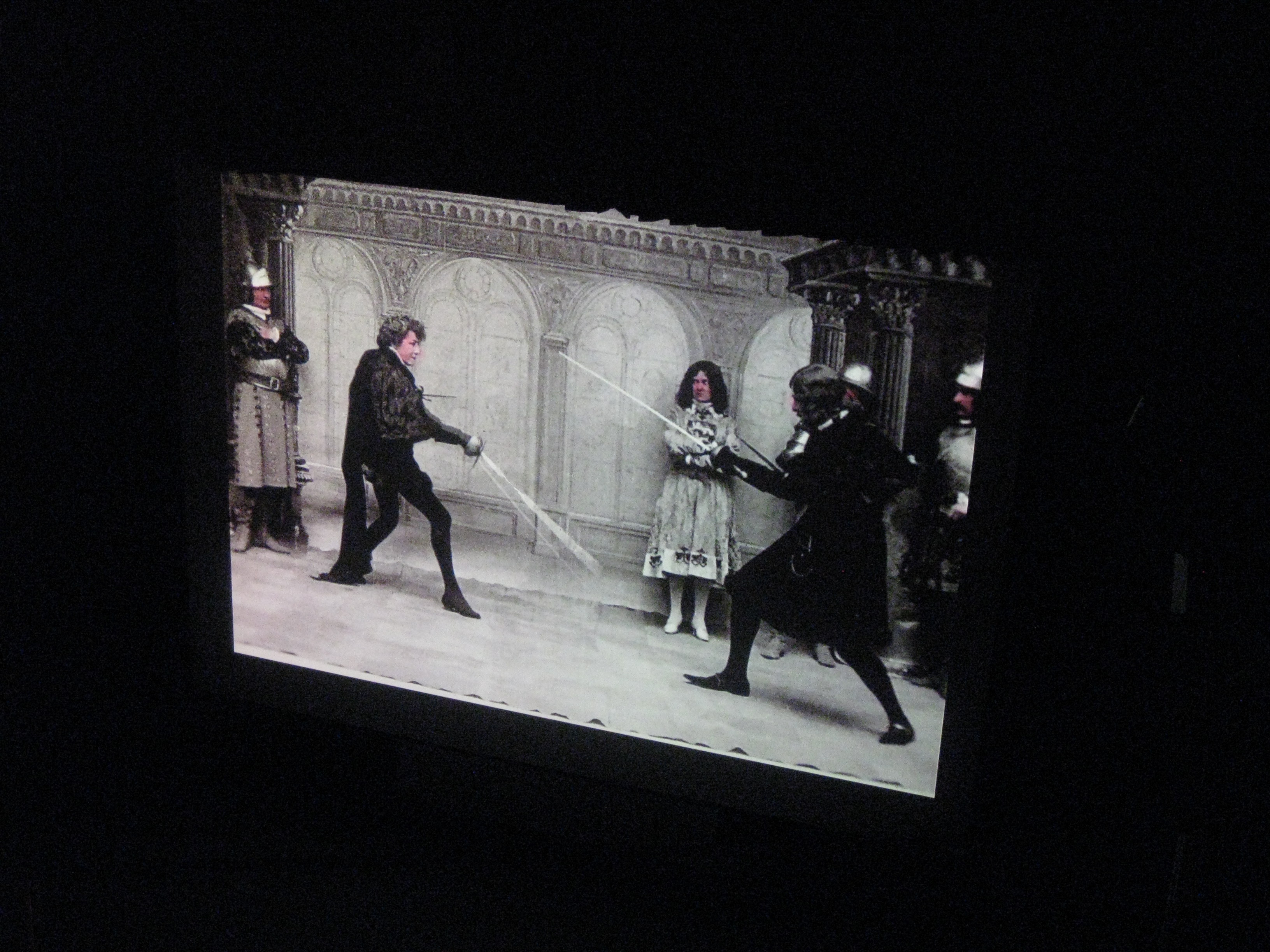
Pordenone 2012 019Now I don’t bother to look at the program.  I just go.  In 2012, once again, there was serendipity.  I was writing an essay for Film History entitled “Conversions and Convergences: Sarah Bernhardt in the Era of Technological Reproducibility, 1910-1913.” And the Giornate showed Bernhardt’s first motion picture: a brief excerpt of the duel scene from Hamlet (1900), made for the Phono-Cinema-Theatre at the Paris Exposition Universelle of 1900.
Sarah Bernhardt in the duel scene from Hamlet (1900).

Sarah Bernhardt in the duel scene from Hamlet (1900).

It was in color and wonderful condition.  And I saw it in the context of almost two dozen other Phono-Cinema films, many with recorded sound tracks from the period.

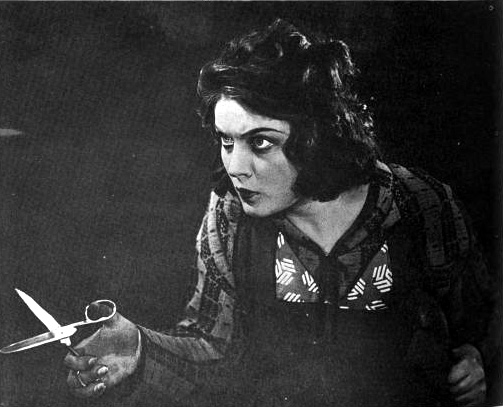
The greatest surprise and perhaps the greatest pleasure of the week was my discovery of Anna Stein, the Soviet film star of the late 1920s, who had a brief career in Germany then moved on to the US where Goldwyn tried to boost her career–but failed. From Boris Barnet’s The Girl with the Hatbox (1927) to Robert Siodmak’s Storms of Passion (1931), I was enthralled.

Anna Stein

Anna Stein

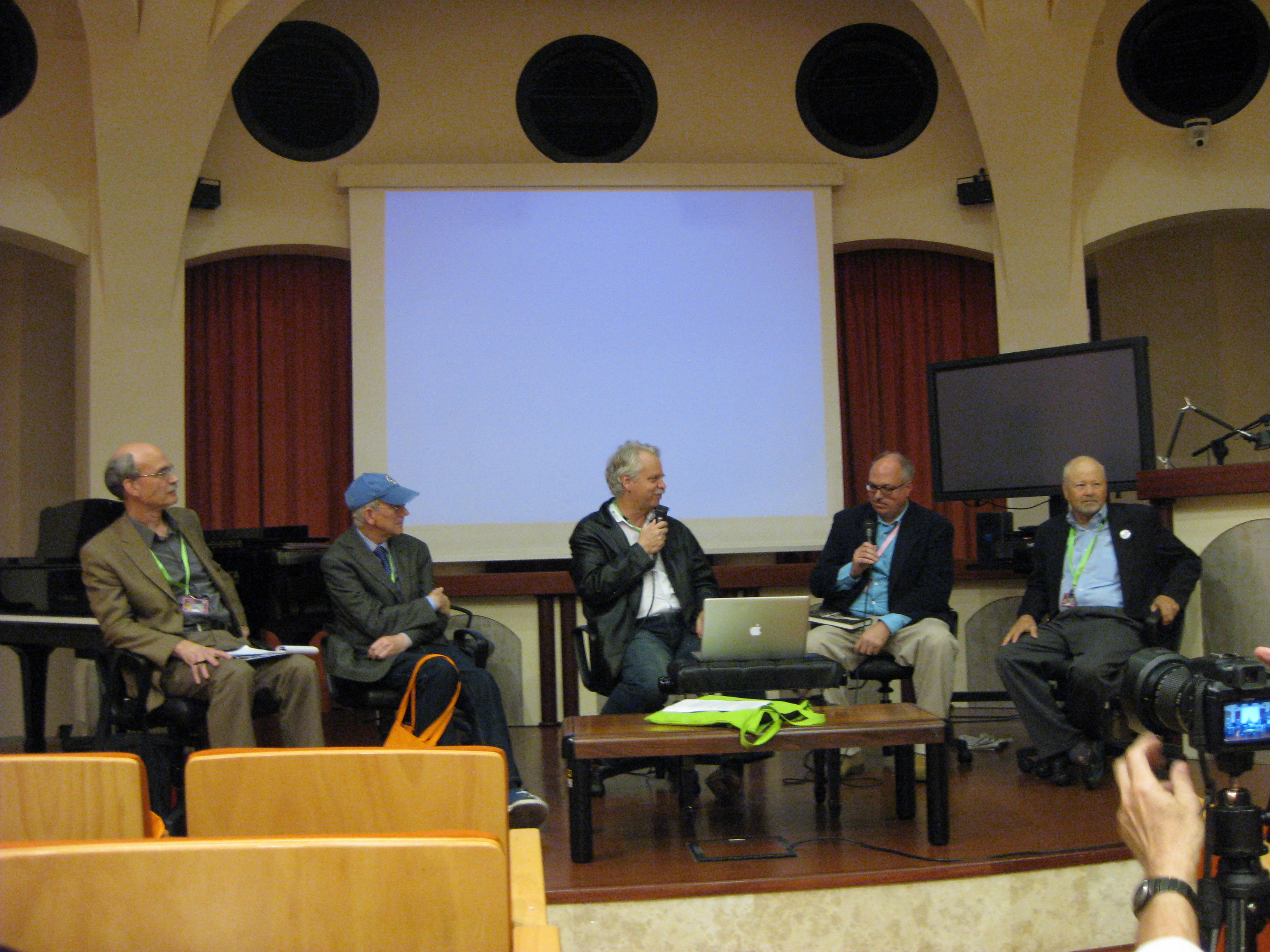
Another high point of the week was chairing a panel with Richard Koszarski, Kevin Brownlow, Ned Thanhouser and Andrew Erish (who had just published a book on William Selig). This Collegium session took place on October 12th: “Hidden History: the forgotten studios–Selig, Thanhouser and the others.”  The Edison company (my area of particular expertise) is clearly not one of the forgotten studios, though I have done my share unearthing some obscure ones.
Talking Silent Cinema at Pordenone

Talking Silent Cinema at Pordenone


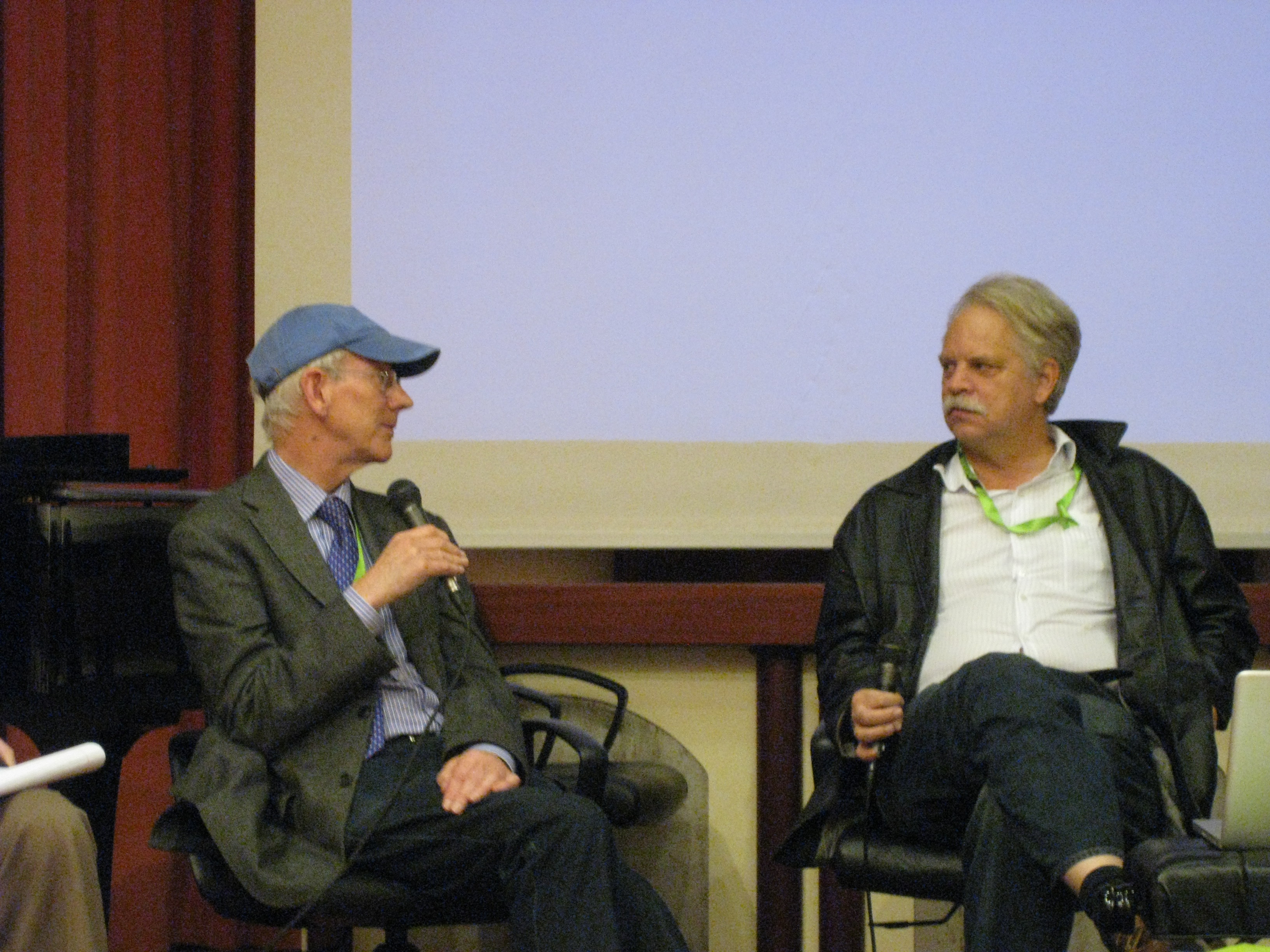
It was a great honor to be on the same stage with Kevin Brownlow–the first time we actually sat down together.  I am hoping it broke the ice.

Kevin and me.

Kevin and me.


Next year in Pordenone! Hopefully with a camera.

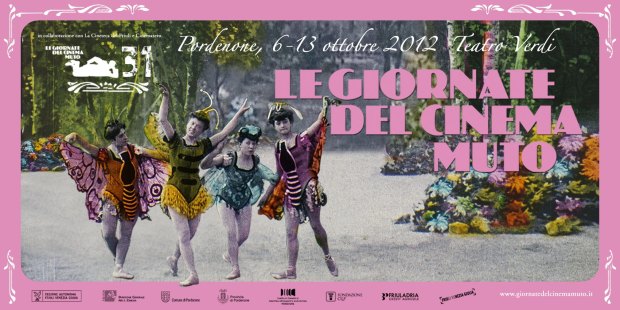
giornate2012card


Pennebaker, Poitras & Documentary Film Workshop

Posted by chamus on October 15, 2012
Posted in: Uncategorized. Tagged: Charles Musser, Chris Hegedus, D. A. Pennebaker, Laura Poitras. Leave a Comment

It is always wonderful when filmmakers one admires receive the kind of recognition they deserve.  But sometimes there is an added benefit: one’s own judgement is affirmed.  Thus this post.

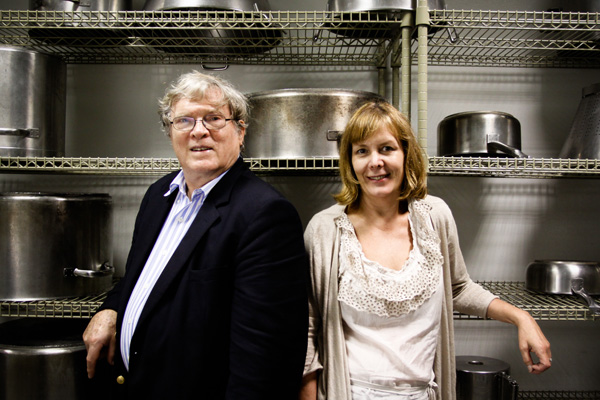
D. A. Pennebaker and Chris Hegedus

I had the pleasure to send out the following email to a number of individuals under the subject heading “Amazing News”–shortly after the names of the MacArthur Foundation’s latest fellowship recipients were released.

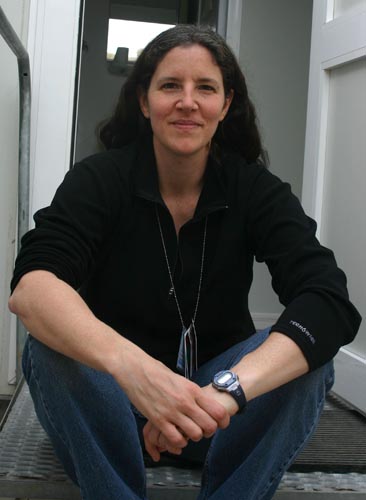
Laura Poitras

Well, this is all very humbling and yet…

As many of you know, I originated Documentary Film Workshop over the course of the 1990s and taught its first official iteration.  When I went on leave, I found my replacement–D.A. Pennebaker, who is being awarded an honorary Oscar this year by the Academy of Motion Picture Arts and Sciences.  After almost 10 years, he and his filmmaking partner Chris Hegedus stepped down and we hired Laura Poitras as a replacement (ok, Laura was my replacement of my replacement)–who has just been awarded a MacArthur fellowship (tonight).  Before her MacArthur, she was not only nominated for an Oscar but was a recipient of the Yale Film Studies Program Award–as was D.A. Pennebaker.  I feel deeply honored that I have bookended these amazing individuals: perhaps the greatest honor of my life is to be both their predecessor and successor.

Hurray for Penny and Laura!!

cm


One should also note that Laura worked with and for Pennebaker and Hegedus earlier in her career.  They were very enthusiastic about having her as their replacement.


My Memorial Day Weekend

Posted by chamus on September 24, 2012
Posted in: Uncategorized. Tagged: Alexander Cockburn, Bill Miles, Charles Musser, Elizabeth Lennard, George Stoney, Giuliana Bruno, Iris Cahn, James Schamus, Luara Mulvey, Mary Anne Doane, Miriam Hansen, Noam Chomsky, Tariq Ali, Tom Gunning. 2 comments

Memorials have been on my mind for the last few months––ever since I missed George Stoney’s funeral and memorial.  I had a good excuse––I was in Sweden teaching an intensive course and a quick return home was out of the question.  Still I have felt a recurrent sense of sadness and guilt that I missed both events.  It was really because of George that I had a chance to teach some of my first courses.  He had been teaching a year-long course on the Documentary Tradition but had become involved in something else, and this gave me my chance to take over (with at least his tacit approval).  I taught it for a couple of years as an adjunct, and our styles proved to be quite different.  His course was filled with eager undergraduate filmmaking students; when I took it over, most of them fled to be replaced by Cinema Studies graduate students.  Obviously, I was grateful–-and that gratitude has only deepened with time.
While the world of a New York documentary is fairly small and reasonably friendly, it has its own quite independent spheres.  They overlap and intersect but not as much as one might think.  New York is filled with Stoney’s disciples, some of whom have written remarkably on his life. (Judith Helfand, for instance); but my mentors were Jay Leyda, D. A. Pennebaker and Peter Davis. George and I were friendly, but we saw each other infrequently and only in passing.  However, we had been running into each other more often in recent years––particularly at the IFC’s Stranger than Fiction series where he was a regular. Of course, we would always say hello and often talk for a few minutes.  He’d update me on the latest film he’d completed or the one he was just starting (his quiet productivity was always dizzying).  I admired the way he kept coming to the IFC even after he was in a walker.

One memorable moment came at the Visible Evidence Conference in August 12011.  The reception was in George’s honor; and when handed the microphone, he mentioned that he was getting old enough so that he had become an advocate for choosing one’s time to die.  I remember thinking that I hoped he would pursue his advocacy through film rather than through example, but in that respect I was perhaps naive.  (People have been quiet about the exact circumstances of his death.) Certainly it didn’t seem as if his last hurrah was imminent: we talked on the phone  later in the fall. A few decades ago George had shown a film that he paired with Lorentz’s The River (1937)–in which dams were shown to be a ecological problem rather than a solution.  I couldn’t remember the title but George supplied it (The Flooding River, 1972) and was still in touch with the filmmaker (L.P. Brower).  I paired the two films in my spring course on Documentary and the Environment.

This past weekend was filled with memorials of different kinds.  Saturday, Sept 22nd, in particular.
A one-day conference, ‘Cinema and the Legacies of Critical Theory’, International Conference in Memory of Miriam Hansen, unfurled at Columbia University’s Deutches Haus on the 22nd.  Miriam and I co-chaired the Columbia Seminar on Film and Interdisciplinary Interpretation for about 10 years, and her work on Babel and Babylon coincided with my own work on early cinema.  We had a warm, productive and at times even intense relationship that inevitably faded when she moved to Chicago and faded even further when she got sick and I assumed parental responsibilities.  So I attended the conference and decided to take a few pictures even though I was rather indiscreet with my 35mm Canon camera compared to others with their iphones.  In fact, I only took photos on Friday evening (Sept 21) at the opening “reception,” which nonetheless included a stealth panel.

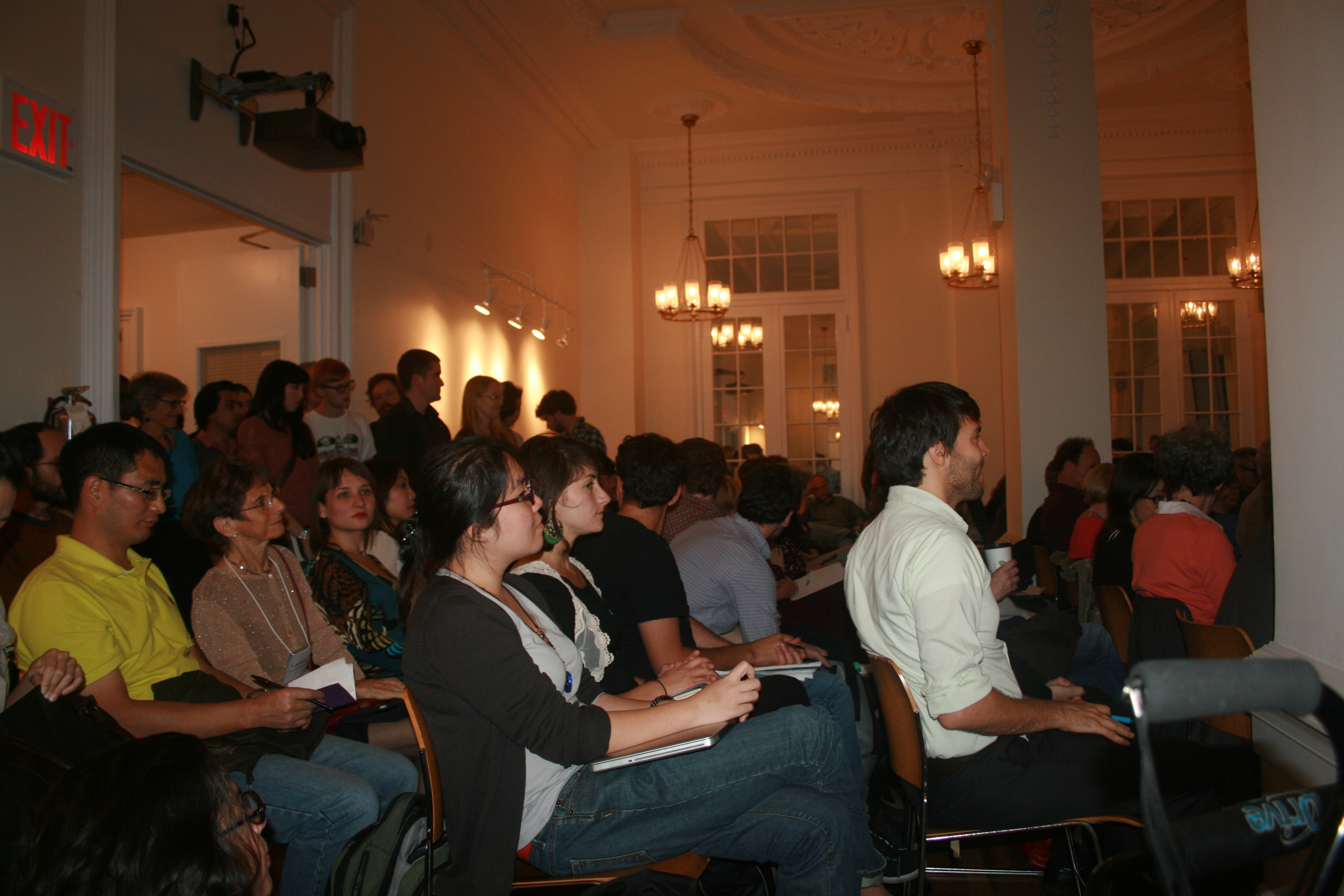
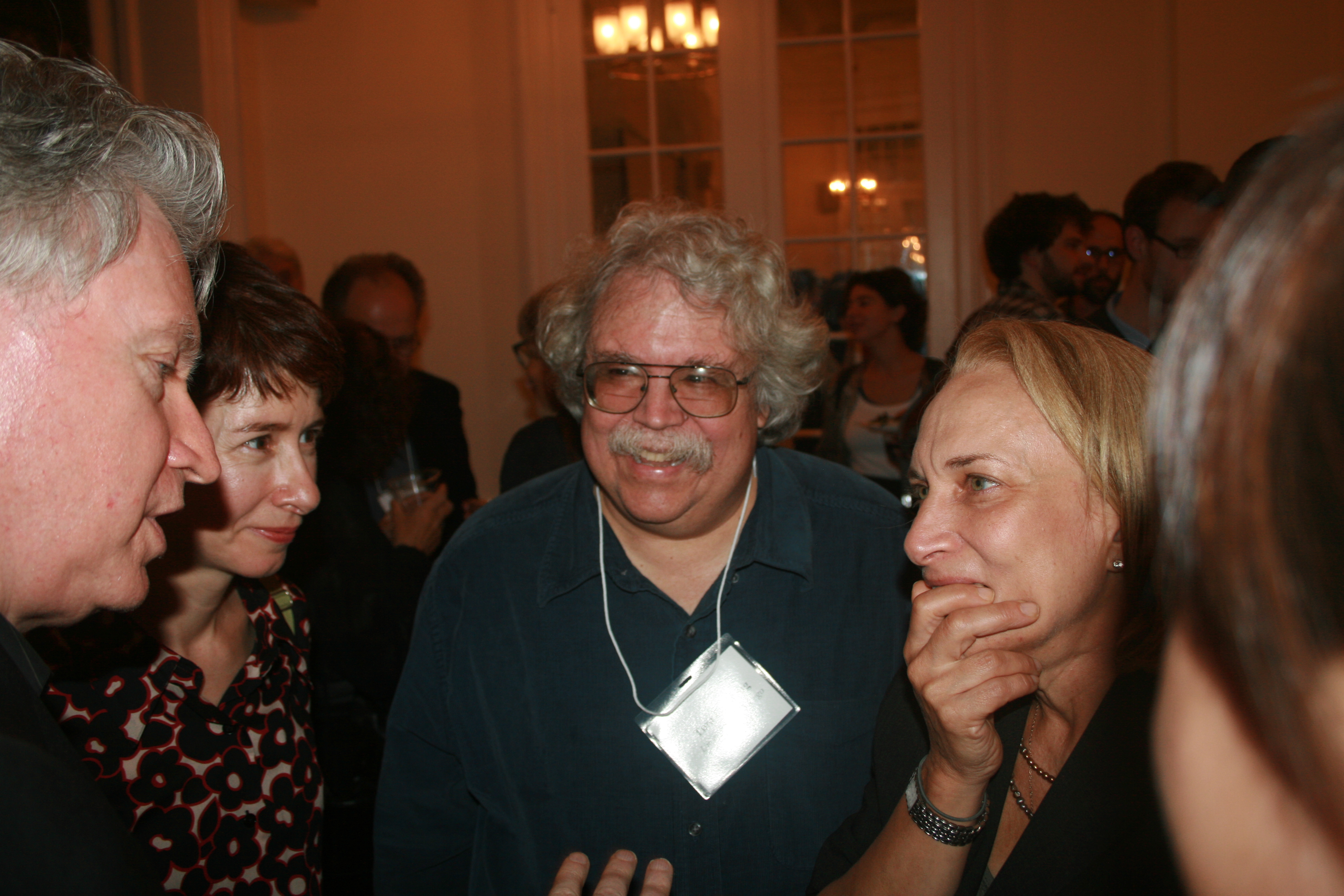
The conference brought together a range of colleagues and friends from all over the country as well as from abroad.  So here are a few images.


Victoria de Grazia, Mary Ann Doane & Laura Mulvey

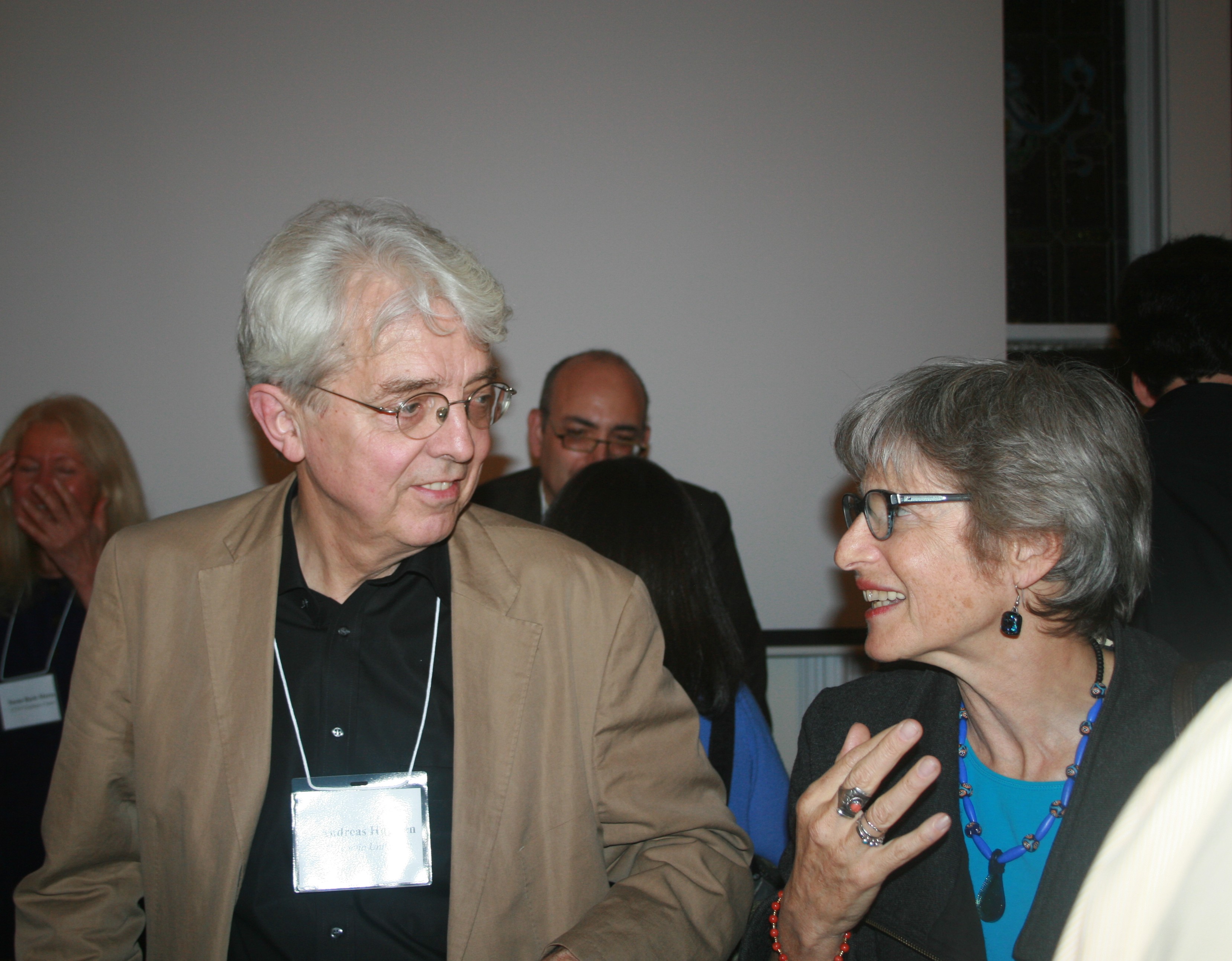
Organizer Andreas Huyssen

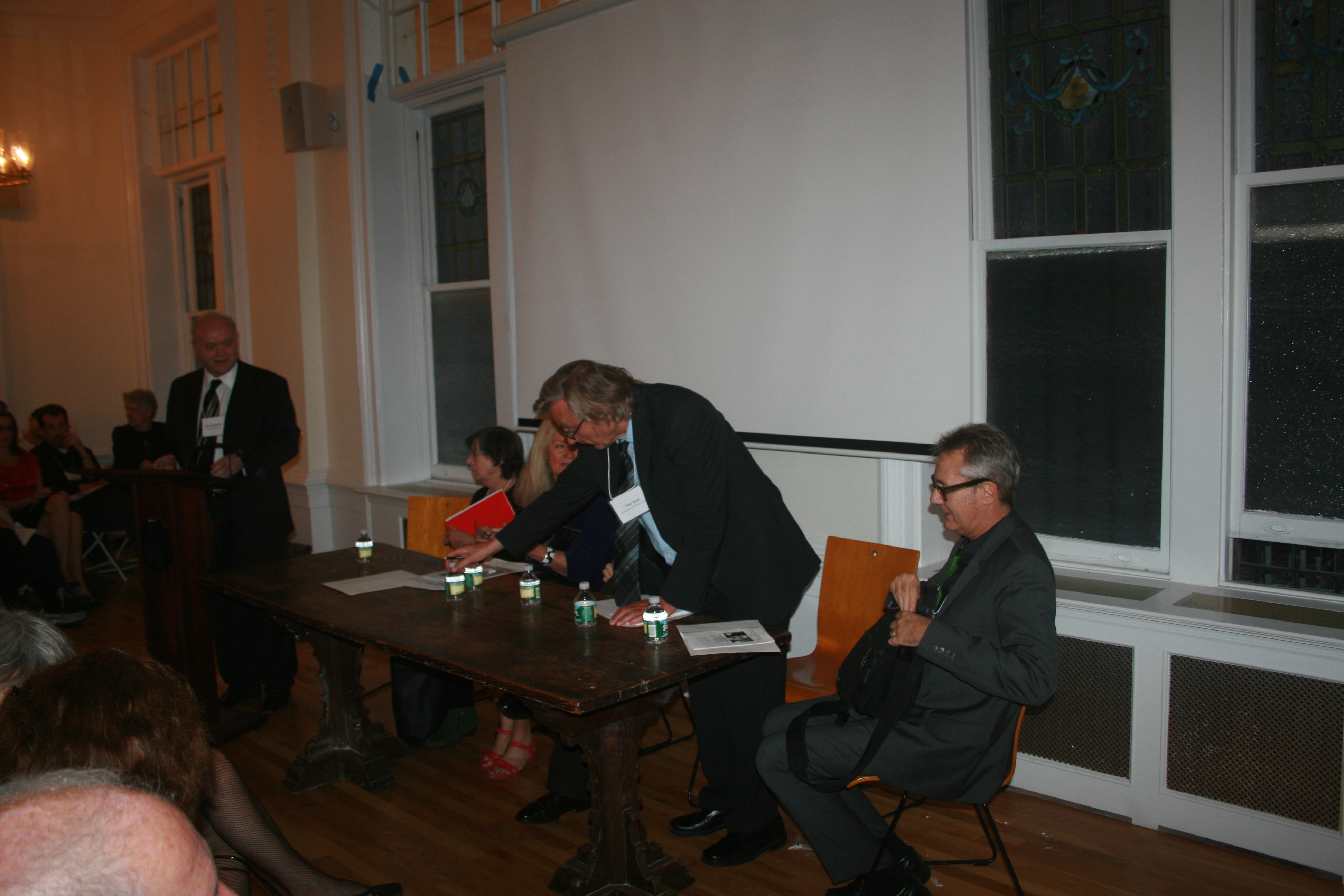
Tony Kaes and Martin Jay


Tom Gunning and Iris Cahn


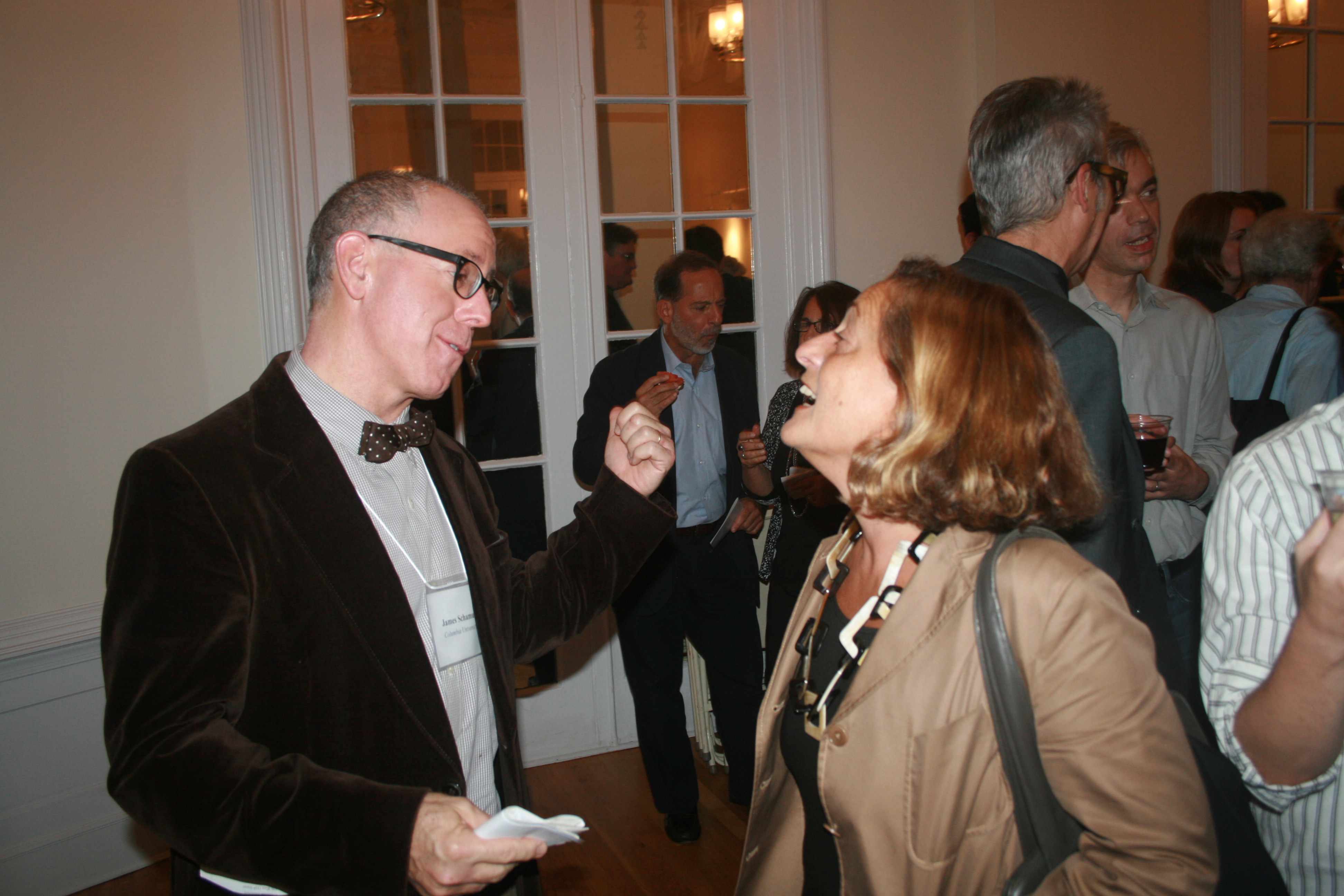
James Schamus & Giuliana Bruno

Pamela Wojcik


Soyoung Yoon & Iris Cahn


Glimpsed out of the corner of my eye


***

I moved to New York in 1972 when being a reader of the Village Voice was crucial to one’s identity as a New York and a free thinker.  Jonas Mekas had his weekly film column and, by the time I had settled in, Alexander Cockburn had his “Press Clips”: radical art, radical politics.  (New York City was a much grittier place in those days–in danger of going bankrupt.)  Today’s Village Voice bears almost no resemblance to that exciting mag–and Cockburn’s assault on the media’s handling of Nixon and Vietnam were inspirational pieces that we read and discussed while working on Hearts and Minds.  Alex C was a larger than life figure, and his long run at the Voice largely coincided with my 20s. A lot of people slipped back into a more conservative politics in the late 1970s and 1980s, but Cockburn was part of what prevented that from happening to me.  In contrast, I wasn’t much of a reader of The Nation, so I did not follow him very regularly there.

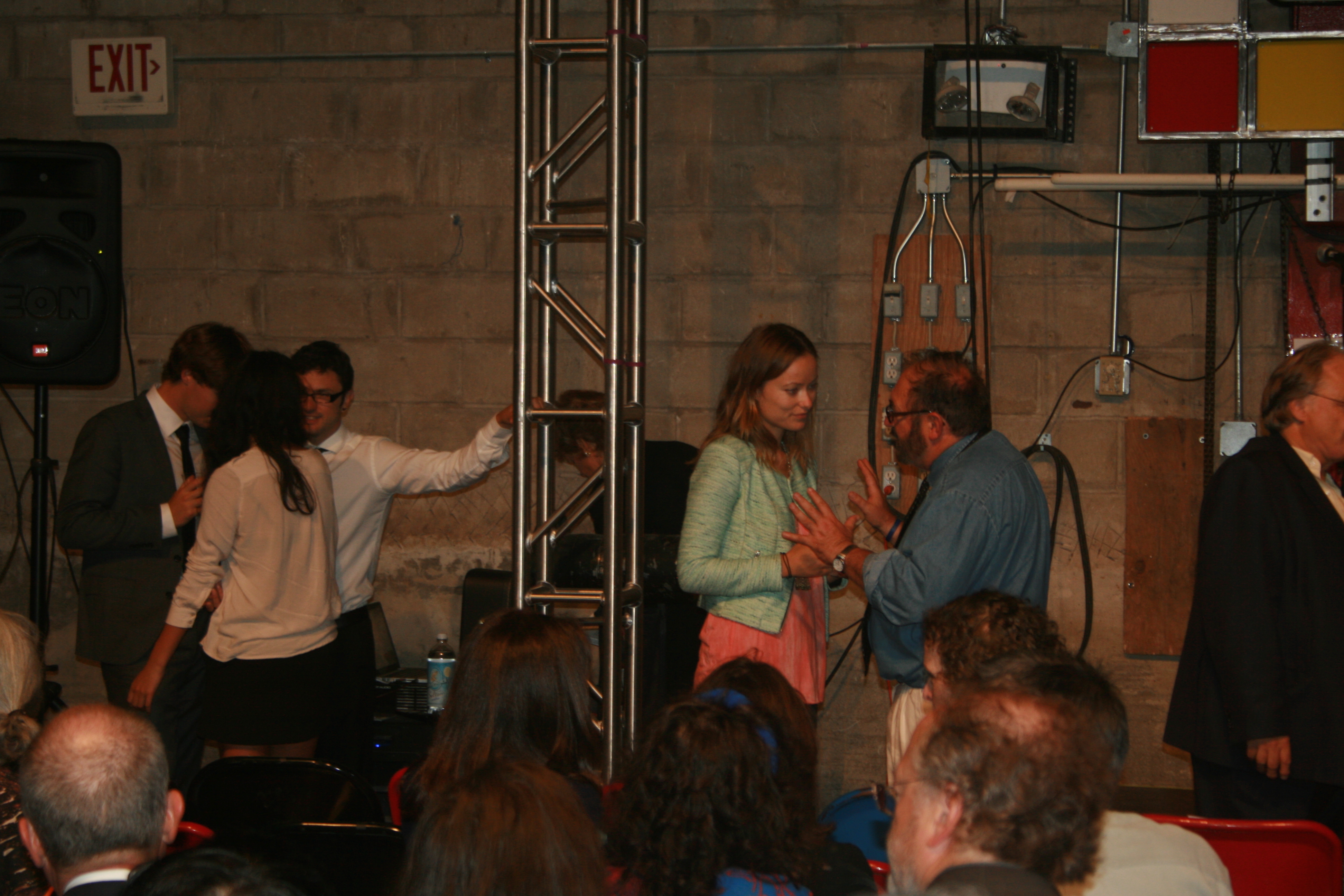
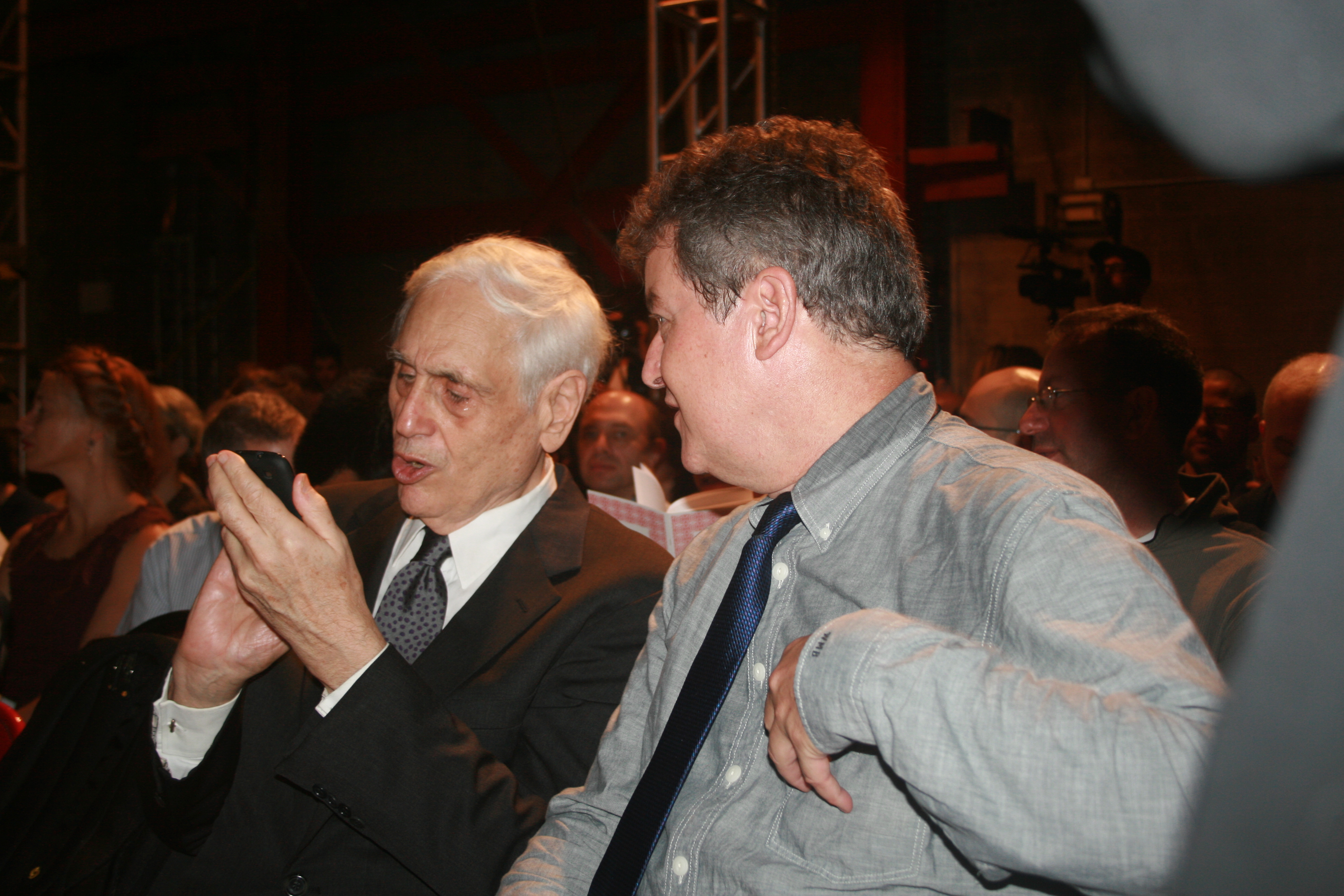
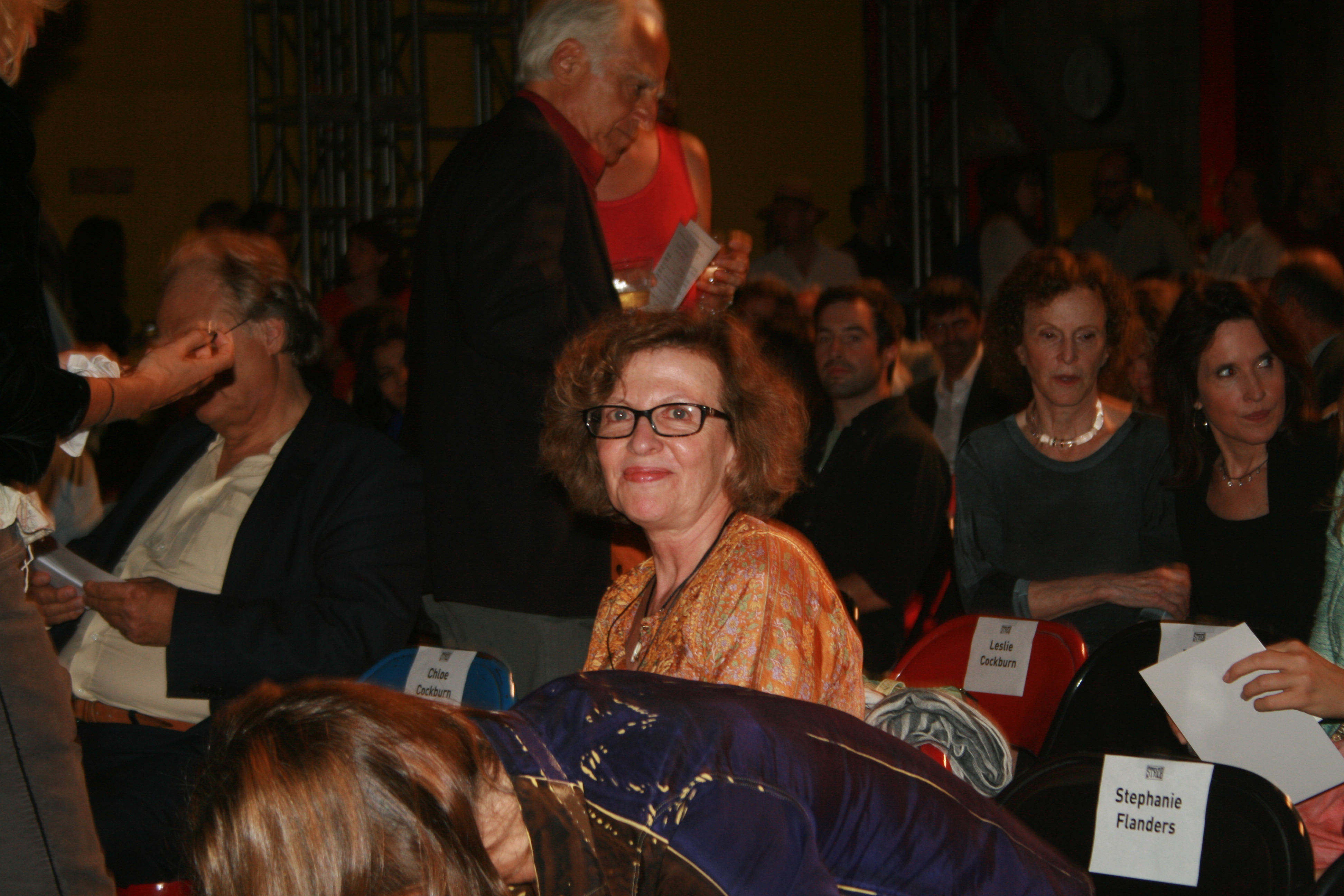
I came to Alex’s memorial to better understand the trajectory of his life and out of respect.  I’ve known Leslie Cockburn from college where we traveled in some of the same circles, and Alex’s brother Andrew through Leslie and through film.  We share friends, two of whom were there: my college roommate Warren Bierwirth and Lizzie Lennard, who tinted the photographs for Before the Nickelodeon and several covers of my books. So again I snapped a few photos to mark the event.

Prelude

Warren Bierwirth listens.


Lizzie Lennard


Continue Reading

Posts navigation

← Older Entries
Newer Entries →