Charles Musser

cultural historian/filmmaker/professor

  • About
    • Summary and Links
    • Filmmaking Bio
    • Current Research and Writing
    • Vita
  • Films
    • An American Potter
    • Before the Nickelodeon
    • Errol Morris: A Lightning Sketch
  • Books
  • Recent Essays
  • News
  • Short Pieces
    • Industry’s Disinherited (Union FIlms, 1949)
    • The Investigators (Union Films, 1948)
    • A People’s Convention (Union FIlms, 1948)
    • 1. A Feminist Moment in the Arts: 1910-1913
    • November 28, 2011 Panel Discussion: “Public Humanities, Documentary FIlmmaking and the Academe”
    • Panel Presentation at Yale on February 24, 2010: My Media-Related Research
  • On the Road: Future/Present/Past
  • Contact
  • On the Creative Side: A History of Film and Media Production Courses at Yale
  • Writing, Filmmaking, Scholarship: Working with Errol Morris
  • Posts to Come

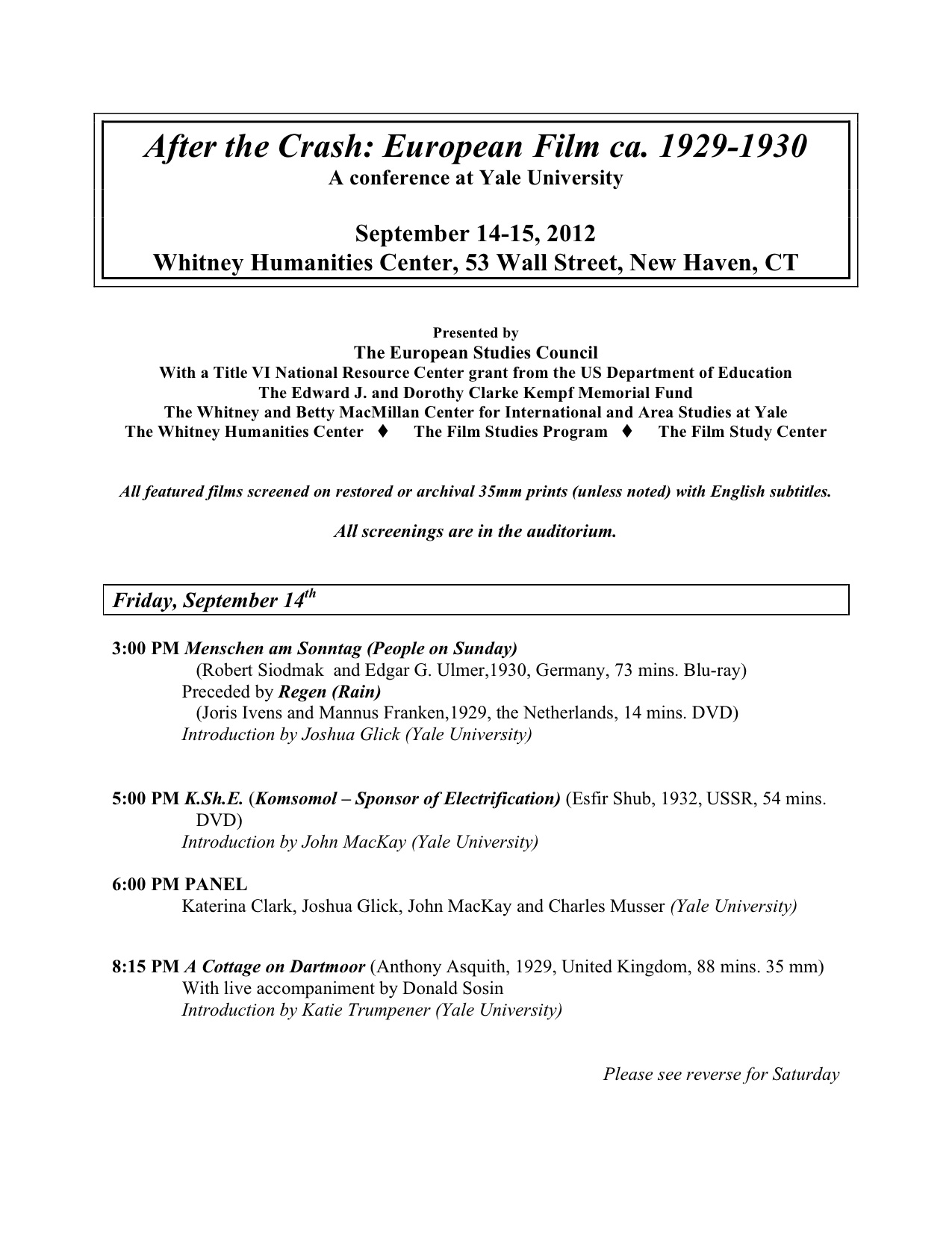
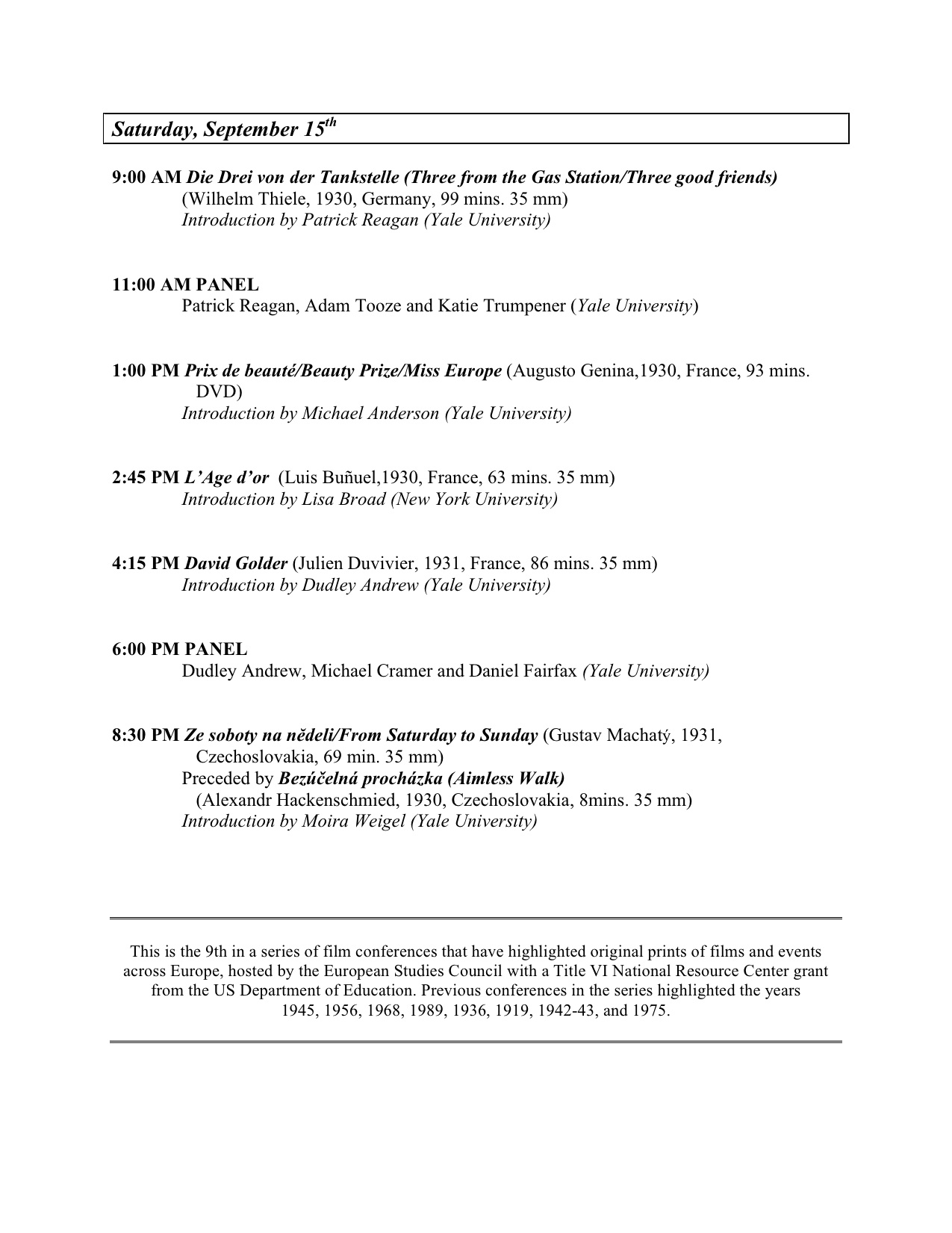
After the Crash: European Film ca. 1929-1930

Posted by chamus on September 16, 2012
Posted in: Uncategorized. Tagged: Aimless Walk, Alexander Hammid, Alexandr Hackenschmie, Bronx Morning, Charles Musser, Charles Sheeler, Edgar G. Ulmer, Jay Leyda, Joris Ivens, Manhatta, People on Sunday, Rain. Leave a Comment


In this conference various members of the Yale Film Studies faculty, their friends and graduate students get together to look at a group of films made in different European countries at roughly the same time.  What do they share?  In general, this year was remarkably coherent, although there was one rather odd outlier: Esfir Shub’s K.Sh.E. (Komsomol – Sponsor of Electrification) (1932).  The discussion was—as usual—provocative and helpful.

I often provide a version of my panel remarks in the “Short Pieces” section of my website.  This didn’t quite work this time around since our panel tried to discuss Ivens’s Rain (1929), Robert Siodmak and Edgar G. Ulmer’s People on Sunday (1930) and Esfir Shub’s K.Sh.E. (Komsomol – Sponsor of Electrification) (1932) in relationship to each other.  The results were awkward on my end.  Instead, I offer a few post-conference thoughts, indebted certainly to the weekend’s discussion:

AFTER THE CRASH
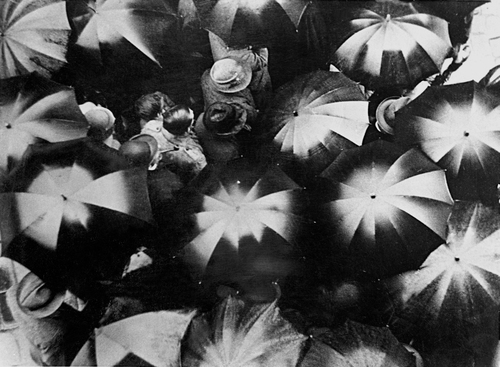
Joris Ivens’s Rain (1929)
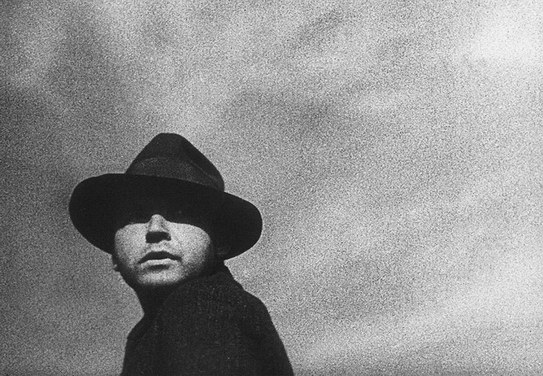


Hammid’s Aimless Walk (1930)


Regen (Rain) (Joris Ivens and Mannus Franken, 1929, the Netherlands, 14 mins.)

Bezúčelná procházka (Aimless Walk) (Alexandr Hackenschmied, 1930, Czechoslovakia, 8mins)

The screenings were bookended by two films that have much in common: Joris Ivens’s Rain (1929) and Alexandr Hackenschmied (Hammid)’s Aimless Walk (1930).  They are part of a rich web of city symphony films and can be profitably connected with Jay Leyda’s A Bronx Morning (1930/1) to constitute a triology.  (Since Leyda was an American, we didn’t show his film but there is a close connection.) All inevitably reacted to Walter Ruttman’s Berlin: Symphony of a Great City (1927).  Ivens apparently started work on Rain in 1927 and did not complete it until late 1929—perhaps under the pressure of Vertov’s Man with a Movie Camera (1929).  In tts opening shots of roof-tops and a departing ocean liner, Rain seemed to gesture quietly towards another avant-garde city film––Charles Sheeler and Paul Strand’s Manhatta (1921). As a short, Manhatta provides the model for depicting a more geographically limited area of the city.[1] Its representations of New York hold in tension the relationship between the metropolis and nature, between the large-scale city and individual people.  These binaries—like the tension between movement and stasis in the film––are purposefully unresolved.

I have always seen Ruttman’s portrait of Berlin as a remarkable articulation of the urban life as analyzed by Georg Simmel in his famous essay “Metropolis and Mental Life.” Its density and scale generates an alienation that makes the city highly impersonal and indifferent (the woman who suicides) but also allows for diversity and idiosyncrosy among its inhabitants.  Rain offers a counterpoint.  The city of Amsterdam and nature are much more in tune with each other.  Ivens often films from low angles—the cobble stones, the raindrops in contrast to high angle shots of the streets looking down.  If Berlin––like other city symphony films—structures its shots around the arc of a single day—from morning to night, Rain is structured around the principle of a single rain storm—a relatively brief, composite shower.  Ivens’ decision to shoot in the rain is already an inversion of previously city symphony films for its predecessors are filmed (at least primarily) on days when the light is good—and there is no rain.  This allows for a sharper image and greater depth of field.  Rain thus suggests a tripartite form of represetations.  There is, of course, the city itself—which Ivens sees every day and now shows us in filmic form.  Through camera lens and editing, it is already once or twice removed—a representation of the city.  However, by filming in the rain and with his frequent shots of pools of water and the canals, there is this third view of the city—its watery reflection.  If cinema is a window onto the world, we also see it through Ivens’ bedroom window as rain hits the panes of glass.  The view of the roof tiles across the courtyard simmer like a watery mirage.  The city is in some sense a cinematic city avant la lettre –not because it is a concentrated nexus of 20th century modernity of which cinema has a synechdocal relationship, but because it is a city of reflection and refraction—and (implictly) of Chritian Huygens’ magic lantern.

Jay Leyda’s A Bronx Morning (1930) is worth mentioning here.  Leyda, born in 1910 and 12 years younger than Ivens, met and worked with Ivens in the Soviet Union.  A Bronx Morning won the prize that got   Leyda there.  Leyda’s film seems in dialogue with both Ruttman’s Berlin and Manhatta.  Berlin opens as the train takes the viewer into the center of Berlin.  A Bronx Morning opens as the subway, a more pelbian and quotidian form of transportation, takes use away from city center to the Bronx—one of New York’s outer boroughs.  It focuses on a geographically limited area, like Manhatta, but one that is again ordinary.  One can only imagine the affinity that these two filmmakers felt when the met and saw each others films.  Both were committed Marxists—though Leyda would never would say as much in print or in public—and both had made short city films that lacked overt political content.  They could come under attack from more militant critics.   Ivens, to be sure, made films with Communist idelology on prominent display but he also made documentaries such as When the Seine Encounters Paris (1956), which is very much in the tradition of Rain.

Leyda, who also would work with Vertov (briefly—he was not a Vertov fan) and Eisenstein (a relationship that lasted until Eisenstein died—and beyond), had an uncanny ability to connect with artists of (often future) prominence.  He was, after all, Walker Evans’ roommate.  He assisted Ivens on Borinage while they were both in the Soviet Union –and also worked on his “autobiography” The Camera and I.

Did Hackenschmied see Rain before making his film Aimless Walk?  An interesting question and one worth pursuing.  But I can’t do that here.  Hackenschmied, born in 1907, was closer to Leyda in age.  His film, apparently filmed in the summer of 1930, perhaps owes some small element of inspiraiton to Rein Que Les Heurs (1926) and People on Sunday (1930).  By this I simply mean that Hackenschmied introduces a male character who is somewhat dishevealed and quietly reflective if not depressed. He could be unemployed as if the city has spit him out.  Thus he looks at the city rather than works in it.  As he moves about the city, he serves as a stand in for the filmmaker himself.  Hammid sometimes shows us what he sees—even from his point of view.  Aimless Walk is well underway before he is introduced.  The film opens in a way that is within the well-established terms of the city film and encounters its protagonist, as if by chance, on the tramway.  If he is Hackenschmied’s avatar within this film, this character encounters his double inside the diegesis—whom he witnesses in the park as he walks away.   Here then is another tripartite structure (like Rain): the filmmaker—his avatar/protagonist, and the avatar’s own double.  One cannot help but think that Hackenschmied is evoking another film about his chosen city: The Student of Prague (1913; 1926), in which the student is confronted with his proliferating double.

K.Sh.E. (Komsomol – Sponsor of Electrification) (Esfir Shub, USSR, 1932) 54 mins.


The outlier in this weekend of screenings was Shub’s K.Sh.E which was released in late 1932: its penultimate scene –ceremonies surround the opening of the hydro-electric damn—was shot in October 1932.  It counterpart was not Joris Ivens’ Rain (1929) but Song of Heroes (Komsomol) (1932/3).  Scenes in Ivens film conform much more to a combination of narrative progression and idelogocial rhetoric. Shub’s film is more open in that the scenes are more loosely organized.  There is a scene, for instance, in which the Americans working on the project are relaxing by the waterside on a Sunday (presumably)—in bathing suits, playing a record.  How are we to analyze the film?  Six American engineers working on the project would receive the Order of the Red Banner of Labor.  One of them, Hugh Cooper, gave a speech that is delivered during the opening ceremonies.  Is it satiric or just documenting the presence of these international allies who were ready to work for the Soviets before the US recognized the Soviet government.  Likewise the concluding scene shows a scientist demonstrating problems with high voltage electricity.  Shub’s film is a collection of interesting moments—documents of this effort.  It is filled with Stalinistic slogans and represents them in the manner of a collage.  The Ivens fim seem as a mode of representation seems closer to what Stalinist culture would want, though even here it has a roughness that may not have been entirely pleasing.  Now, as the Shub and Ivens Komsomol films become more available, comparing their stylistics and their reception should be fruitful.  Certainly Shub’s effort strikes one as more experimental.


Menschen am Sonntag (People on Sunday) (Robert Siodmak and Edgar G. Ulmer,1930)

Prix de beauté/Beauty Prize/Miss Europe (Augusto Genina,1930)

Ze soboty na nĕdeli/From Saturday to Sunday (Gustav Machatý, 1931)


There was another provocative trilogy of films that was part of this weekend’s program—and three holes in my knowledge.   The starting point was Siodmak and Ulmer’s People on Sunday, which premiered in Februray 1930 and was a hit.  In a clear reference to Vertov’s Man with a Movie Camera. it claims to be a film “without actors.” They are supposed to be nonactors though one of the women is a movie extra—and another a model.  Their performances are highly credible and the women (as well as the men for that matter) look like young, attractive actresses.  (a few appeared in  another movie or two associated with the behind the screen talent but IMDb suggests that none had sustained careers).  There are sections of the film that are nonfiction in a way consistent with Berlin: Symphony of a Great City or Vertov.  In a way, the decision to probe more deeply into the pysche of youthful Berliners is operative reason to create this narrative of any old Sunday when little—or quite a lot—happens.  Between the actuality sequences of the city and the neo-realist-like scenes with the five unknown actors, there is a third group of scenes and characters –people are are treated like the unknown actors for a scene or so but are not part of the film’s narrative.  These include the schoolboys playing a spanking game and the Vertov-evoking scene of the photographer taking photos of people (including Valeska Gert, who did have a career as a performer in cabaret.  These intermediate figures are important for smoothing the disjunction between actuality and fiction.

The disturbing element of this film—and a central issue in the other two—is the misogyny of these lower-middle class men, which is directed at the two youngish women.  Christi for all her claims to be an extra is taken aback by Wolf’s phyiscality as he forces a kiss from her as they swim.  He then turns to her best friend, Brigitte Borchert, who is more accommodating.  She lets him chase her into the woods, where making out turns into full-throtle sex.  The camera pans off the couple to a debris-littered field and Wolf leaves the encounter with a badly torn shirt.  Brigitte seems ready to make the best of it and hopes it might be something more than a one-off encounter.  She asks for a date the following Sunday.  Wolf seems to agree but then quietly acknowledge plans to go to a football game with his best friend, instead.  These men are on the make and not particuarly attractive.  Erwin, the taxi driver, leaves his girlfriend at home: they had had a fight over how she wore her hat.  He didn’t like what she did with the brim and so they stayed home.  They seem stuck in a destructive relationship neither can quite escape.

Sean Axmaker, writing for Turner Classic movies, remarks that “Under the bubbly surface of innocent flirtations and breezy fun is the story of budding romance and a portrait of life at the end of Weimar era. There is no political subtext to the film…”  But is this true?  If so, then the film would seem to revel in the men’s treatment of these women.  Or perhaps the film is aware of something darker under the “breezy fun.”  If so, these filmmakers (including Billy Wilder) already are concerned with issues they would explore in film noir.

Genina’s Prix de Beauté (1930) would seem to move further and perhaps more critically in this direction.  André adores his girfriend Lucienne (Louise Brooks) but is jealous and controlling.  This begins to spin out of control when Lucienne enters a beauty contest and wins.  Although she abandoning media attention and an interesting life to make Andre happy, she becomes isolated and miserable cooped up in her apartment all day.  When she tries to reclaim her glory by going into the movie business—he kills her.   Andre is typesetter for a newspaper.  So once again we have a working-class/lower middle-class guy who is abusive towards women—particularly the woman he wants to serve as a simple complement to his needy ego.  (Actually, he is quite abusive to his best friend Antonin as well.)  The double meaning of the title is lost in the two English-language titles.  Is her death “the price of beauty”?  Or is it the price she paid for not seeing more clearly the demented jealousy and insistence of male control that drove him to this act.  He cannot cope with a woman who succeeds and experience adventure in ways that he cannot—even though she is ready to bring him along for the ride.

It is hard not to see Gustav Machatý’s From Saturday to Sunday as a response to these two earlier films.  The gesture towards People on Sunday is obvious.  Prix de Beauté opened August 1, 1930.  From Saturday to Sunday opened May 1, 1931.  The two young women are not exactly svelte, elegant movie stars.  Although one had an acting career, the main female lead did not.  Nany clearly has a number of male friends for whom she trades sex for an evening’s fun and some extra cash.  She virtually forces her friend Mana to accompany her on a date.  When the men escort the girls to the hotel, Mana flees—into a rainstorm and into the arms of Karel—a typesetter.  Karel ultimately charms and seduces.  They end up in bed and It seems that they are destined for each other.  A misunderstanding—a note from Nany leads Karel to believe Mana is a prostitute––leads to rejection and Mana’s decision to kill herself. Reflects on the situation, Karel is able to overcome his wounded pride and masculinist jealousy.  He returns to her apartment, rescuing her from her attempted suicide using gas.  Its movement between classes and various types of entertainment venues, as well as its carefully wrought portraits of these people, make it an uplifting film—suggesting elements of hope which somehow I allign with films such as Rain and A Bronx Morning.

[1] Of course Ivens’s The Bridge (1928) had already dealt with a circumscribed space of the city.


And the School Year Begins…

Posted by chamus on September 16, 2012
Posted in: Uncategorized. Tagged: Dudley Andrew, Francesco Casetti, Katie Trumpener, Katy Clark, Marie-Threse Maeder, Michael Kerbel, Michael Roemer, Yale Film Studies Program. Leave a Comment

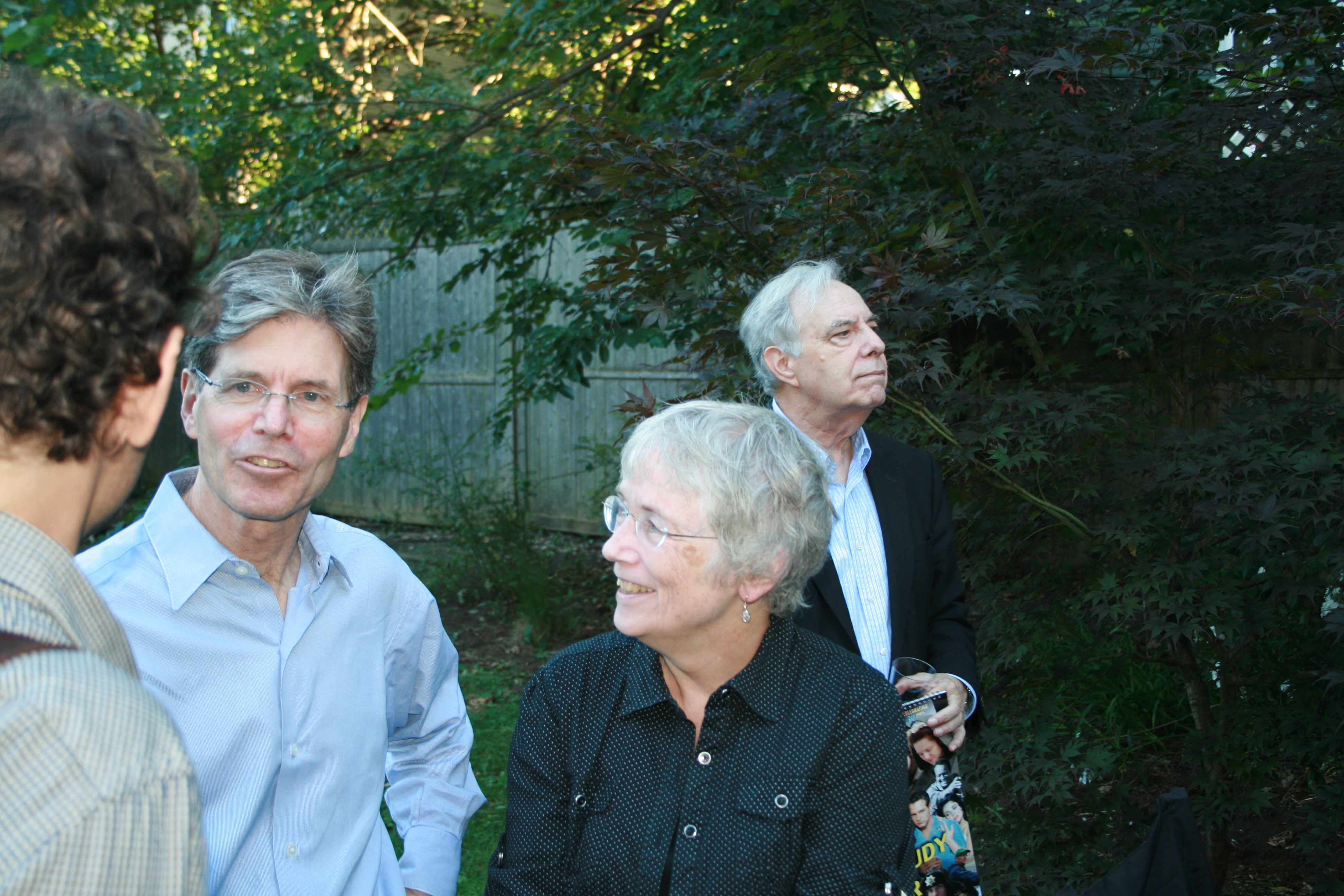
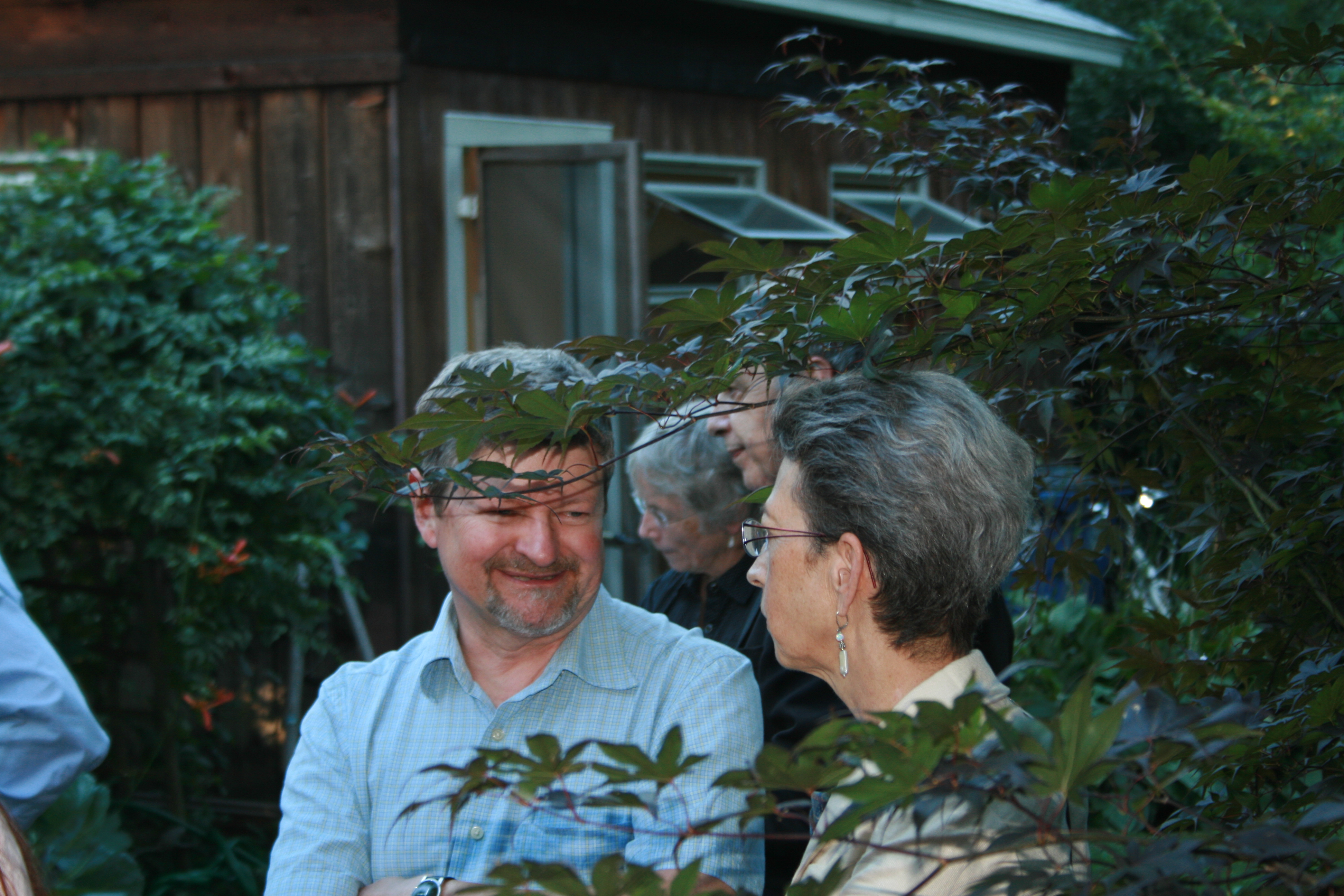
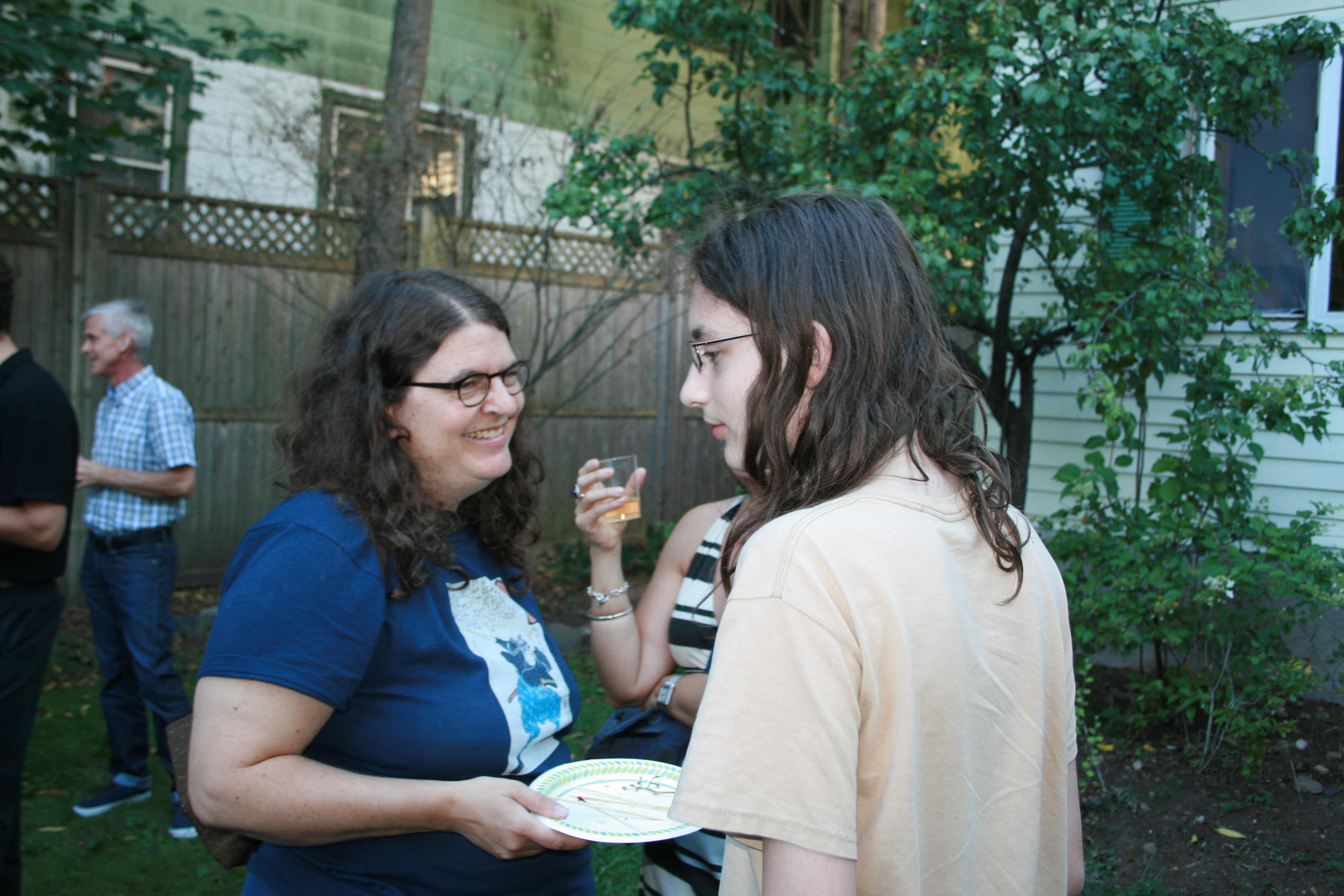
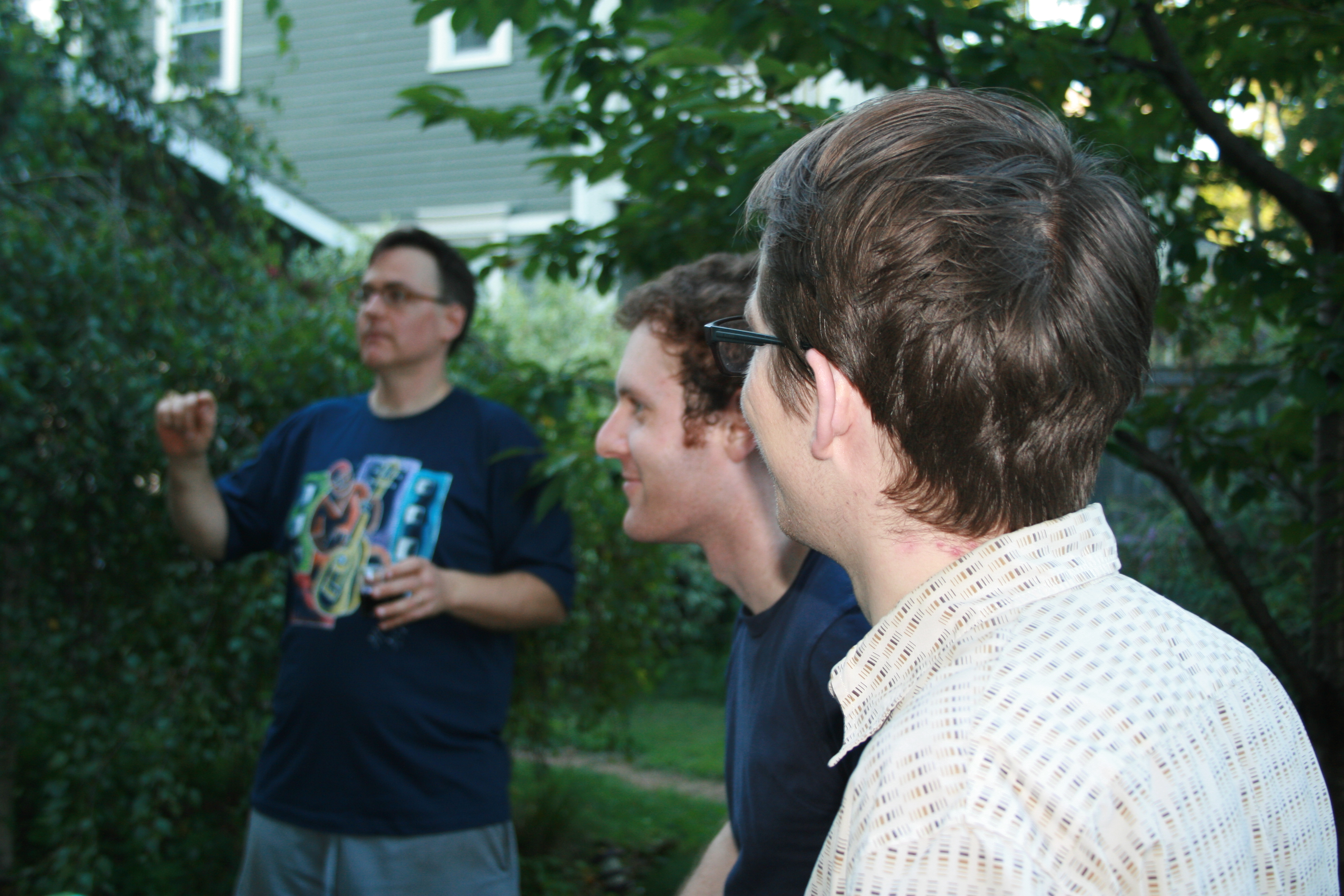
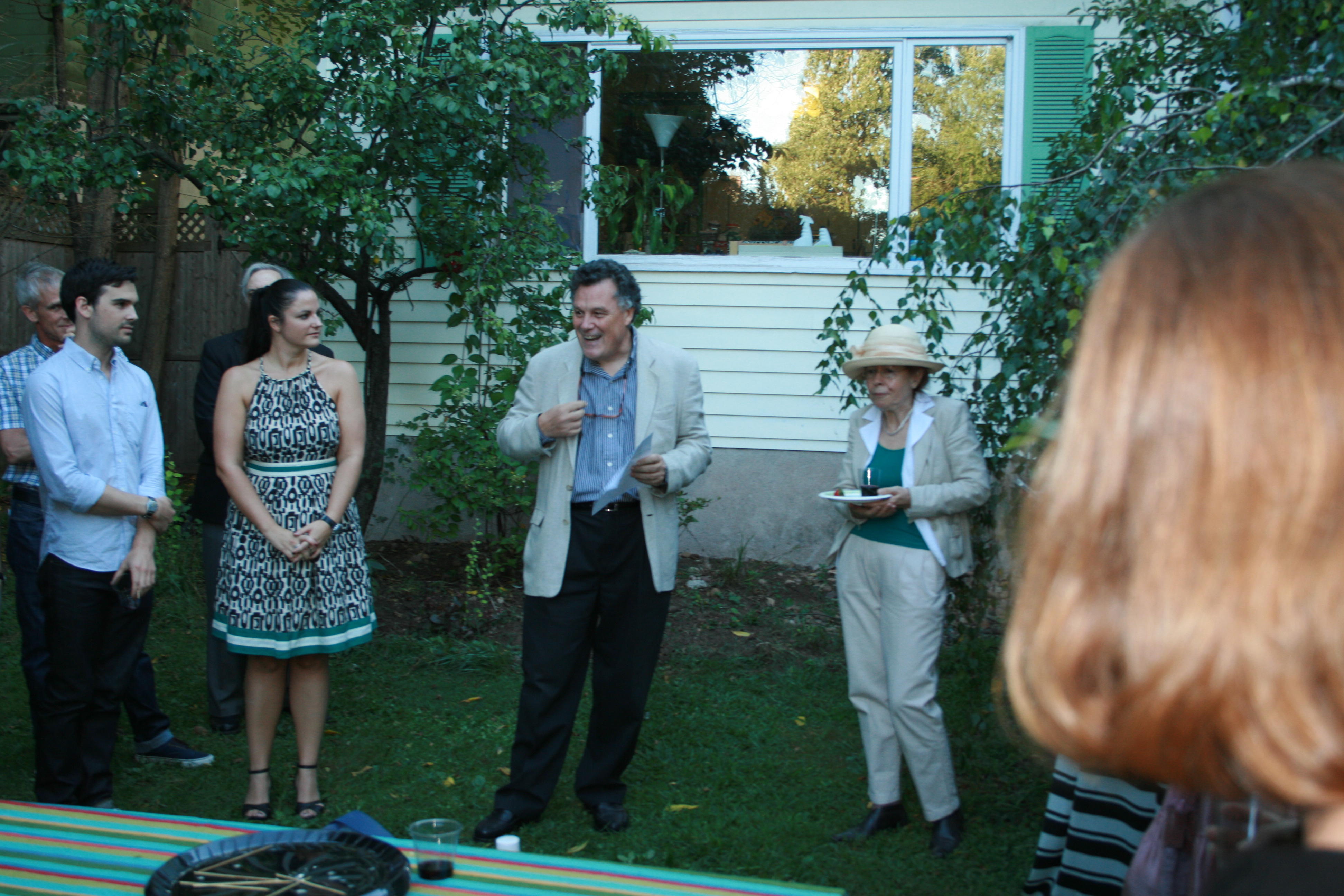
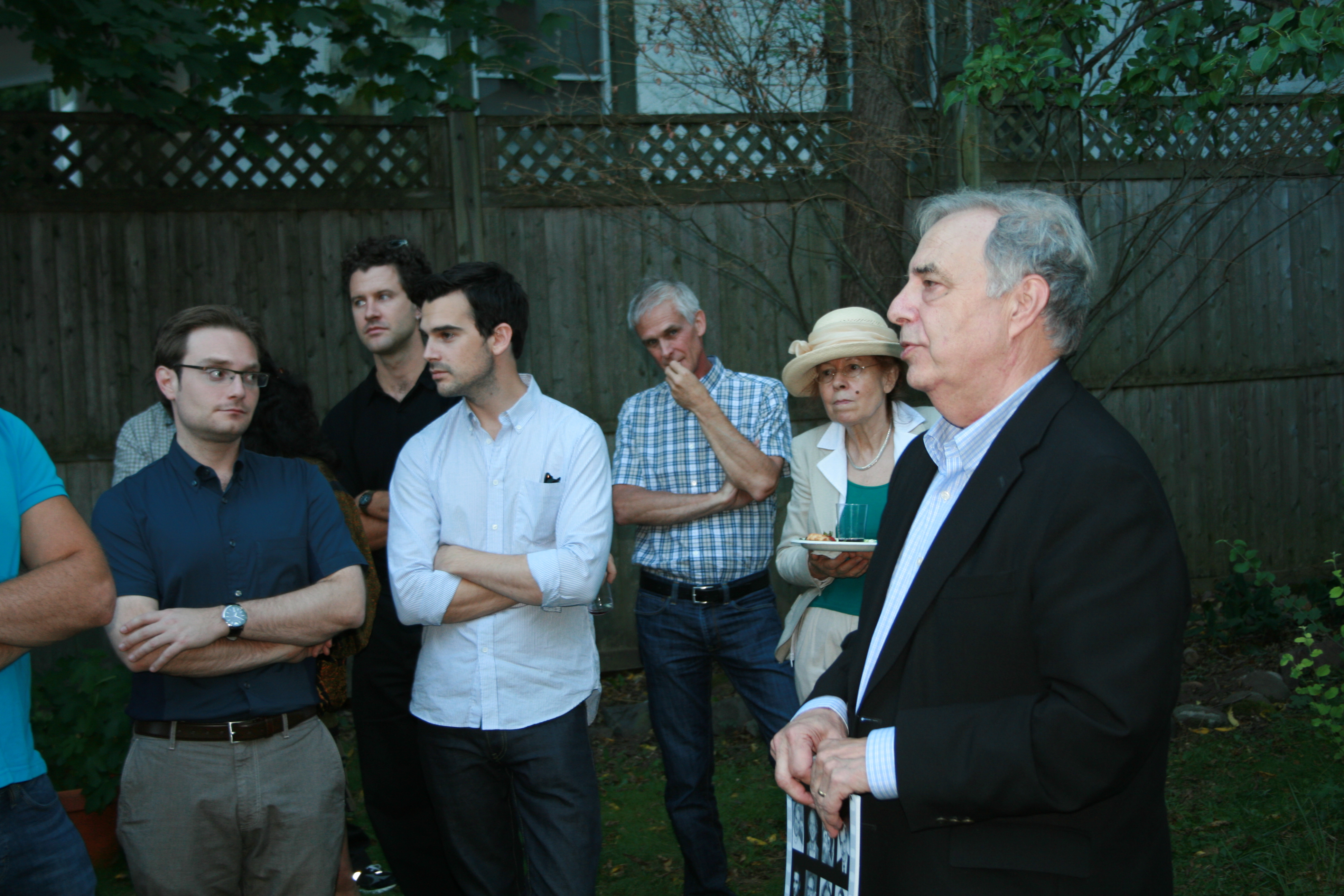
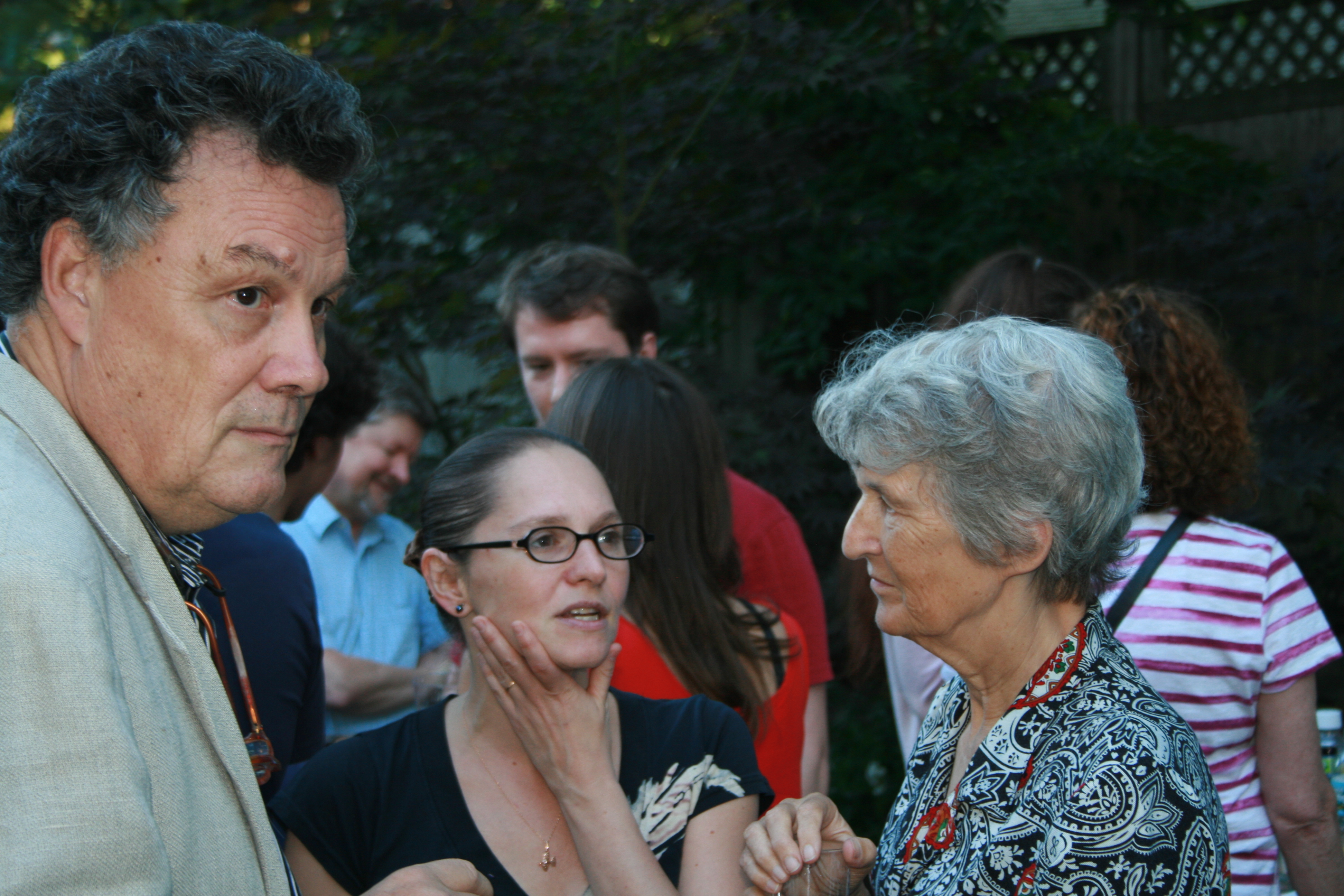
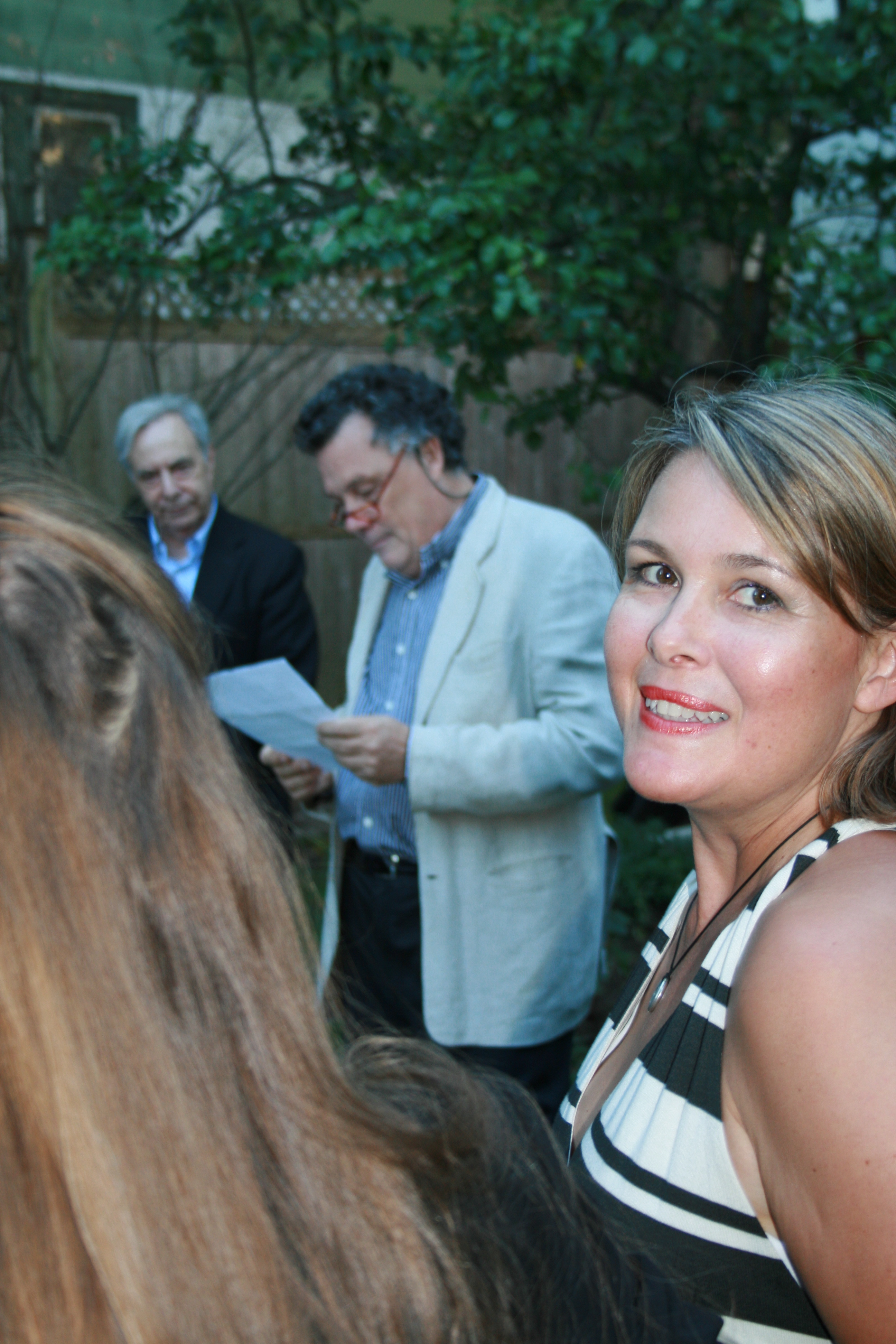
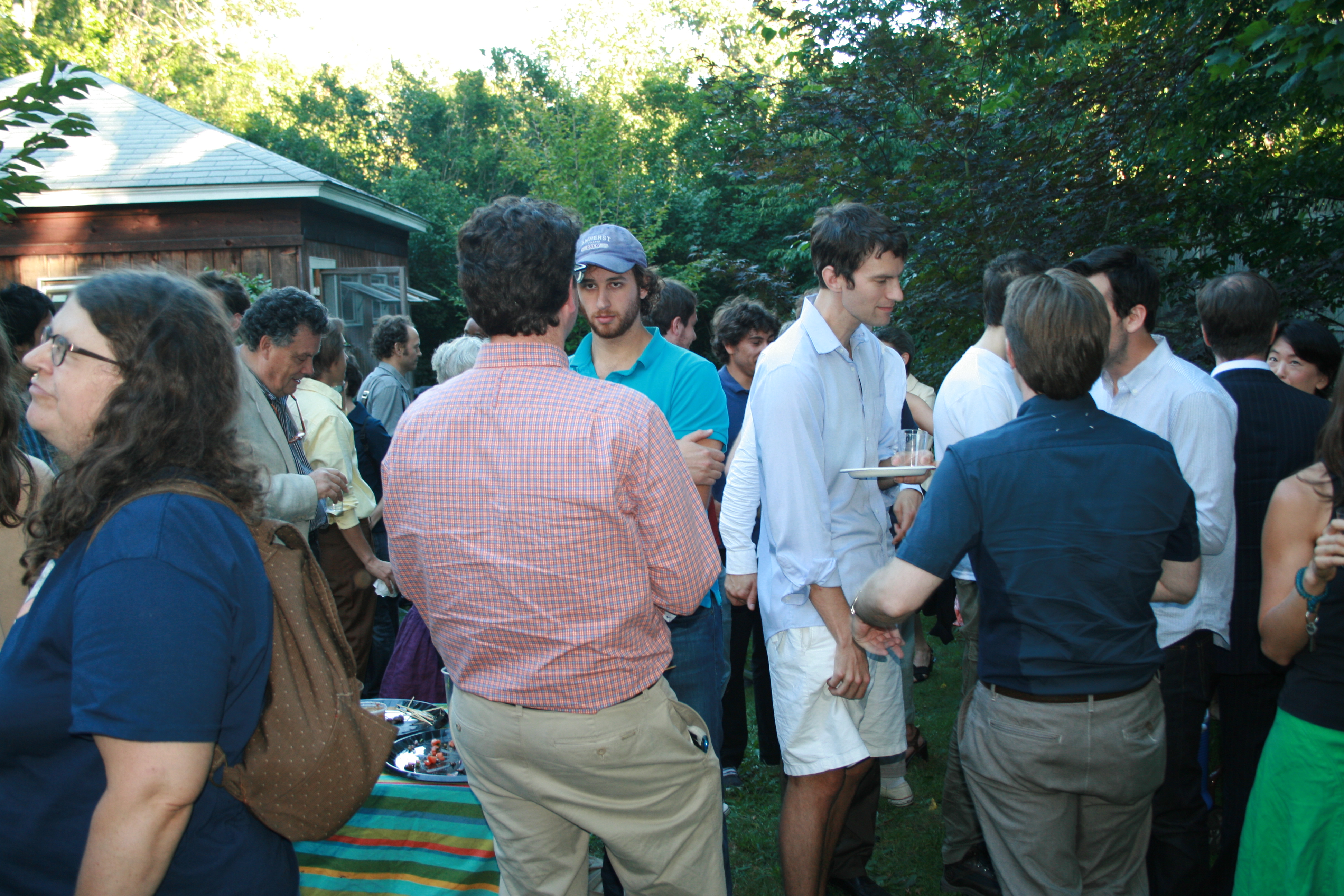
The Yale Film Studies Program has its “School Year Begins” party at the end of the first day of classes–this year on Wednesday, August 29th. It was at the home of FSP chair John MacKay, and  I brought my still camera.  There were lots of people and I didn’t get pictures of everyone.  My apologies, but here’s a taste.

Francesco Casetti, Vika Paranyuk and Katy Clark

Visiting Post-Doc Marie-Therese Maeder


Michael Roemer


Dudley and Stevie Andrew

George Chauncey and Mary Miller

Katie Trumpener and Alexander Maxwell

Chair John MacKay starts off the speeches

DGS Casetti continues

Film Study Center Director Michael Kerbel promotes the new FSC calendar


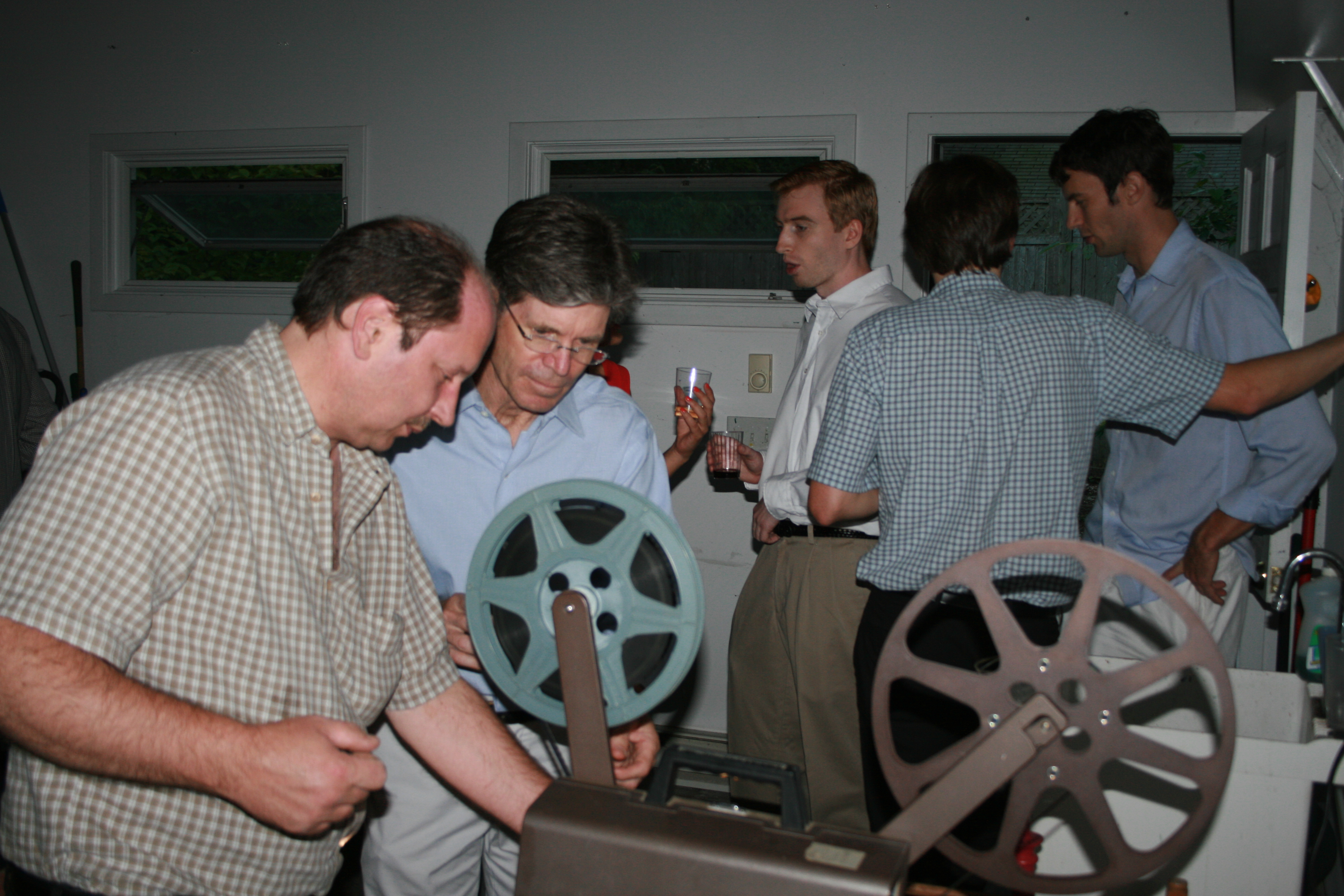
The evening ends with a film screening: Tony Sudol and Dudley Andrew try to get the projector to function.


My Top 10 films for Sight and Sound

Posted by chamus on August 5, 2012
Posted in: Uncategorized. Tagged: Agnes Varda, Sandow, Sight and Sound, top 10, Vertov. Leave a Comment

The results have been published and so I am free to post my response.

In the last few years, I have had to confront the fact that I am an unintentional contrarian.  I won’t go into all the details but I find it hard to ignore the evidence.  Faced with this identity, which I did not choose,  I think it has something to do with principle, honesty and a need to live with myself with some modicum of self-respect–but there must be some perversity mixed in there as well.

Take the ‘top 10 films’ poll for Sight and Sound.  The film magazine’s editors have asked for my ‘top 10’ film list in the past, but I simply ignored the request.  This time I got another invitation and a second nudge––on a day when I must have been thinking fondly about the BFI or just about the idea of expressing my opinions on a given subject (for the record, I am a longstanding fan of the BFI and admire its remarkable ability to self-destruct and somehow keep going).  But really!  Critics, programmers, academics and distributors are supposed to take polls like this seriously?

The big news, according to my good friend Ian Christie,  is that Hitchcock has been on the rise and Citizen Kane fell to the number two position!   It reminds me of when people ask me to list my favorite film.  I respond by saying that I don’t answer those kinds of questions.  Moreover, it is fair to say that the films that I most care about –the films I have written about at some length, with a deep intellectual engagement that has produced a corresponding appreciation of their aesthetic and cultural achievements––do not appear on the Sight and Sound list.  A few examples include Ernst Lubitsch’s Lady Windermere’s Fan (1925), Oscar Micheaux’s Body and Soul (1925), Germaine Dulac’s La Souriante Madame Beudet (1923)–-or to go into the sound period Billy Wilder’s Double Indemnity (1944), Errol Morris’ The Thin Blue Line (1988) and Spike Lee’ Do The Right Thing (1989)–not to mention The John C. Rice-May Irwin Kiss (1896), Edwin S. Porter’s Life of An American Fireman (1903) and Union Films’ The Investigators (1948). Or least we forget the classic avant-garde: Brakhage’s Mothlight (1963) and Maya Deren’s Meshes of the Afternoon (1943).  But where does this get us?

One film on my top 10 list did make it onto the Sight and Sound counterpart!  This just shows that I am not an intentional contrarian.  If I was, I’d have listed Vertov’s Three Songs of Lenin (1933) or perhaps Enthusiasm (1931) instead of Man with a Movie Camera (1929), which turned up as number eight.

So: in a small fit of inspiration, I listed my top 10 nonfiction/documentary films with a brief commentary (as requested):

Top 10 Films

Sandow (1894)
Battle of the Somme
(1916)
Nanook of the North
(1922)
Man with a Movie Camera
(1929)
Listen to Britain
(1942)
Chronicle of a Summer
(1961)
Don’t Look Back
(1967)
Hearts and Minds
(1974)
The Thin Blue Line
(1988)
The Gleaners and I  (2001)

Rationale:

–Sandow is on my list as a reminder that we should not ignore short films (including short one-shot films): besides being a wonderful film, it is also the first motion picture made for explicitly commercial purposes.  And it is a document—though not a documentary—of the opening of Sandow’s act as it was performed in 1893-94.

–Battle of the Somme is a reminder that there were documentaries before Nanook—but again a great, powerful film. Indeed there were “documentaries” (documentary equivalents) before there were motion pictures, but that is the topic for a book.

–Nanook is there because one is either for Nanook or against it—and I am for it. It is the collaboration between Nanook and Flaherty which makes this film special.  It is a co-authored film. [Note: this used to be on S&S’s top 10 list but no longer]

– Man with a Movie Camera is on the list, in part, because I wrote my first paper on the film, and it has inspired me.  I also showed it to John MacKay when he was a teaching assistant in my Introduction to Cinema class, and he is now writing the definitive Vertov biography.  Just as importantly, my daughter took his Russian cinema course and then (without knowing my past) wrote her first paper on Man with a Movie Camera.  Next year she is going to be a teaching assistant for an Introduction to Media Studies course in the Department of Media, Culture and Communications at NYU.

–Listen to Britain because it shows how to make an inspirational film in wartime––one that is not based on hate–– and how to make a city symphony film that embraces the whole country and likewise embraces all kinds of sounds.

–Chronicle of a Summer is endlessly inspiring when it comes to imagining how to make a documentary and interrogate the process at the same time.

Don’t Look Back: of all the examples of cinema verite/observational cinema, this one stands out as a masterpiece.  The term “masterpiece” is a term I generally abhor, but there are always exceptions.  Certainly the documentary is far more sophisticated than generally recognized.  I am a Pennebaker fan–-and will always be indebted to him for a host of reasons.  Here’s one.  I worked in Los Angeles several times.  The first two times I returned to NYC, I dropped by his offices exhausted from the previous project and anxious about my re-entry into New York City. Each time he showed me a film: the first was Jane (1963) and the other was Daybreak Express (1954/58).  These welcomed me back: each time I left feeling reassured and re-inspired–knowing I had chosen wisely in returning to my home base.

–Hearts and Minds is a documentary I worked on for two years and it is how I learned to make films and write books. My apprenticeship to Peter Davis, Richard Pierce,  Lynzee Klingman, Susan Martin and Tom Cohen was inspiring and difficult in all the best ways.  I’d hesitate to put Hearts and Minds on the list, but it continues to be widely shown.  People often praise H&M in passing, before they know I worked on it.  When we locked picture on the film, we were too exhausted to know what we had achieved. I’ve seen it a number of times since then.  I have even taught it several times.  I feel both fortunate and proud to have worked on this documentary.

–The Thin Blue Line inspired me to get back involved with documentary theory and history after a long hiatus while researching and writing on early cinema.  It completely shook up my ideas—and everyone else’s—of what documentary could and should be. And it began an interaction with Errol Morris which has turned into some kind of low key friendship.

–The Gleaners and I––I love this film: it is hard edged but makes me cry: I think it is Agnes Varda’s relationship to her subjects, which is so special.   If I can grow old and keep working the way she does, I’ll feel very fortunate.

 ***

Are the above the 10 best documentaries of all time, by some objective criteria?  Well those of us writing on documentary know that we are supposed to be skeptical about objective criteria.

The Paradise Lost documentaries with Joe Berlinger, Jason Baldwin

Posted by chamus on August 5, 2012
Posted in: Uncategorized. 1 comment

I am planning to write about this.  A lot of deadlines (and a little vacation) are getting in the way.

The School Year Ends–-Finally!

Posted by chamus on May 27, 2012
Posted in: Uncategorized. Tagged: Ferd Klebold, Hannah Zeavin, John Carlos Musser, Threese Serana. Leave a Comment

By the end of the school year, everyone’s exhausted.  The students in my Documentary Film Workshop did great work, but we were in the cutting room (Studio B of the DMCA) until the wee hours of the morning for nights on end. Students in my other course, Documentary and the Environment took to it with gusto as well, and I look forward to teaching it again in future years.

The Film Studies Program went through an external review this academic year, which was stressful but generally a success–pinpointing areas in which we have fallen short and generating vigorous and hopefully fruitful discussion.  We’ll see.

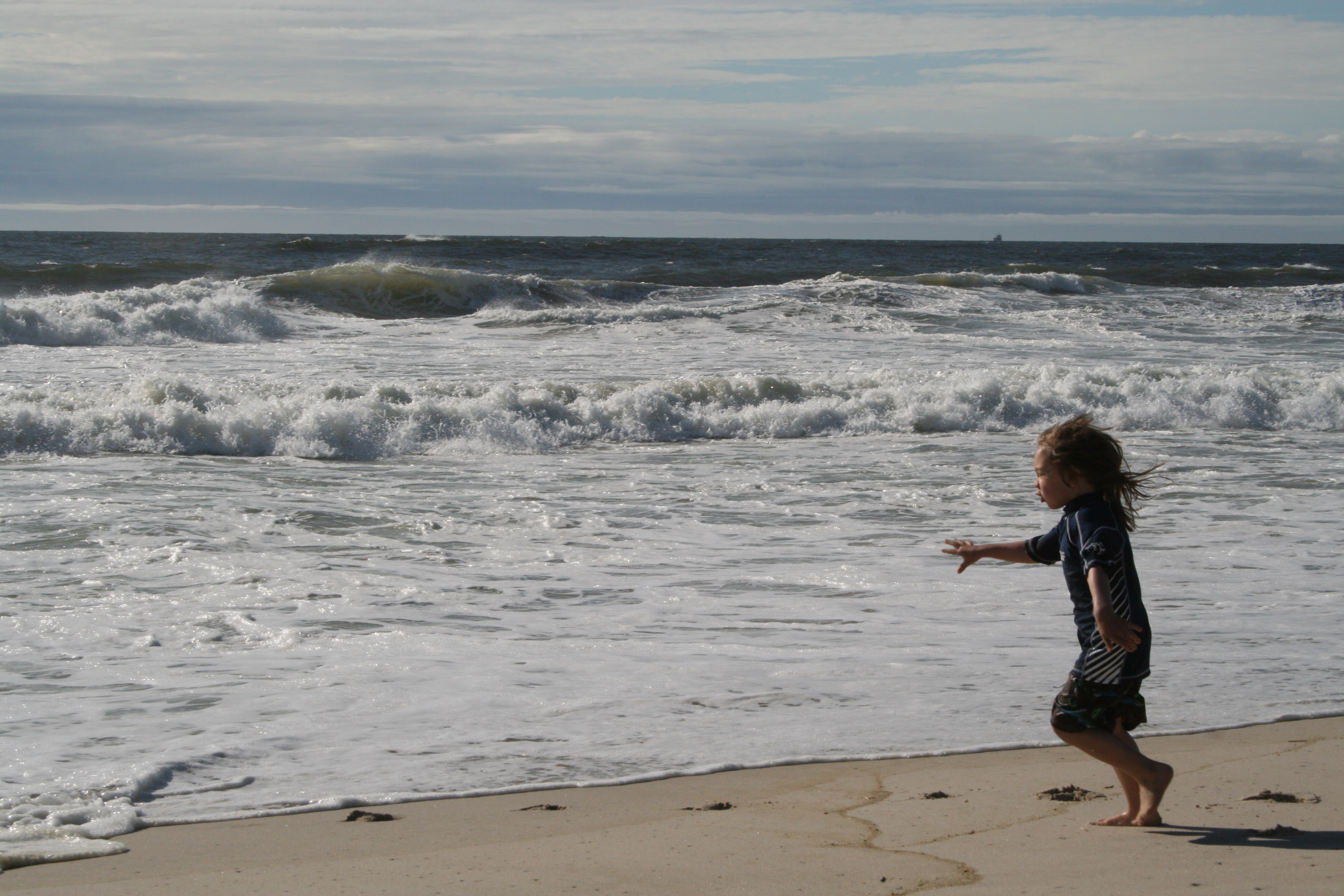
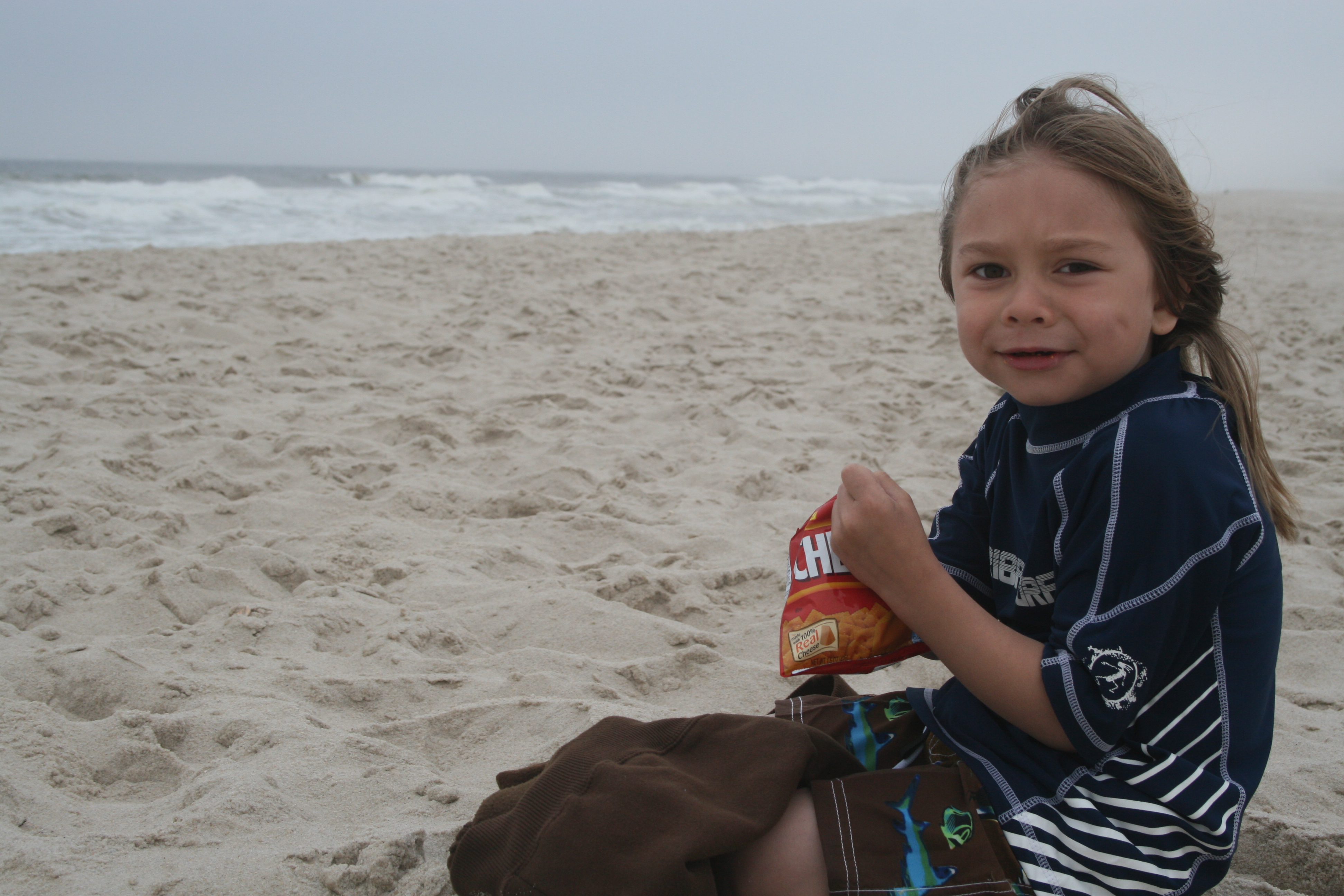
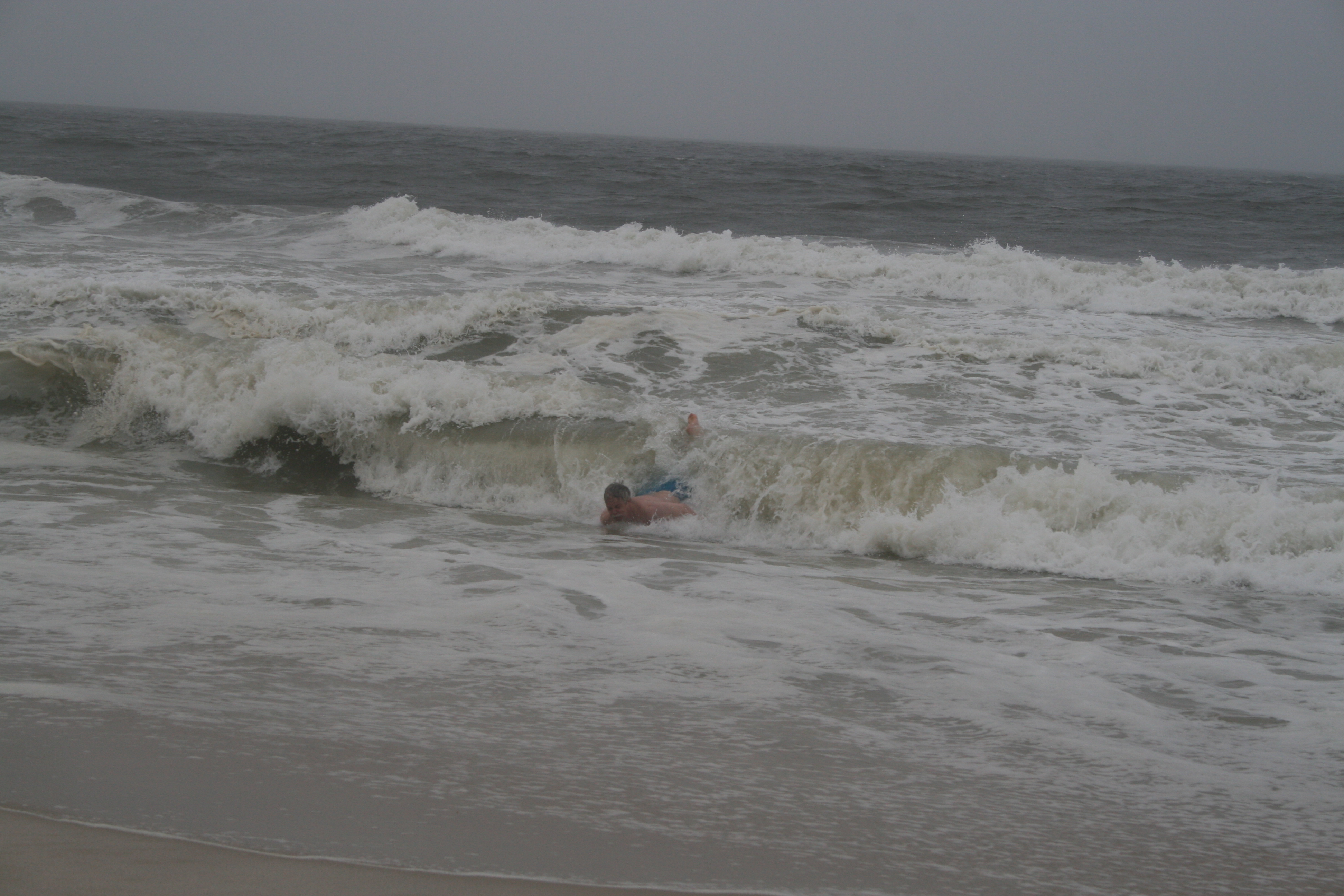
Now it’s time to reconnect with family–-and catch a few waves.


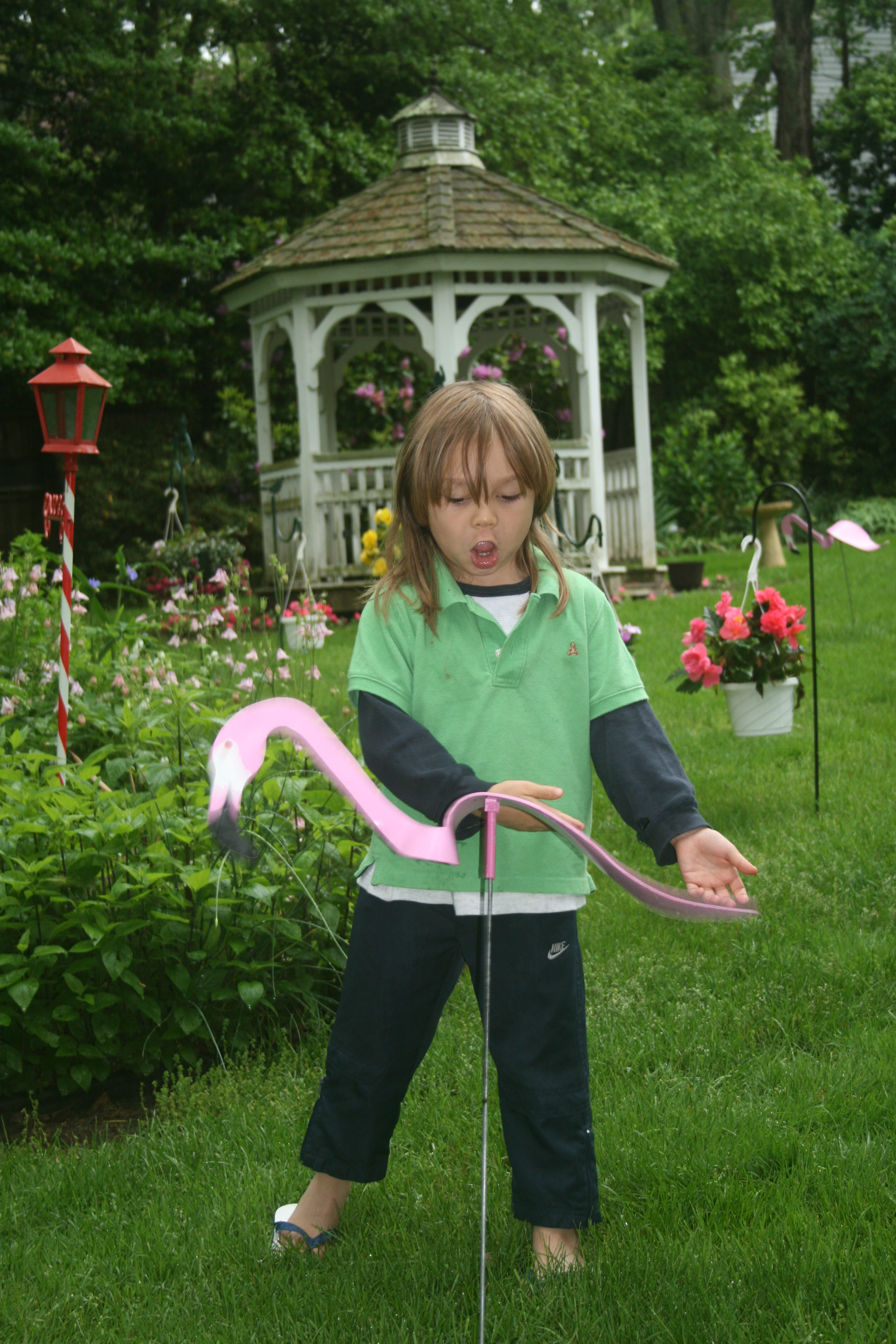
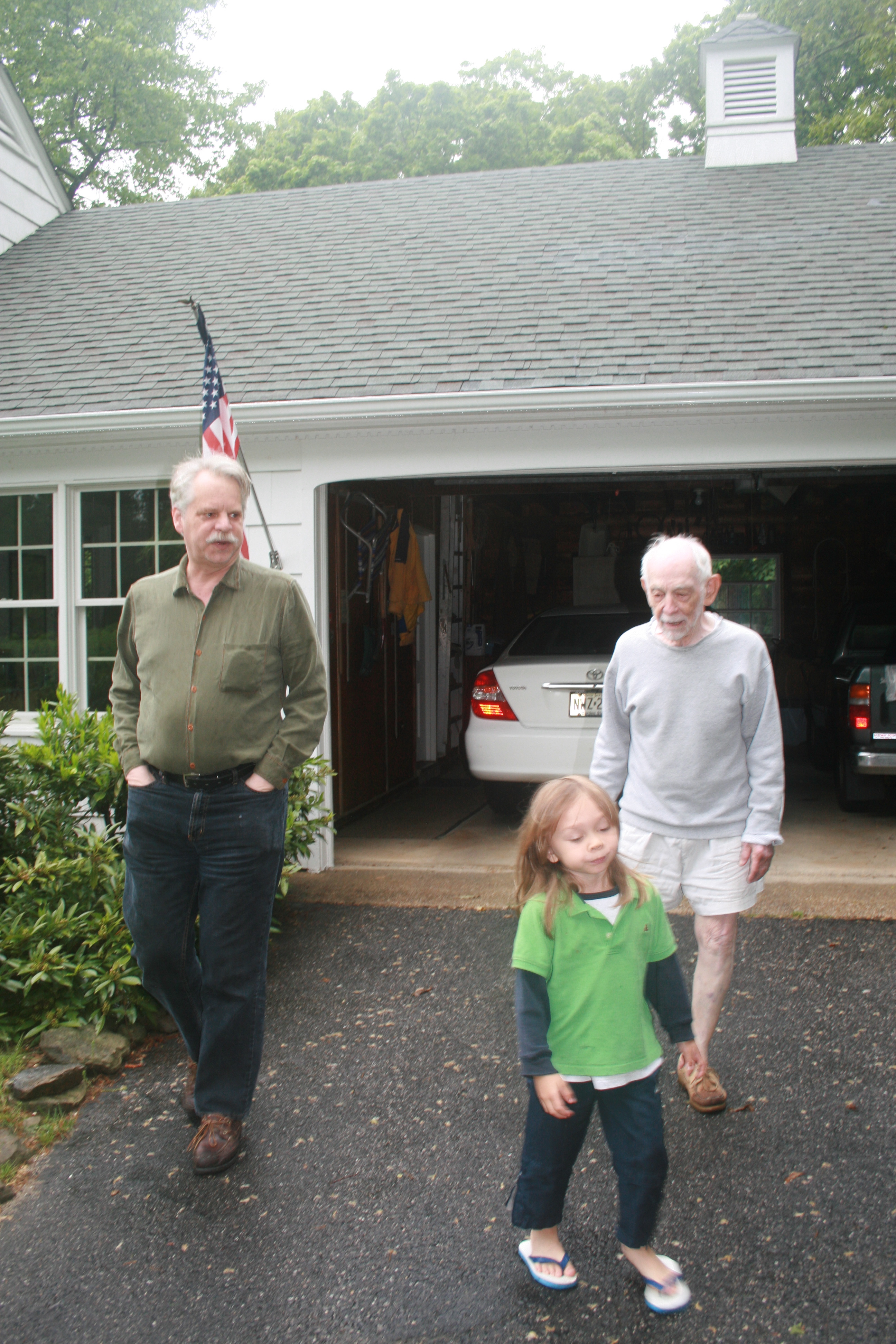
My Uncle Ferd’s garden, which he and my Aunt Nancy tended for many years.  When I was John Carlos’s age, I woke up one morning at dawn (5 or 5:30 am) and went into the garden and picked a tomato.  Family legend has it that I ran back into the house shouting “Aunt Nancy, Uncle Ferd–I found a ripe tomato!” My family has been going to the Jersey Shore each summer since my father was four.


 photos mostly by Threese Serana


One Evening, Two Worlds

Posted by chamus on May 25, 2012
Posted in: Uncategorized. Leave a Comment

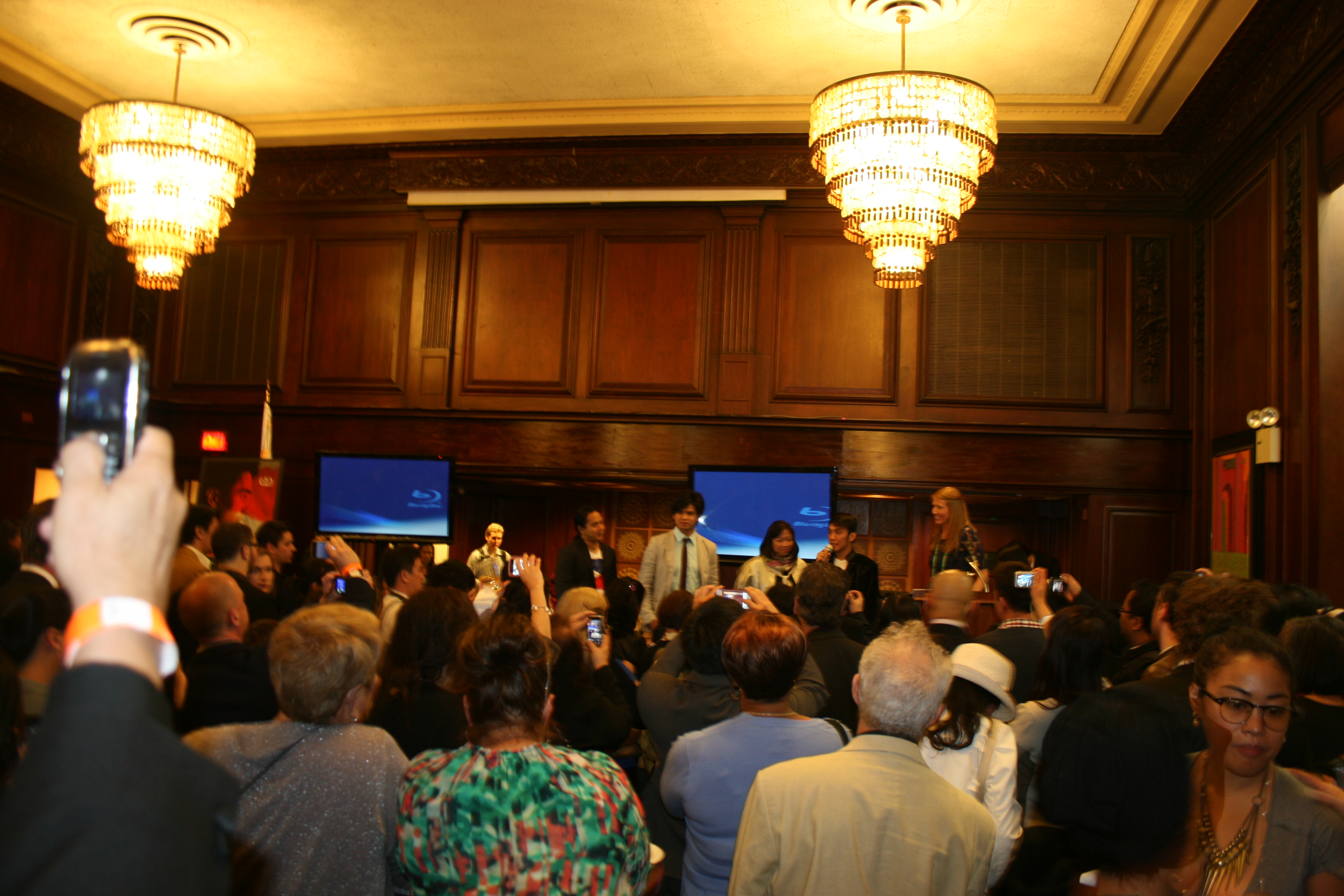
One of the pleasures in being married to a woman who spent the first 33 years of her life on the other side of the world is that life never gets boring.  Everything is done at least a little differently–whether it is family gatherings which often seem dominated by karaoke or having a priest for a brother in law (a future pope?). I was lucky enough to  get into the hottest Filipino event in NYC in some years, courtesy of Threese’s press pass.  It was to celebrate three Filipino films in the Tribeca Film Festival but the real excitement surrounded Don’t Stop Believing, Ramona Diaz’s documentary on Arnel Pineda and his rise to fame as lead singer for the rock group Journey.  He was the evening’s star attraction.  Indeed he was definitely one of the reasons why we were there:

Arnel Pineda on the mike at the Philippine Consulate, NYC-April 20, 2012

I had heard a lot about Arnel Pineda from Threese.  What Filipinos love about Pineda, in part, is that he was seen as a good but hardly exceptional singer in the Philippines.  Filipinos pride themselves on their musical abilities and I confess that Threese used to sing love songs to me over the phone.  So they celebrate Arnel’s success but also it affirms the feeling that Filipinos can make it here in the US–where all too often doctors become nurses and college teachers become pre-school teachers.
We went to the Philippine Consulate to meet Filipino filmmakers, but Ramona Diaz, in particular.

Ramona Diaz & Threese Serana

From probably our first date,  Threese was asking me if I had seen Diaz’s film Imelda. And she was not the only one in the Philippines who asked me that question!  Once she was in the US, she started to urge me to bring Ramona up to Yale.  I moved slowly but included Imelda in my World Documentary course, and was impressed.  So were my students.  Threese then heard  that she was making a new documentary about Filipinas becoming public school teachers in Baltimore––The Learning (2011). So I began to be in email contact with Ramona–hoping to find a way to get her up to Yale. So this was actually the first time we met (I was behind the camera in this instance).

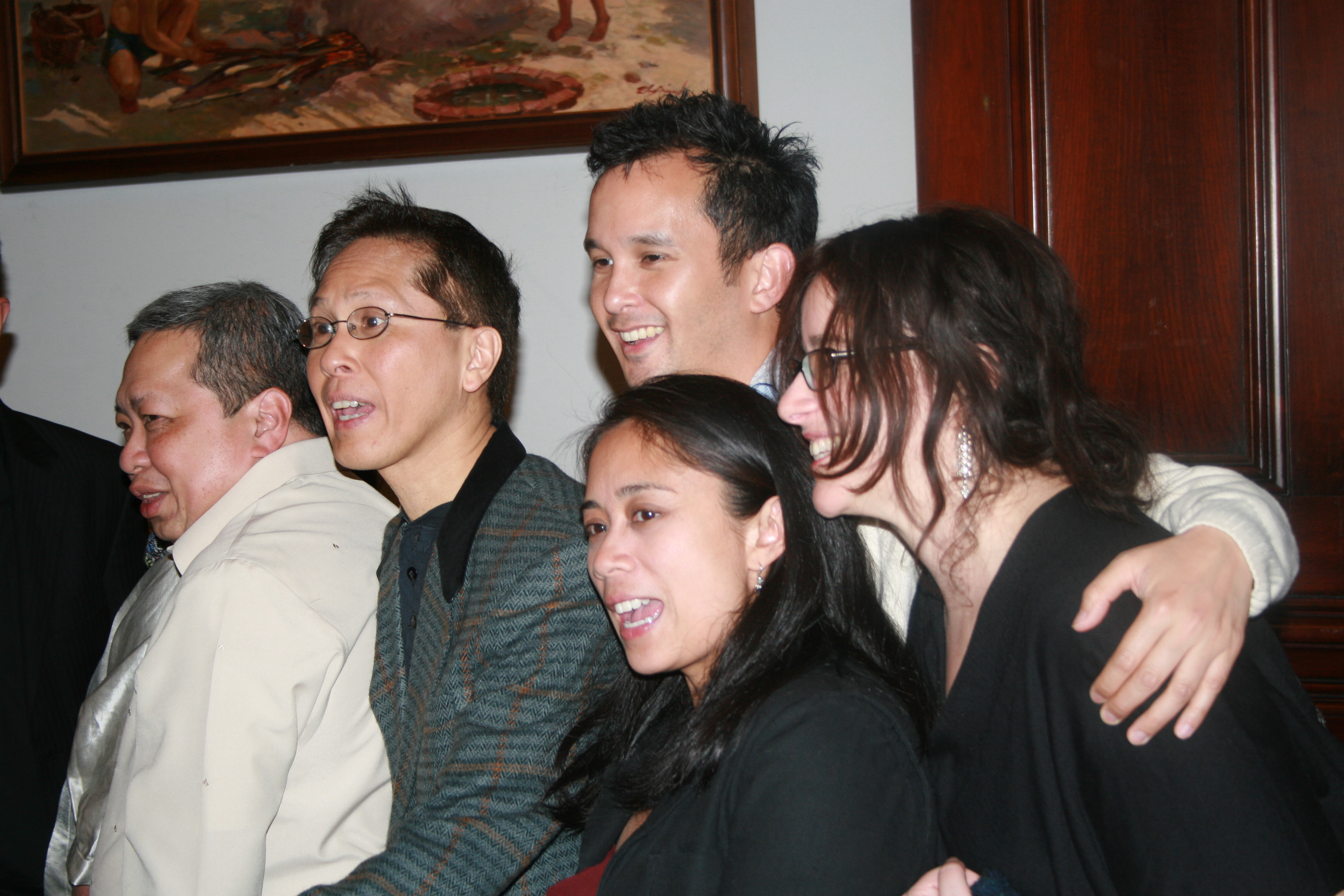
One very popular ritual in Filipino culture is the photo-op.  There were tons of photo-ops happening at the consulate.
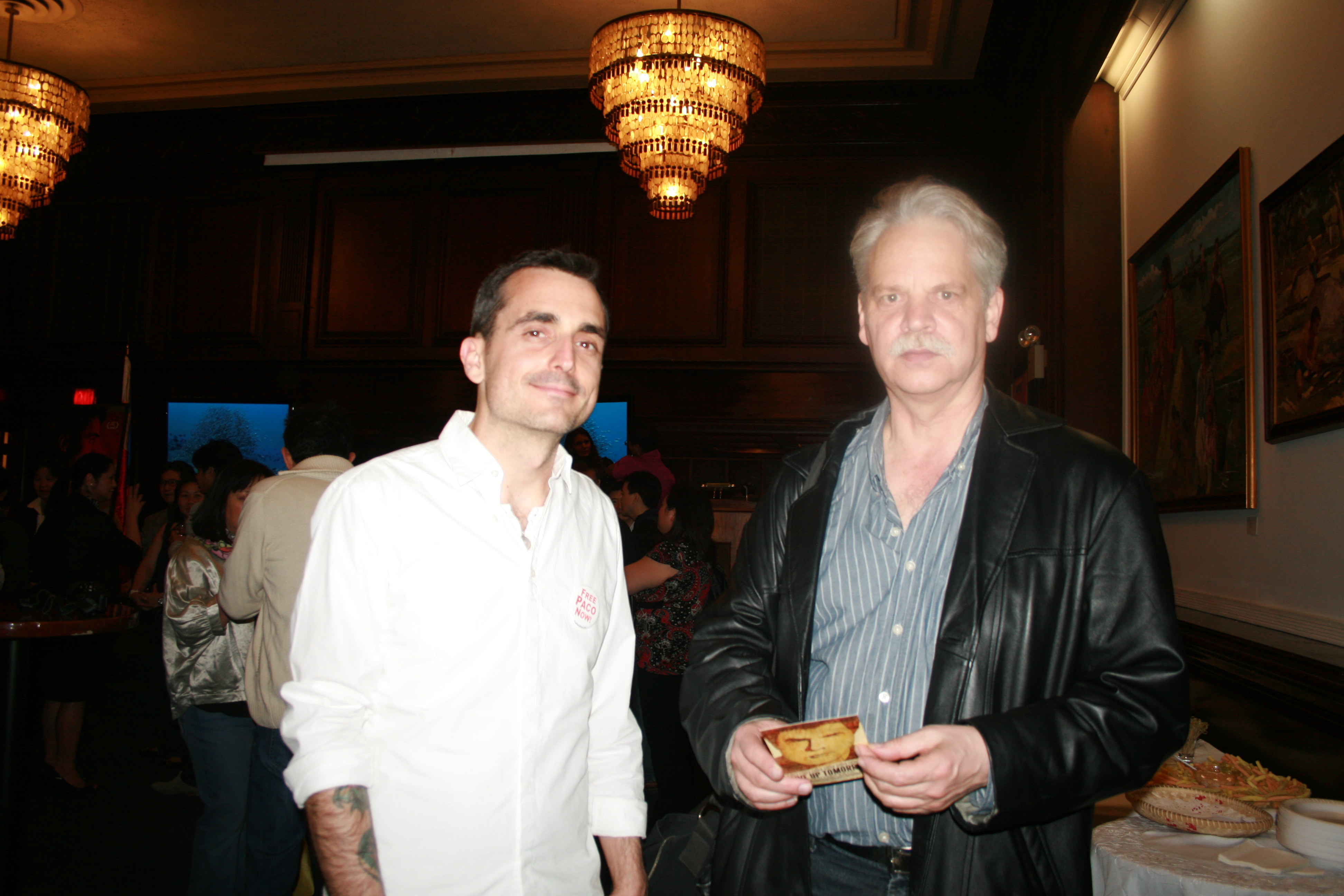
Here’s one with Filipino film distributor Vincent Nebrida (far left) and some of the stars and filmmakers there for the evening. -For some, it was their first visit to the US.  So I will try to get Threese to identify these people–definitely part of the Filipino film community.  But in any case, when in the Philippine consulate, do as the Filipinos.  And so…here I am with Michael Collins, who partners with Marty Syjuco.  Together they made Give Up Tomorrow, a documentary about the conviction and imprisonment of Paco Larrañaga for a crime he did not commit.  I am holding their promotional postcard for the film in my hand.
with Michael Collins

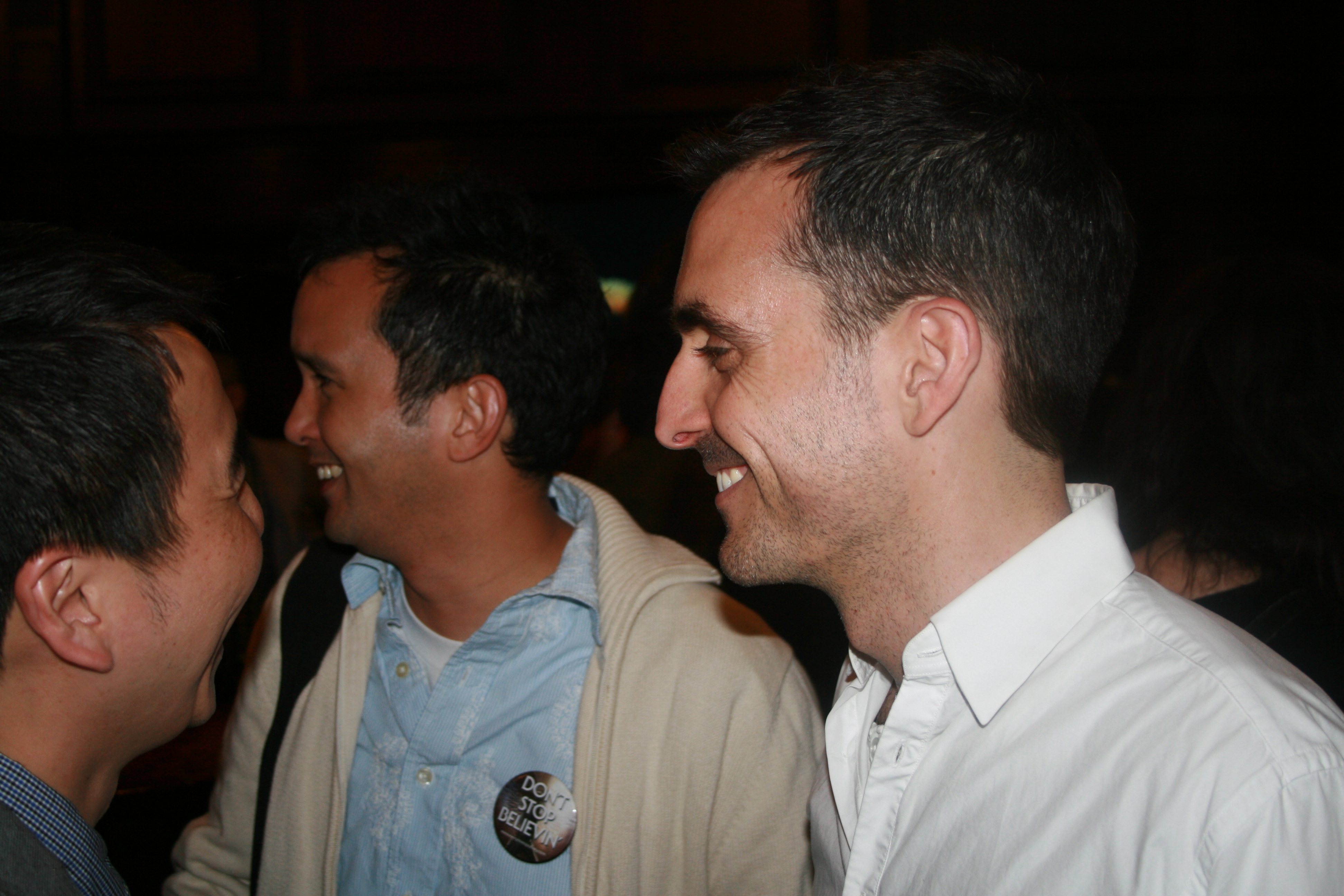
A few minutes later, we caught them

Marty Syjuco & Michael Collins

We met another filmmaking couple, who had recently moved East from the West Coast–Niall McKay and Marissa Aroy, who worked together through their company Media Factory.

Marissa Aroy and Niall McKay


Standish Lawder: My Teacher & Role Model Returns to Yale

Posted by chamus on May 25, 2012
Posted in: Uncategorized. 3 comments

Standish Lawder ca. 1970


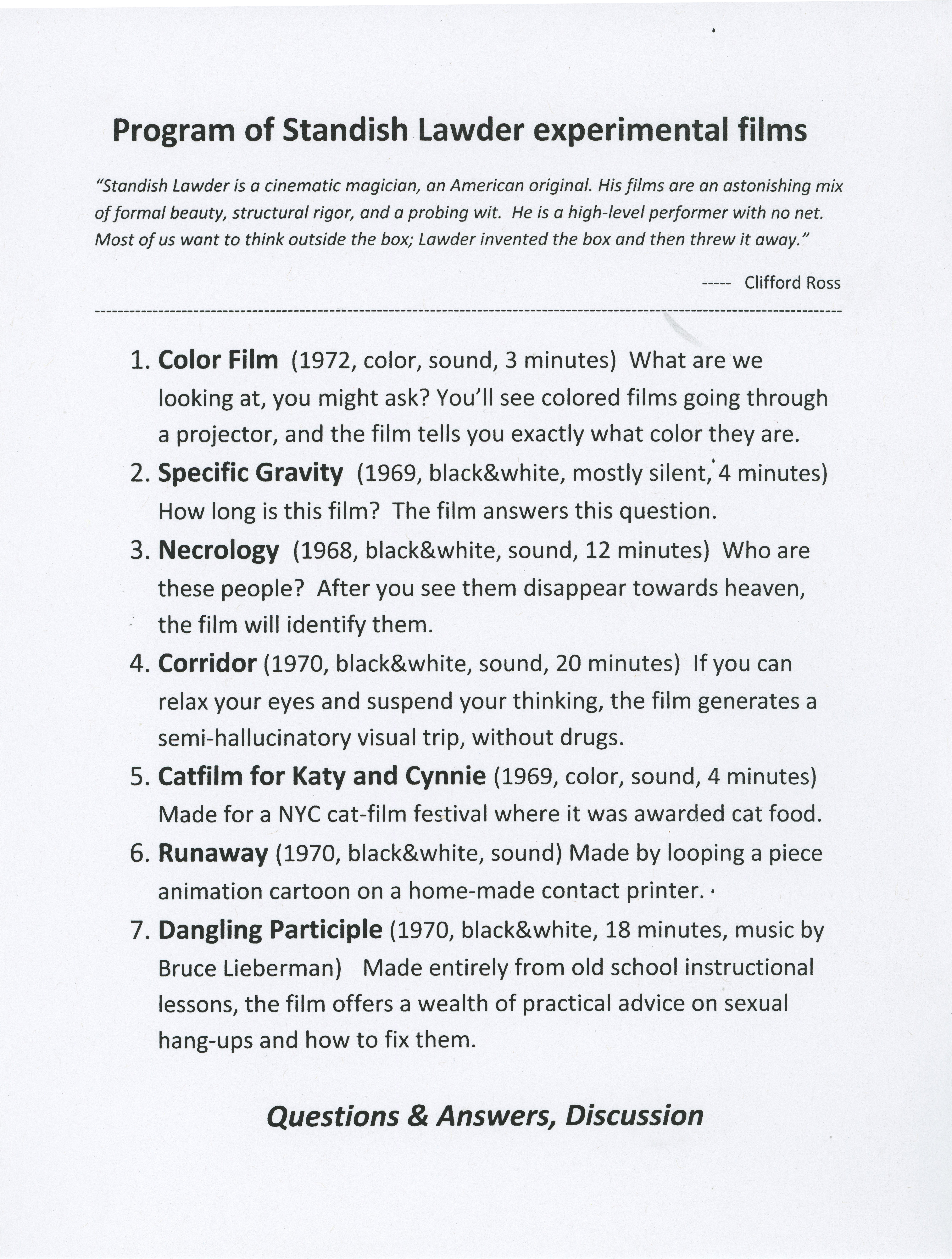
Stan Lawder was an inspirational figure for me when I was a Yale undergraduate in the late 1960s and early 1970s.  He and Jay Leyda were my two main film studies teachers–what a deal!  Stan taught a Silent Film course in the Yale Art Gallery–and filled lecture hall (one of the biggest on campus). There were at least two hundred students–probably more.  I still remember many of the films that were shown in that class: Rene Clair’s Entr’Acte (1924) and The Crazy Ray (Paris Qui Dort, 1927), plus Bunuel’s L‘Age D’or (1930). (Was this even possible then?) He also showed us Vertov’s Man with a Movie Camera (1929), about which I wrote my first film paper.  As I have said on other occasions, when I came to Yale to teach I was determined to maintain the tradition and show that film in Introduction to Film Studies.  Eventually we were able to buy a 35mm print.  If Stan was the inspiration for that then I was able to pass that inspiration on to John MacKay who was a teaching assistant for Introduction to Film Studies and subsequently decided to write his first post-dissertation book on Vertov, turning John into a film professor–and now chair of Yale’s Film Studies Program.  So it was great–and I think also symbolic for John to not just meet Lwader but to introduce Stan when he came to show us his films and collect the Yale Film Studies Program Award.

John MacKay introduces Standish Lawder

Our audience was medium size–mostly faculty and graduate students (undergrads are always finishing papers and otherwise getting ready for the summer).

I had seen most of these films as an undergraduate –and Necrology (one of my favorites) since then.  But I have to say that I was stunned to see them as a group.  They were so fresh, sparkling with a knowing, sophisticated sense of humor.  Earlier in the day, Stan had given a lecture on early and silent cinema.


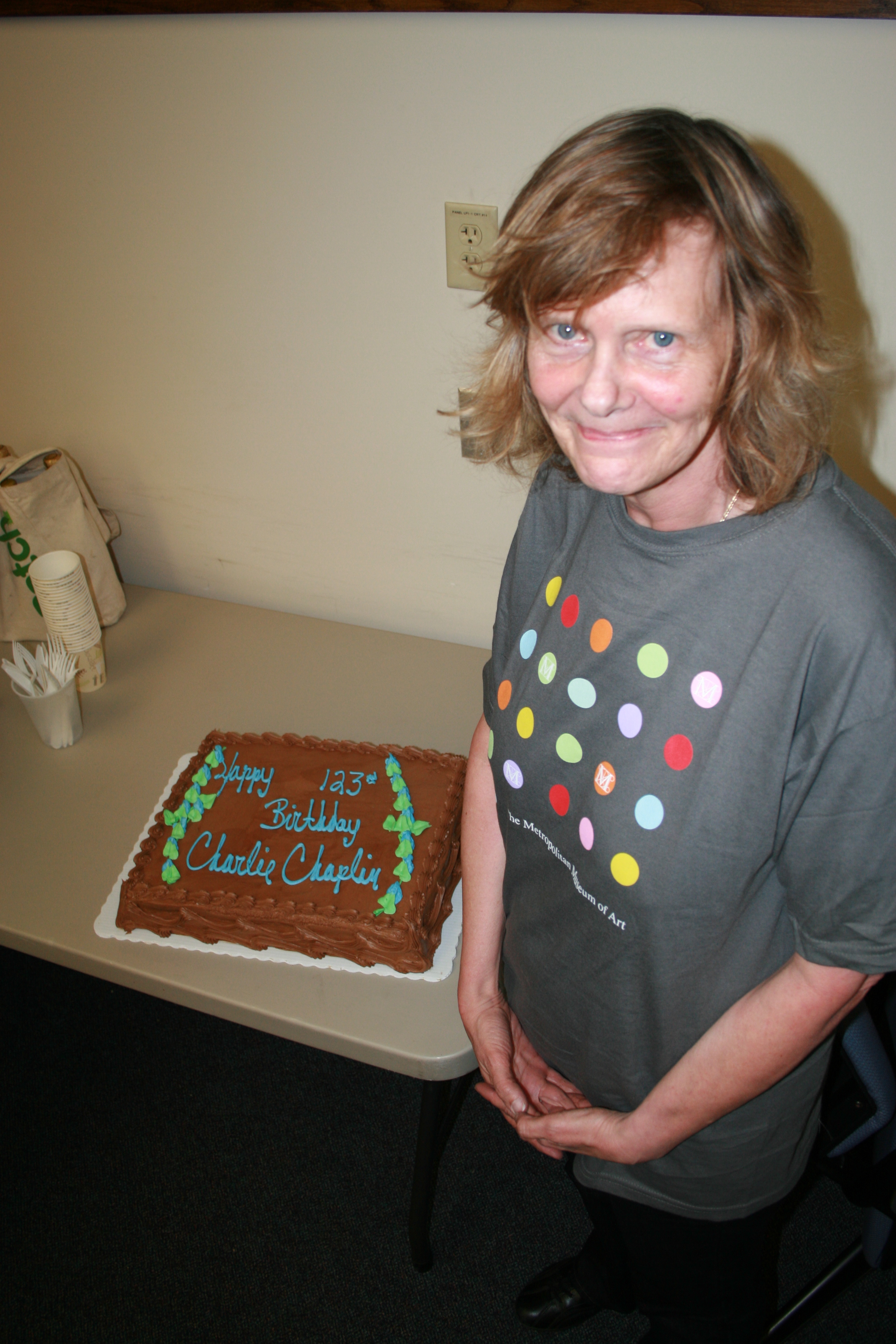
Celebrating Charlie Chaplin’s 123rd Birthday

Posted by chamus on May 12, 2012
Posted in: Uncategorized. Tagged: birthdays, Chaplin, Charles Musser, Kathryn Millard, Stanley Milgram. Leave a Comment

The end of the school year meant there was no time to indulge in blogs and posts.  So I am hoping to make up for lost time.

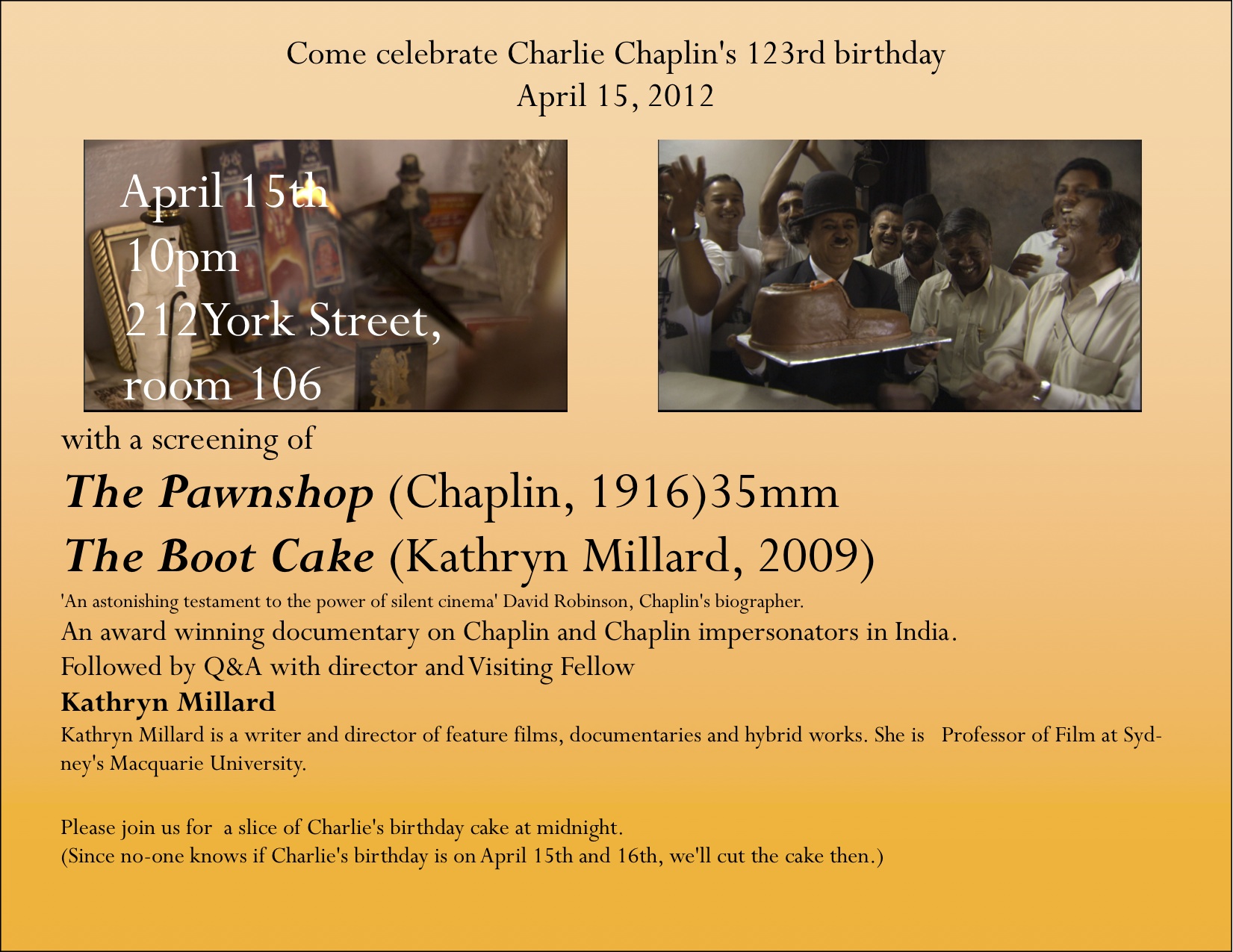
One event I want to document and remember is our celebration of Charlie Chaplin’s 123rd birthday. The idea came about because we were looking for a way to show a film by Kathryn Millard, who is a Professor of Film and Creative Arts at Macquarie University in Australia and came to Yale as a visiting scholar to do research on Stanley Milgram and Milgram’s experiments on obedience, resistance and authority, which he conducted at Yale in the 1960s (I remember participating as a subject in some pale echo of these experiments when I was a Yale undergraduate but by then the experiments were being discussed ins Psych 101.)  Kathryn contacted me about some kind of sponsorship because Milgram’s papers were at Yale and she suspected that we were soulmates in the academic sense.  And indeed, this proved to be the case.  Here is a small piece of her bio on the Macquarie University website:

Kathryn is a  filmmaker, essayist and academic  with a body of work that is internationally recognized and highly awarded.  She holds a Doctorate of Creative Arts (1999) and an M.A. in Applied History (1993) from the University of Technology, Sydney. Both theses focused on the poetics of colour.

Our affinities go far beyond being filmmaker-scholars in an academic world that remains uncomfortable with that combination.  I became interested in the Milgram experiments really due to Errol Morris who was concerned about the way they were being applied to the so-called “bad apples” at Abu Ghraib––the subjects of his documentary Standard Operating Procedure. The issue of obedience and authority, of course, gets played out in universities in very complicated and fraught ways–e.g. Yale University ca. 2012.  Milgram’s experiments are related to Chaplin’s tramp in ways that should be obvious:, his screen construction –Charlie– is engaged in a massive project of resistance to the regimentation of work in industrializing America–he rejects obedience to authority in some deep way.  Kathryn had made a documentary on Chaplin imitators, entitled The Boot Cake (2008) while it was my essay on Chaplin (“Work, Ideology and Chaplin’s Tramp”) that seems to have sufficiently impressed the search committee at Yale to get me hired in the first place.

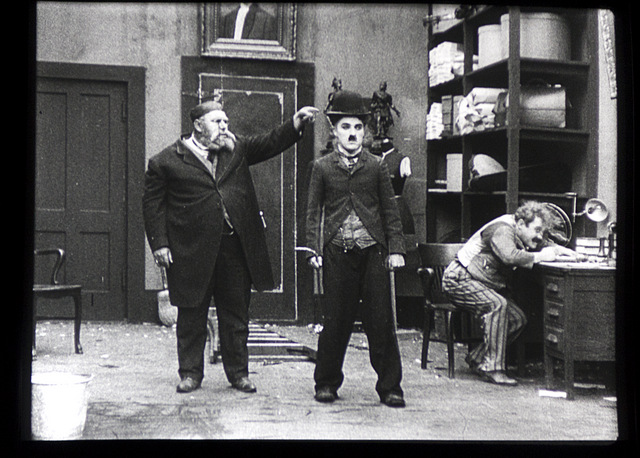
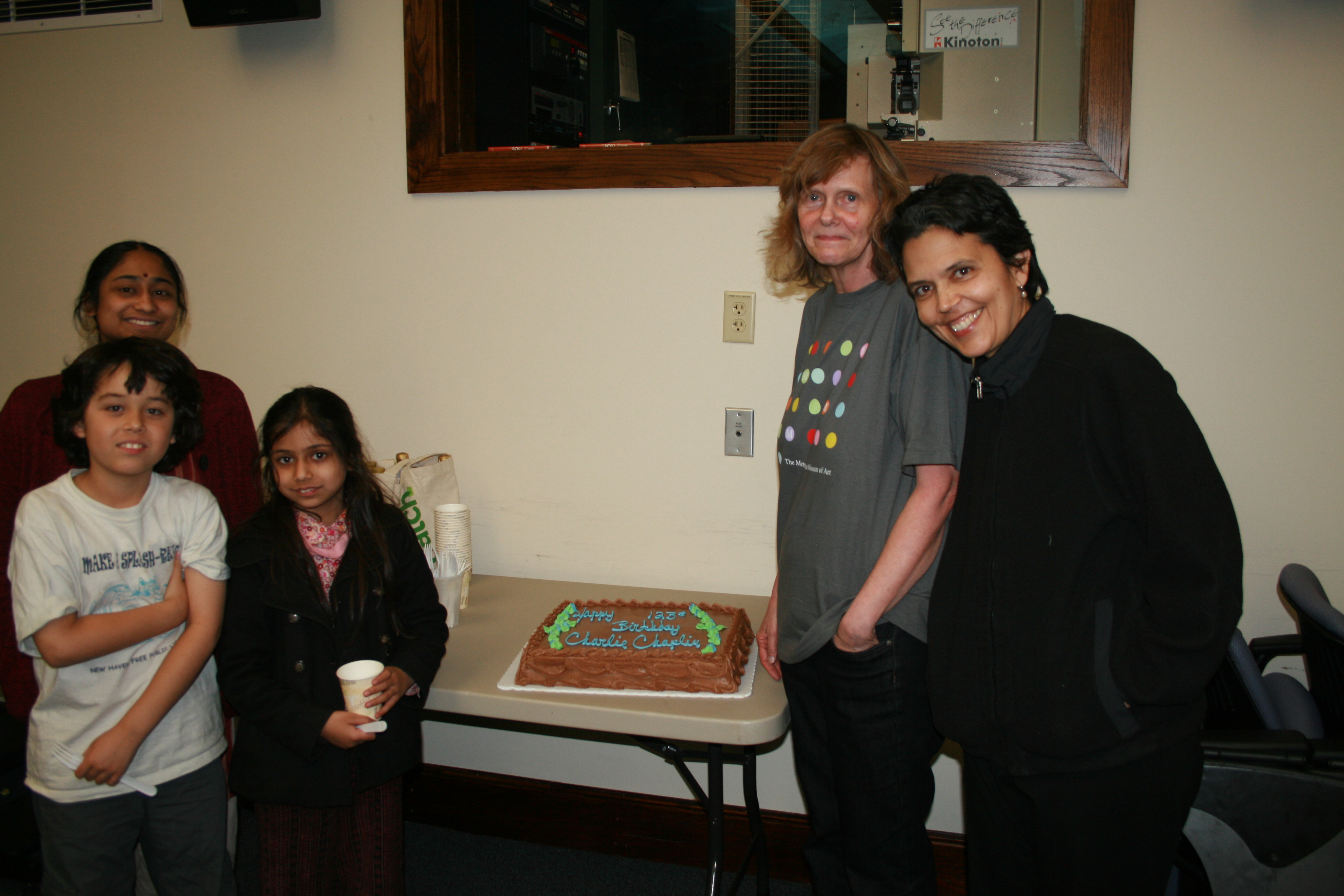
There is some uncertainty as to Charles Chaplin’s actual birthday.  Was it April 15th or 16th?  Generally people go for the 16th, but who knows?  So we decided to have a party on the night of the 15th and then cut the cake at midnight.  Before the cake cutting we showed Yale’s 35mm print of The Pawnshop (1916)–a key and glorious Chaplin masterpiece in my humble opinion–and Kathryn’s documentary.

Before the screening, as it so happened, we had scheduled one of our potluck dinners with Ashish Chadha, Ashwini Deo, Domingo Melina (who took Kathryn’s portrait at the top of this blog) and Maria Pinango–plus our kids.  Kathryn joined the group and then everyone found there way over to the screening. Since it was school vacation the next day, the kids had no curfew.
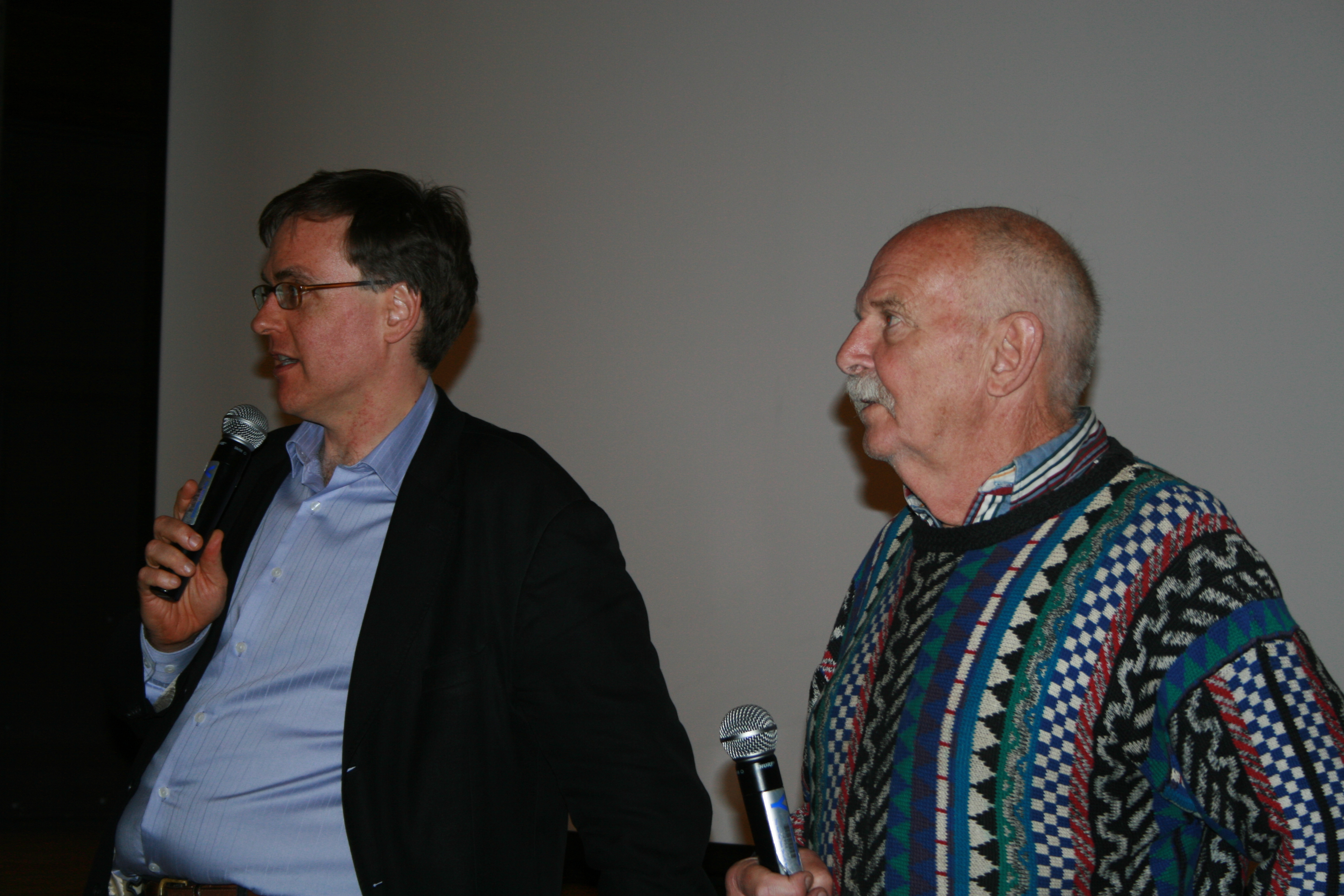
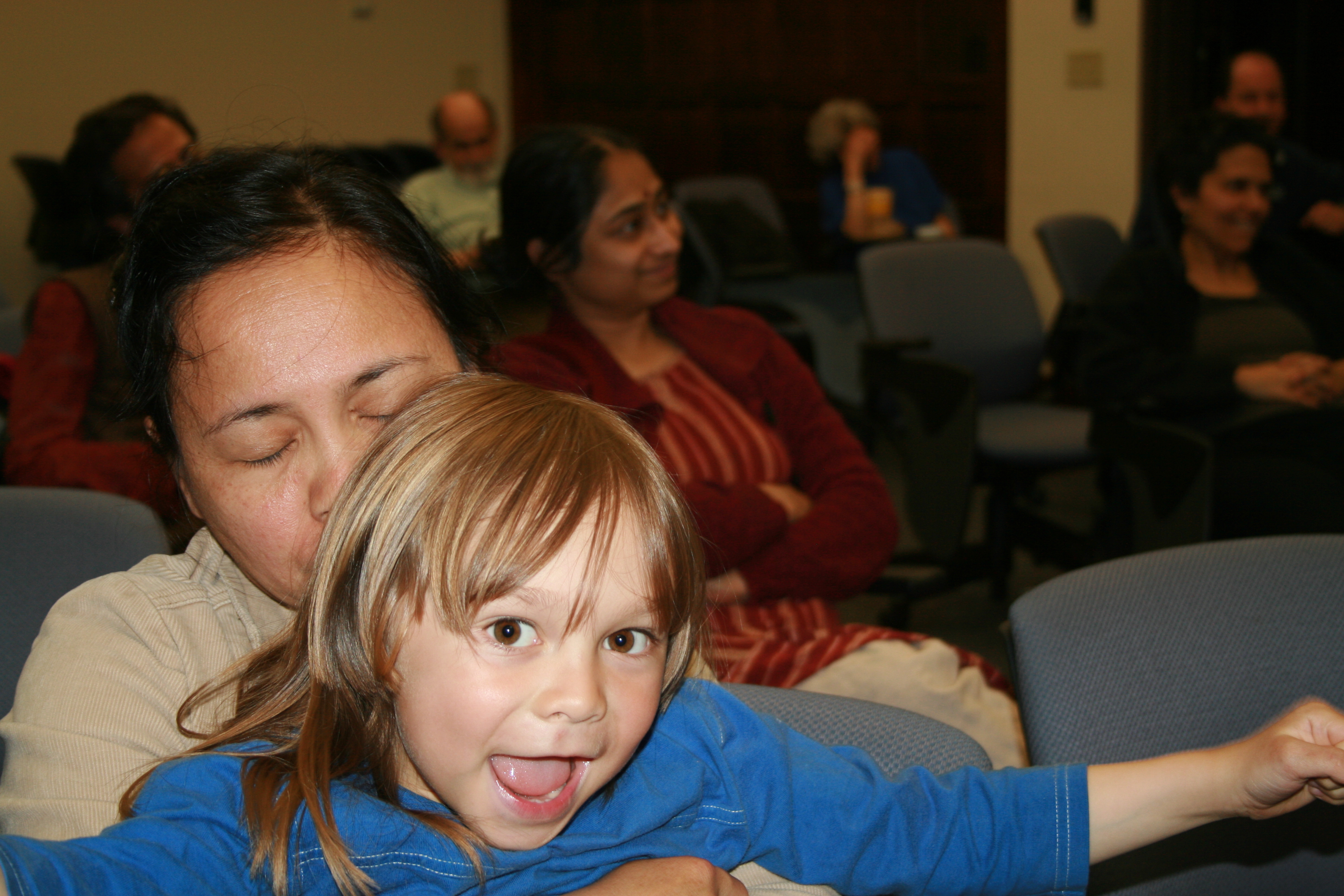
Turn out was not the best, but the special treat for me was to watch Chaplin with the kids, particularly my son John Carlos.  Although we avoid TV per se, our children see a lot of moving image programming from Netflix and elsewhere.  John Carlos is a big Buster Keaton fan.  But it is unusual for them to sit and watch a silent B& W film in a theatre-like setting–in the dark with complete focus and concentration.  They laughed very hard.  And very loud.  John Carlos loved Charlie Chaplin but found one moment very disturbing –when Charlie kicks a young boy in the buttock.  Hitting the cop with a ladder was just fine, but that moment when he kicked the boy’s rear end proved to be of ongoing concern for the next few days. (“Why did he kick the boy in the butt, Daddy?”)

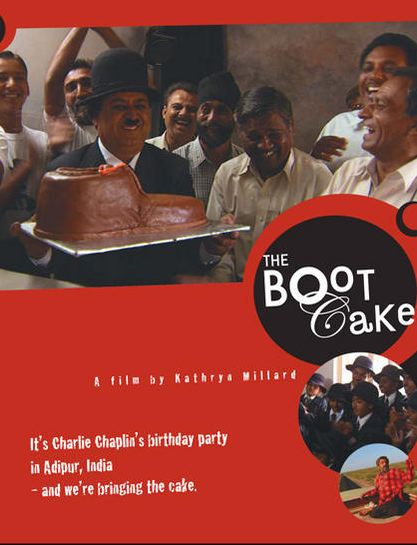
Next up was Kathryn’s documentary, The Boot Cake:The Boot Cake shows some clips of Chaplin imitators from the 1910s–actors who made their careers in the image of Chaplin, but most of the film was devoted to present-day Chaplinites.  There was something quite moving about these people who remain devoted to the comedian almost 100 years after he began to make films.  They are all, as Kathryn remarked, bad Chaplin imitators.  Many are lost souls, who perhaps find in Chaplin a kindred spirit, someone who does not quite fit into the world around him.

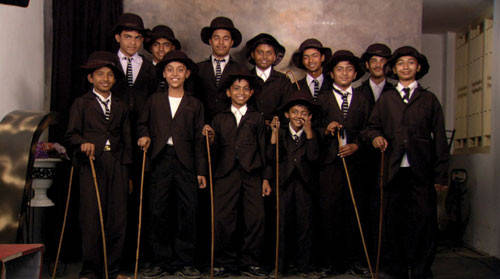
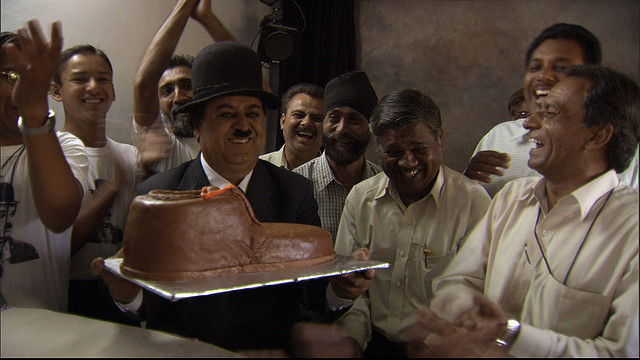
Kathryn’s film is centered around Chaplin imitators in India––and in particular a small cult in a town where Chaplin has become a kind of God, and they make an

elaborate ritual of celebrating his birthday with a boot cake, in memory of the boot that Charlie ate in The Gold Rush (1925). The local boys (and one girl) get dressed up in their tramp costumes.

The mastermind behind these events is a doctor who understands that laughter is good for one’s health.  Among his prescriptions for patients are comedy DVDs.  He first saw Chaplin in a movie theater as a kid–and stayed for repeated shows. Kathryn’s job–besides filming the doctor and the celebration–was to find a proper boot cake for the anniversary.  In the process of following Kathryn’s journey of discovery via film, we learn that licorice is a laxative and that when Chaplin ate his shoe made of licorice for The Gold Rush (multiple takes and multiple shoes), he suffered the inevitable results for his art. 

By the time we finished the screening of this documentary for adults, the kids were getting sleepy -and John Carlos was in dreamland.  So after a few questions we moved to the cutting of our cake:

And then back to work! Kathryn had found a 91-year-old resident of New Haven who had participated in one of the Milgram experiments.  He had been noncompliant–i.e. a resistor.  So she hired Film Studies Ph.D. candidate Patrick Reagan, whose dissertation is on utopia and distopia in modern cinema, to film an interview with Milgram’s subject for her forthcoming documentary.

***

Kathryn Millard & our non-boot cake


Orphan Film Symposium–#8

Posted by chamus on April 19, 2012
Posted in: Uncategorized. 2 comments

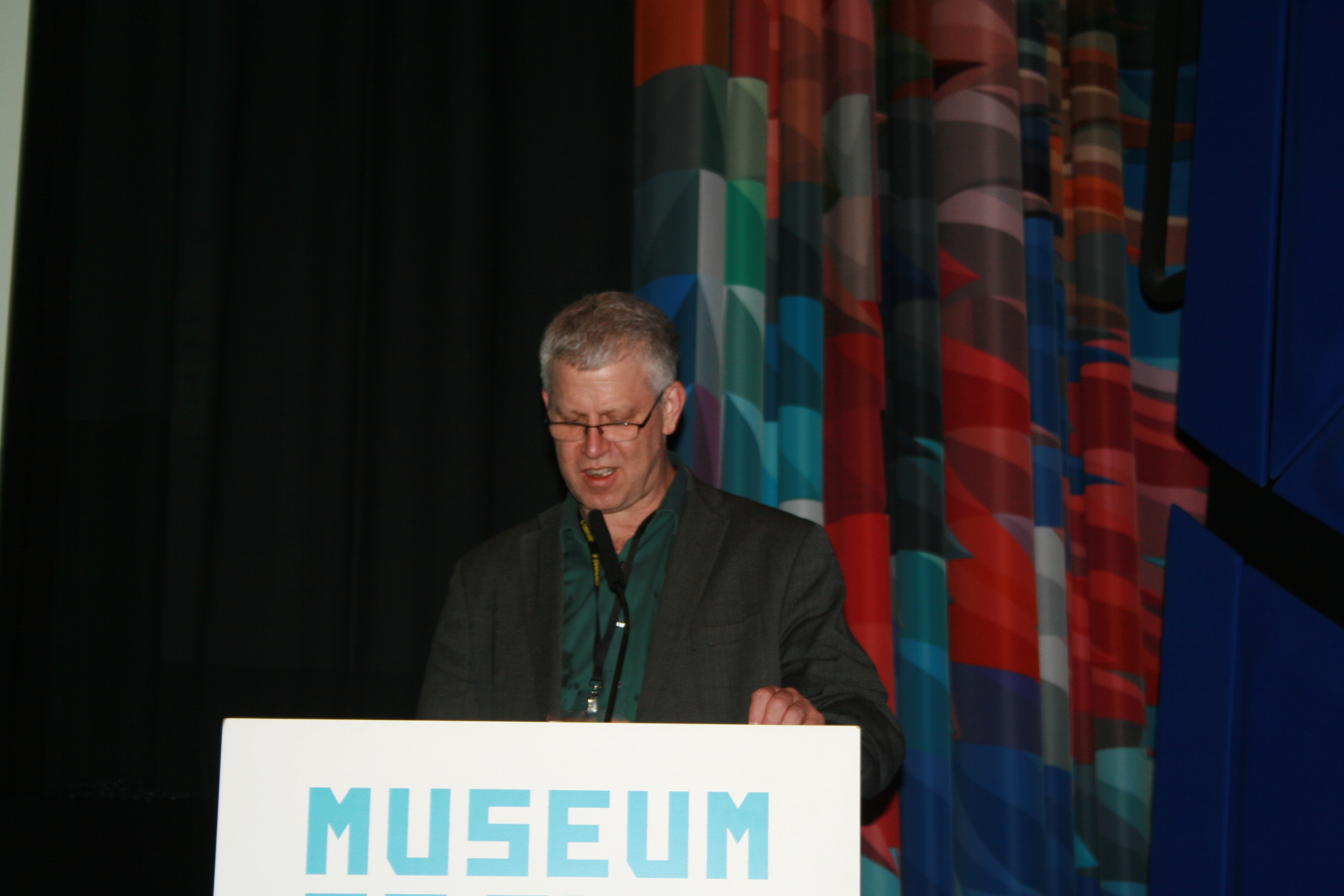
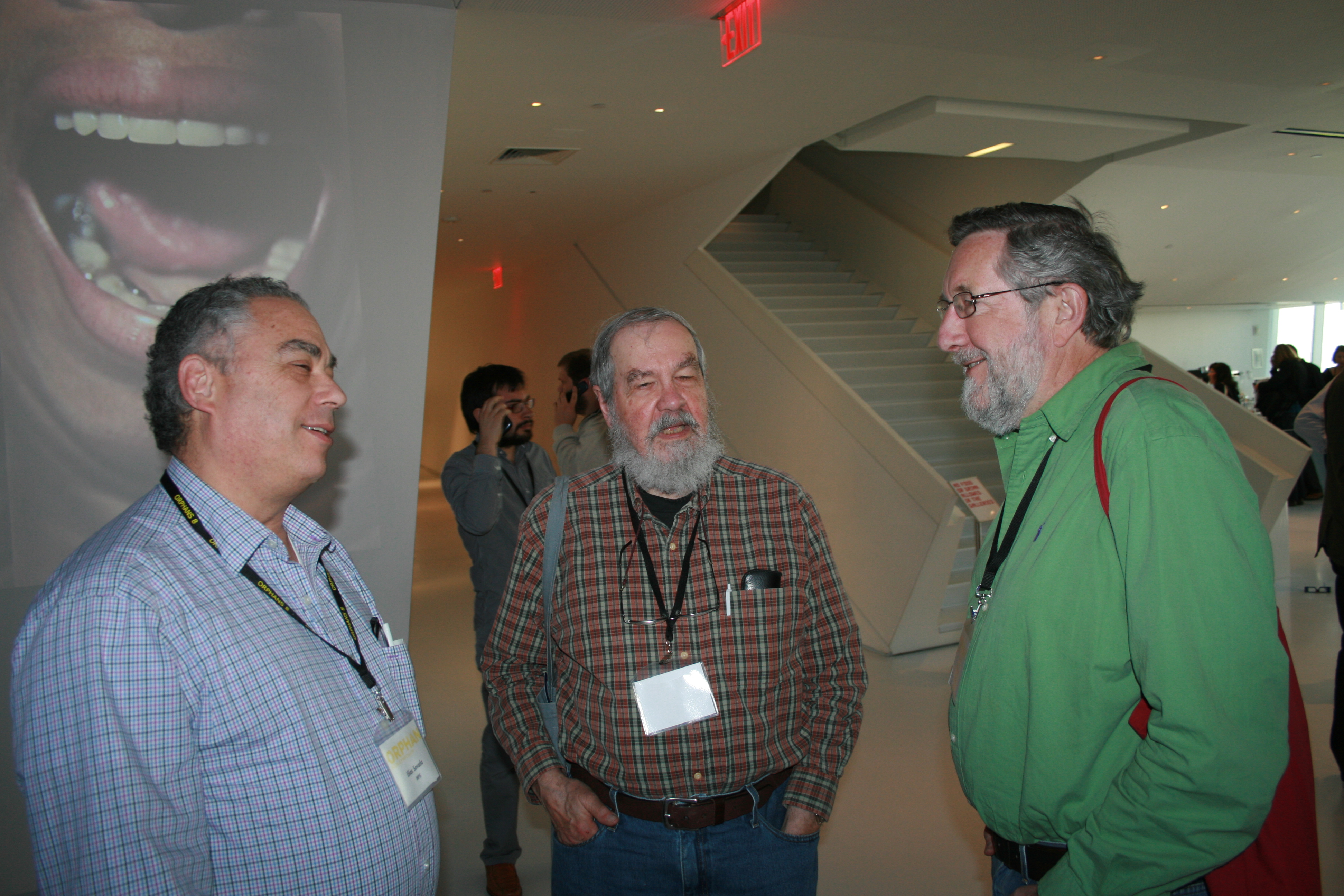
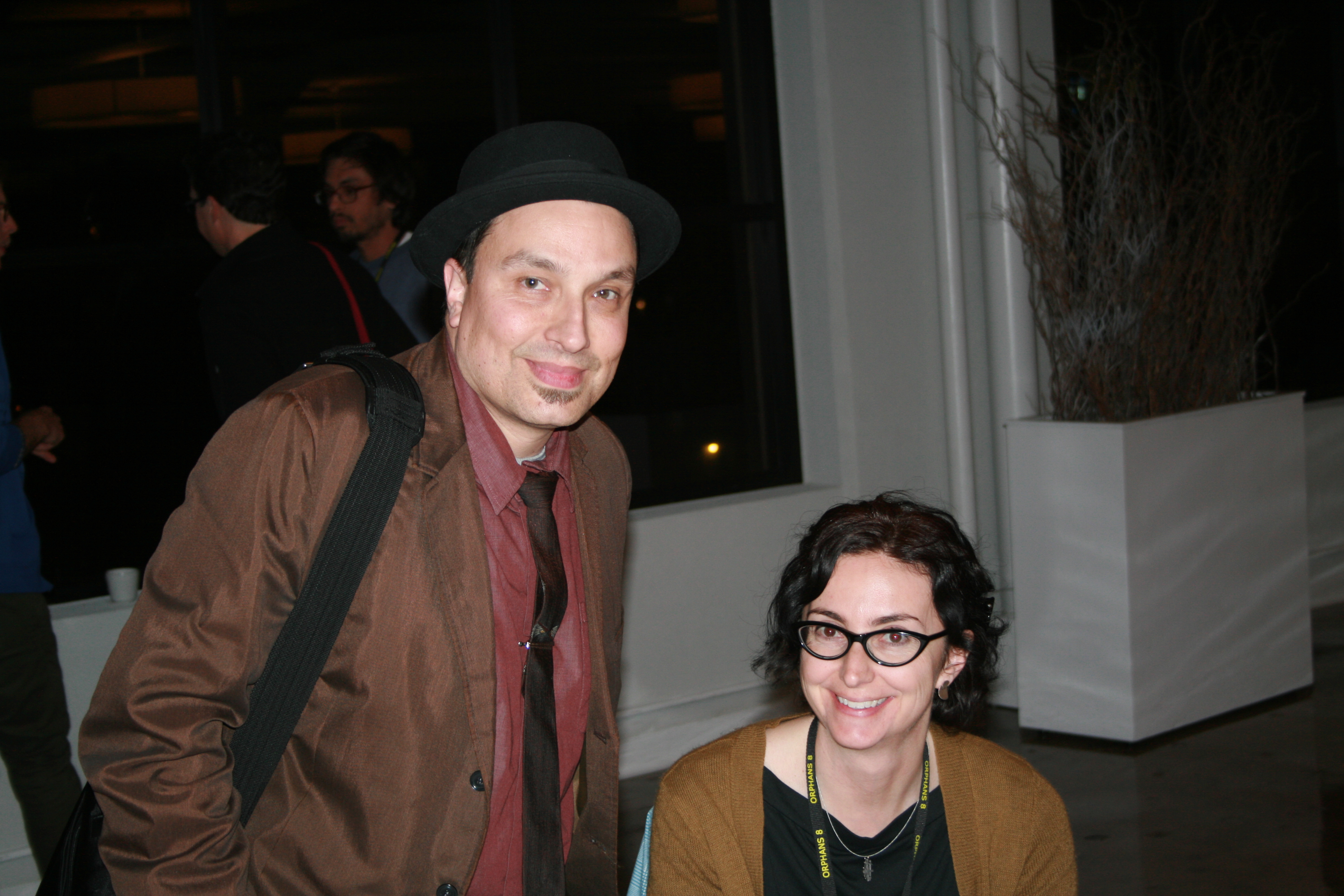
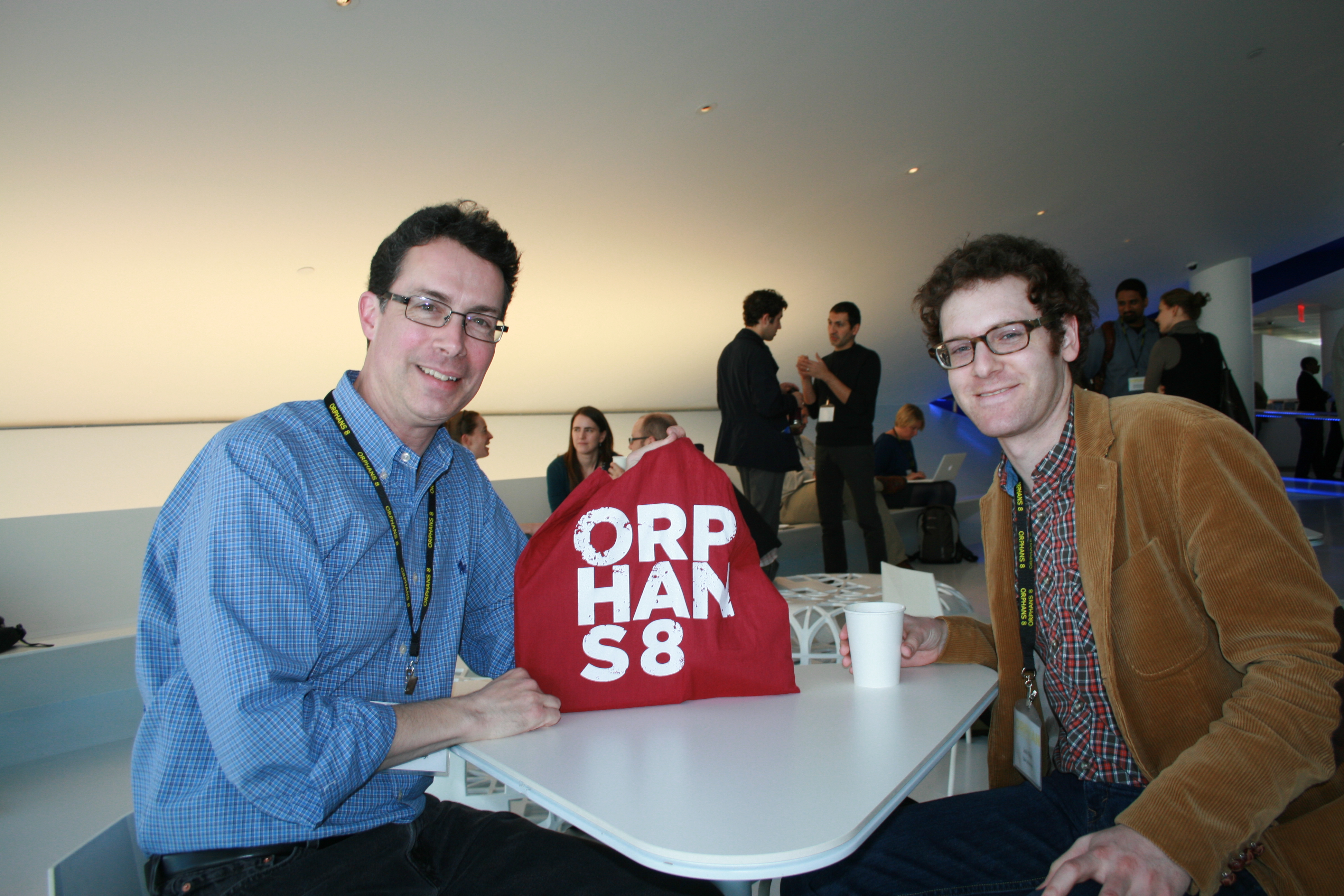
The Orphan Film Symposium unfurled at the Museum of the Moving Image, April 11-14, 2012.  This was its eighth articulation. As always, the success of this wonderful gathering of scholars, archivists, lab technicians, digital geeks and independent collectors was due to mastermind Dan Streible.

Dan Streible at the Museum of the Moving Image, April 12th

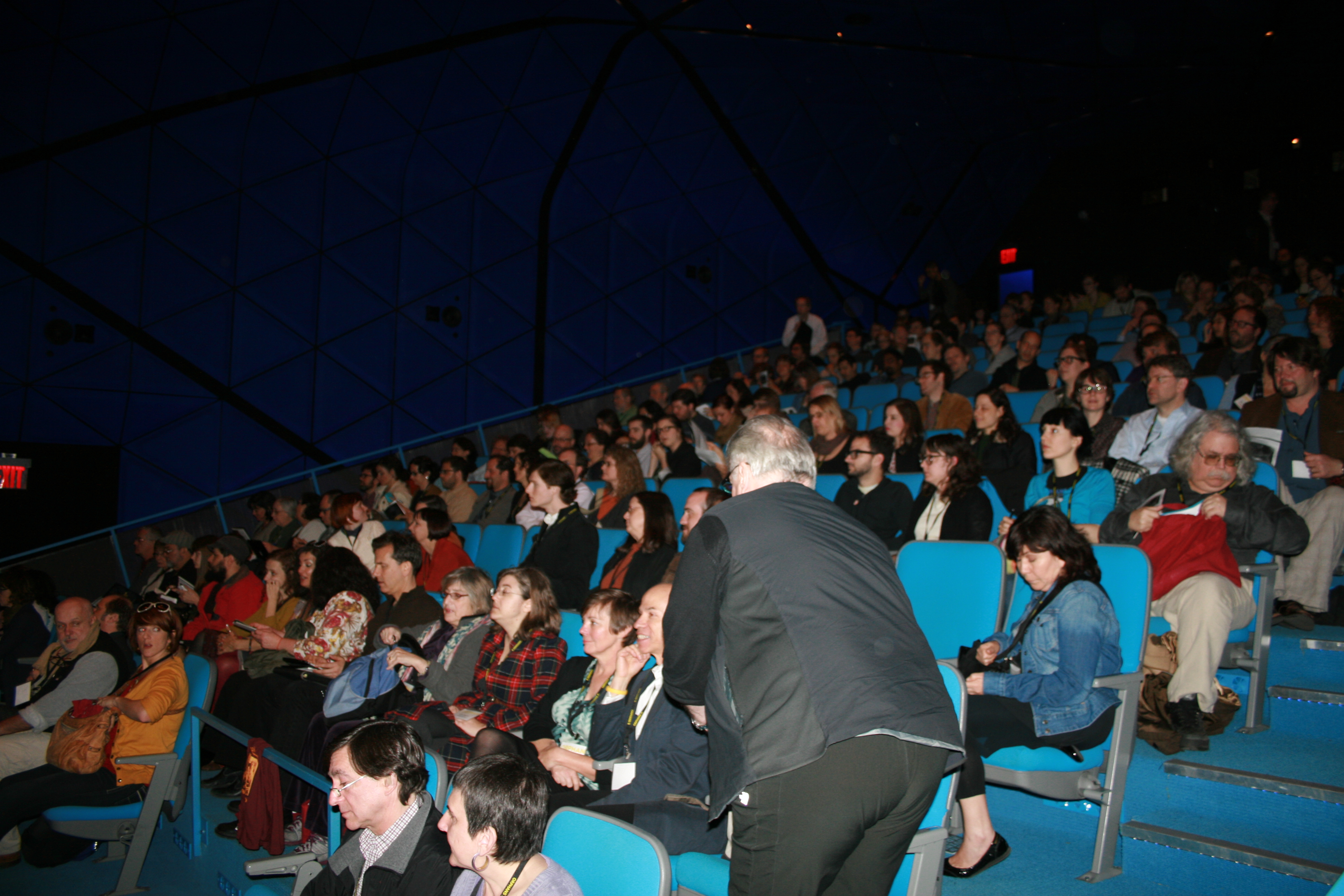
The renovated Museum of the Moving Image was filled with Orphanistas though no one was turned away this year (I think!).

A room full of Orphanistas--with Tom Gunning on the aisle (with the red bag).

The presence of Tom Gunning at a conference guarantees its success, but in this instance Tom’s participation was simply confirmation that this event was the place to be. (Indeed, I abandoned the Environmental Film Festival at Yale and skipped the Full Frame Documentary Film Festival at Durham to be here.) He helped kick off the conference on Wednesday evening with a screening of Valy Arnheim’s  The Elevated Train Catastrophe  (1921, The 16th Sensational Adventure of Master Detective Harry Hill).  In classic Musser fashion, I had to miss the entire evening.  I was still preparing my own Orphans presentation on 1948 presidential campaign films and the research dragged on and on –into the afternoon and late evening.
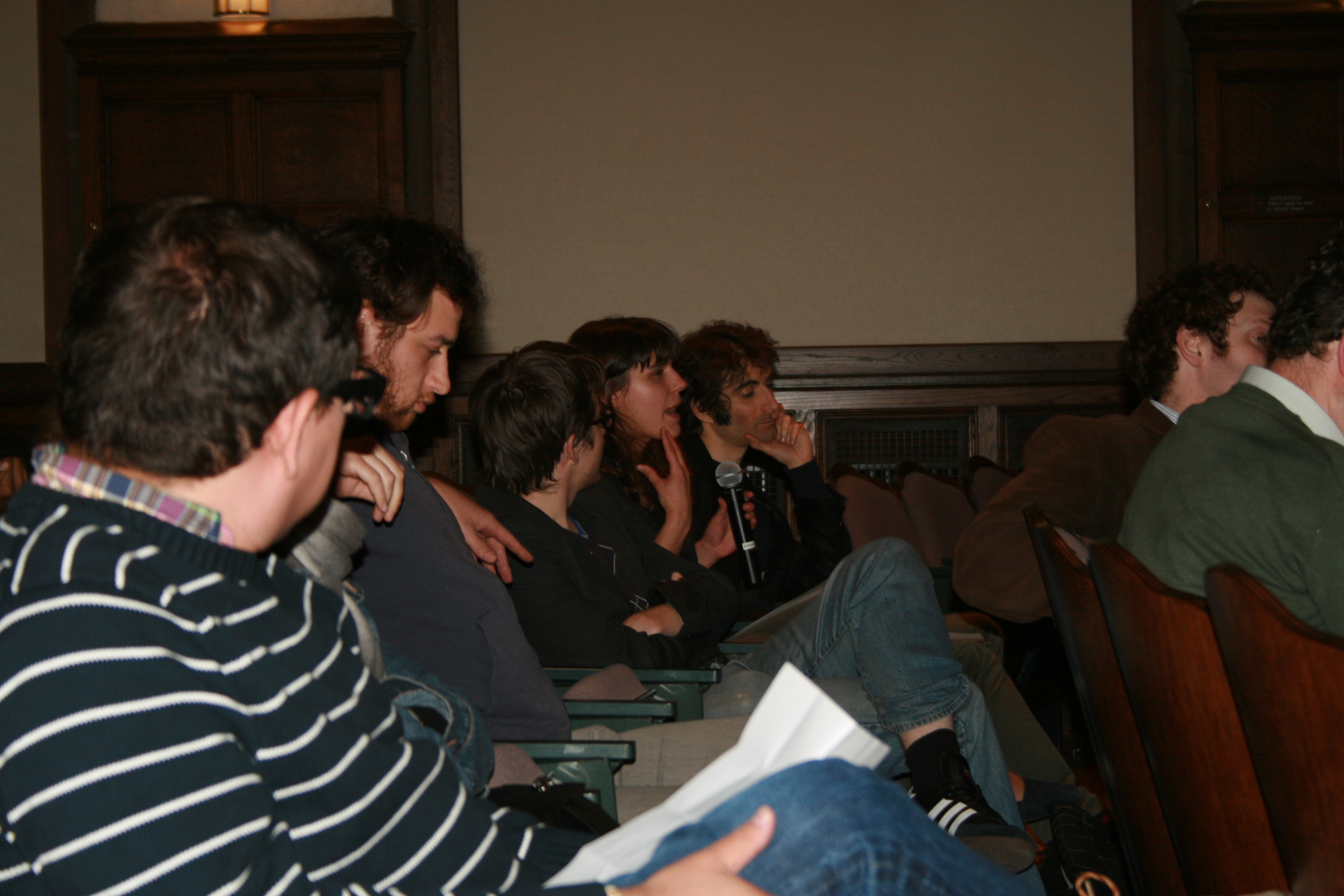
David Schwartz, chief curator at the Museum of the Moving Image, played host.
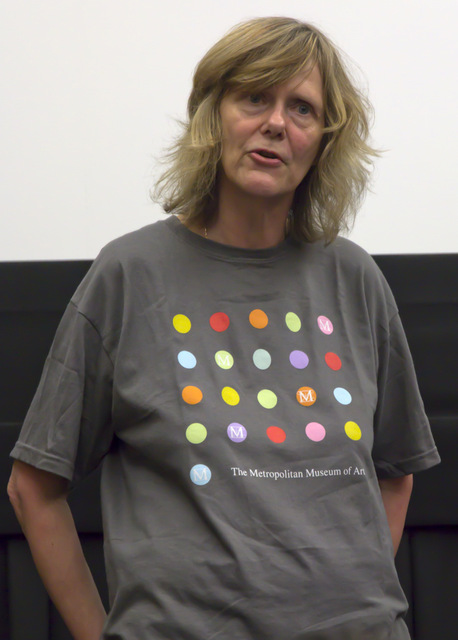
David Schwartz

I am not going to try to blog this conference in any detail.  David and I gave presentations about the use of media in presidential elections.  He showed us his incredible website, The Living Room Candidate, for which he has gathered a rich array of presidential campaign commercials from 1952 to 2008.
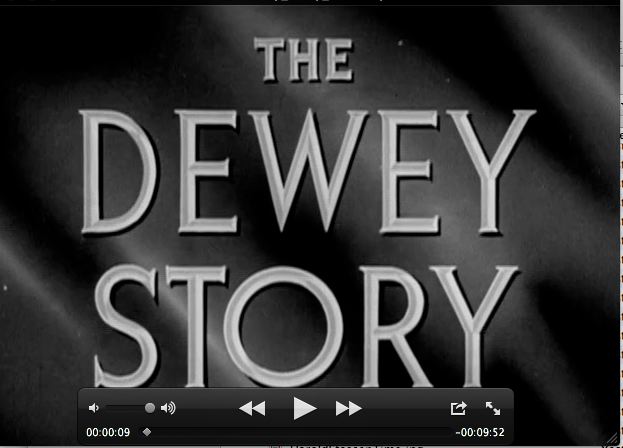
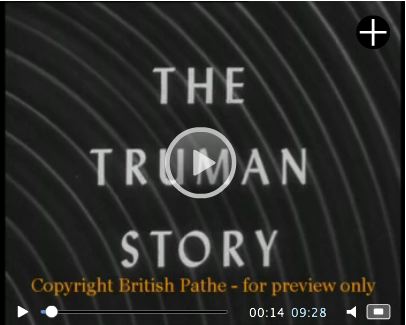
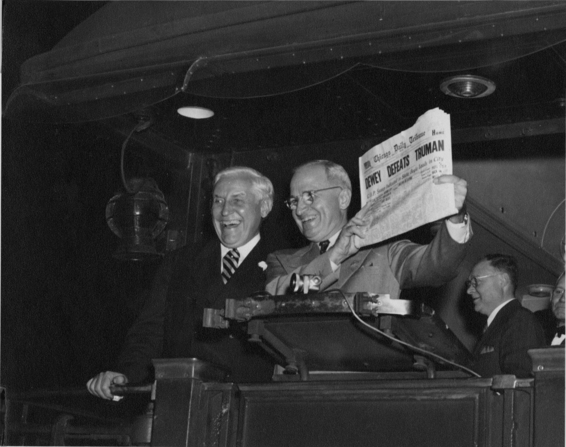
I provided his account with a little back story and showed three campaign films from 1948.  Although motion pictures had been used to proselytize for various presidential candidates since the first months of cinema (i.e. Biograph’s McKinley at Home, Canton O., 1896), it was only in 1948 that the use–or misuse–of motion pictures for electoral campaigns had a direct impact on the outcome of an election.  Governor Thomas E. Dewey had become the Republican nominee after winning a radio debate with his rival Harold Stassen–thus winning the Oregon Republican primary and securing the nomination.  It was the first modern presidential debate in US history.  A confident Dewey then hired Louis de Rochemont to produce The Dewey Story using reenactments and staged scenes with actors in the tradition of his series The March of Time. They planned to send 3,000 prints of the 10-minute film into US movie houses as paid political advertising.  It was almost a formality since everyone was convinced that Dewey would easily defeat President Harry Truman on Election Day. Nevertheless, Truman protested and got his own campaign film–The Truman Story, which was made almost entirely of newsreel material and assembled at Universal.  The Dewey Story was then released to the nation’s theaters as a public service on October 14th–and The Truman Story one week later.  From a comparison of the two films, it seems almost certain that the people making the Truman picture had seen The Dewey Story and were able to make a much stronger film as a result.  In any case, the powerful Truman film was shown to Americans after the Dewey picture and one week before the election.  Recall that roughly 90 million movie tickets were sold each week in 1948, while just under 48 million people actually voted. 
The Truman Story
proved to be the key element in Truman’s come from behind, upset victory.

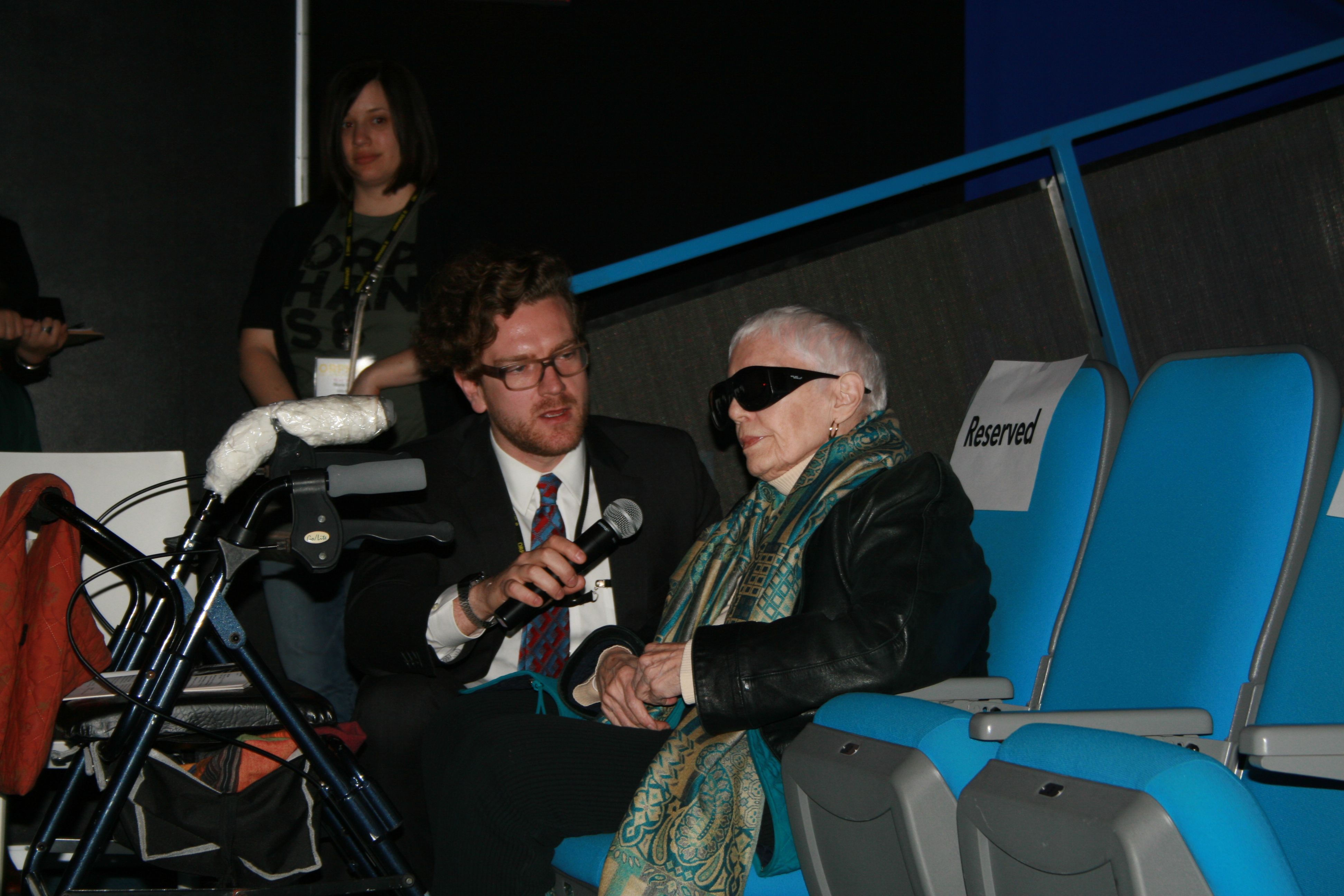
Otherwise, it was a chance to see a wide range of film material from the experimental work of Lillian Schwartz (Pixillation (1970), UFOs and Olympiad (1971), Enigma (1972), Papillons (1973), Galaxies (1974)) to booster films in the mid-1910s by Paragon Feature Film Company.  Lillian was there–mostly blind and with limited mobility–but a sharp and witty mind.

Walter Forsberg interviews Lillian Schwartz

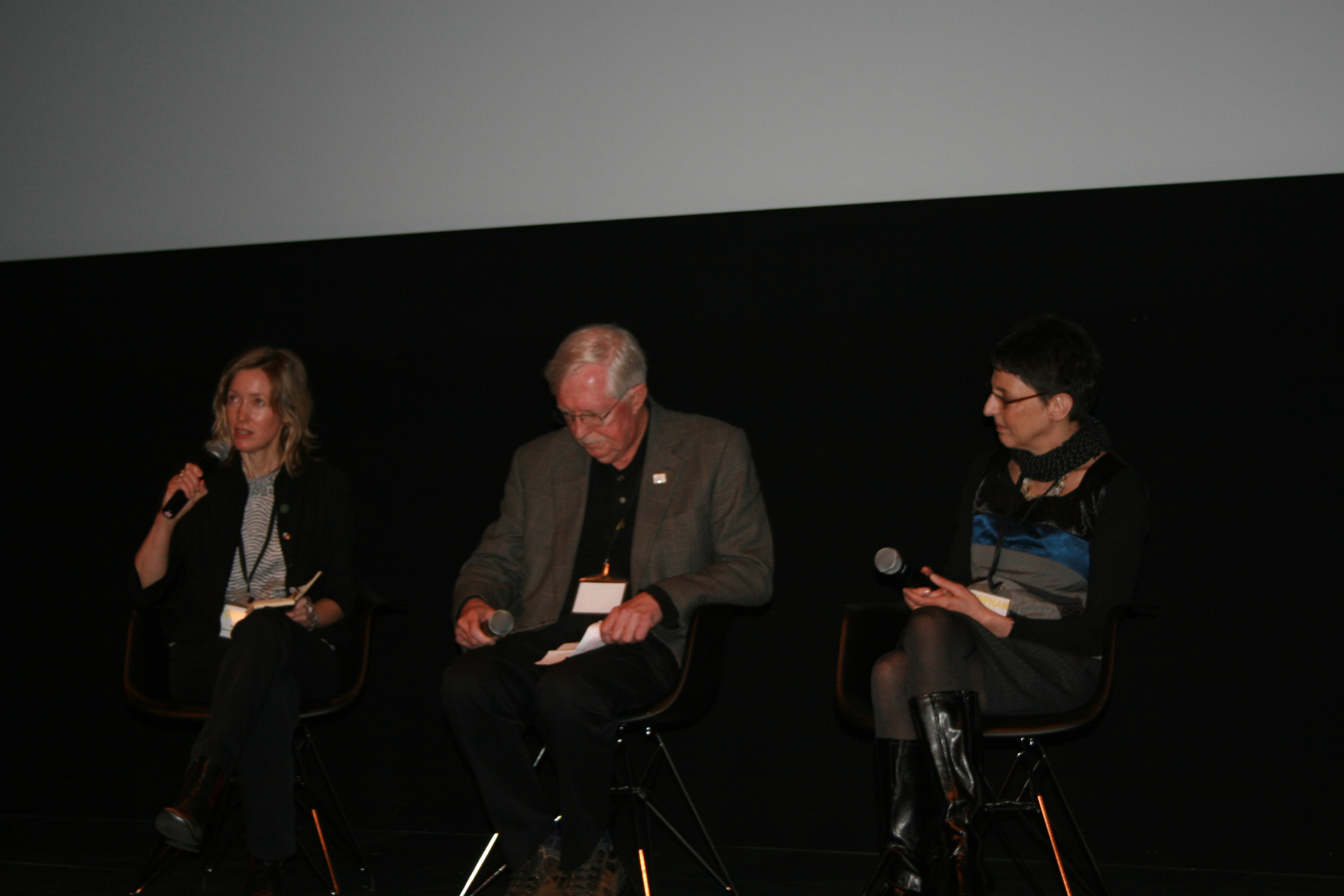
Laura Kissel (U of South Carolina), Larry A. Jones (the Arc of Washington) and Faye Ginsburg (NYU Council for the Study of Disability) presented and discussed Children Limited (1951, Children’s Benevolent League), an advocacy film for children and families with intellectual disabilities.

Laura Kissel–Larry A. Jones–Faye Ginsburg

The film depicted a supportive environment for these kids that was almost impossible to find in this period.  It was a ground-breaking, progressive film that nonetheless could not escape the limitations of its period.

Between presentations and screenings, there was coffee (lots of coffee) and meals.  It was a chance for all of us to catch up with friends we too rarely see:

Eli Savada, Paul Spehr and Bob Summers

I worked with Bob Summers back in the 1970s when he was running the Museum of Modern Art Film Circulating Collection.  Paul Spehr, who needs no introduction after his magnificent biography of W.K.L. Dickson was someone I got to know very well at the Library of Congress in the 1970s and into the 1990s. Eli also worked in and around the Library of Congress–in particular on the pre-1910 AFI catalog.

If David Bordwell and Kristin Thompson have provided our Film Studies field with its longest running study date,  Devin and Marsha Orgeron have reinvented the academic film couple in a way that has won my heartfelt admiration (in this I suspect I am not alone!) .

Devin and Marsah Orgeron

Full disclosure: At Oprhans 7, Marsha, Devin and I conspired to give Dan a lovely wall clock.  See below:

Dan's Trophy

It was Marsha’s wonderful idea–– a way to express our deepest, heartfelt gratitude to Dan.  On 3/25/10 7:09 PM, Marsha Orgeron wrote:
Hi Charlie,
Just got a call today from the vintage store and the ugly frog wooden sculpture clock is all mine. I’ll pick it up tomorrow or Saturday.

On 3/26/10 3:56 PM, Marsha Orgeron wrote:
Hi Charlie, Snowden, and Skip,
This is the frog clock I picked up for Dan (see attached). It was actually handcrafted in Mt. Pleasant, S.C., which suggests to me a strong likelihood that the artist (such as he is) saw Ro-Revus as a child and that the frog never was far from his mind.… Hush….it’s a surprise.

In truth, Marsha and Devin developed some real affection for the little guy.  Before finally parting with the souvenir, they added a small plague reading “For Dan Streible, rescuer of orphaned films, mascots, journals and scholars.”

But life at the Orphan Film Symposium is not all fun and games.  Here Dartmouth professor Mark Williams is helping me teach Yale grad student Josh Glick (my advisee) a few lessons about conference schmoozing.

Mark Williams & Josh Glick

My basic lesson plan for the week was carefully crafted and rigorous:  Day 1: Go to the Orphan Film Symposium; Day 2: Go to the Orphan Film Symposium, Day 3: ditto. After that, report back to me.

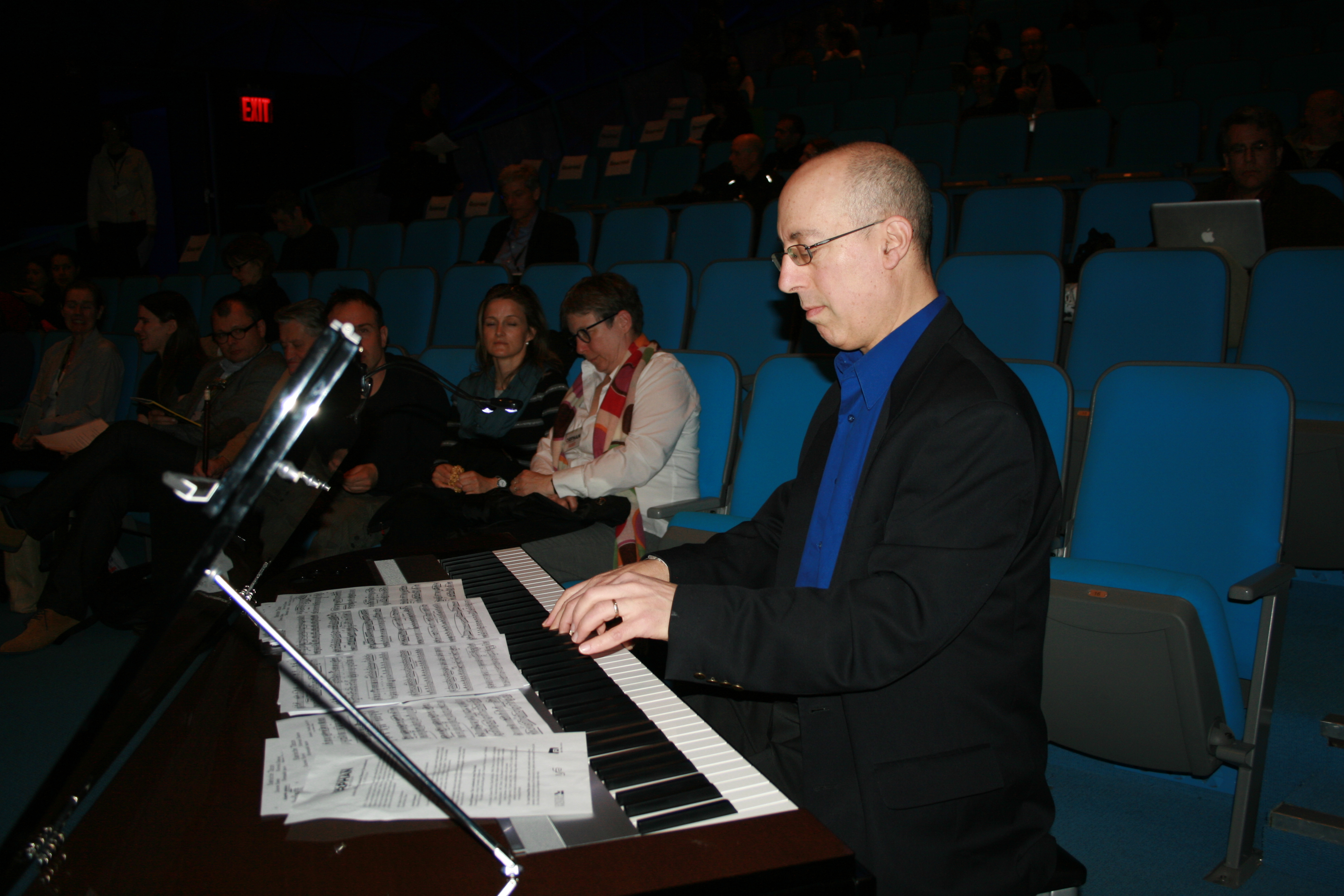
The last photo I took at Orphans 8 was of pianist Donald Sosin, whom I regularly see at the Giornate del Cinema Muto in Pordenone, Italy :

Donald Sosin on keyboard

Then my camera battery died and the charger was in New Haven.


Students Blog the Environmental Film Festival at Yale

Posted by chamus on April 10, 2012
Posted in: Uncategorized. Leave a Comment

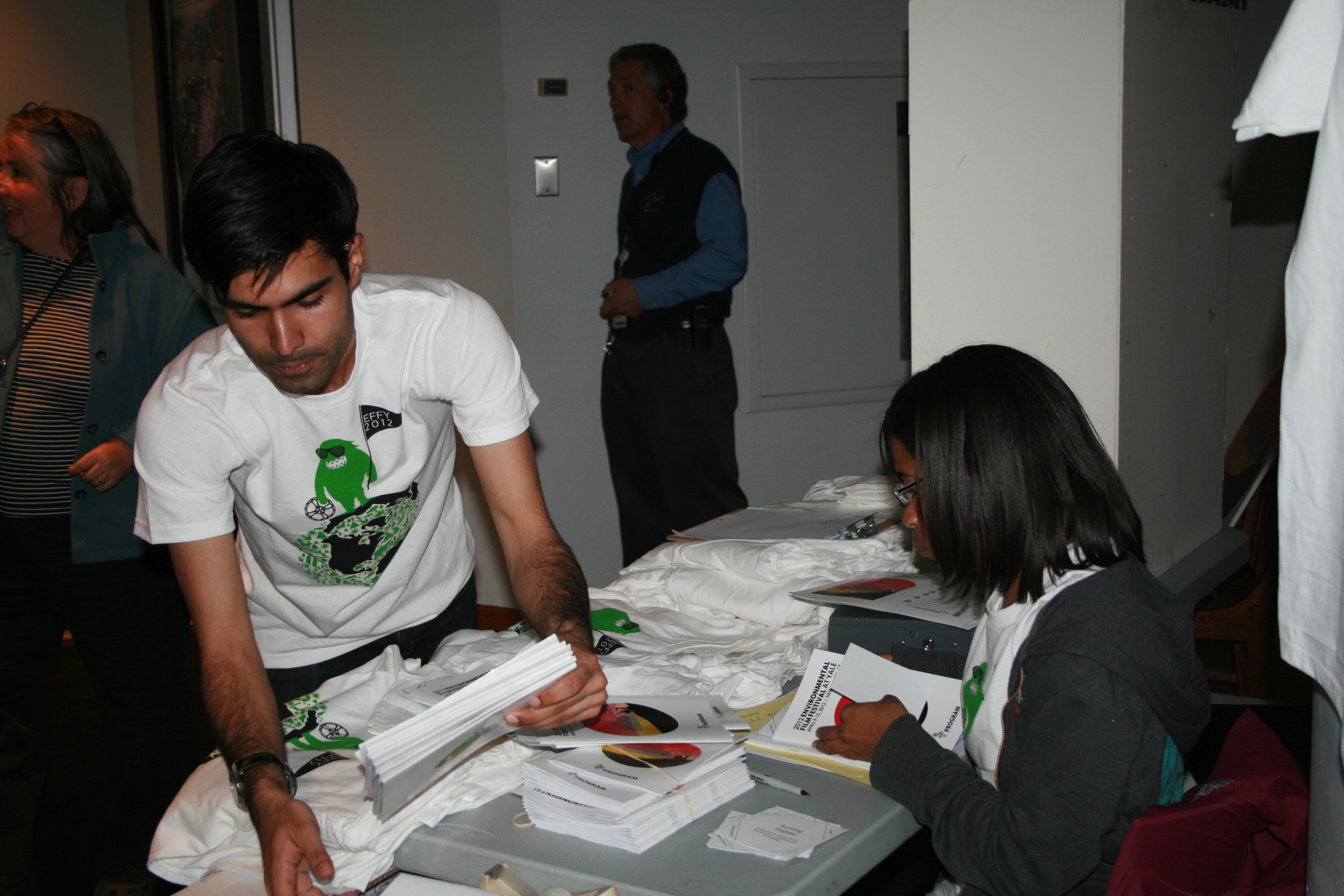
The Environmental Film Festival at Yale opened on April 9, Monday night in the Art Gallery Auditorium.  It was a gala event.

Jefffrey Kerekes–who ran a spirited campaign for mayor of New Haven against DeStefano––was there with his wife.


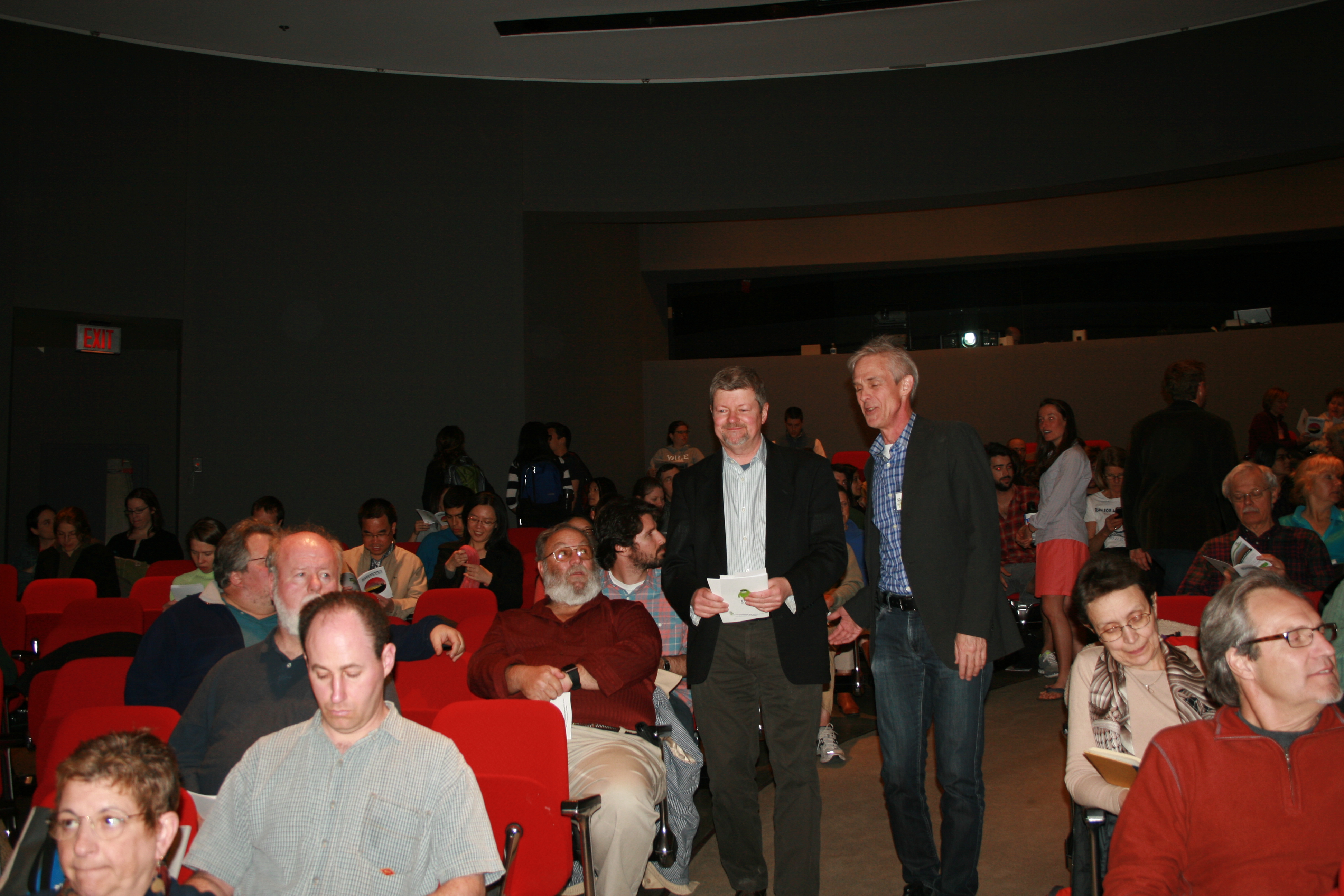
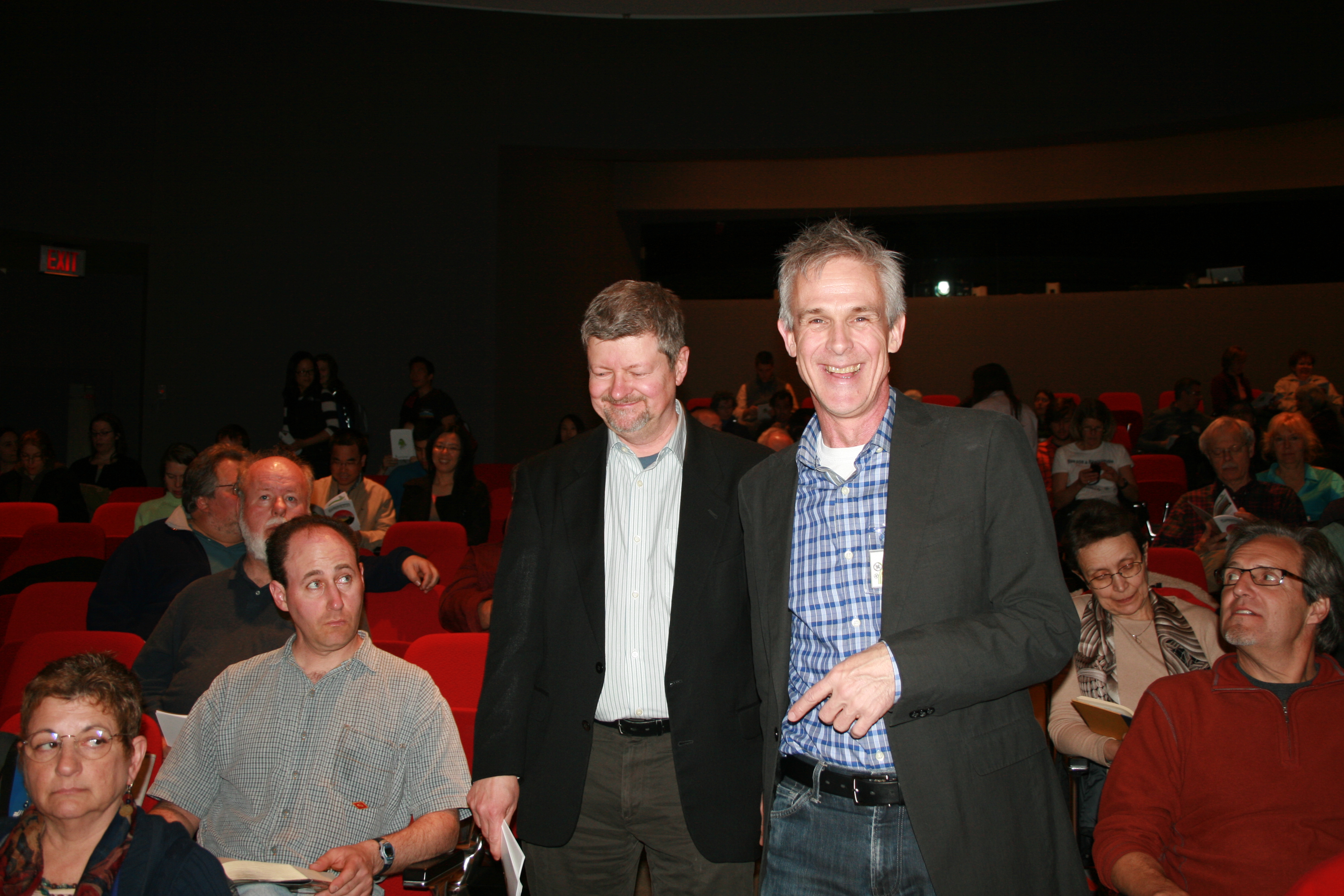
Various members of Yale faculty showed up. As George Chauncey of American Studies and Ron Gregg of Film Studies ambled down the aisle, I suddenly felt that the chairs should be grey and the carpet red.


The opening night film was Surviving Progress (2011) with co-director Harold Crooks available for a conversation/Q & A afterwards, led by Mary Evelyn Tucker, who has appointments in the School of Forestry & Environmental Studies as well as the Divinity School.

b

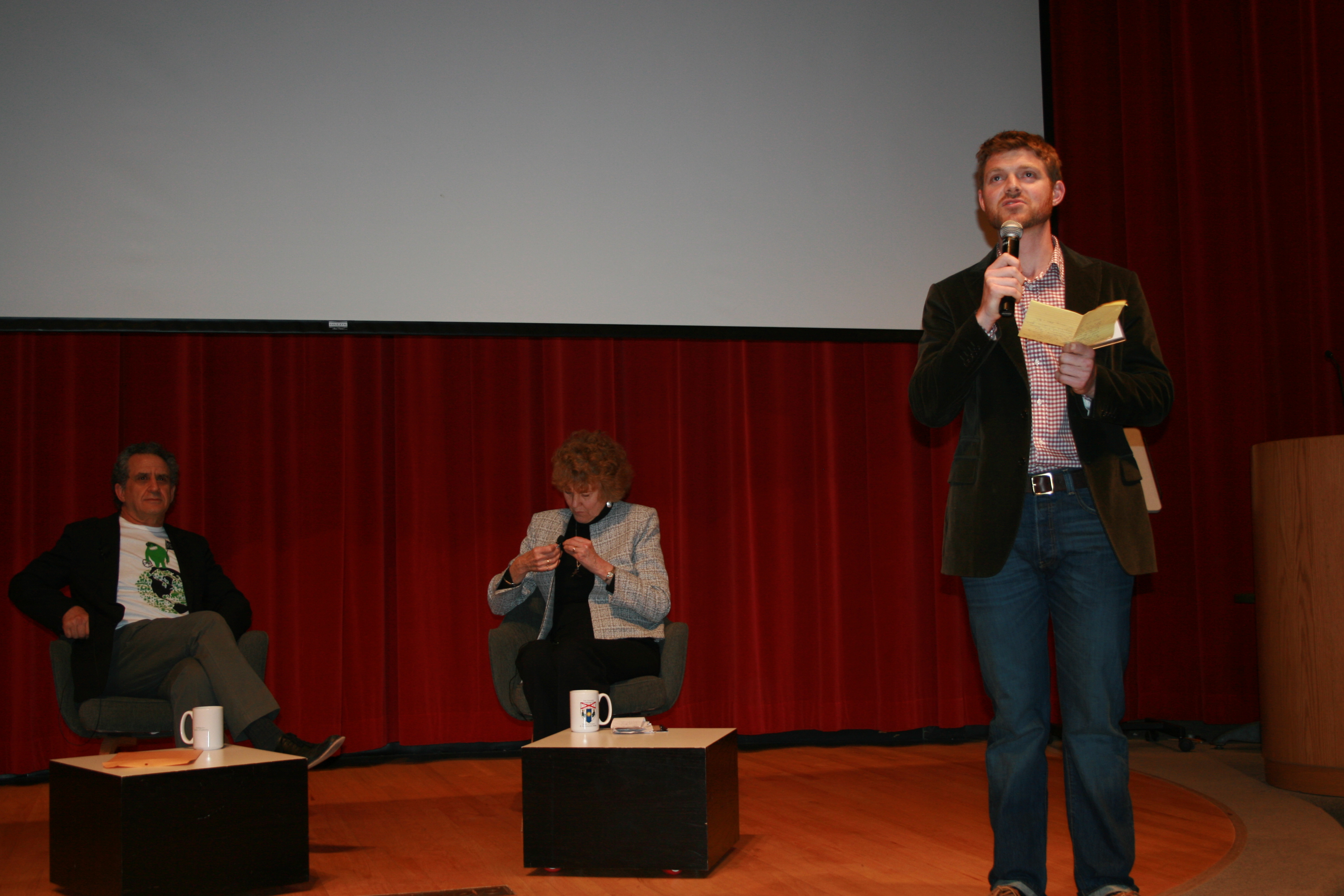
Paul Thomson introduces Harold Crooks and Mary Evelyn Tucker after the screening of Surviving Progress

I found myself sitting next to Carlos Torre, Professor of Education at Southern Connecticut State University and former President of the New Haven, Connecticut Board of Education.  He asked about getting Surviving Progress into the city’s schools.


Students in my class on Documentary and the Environment were there in force.  A number of them were blogging the festival:

You can find Camille Chambers and Russell Holmes’s blog @   http://effyblog.tumblr.com/

Victoria Balta is blogging @ http://victoria-balta.tumblr.com/


Alice Buckley and Victoria Montanez are blogging @ http://filmgirlsgonebananas.wordpress.com/

I taught this course really for two reasons.  First, I feel that the Environmental Documentary is the most vital and central genre within documentary at the present moment.  Second, I wanted to create a class that could take advantage of this wonderful festival.

My frustration is that there are three major festivals/conferences over this long week/weekend.  Besides EFFY, there is Full Frame Documentary FIlm Festival in Durham, North Carolina and the Orphan Film Symposium at the Museum of the Moving Image in Queens.  I am giving a presentation at the Orphan Film Symposium.  So follow the festival on my students’ blogs. And it works best if you can actually attend the films!

 Addendum!

A Joint Statement about Blogging the Environmental Film Festival @ Yale

by Russell Holmes and Camille Chambers

go to: http://effyblog.tumblr.com/

We both really enjoyed this experience from start to finish. EFFY picked compelling films and it was exciting to go every night, watch the screening and then hear about the film from a filmmaker or guest. The films covered a variety of issues and presented arguments in different ways, so the experience never felt repetitive. Being a blogger meant a transition from a passive viewer to a more involved viewer. Instead of just watching a film and noticing whether or not we liked it, we went into the films with the intention of picking apart the arguments and the methods used to further these arguments. The seminar and class screenings gave us many of the tools we needed to do this, and the weekly responses prepare us to churn out the blog posts on time so that a followed of the blog would be up to date. The screenings from class were in dialogue with many of the EFFY films, so it was often relevant to compare films to see what worked and what didn’t. The experience of being a blogger was a learning experience, and allowed us to apply our knowledge to new films.

A note on our methods:

Between the two of us, we attended every film and event, and we overlapped on many of the screenings. During the screening we would take handwritten notes to remember important quotes and techniques. After the film, we compared our thoughts on the persuasiveness of the film and the overall message—which we translated into our rating system. One or both of us would then write up the blog post for the night, keeping in mind that it should be useful for people who had and hadn’t attended the screening. We also attended the special EFFY events, like the discussion with Colin Beavan, which we thought were really interesting. Blogging these was fun because it added another level to our account of EFFY. Camille was also able to entertain an exclusive interview with Andrew Grace of Eating Alabama and this added some value to our blog because it was something that could only be found on our site. What was challenging—and this is where the importance of a partner comes in—was the time commitment it took. Every night of the week and throughout the weekend, there was a film screening. A guest speaker usually followed each screening, and the whole process took about two hours. Then, to produce a blog post that really analyzed the film thoughtfully took about another hour. We wanted the blog to be functional and up-to-date so it was important to us to get the posts up the night of the event or screening. This also was very writing intensive, and we ended up writing over 40 pages (double spaced) of posts. Because it was the first film festival that either of us had attended and neither of us blog regularly, we initially expected we might run into some hurdles. However, the process went relatively smoothly. We picked out and customized a blog format on tumblr, and intentionally made it viewer friendly. We scheduled which events we would attend and checked in regularly with each other to make sure that the blog was up to date. Once everything got off to a smooth start, we even decided to try and promote our blog through the EFFY Facebook page, which ended up getting us a few followers. Good planning and timely completion of the blog posts was key to keeping us on track.

What we learned:

After this experience, we both felt like we were experts in the field of environmental documentary. After reading Spence and Navarro and analyzing the screenings in class, we had a lot of analytical devices with which to parse the films. We watched so many films in a short period of time that we became very good at picking out what exactly worked and didn’t work. We were able to look at the films through the elements of bias, authenticity, evidence, narrative voice and several other filters. When you see a finished documentary it is easy to forget the process behind it. EFFY, through its use of guest speakers, constantly reminded us of the process. The director or filmmaker makes many decisions throughout the course of filming, and blogging the festival constantly reminded us that what we were seeing was someone’s vision for the documentary. The experience of attending all of these films also taught us a little bit about the culture of a film festival. The time we spend in class is mainly spent analyzing the films, which misses our a little on the culture of film. When we went to the screenings and saw the EFFY team, the filmmakers and the excitement of the viewers, it added to the experience of the documentary. We thought that this was a valuable learning experience and that it complemented the class very well.

Final note:

We do not plan on taking the blog down, so presumably it will remain on the internet for a long time. We have enjoyed the experience, take pride in the finished product and would be happy to share it with anyone.


Posts navigation

← Older Entries
Newer Entries →