Charles Musser

cultural historian/filmmaker/professor

  • About
    • Summary and Links
    • Filmmaking Bio
    • Current Research and Writing
    • Vita
  • Films
    • An American Potter
    • Before the Nickelodeon
    • Errol Morris: A Lightning Sketch
  • Books
  • Recent Essays
  • News
  • Short Pieces
    • Industry’s Disinherited (Union FIlms, 1949)
    • The Investigators (Union Films, 1948)
    • A People’s Convention (Union FIlms, 1948)
    • 1. A Feminist Moment in the Arts: 1910-1913
    • November 28, 2011 Panel Discussion: “Public Humanities, Documentary FIlmmaking and the Academe”
    • Panel Presentation at Yale on February 24, 2010: My Media-Related Research
  • On the Road: Future/Present/Past
  • Contact
  • On the Creative Side: A History of Film and Media Production Courses at Yale
  • Writing, Filmmaking, Scholarship: Working with Errol Morris
  • Posts to Come

Summer Travels in the Philippines. Part III: Family

Posted by chamus on September 12, 2013
Posted in: Uncategorized. Leave a Comment

Our trip had three, maybe four dimensions.  Without them, it would not have made sense.  And together it made a memorable and rewarding visit–certainly the most successful of our trips as a family.  First, we wanted to see family, but mostly particularly we wanted John Carlos to reconnect with his extended family and also with daily life in the Philippines.  Core family was in the Cebu City area.  Picture taking was, of course, required:
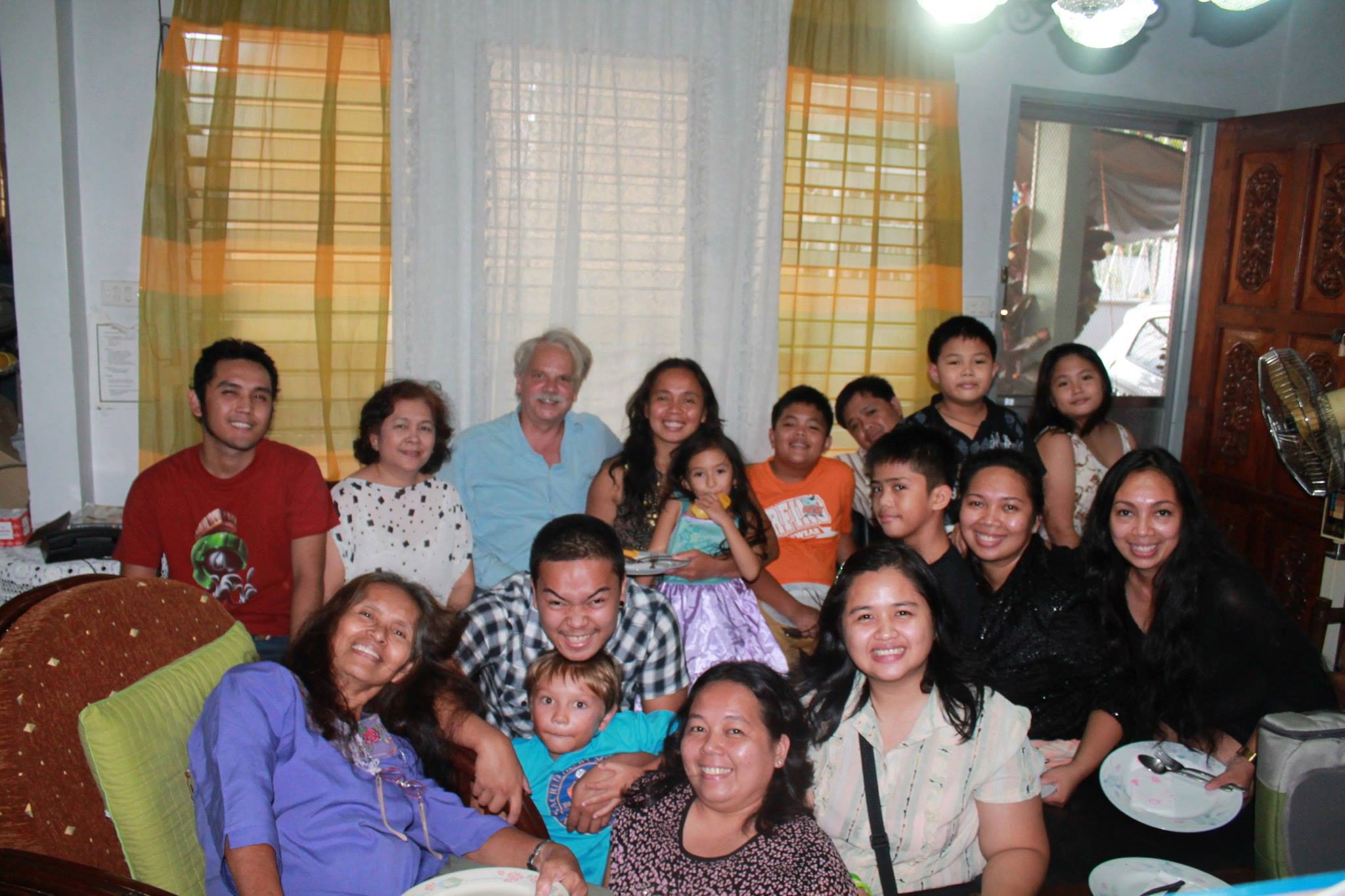
The Serana Family at a Small Celebration

The Serana Family at a Small Celebration

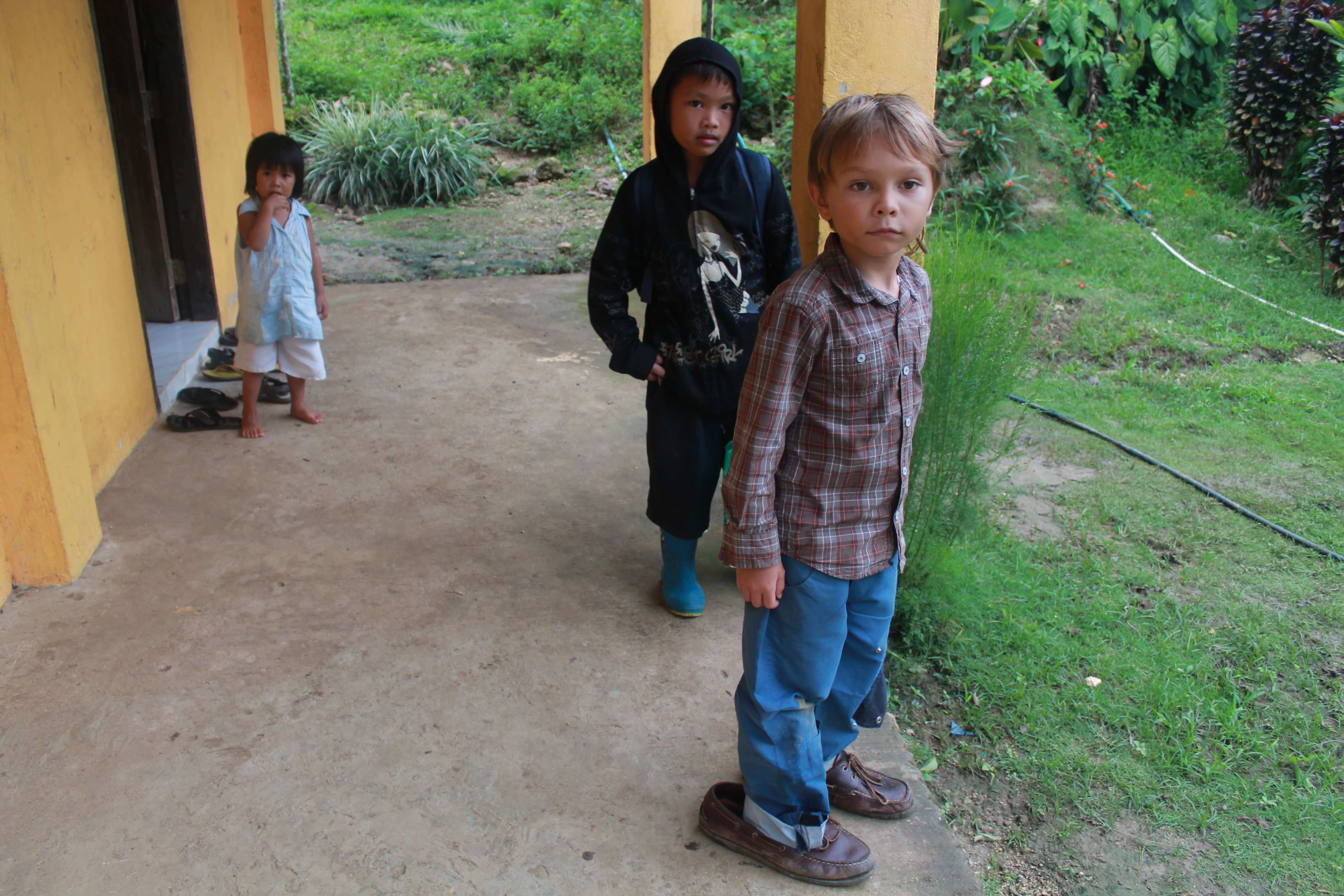
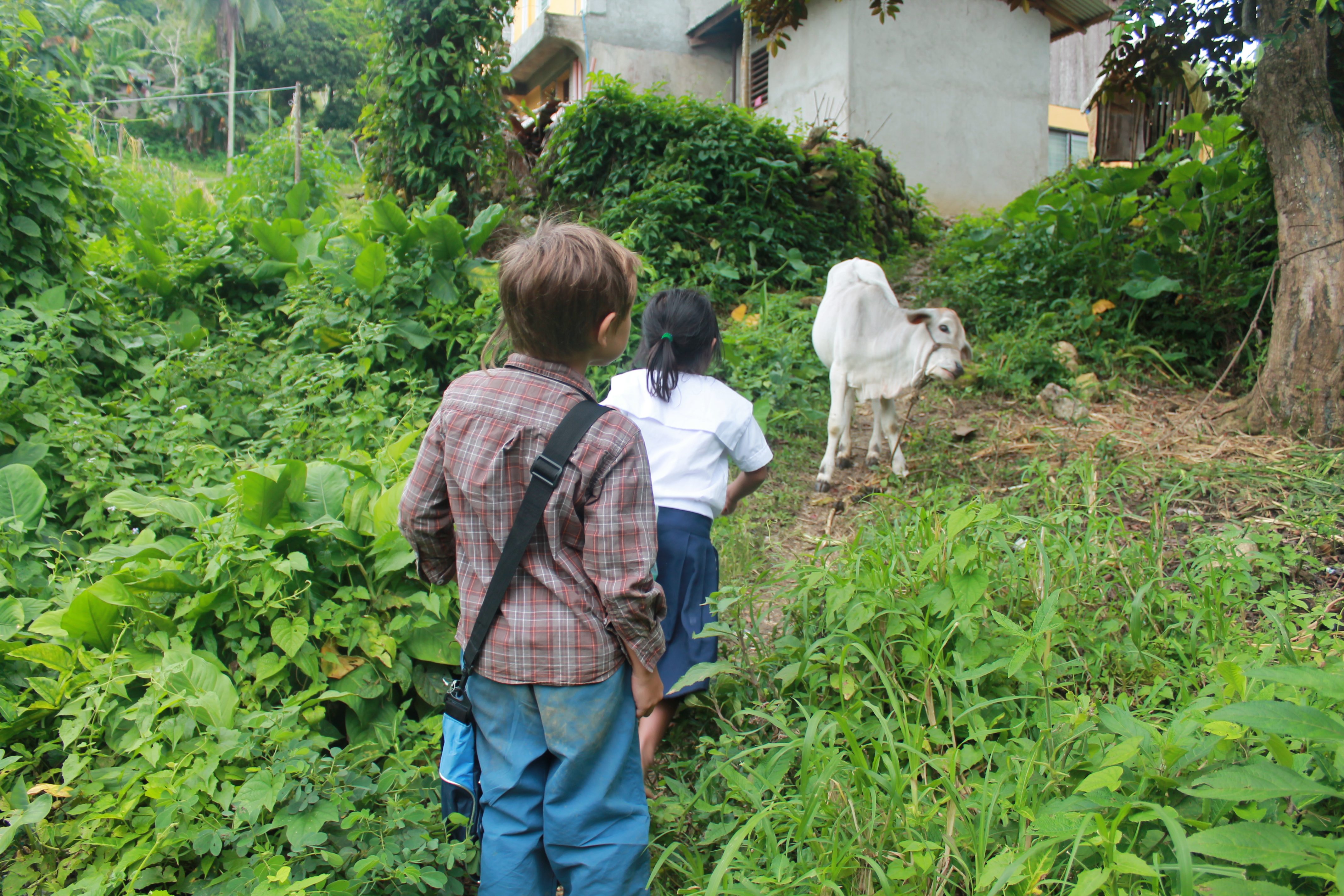
John Carlos and Threese spent several weeks in Manlapay in the Southern part of Cebu Island.  Her mother grew up there, and it is one of two towns composed primarily of relatives.  John Carlos went to the local primary school, where classes are conducted in Cebano.  His teacher was a relative, the principal was a relative and many of his classmates were second cousins.
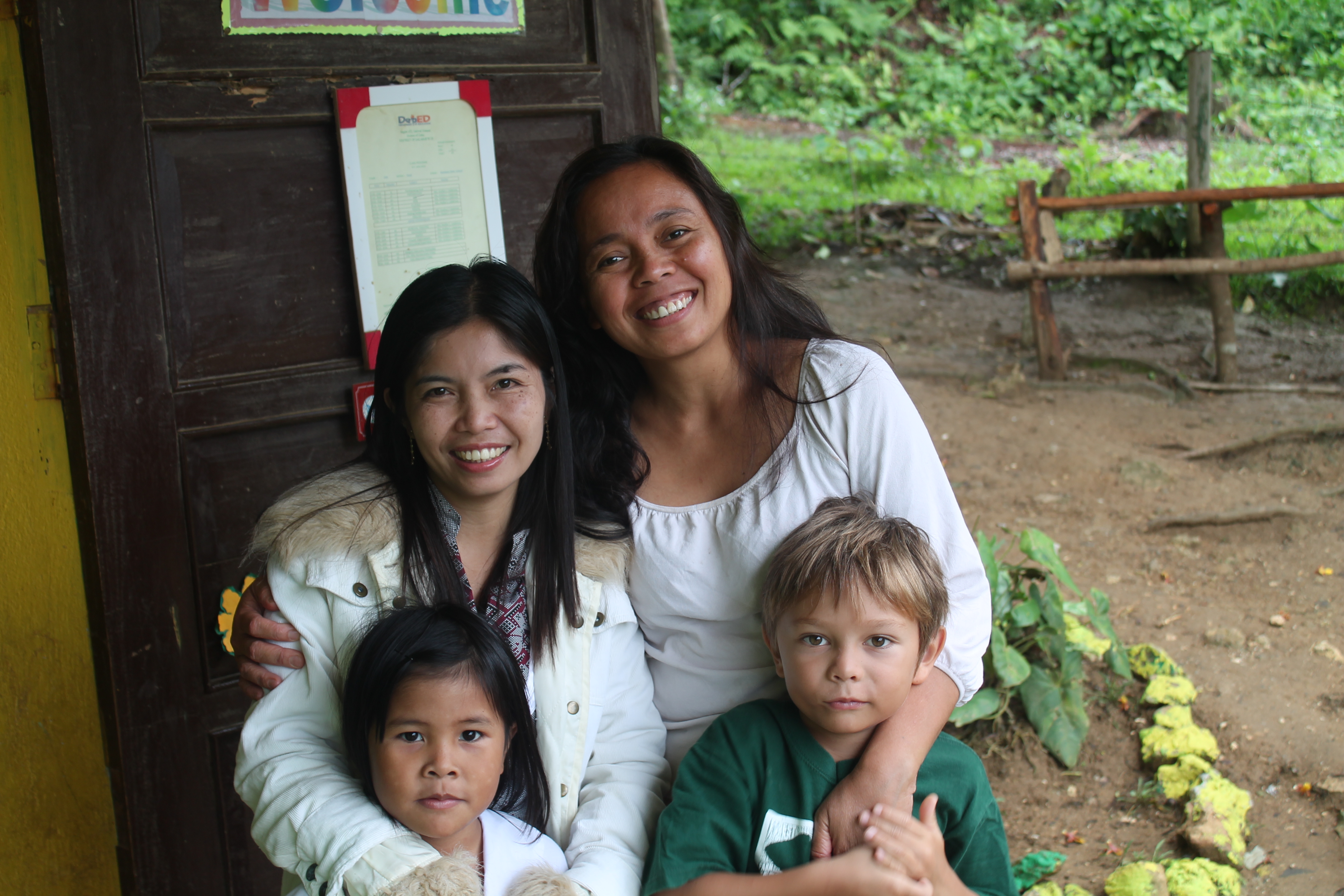
John Carlos's first-grade teacher Analisa Cartesiano.

John Carlos’s first-grade teacher Analisa Cartesiano.
IMG_3102IMG_3195


I managed to spend a few days there a the end of our stay.  We stayed at another Aunt’s house–she was in Texas but other family members were living in half of the house, so we moved in.

Threese cooking in the Dirty Kitchen

Threese cooking in the Dirty Kitchen

Playing Angry Birds at Home.

Playing Angry Birds at in the Living Room.
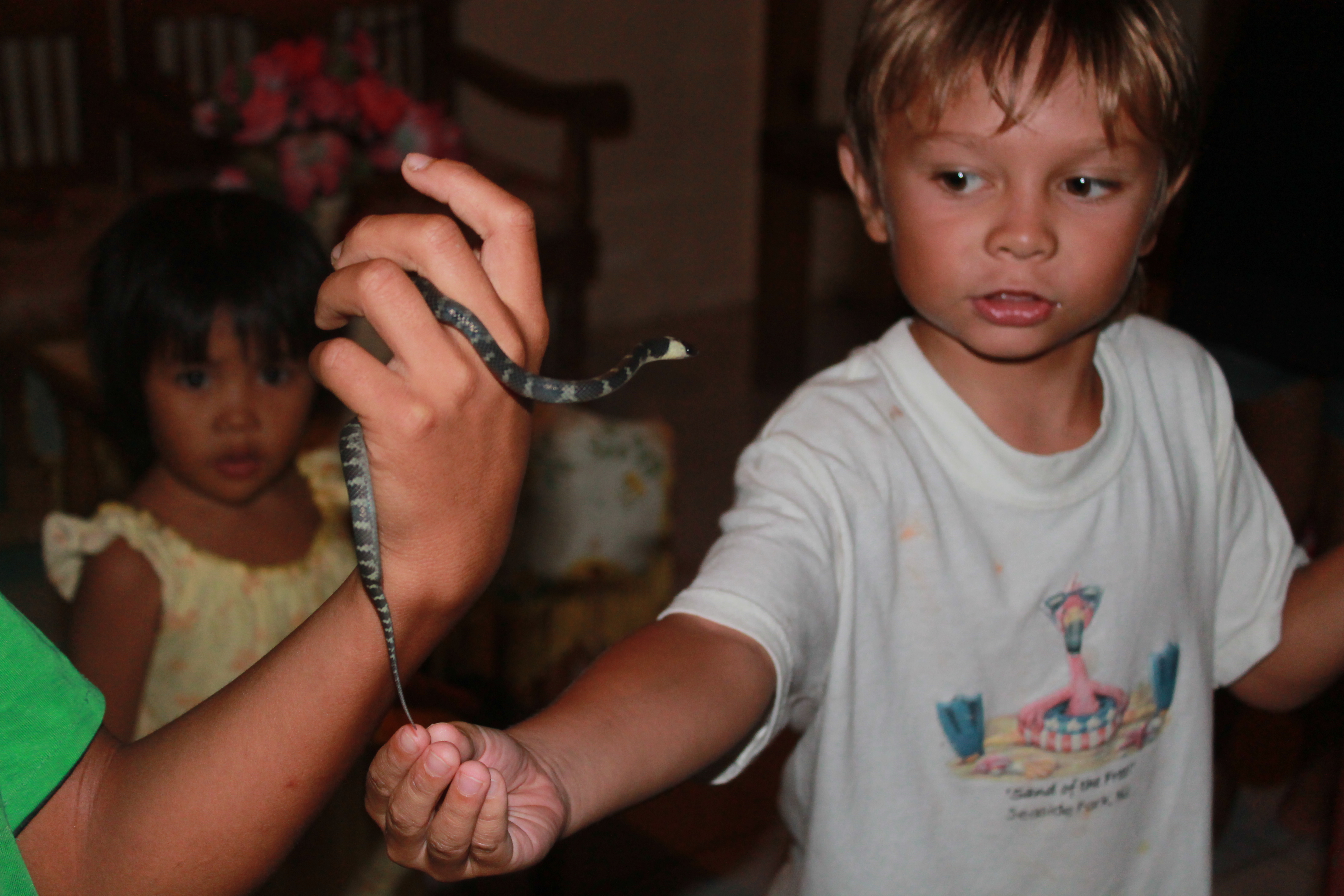
IMG_3074IMG_3212There is no cell phone service or Internet in Manlapay.

That Monday we descended on the school with video and still cameras.

We had visited Manlapay once before––for about an hour when John Carlos was one and a half.  The roads were consistently tortuous–almost impassable then.  Everyone but the driver (me) had to get out numerous times to lighten the car and push. This time the roads were much improved.

John Carlos and his Classmates

John Carlos and his Classmates

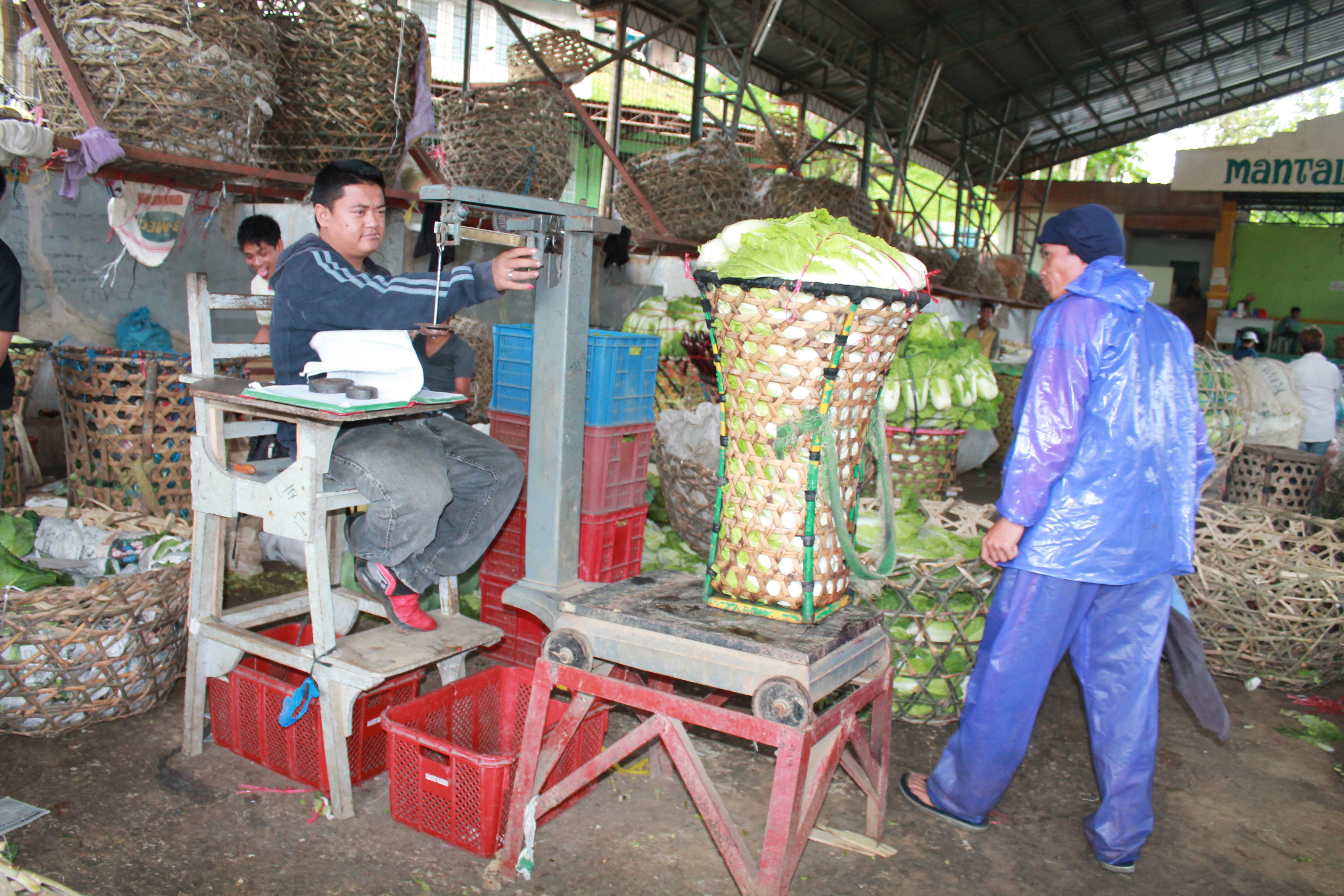
The drive from Dalaguate to Mantalongon, the market center for vegetables in this area (it is known as the vegetable basket of Cebu), was quite easy due.  We stopped to see one of IMG_2996Threese’s uncles, who owns a bakery and ended up doing some filming. A little like typical tourists, we were impressed with the
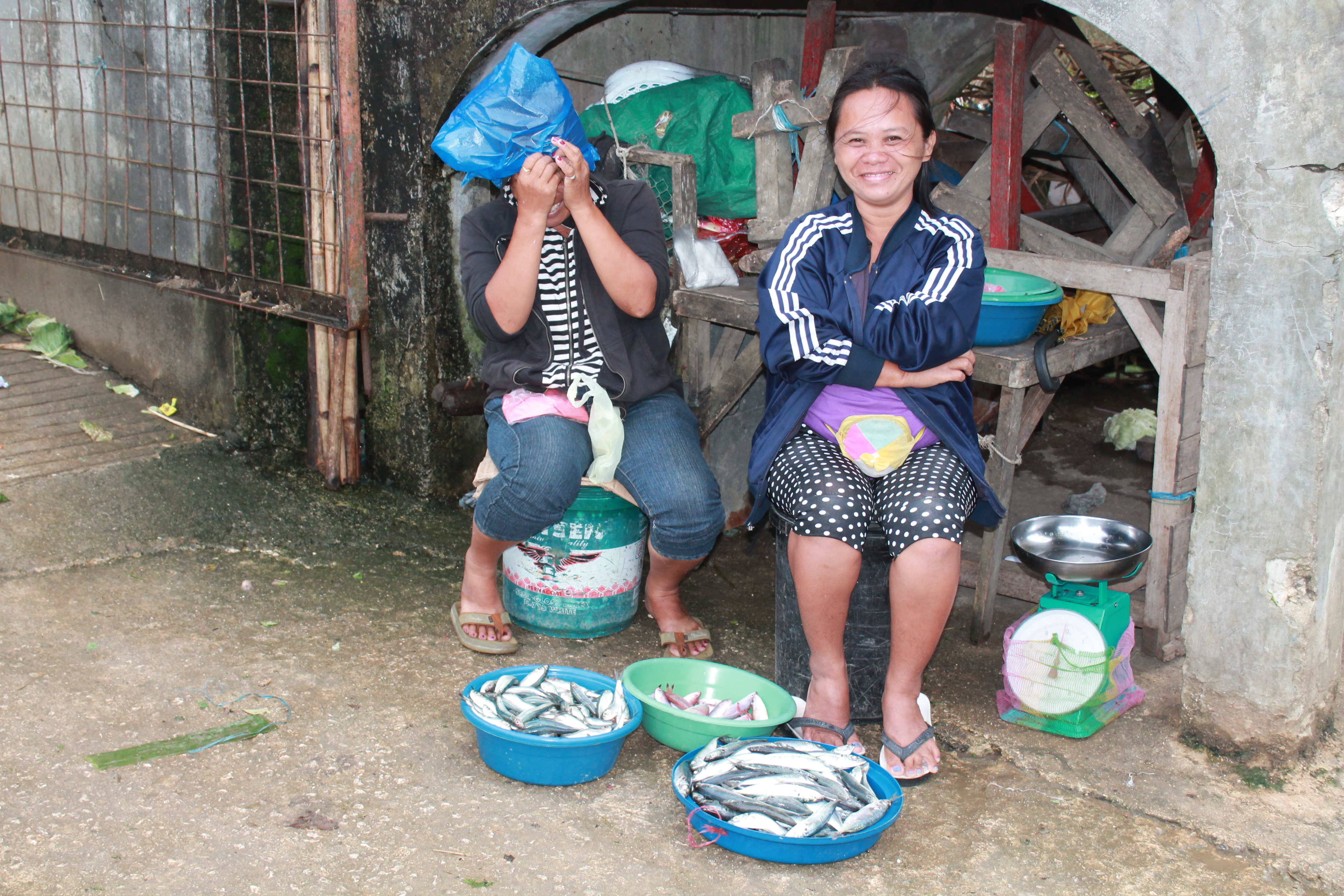
Threese's Aunt

Threese’s cousin–or is she an Aunt?

large open shed where farmers were carrying in the cabbages, carrots and so forth.  The weather was cold and windy: people were wearing jackets–not at all what one thinks of this part of the world.  We unexpectedly ran into one of Threese’s aunt–a woman who had been reasonably well off until her husband was killed by one of the buses that barrel along the highway––for which she received no compensation.  Now she is raising her child by selling fish in this market town.

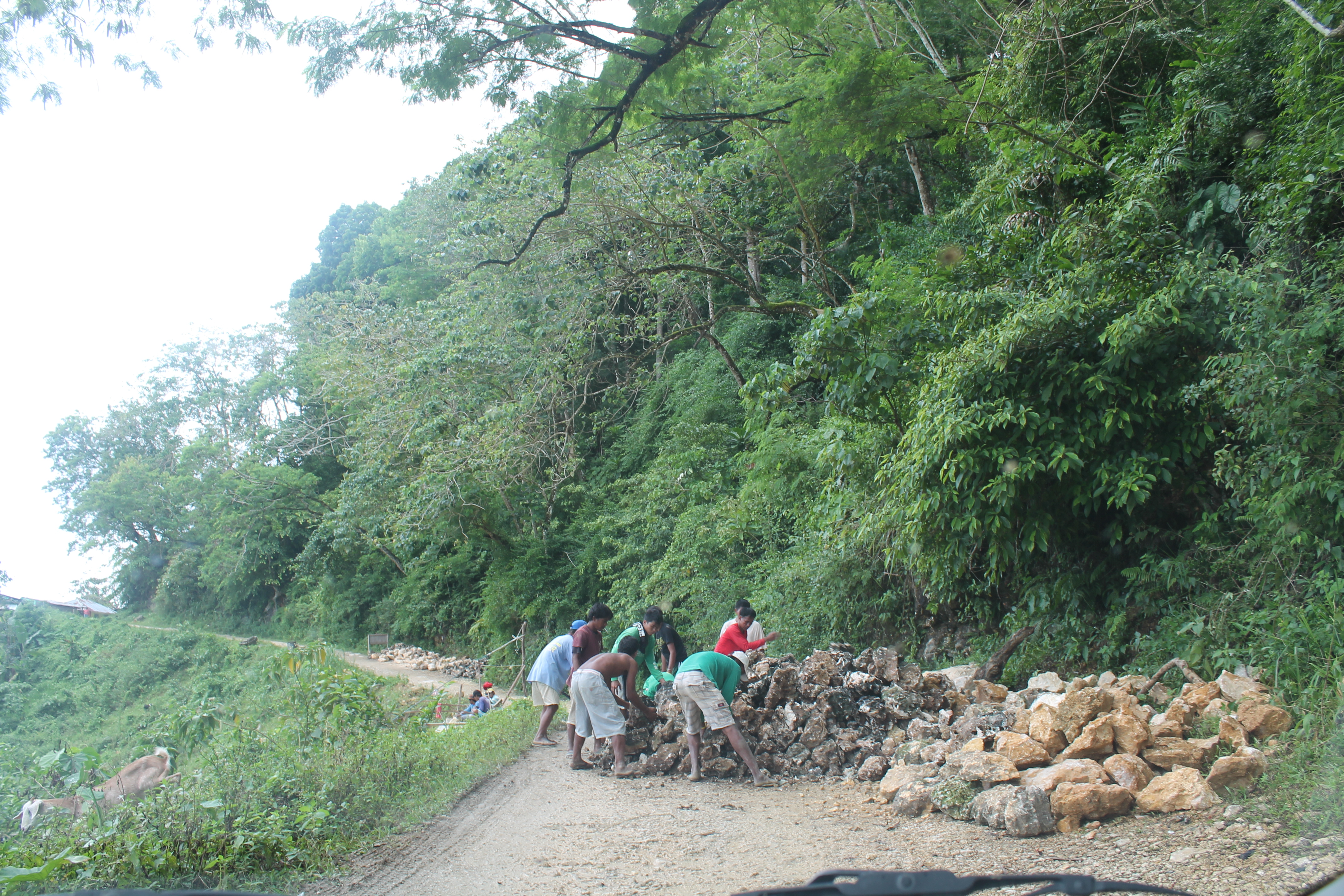
They were busy building paved roads from Dalaguete to Manlapay, but the work was being done in noncontinuous sections. We had more difficulty going from Mantalongon to Manlapay–and later back again.  On our way out, we were stopped by several different crews who were widening the road.
They Wor on the Road.  We Wait to Pass.

They Work on the Road. We Wait to Pass.

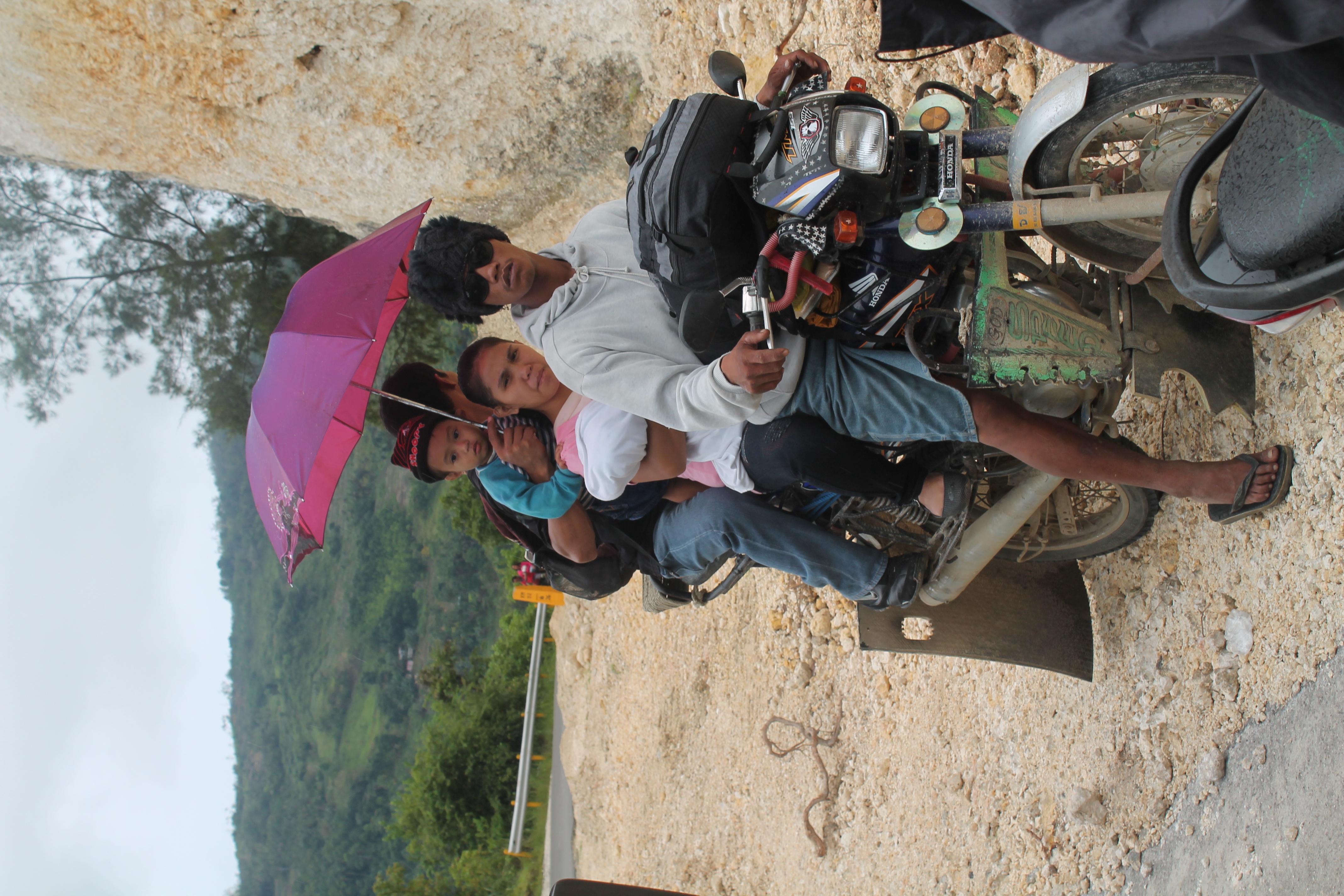
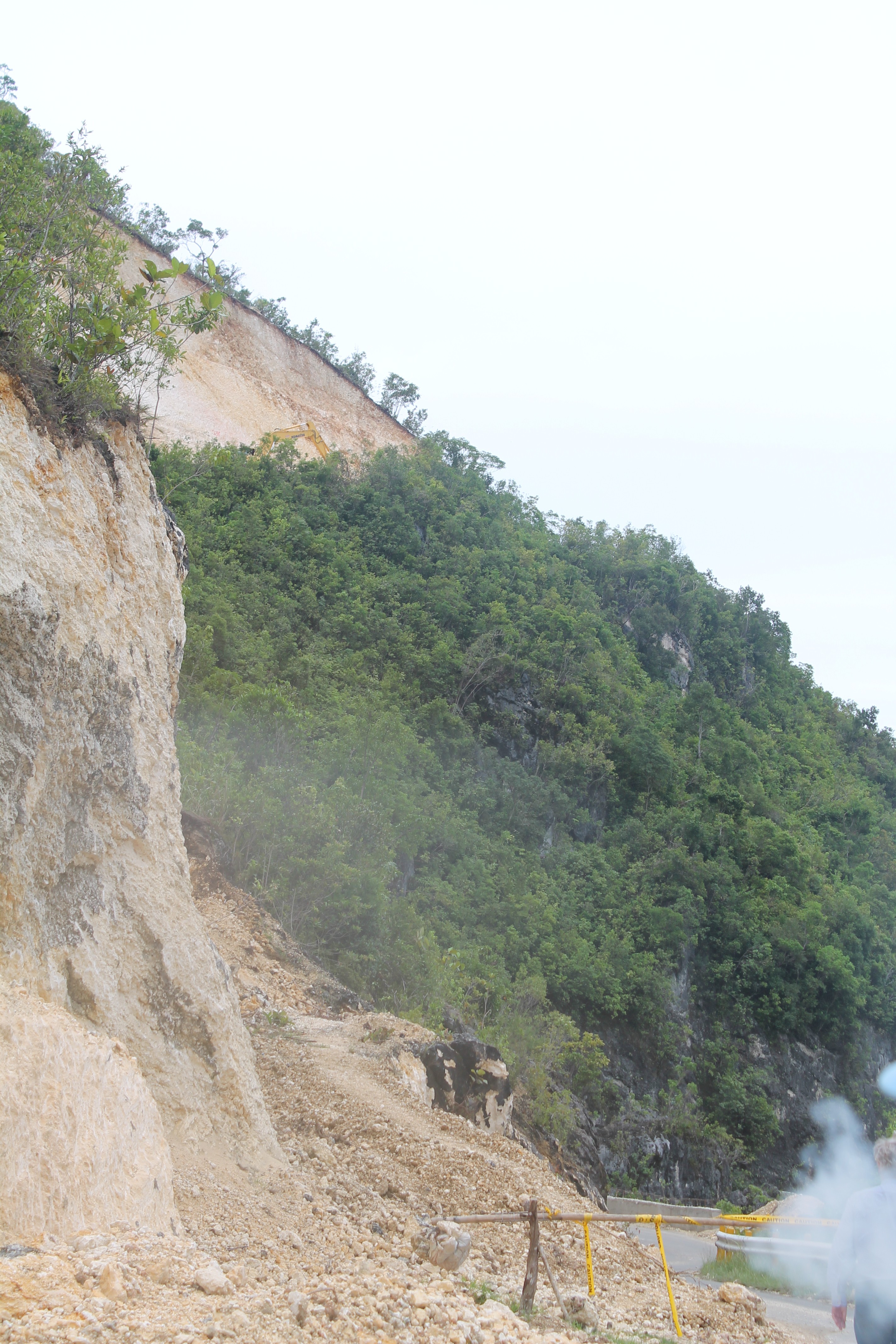
In this mountainous countryside, the roads are often treacherous.  The most poignant spot was one I remembered from our previous visit: a narrow curvy section along the edge of a cliff.  This is where the truck that was carrying coal and Threese’s grandmother went off the road, killing her and everyone else.  She was on her way to Cebu City (a six hour drive) with vegetables to sell and to buy a wedding cake for a relative.  That section of the road was being widened as we left:
IMG_3353IMG_3360

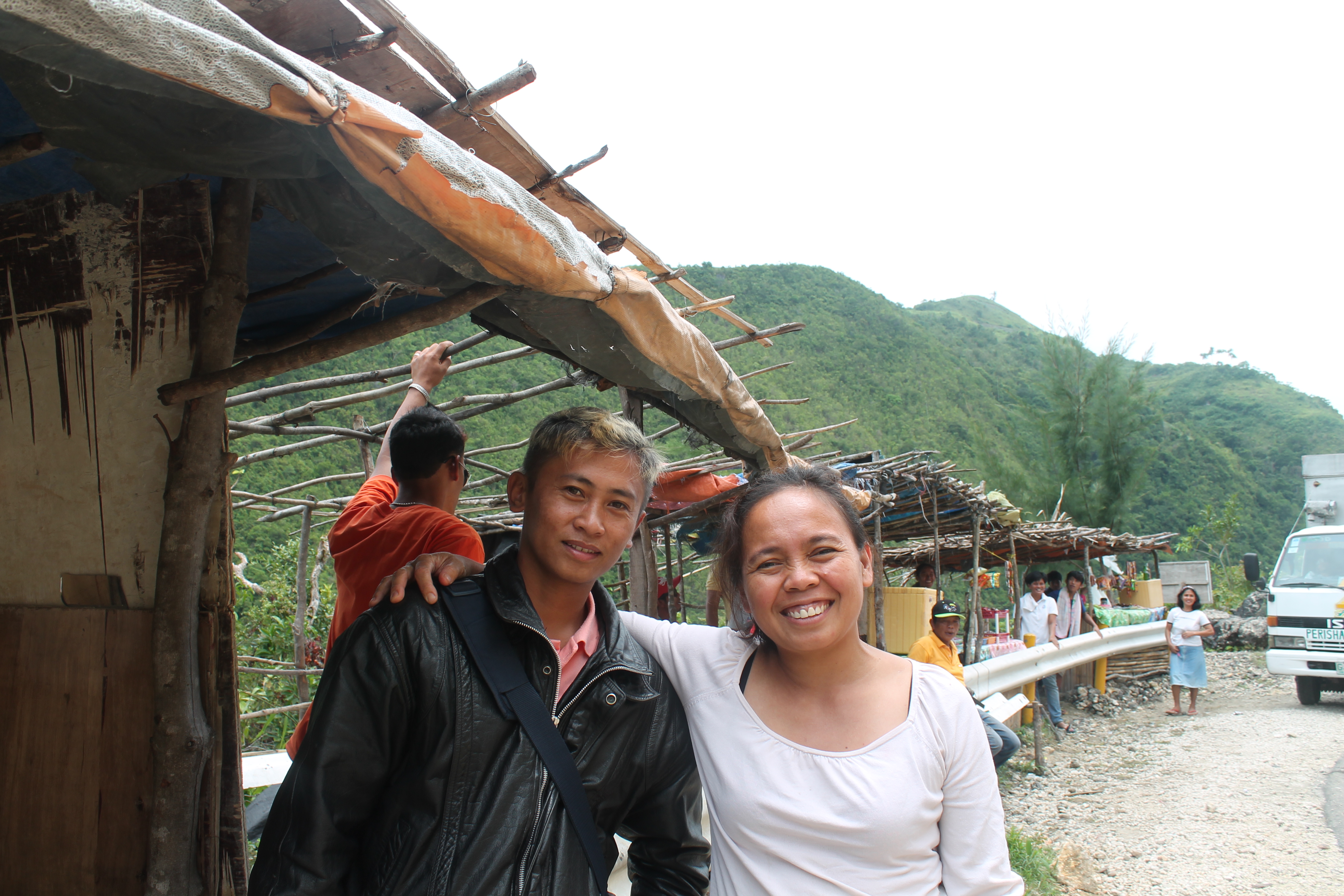
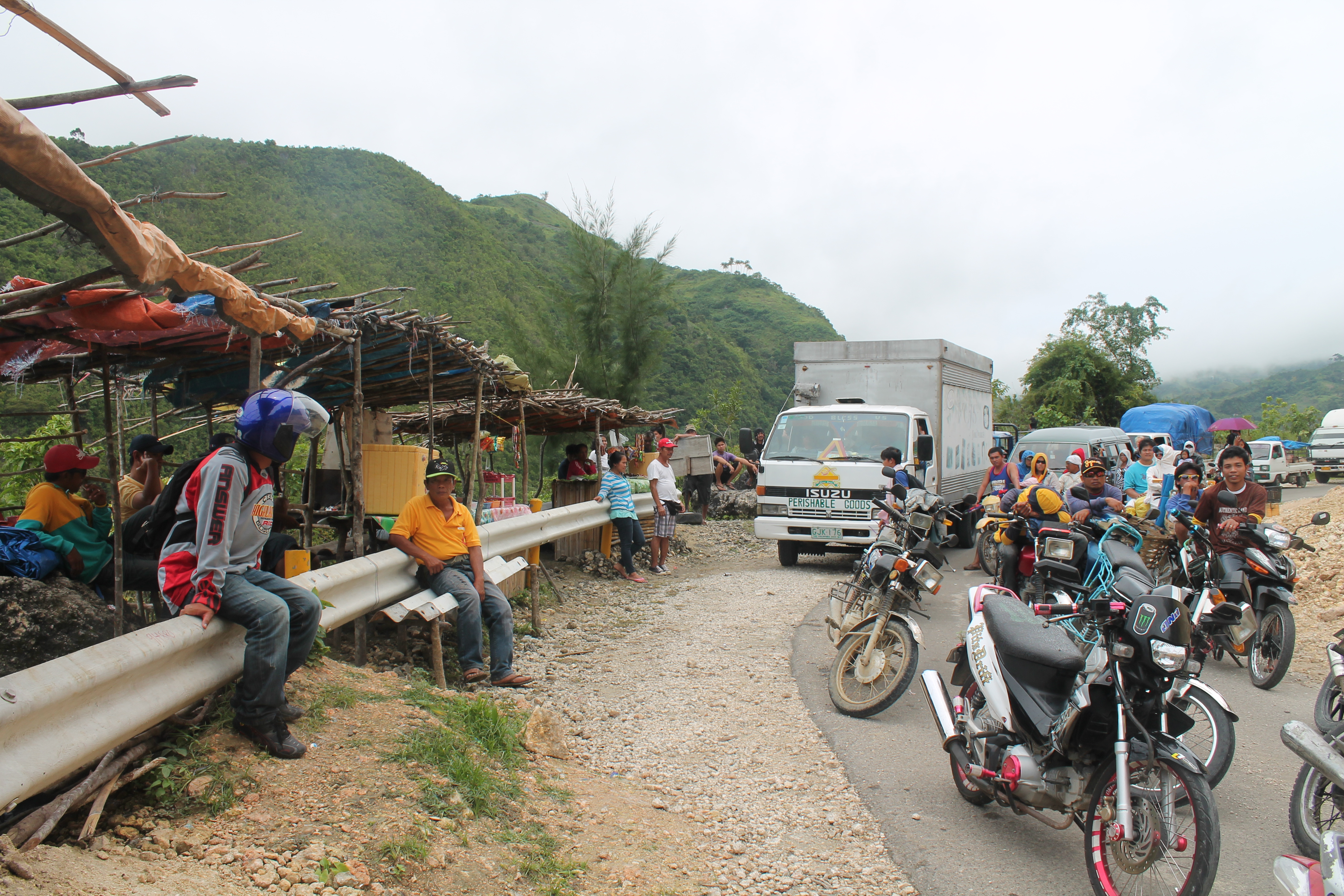
We had to wait for an hour or so–until the lunch break–while they dynamited the mountain above the road. Travelers piled up.  A few make-shift stores had been opened.  And once again, Threese met a relative–a cousin this time.


waiting_to_pass

IMG_3371

A fourth goal for our visit was to have a little vacation time and to see a part of the Philippines that was unfamiliar.  We ended up deciding to go to Siargo.  We took a ferry––a quite primitive ferry at that––from Cebu to Surigao City on the northern tip of Mindanao, then another smaller ferry to Dapa on the island of Siargo–and on to General Luna.

3s,JC,CMonBoat


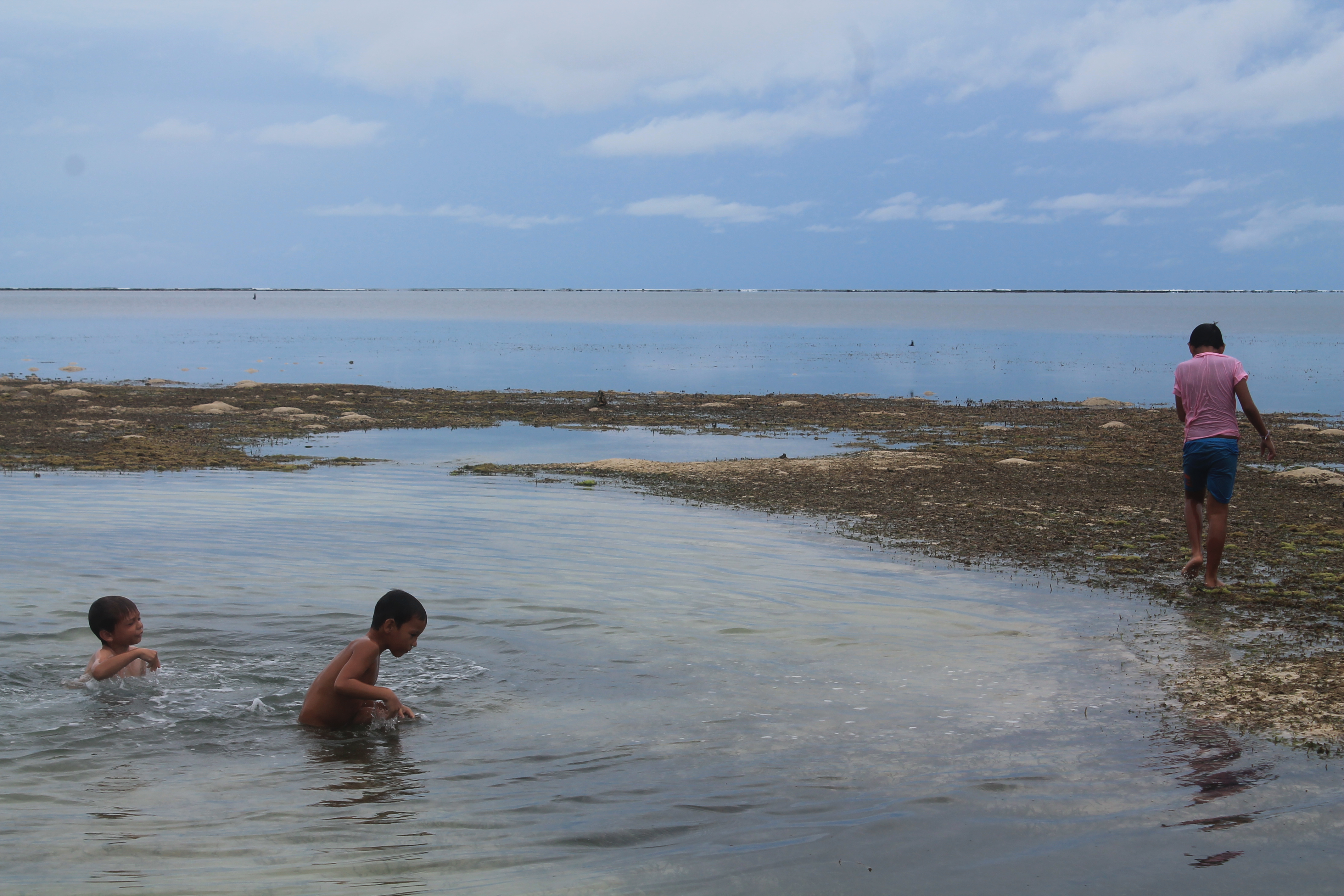
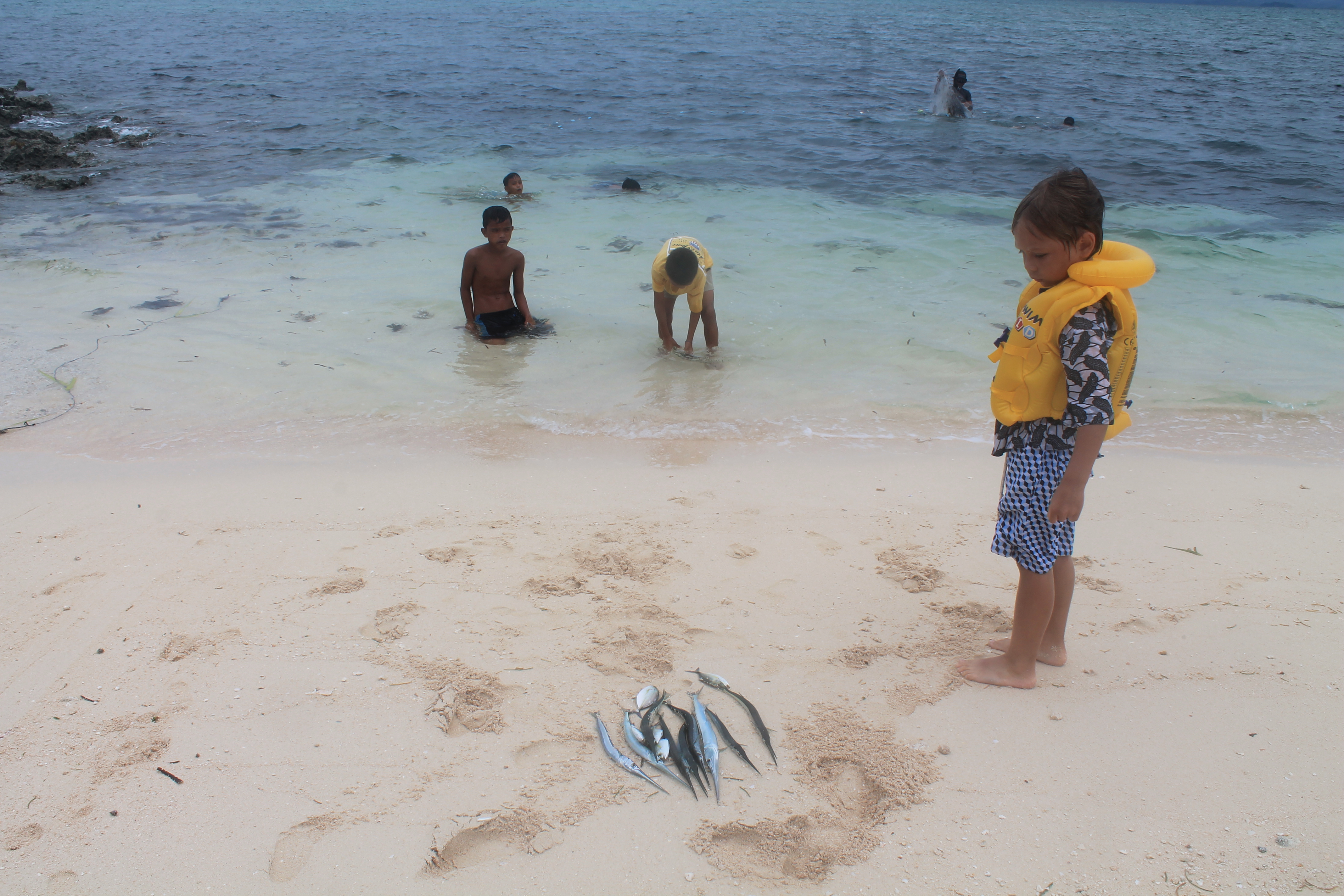
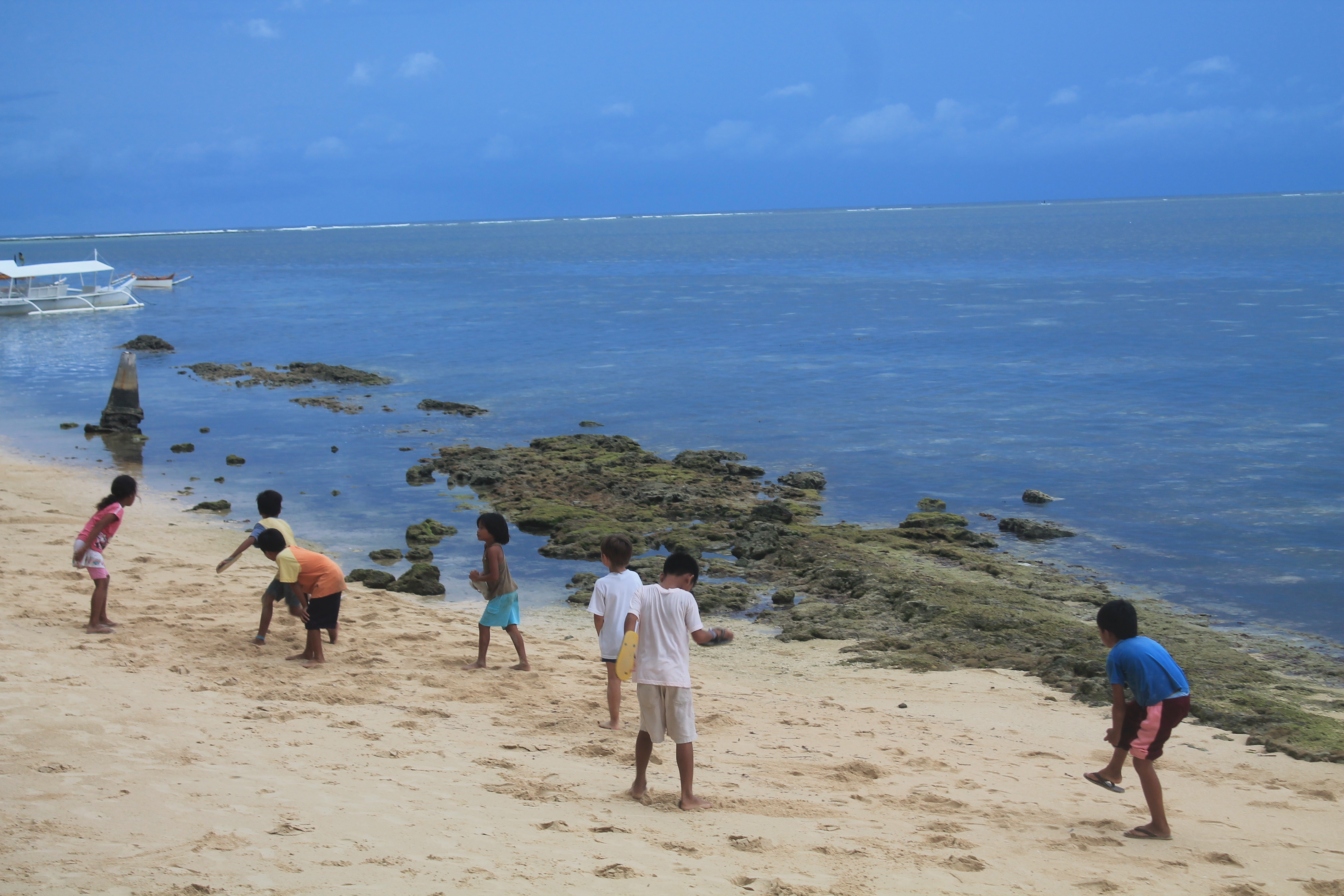
We stayed at Patrick’s on the Beach with Andreas Mikoleiczik, his wife Elizabeth and their kids, with whom John Carlos played when they were not in school. IMG_2453IMG_2476
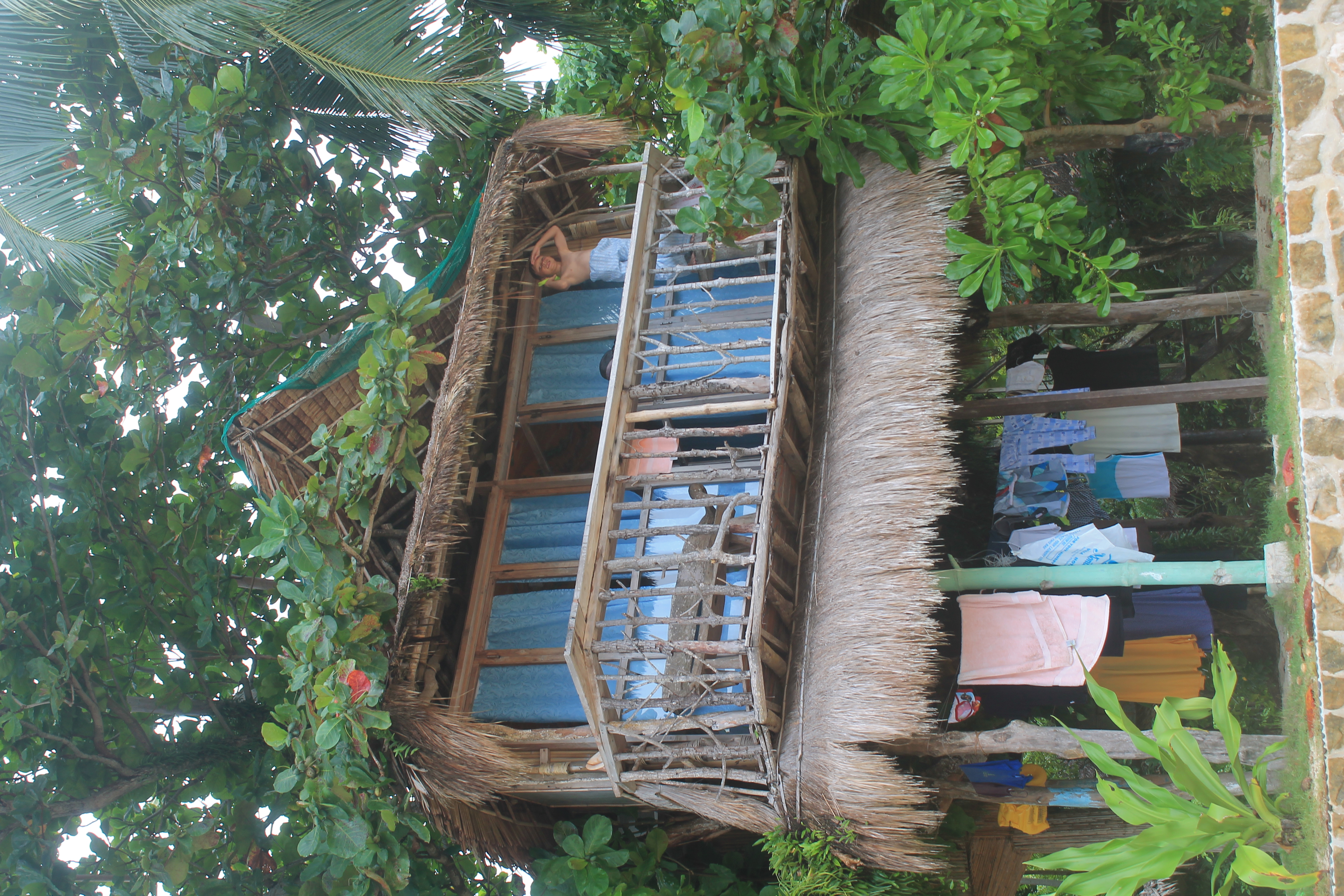


The beach area. John Carlos quickly made friends.
 

JCPlayingwboysonbeach


IMG_2471

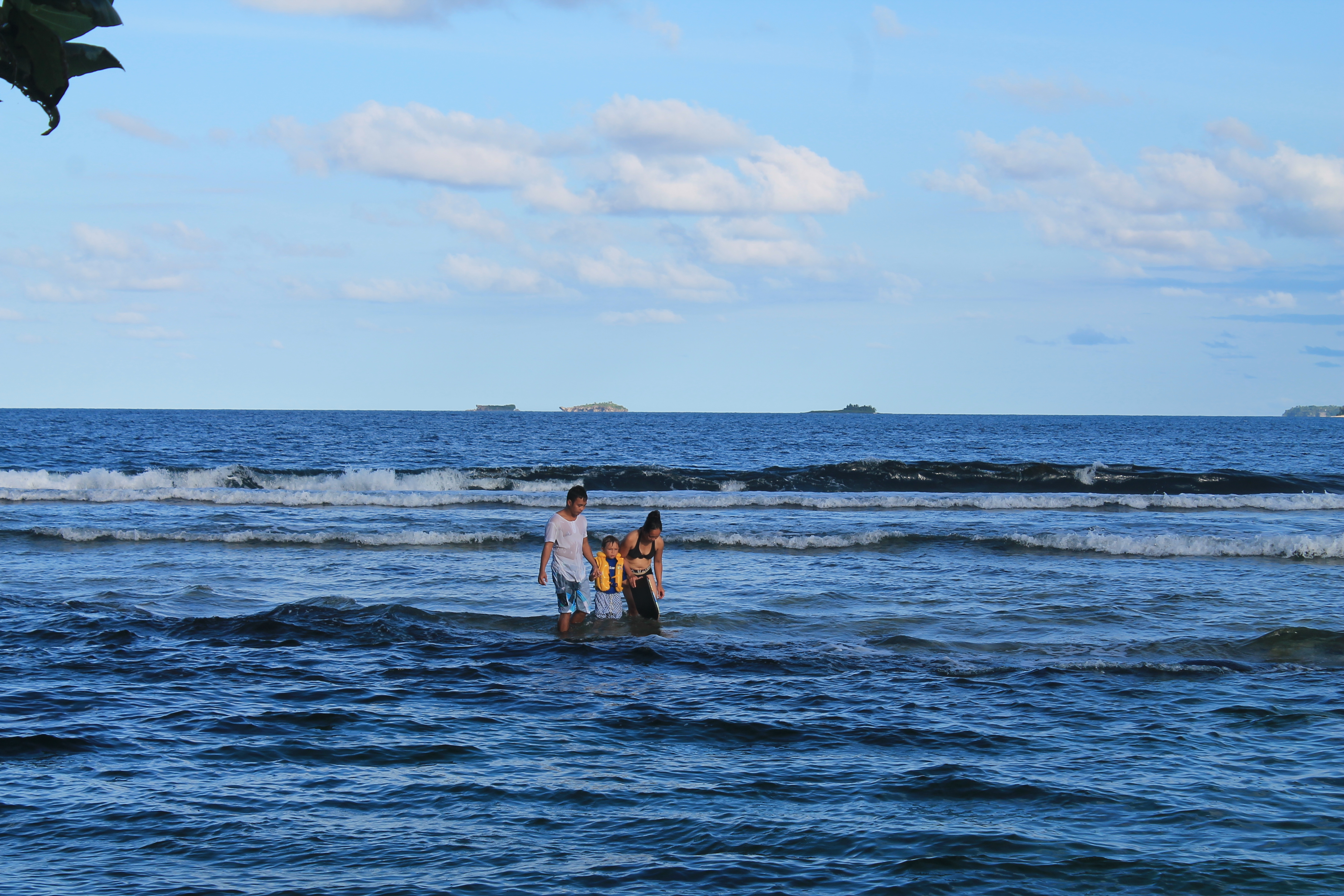
We went on two different expeditions to nearby islands.  We were very happy to be there.
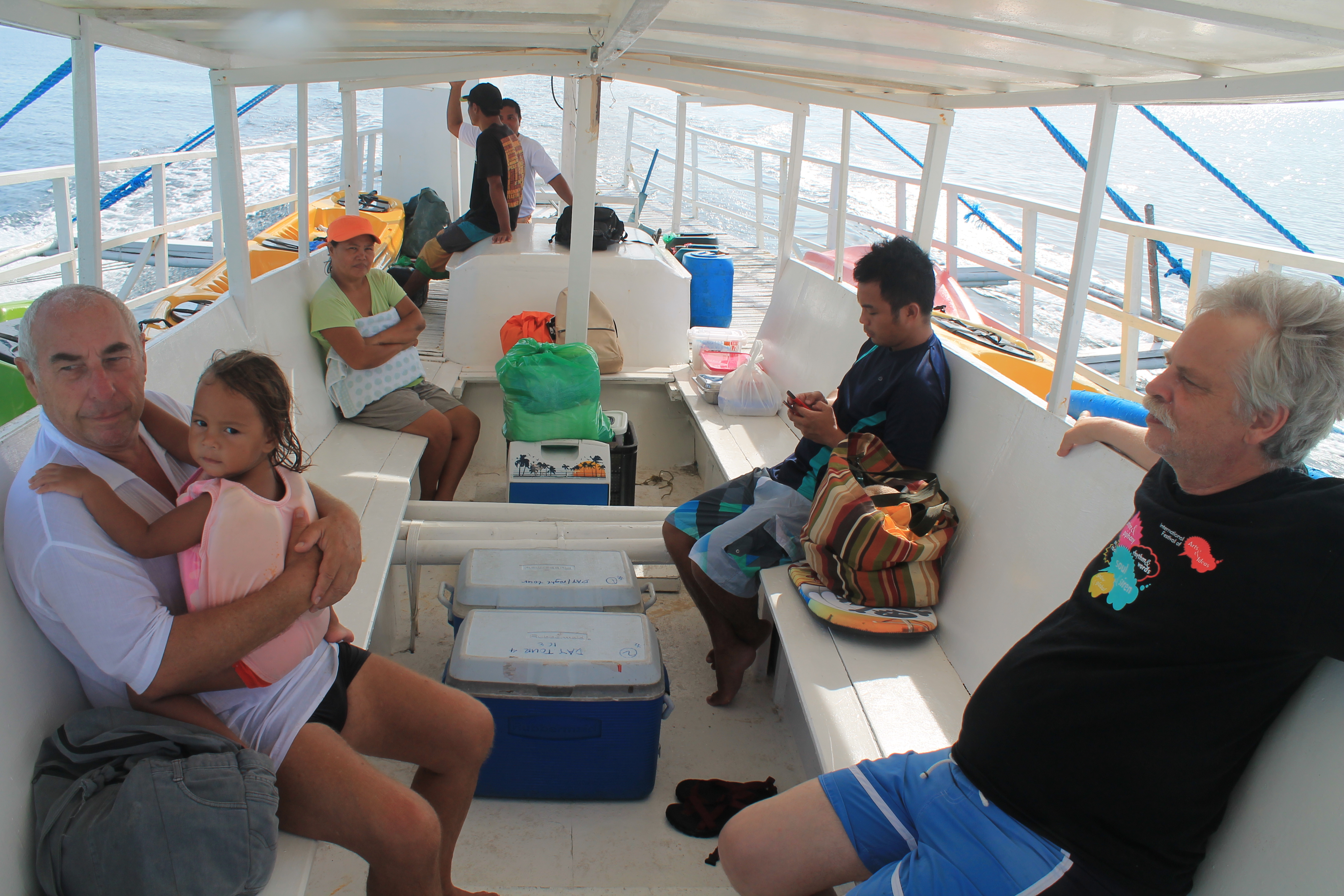
Andreas and His Daughter on the left.

Andreas and his daughter on the left.

IMG_2207JC&FIsh

Threese, John Carlos and His Uncle Jethro in a Lagoon.
Threese, John Carlos and His Uncle Jethro in a Lagoon.


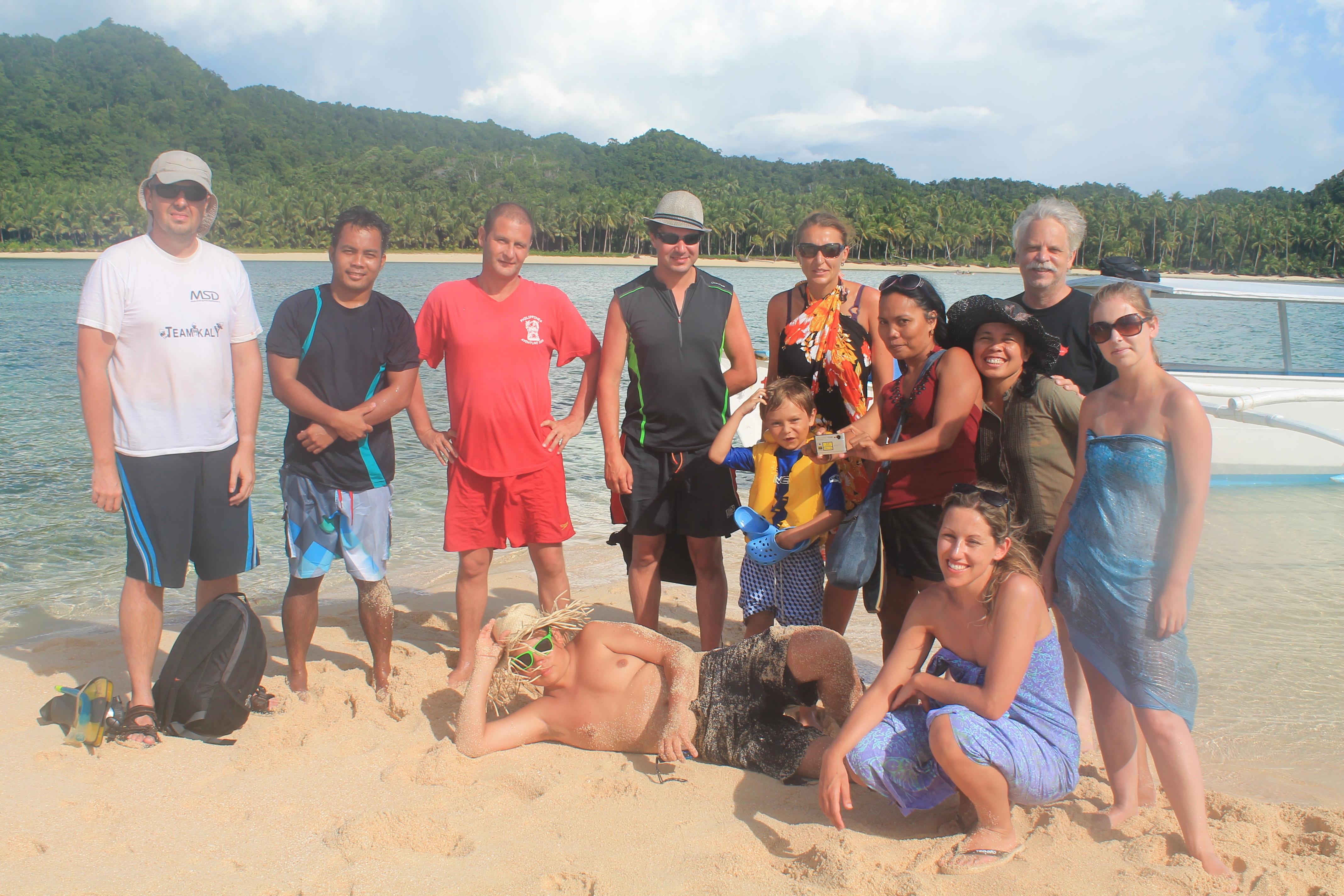
One Day Trip with a French Tour Group.

One Day Trip with a French Tour Group.


IMG_2432

The Sky at Sunset, on our way back home.
 

Summer Travels in the Philippines. Part II: FIlmmaking

Posted by chamus on September 12, 2013
Posted in: Uncategorized. Tagged: Charles Musser, Commission of Filipinos Overseas, Fiancée Visas, Ivy Miravalles, Nick Deocampo, Threese Serana, Visa Wives. Leave a Comment

Threese Serana and I have been working on a documentary, which I’ve been calling Visa Wives (she likes to call it Filipina Wives).  We’ve been working on it for close to a year (but done virtually nothing this fall due to other commitments).  It’s been a subject we have been talking about for awhile because it routinely generates negative responses: “you mean mail order brides” is pretty typical.  Threese did not come to the US on a Fiancée Visa but that was more circumstantial than anything else. And we certainly get the not-so-nice vibes that radiate from this assumption with reasonable frequency.  When Threese’s sister announced that she was getting married to an American and was coming here on a Fiancee Visa, this propelled us into filmmaking action.  We have three couples–plus ourselves inevitably–on whom we are focusing.  Her sister and husband Stephen, Threese’s best friend Fleur Harris, who also came on a Fiancée Visa, and one of Threese’s cousins who has US citizenship and was bringing over Welchie, now his wife, on a FV.

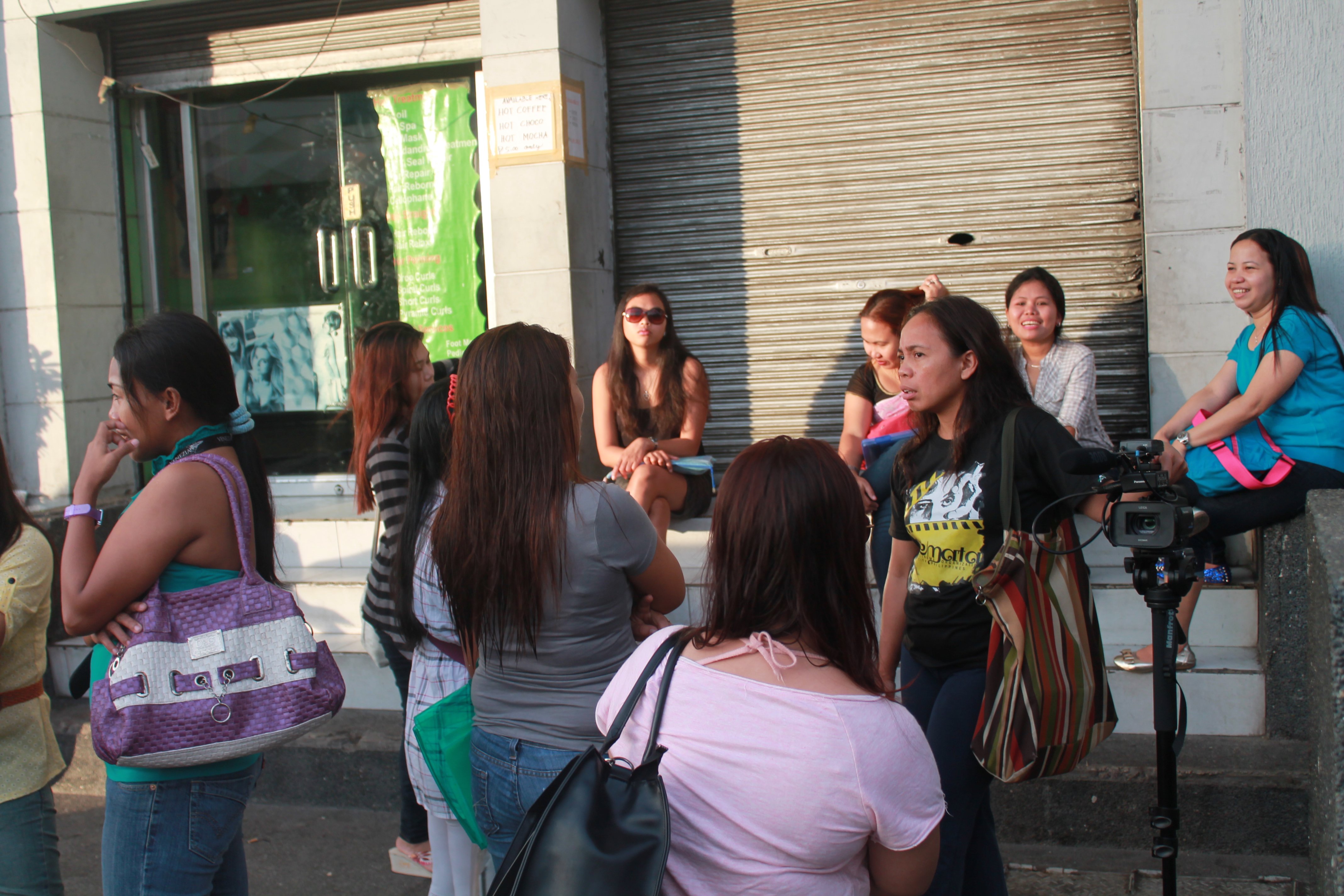
Threese with Women Waiting to Attend the CFO seminar in Cebu

Threese Serana with Women Waiting to Attend the CFO seminar in Cebu

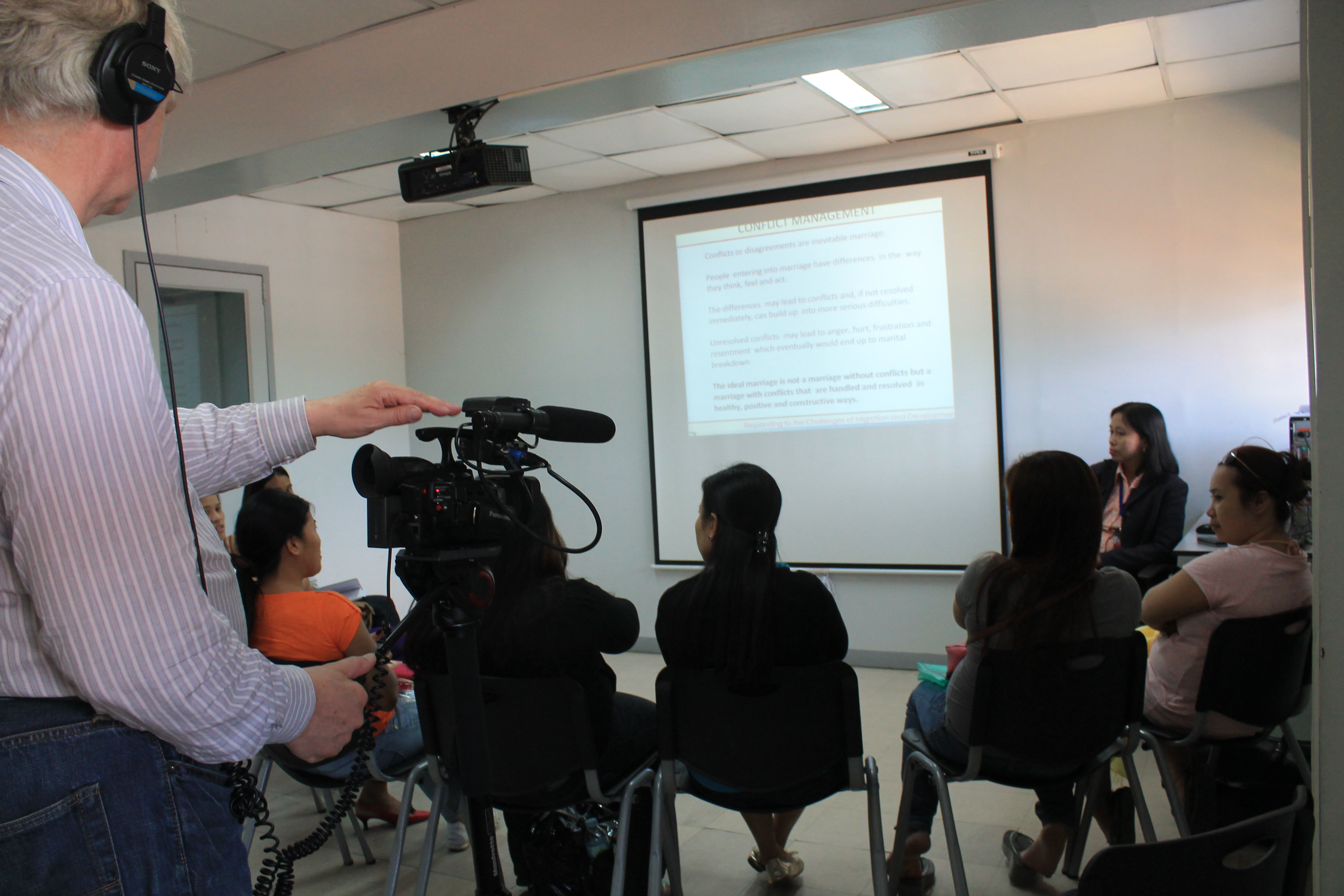
This past summer we went to the Philippines and filmed the back story if you will.  The overwhelming number of Filipinos who come to the US on Fiancé Visas are women and the largest number of Filipinas on VFs go to the US compared to other countries.  Plus the largest number of women coming to the US on VFs are from the Philippines.  filmingaseminarAll Filipinas must attend an one day seminar at the Commission of Filipinos Overseas in either Cebu or Manila.

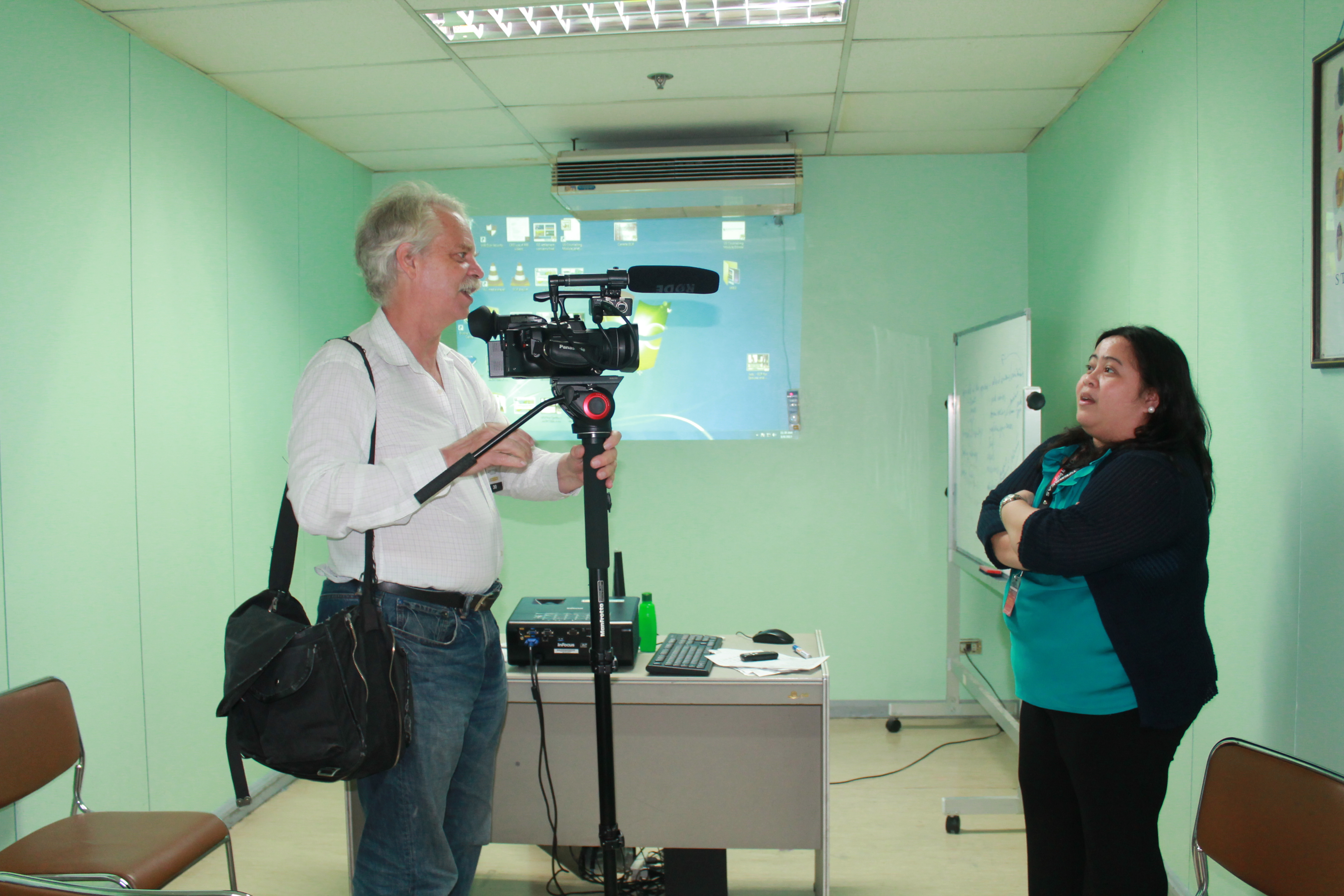
Filming Ivy Miravalles, Supervisor of the Commision of Filipinos Overseas

Filming Ivy Miravalles, Supervisor of the Commision of Filipinos Overseas

So we filmed a number of related scenes, including a long interview with Supervisor Ivy Mirvalles. We were impressed by their insights, dedication and willingness to talk openly about the issues.  We also talked to some of the women.  As is so often the case, we were moved by their stories, which did not easily conform to the “mail order bride” scenario.

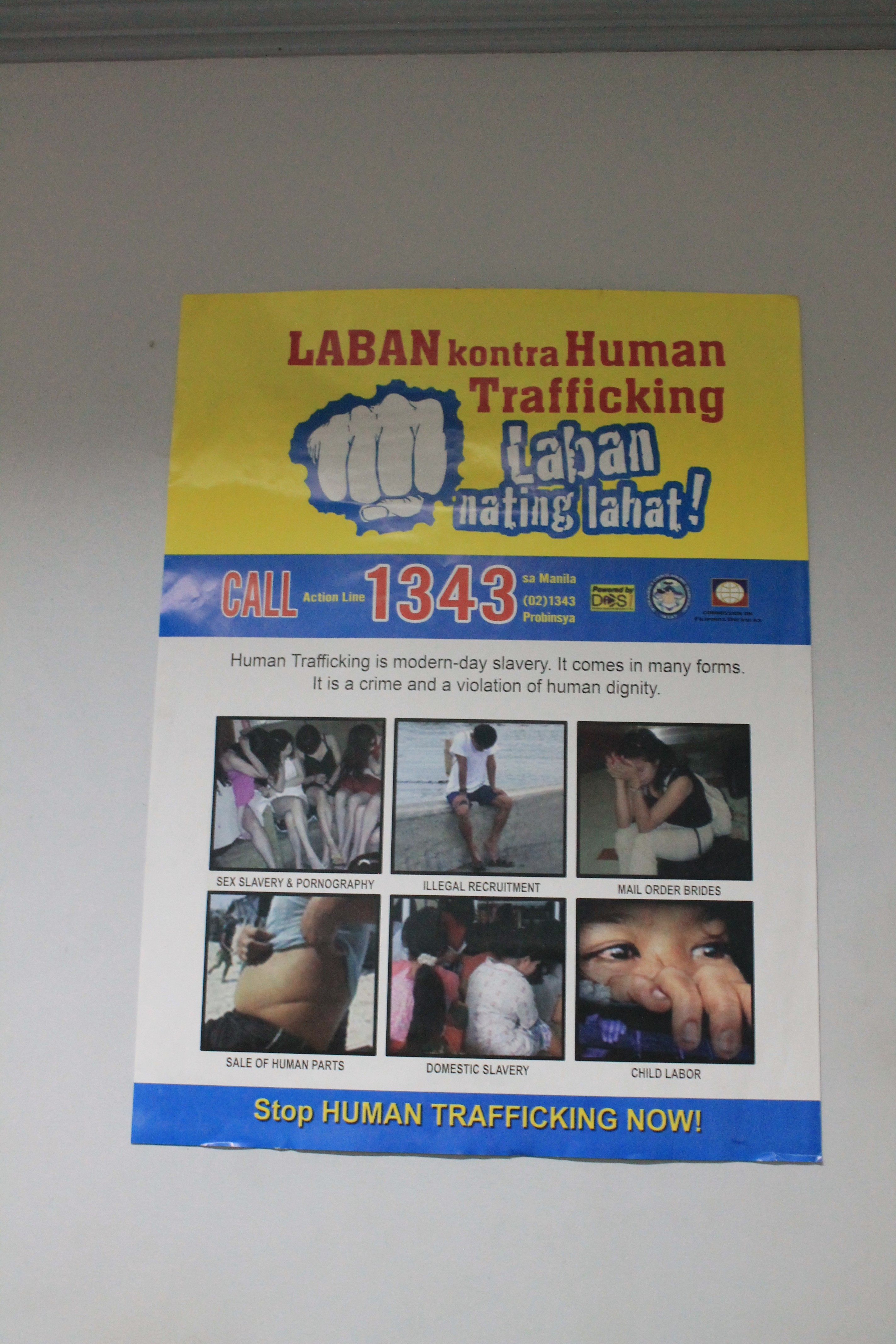
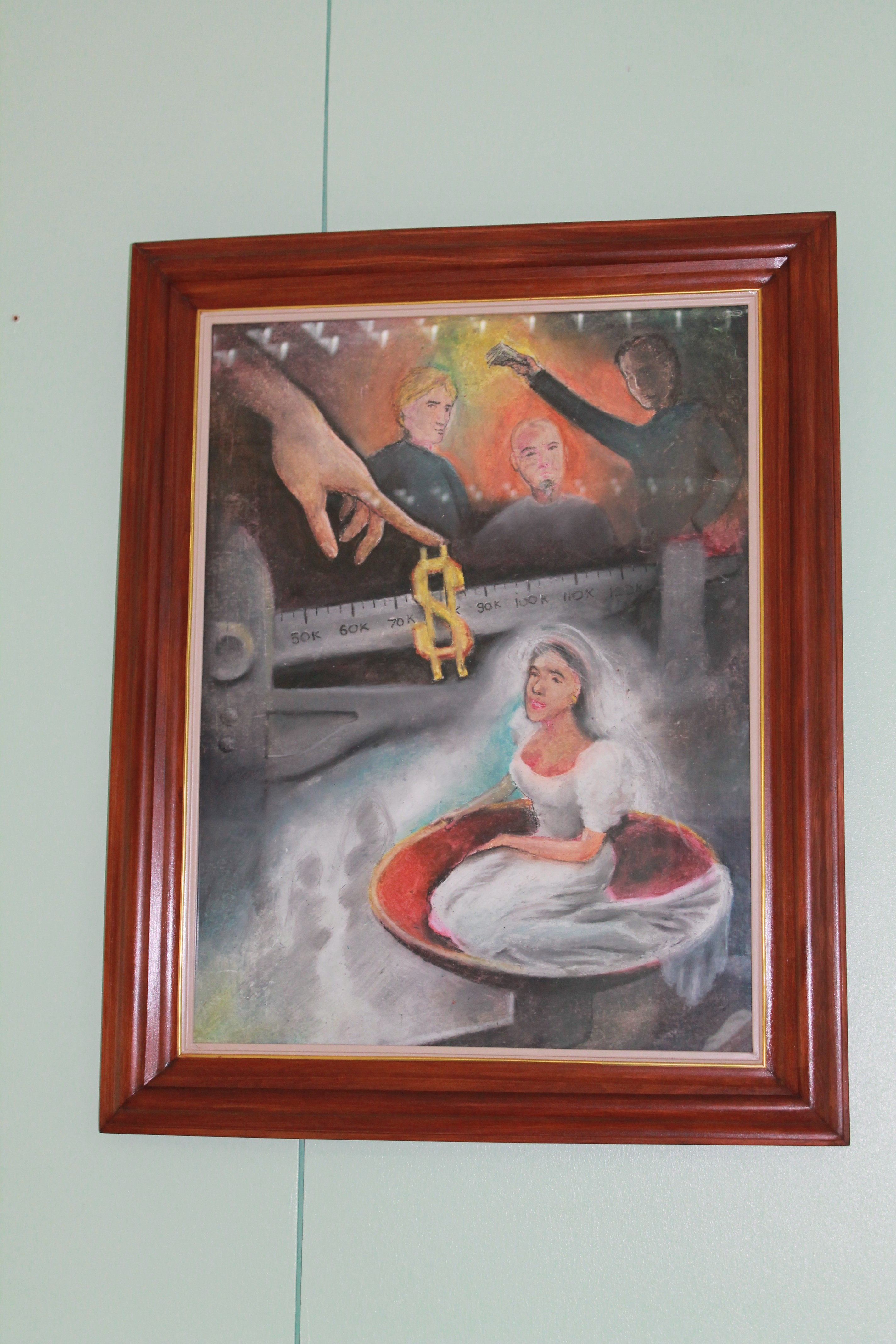
poster-againstHumanTraffickingMailorderbirdespainting


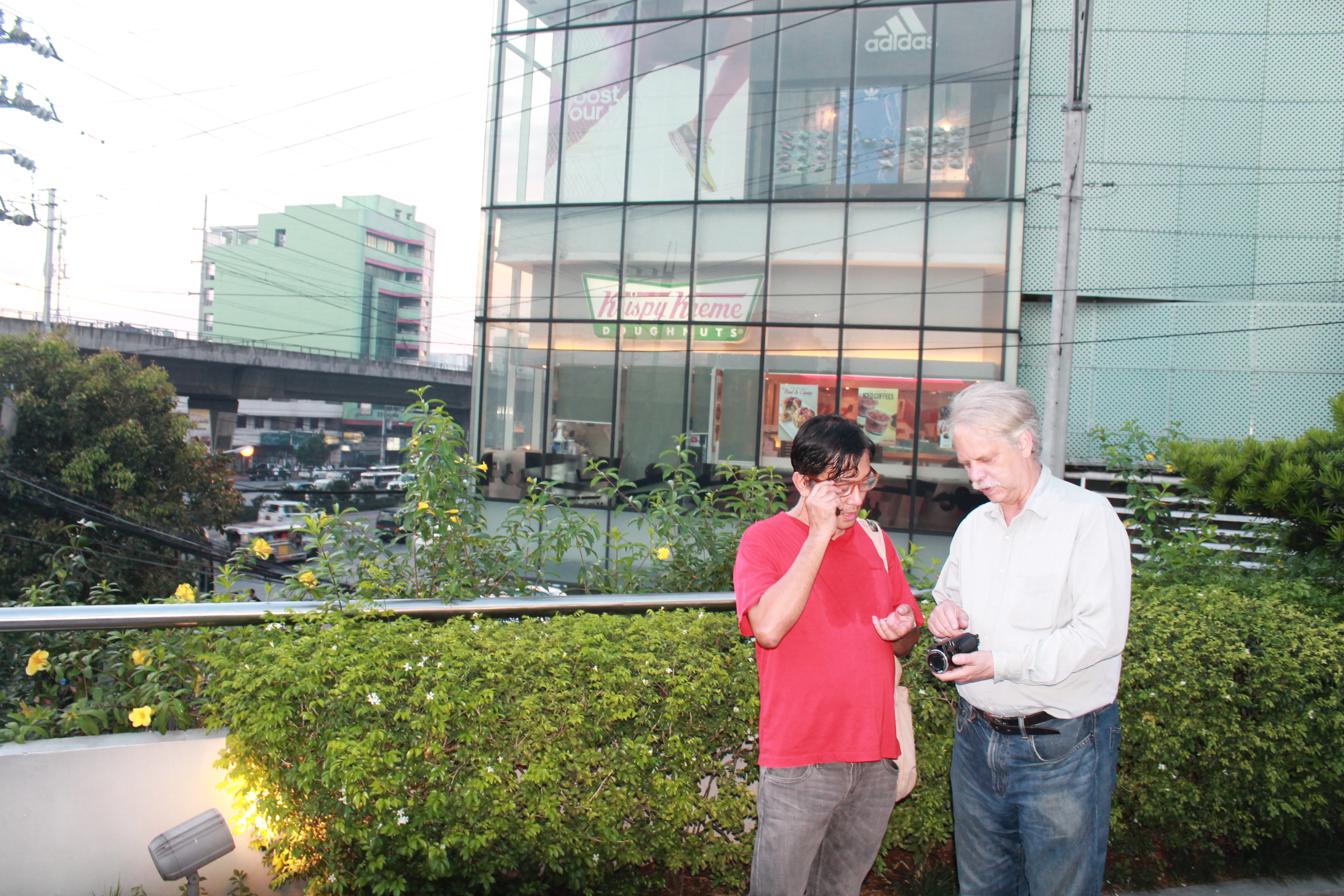
Nick Deocampo also pitched in and did some shooting for us at the mall, using his small camera.  It was amazing to watch him move through the space with remarkable grace and elegance.

Checking out Nick's camera at the SM Mall in Quezon CIty

Checking out Nick’s camera at the SM Mall in Quezon CIty

If the guys seem to be behind the camera a lot, well that’s because Threese was doing the crucial work in front of the camera.  And sometimes she had a chance to photograph us, but not so much vice versa.


Summer Travels in the Philippines. Part I: Academia

Posted by chamus on September 11, 2013
Posted in: Uncategorized. Tagged: Bliss Lim, Bono Olgado, Charles Musser, early cinema, Joel David, Misha Anissimov, Nick Deocampo, Paul Grant, Philipinnes, University of San Carlos. Leave a Comment

I was in the Philippines for five weeks this summer–easily my longest stay (in fact, I unintentionally overstayed my visa and was heavily fined!).  So the trip had three major components:

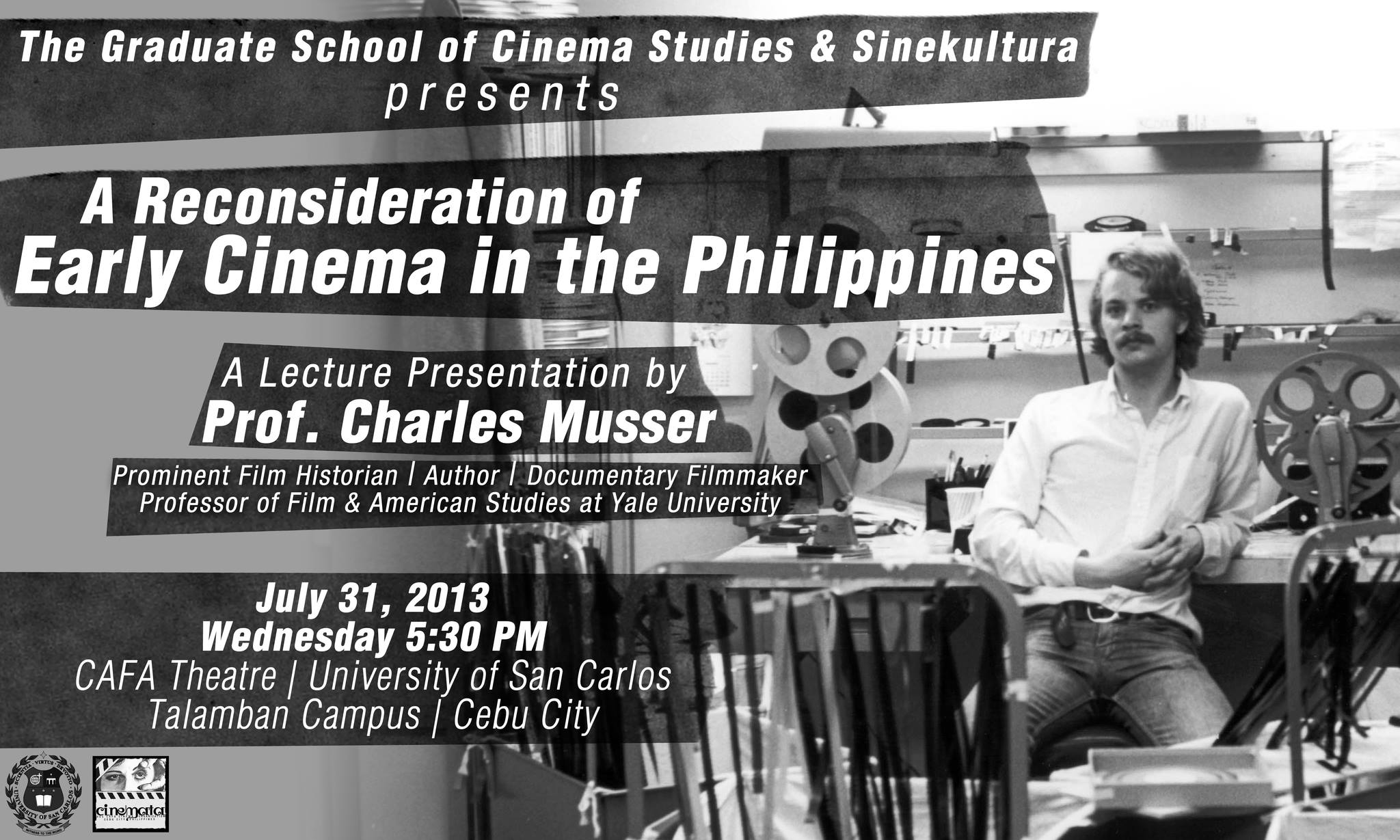
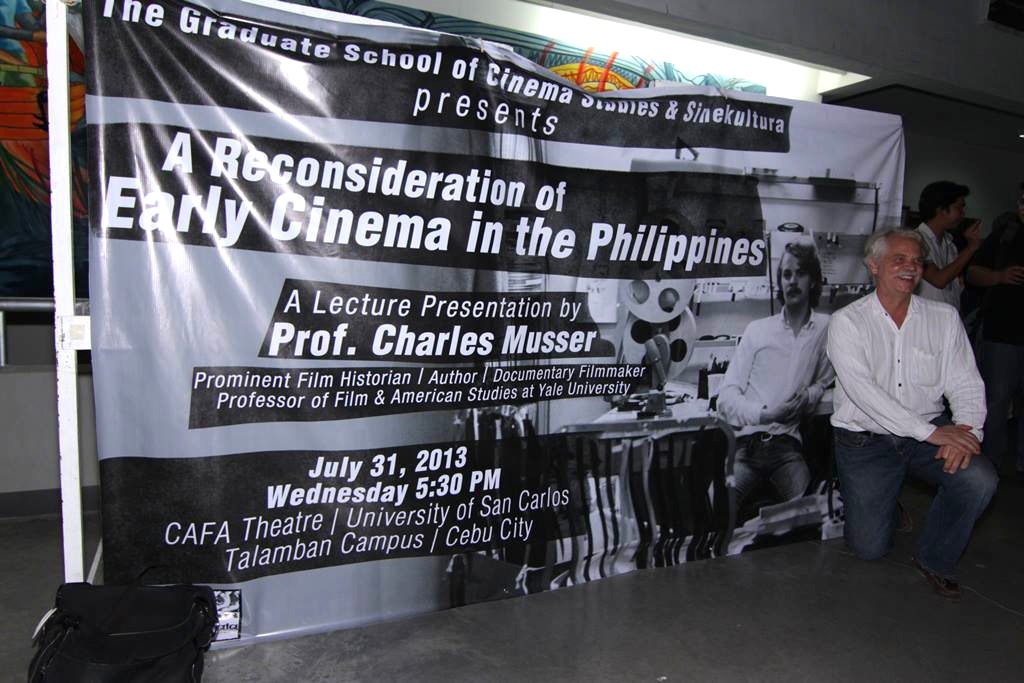
No.1:  I further developed my connections with Filipino film culture, giving two different talks on early cinema in the Philippines.  The first was at University of San Carlos in Cebu, an event that was largely organized by Misha Anissimov along with his colleague and (just about) NYU Ph.D. Paul Grant.  A few of you may have seen the poster on Facebook, but here it is again:

Poster,UnivofSanCarlosI got some good-natured ribbing from friends.  Samantha Solidum, who designed the poster, chose a photo from my website for the poster.  Someone suggested it was from 20 years ago.  If only: it was taken it Los Angeles while I was working on Hearts and Minds.
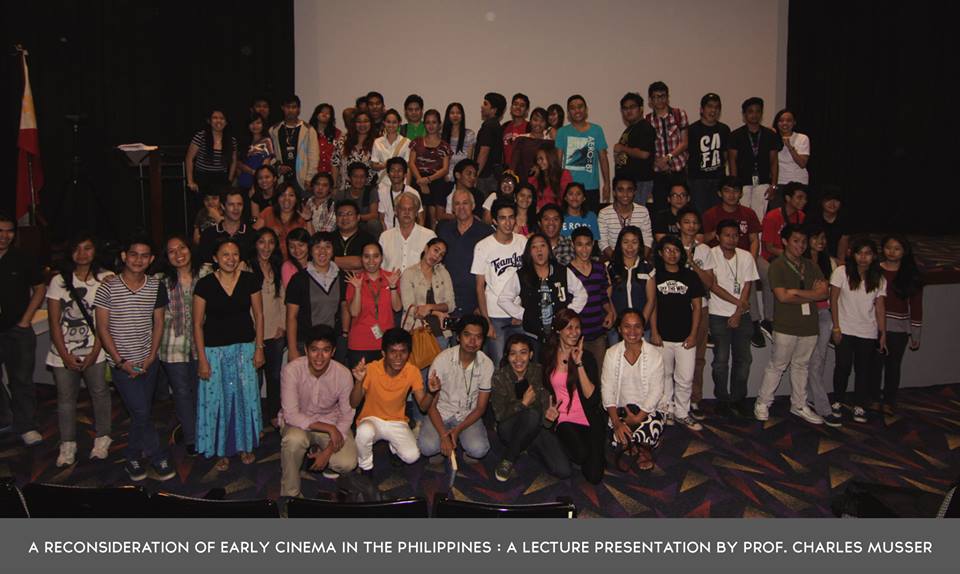
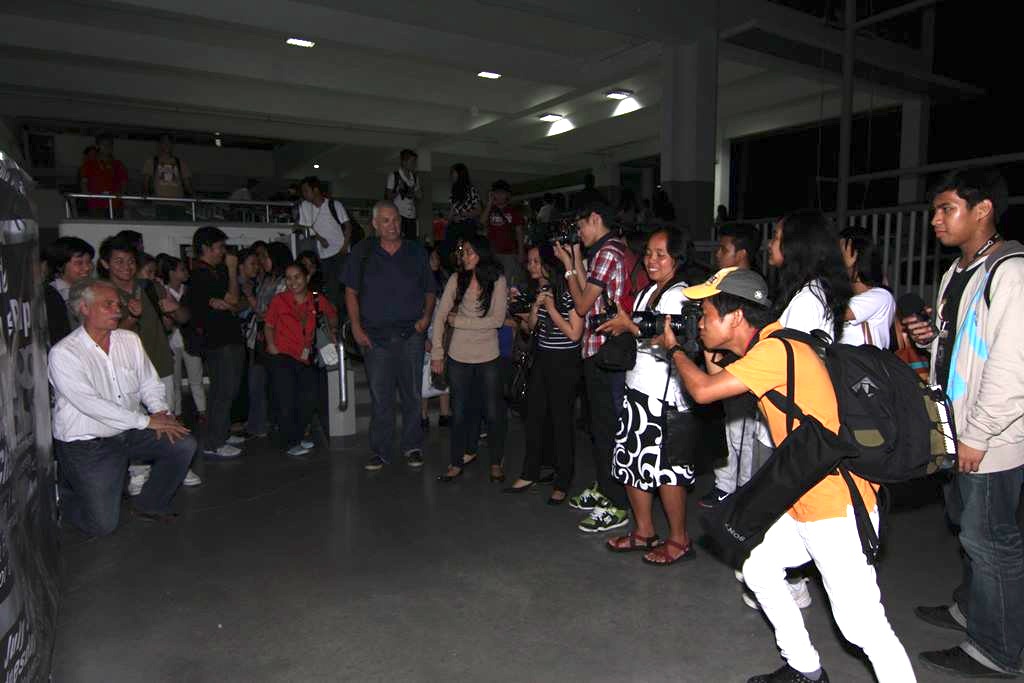
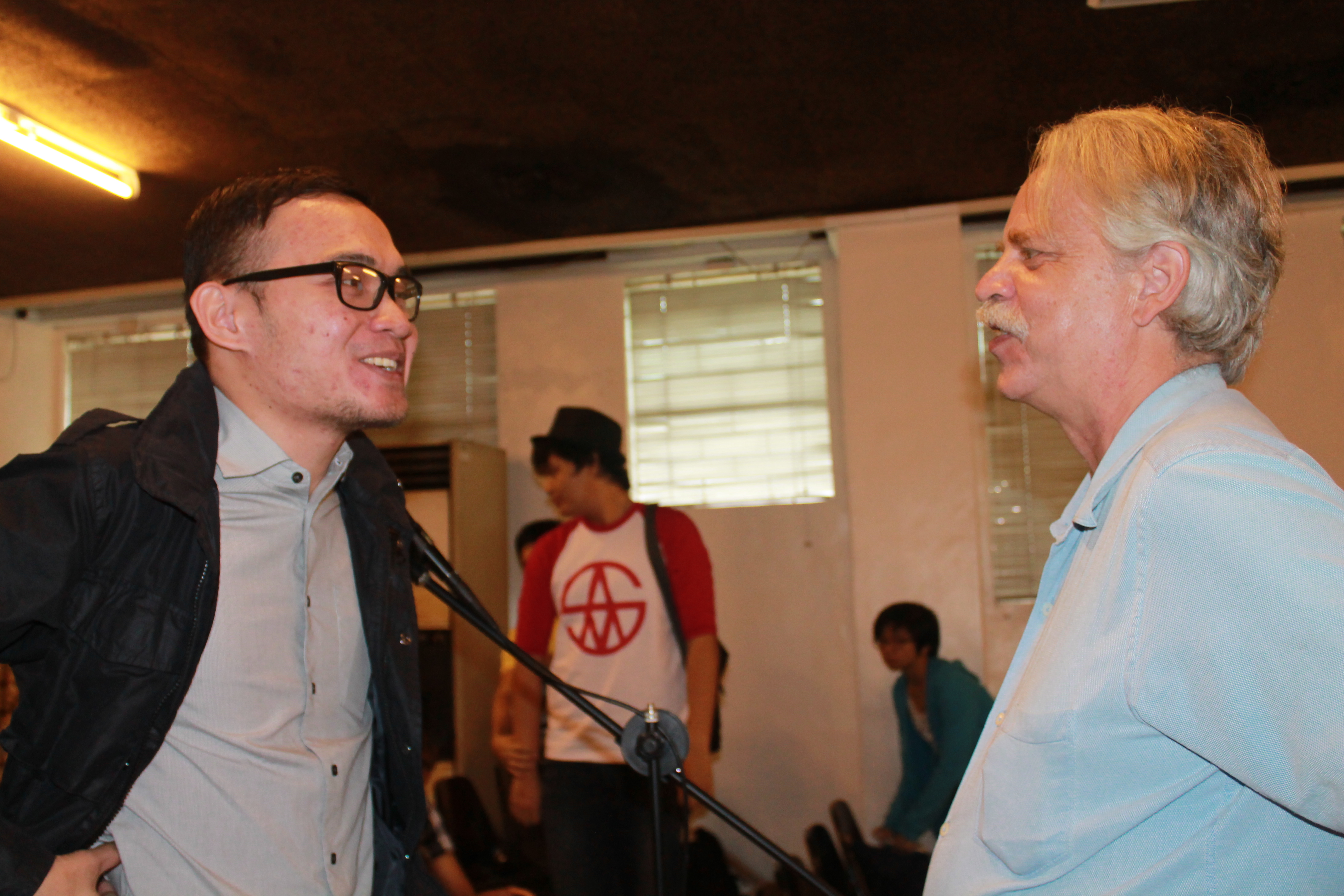
As it turned out, the first film that most of the students saw for their film studies course of study was my documentary Before the Nickelodeon.  So after I finished my presentation and we had a question and answer period, I assumed the event had concluded and it was time for dinner.  But no one left.  Now it was time for the really important part of the evening: the photo ops.  (For the uninformed, photo ops are a crucial element of Filipino culture.) We began with a group portrait (here is one of many, many versions of this moment).
MusserAtUniversityofSanCarlosAnd then it got serious.  Samantha also made a banner version of the poster in which I became lifesize:
CharlieasRockStarCharlie&BannerCebu film culture is undergoing a remarkable revival.  University of San Carlos has started an MA program in Film Studies–and is thinking about a Ph.D.  Cebuano filmmaking of the independent variety is also flourishing.

The importance of film culture is one of the things shared by the Philippines and the United States.  For instance, we are the only two countries that elected movie stars as presidents.

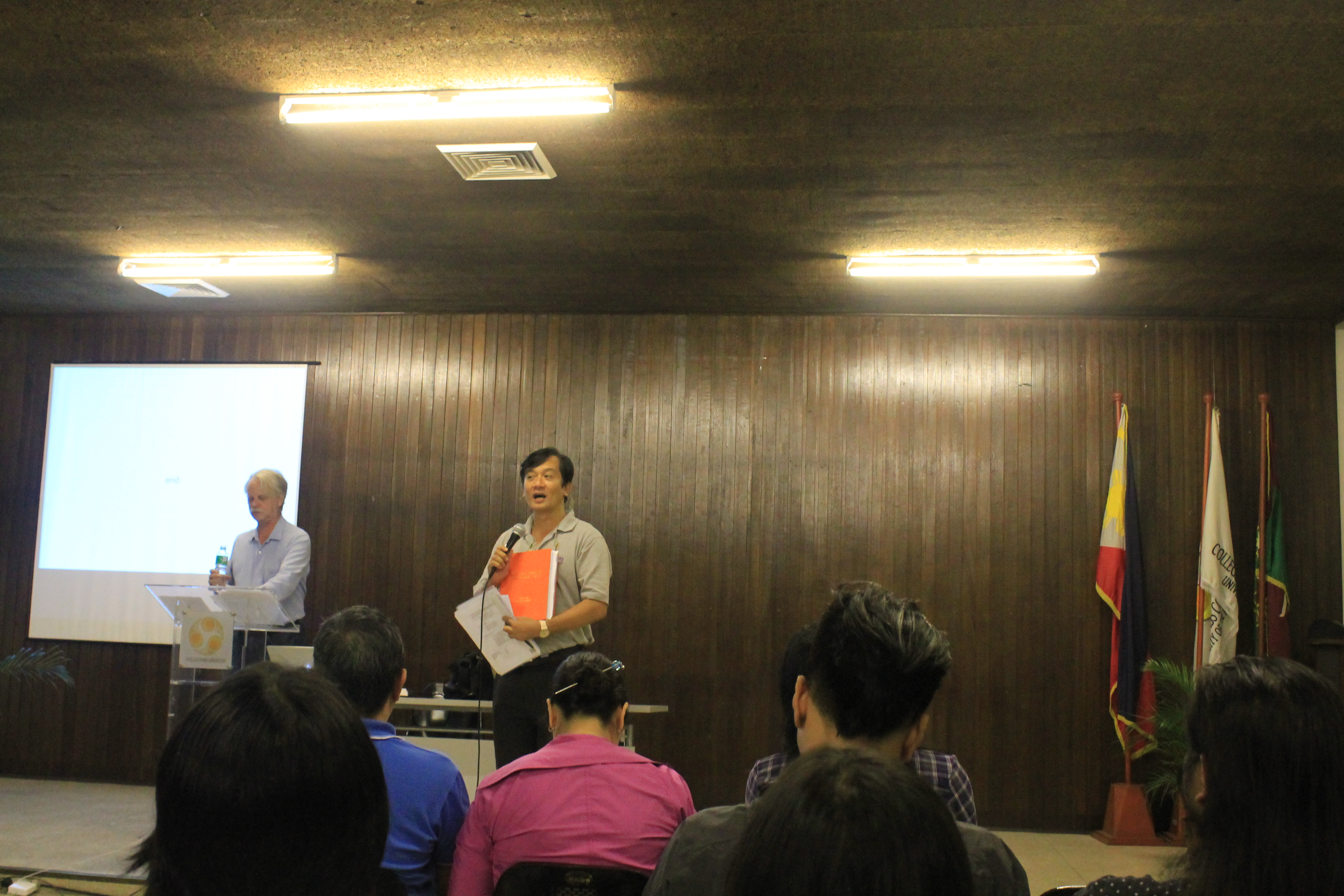
Manilla/Quezon City is the traditional center of Filipino film culture, with University of the Philippines-Dilman the intellectual center.  My friend and colleague Nick Deocampo–mine and Threese’s shadkhn) now teaches there and arranged a reprise in the School of Mass Communication.   Indeed, it was because of Nick that I wrote this paper some years ago (and soon to be published in his book).  It was a smaller crowd but had its own salience.  Nick, of course, did the introductions:

Nick Deocampo provides introductory remarks.

Nick Deocampo providing some introductory remarks.

It proved a great opportunity to make the NYU-Filipino film connection as I met Benedict “Bono” Olgado, the first head of the National Film Archive of the Philippines and an NYU graduate:

With Bono Olgado after my talk.

With Bono Olgado after my talk.

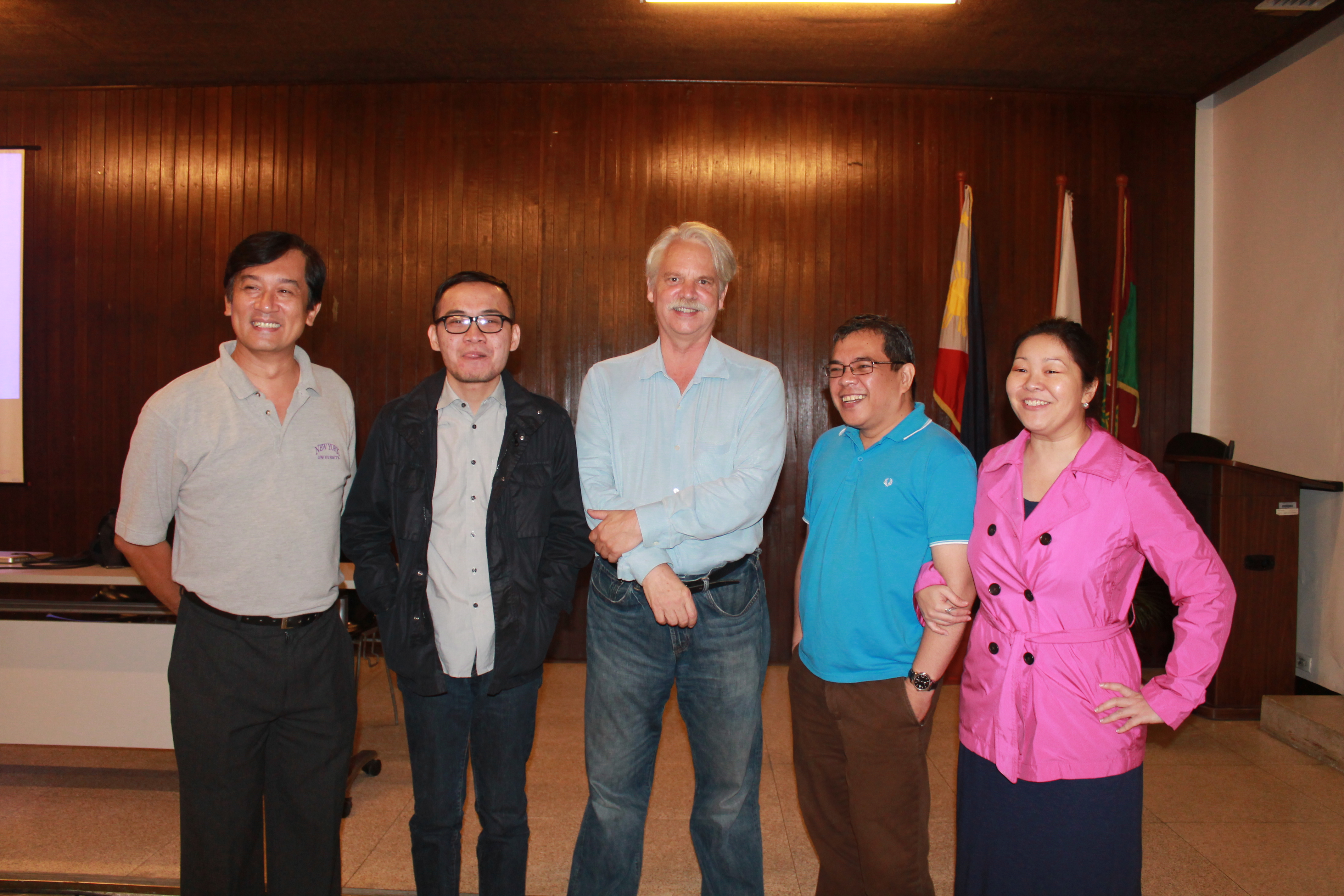
And again one of many requisite group portraits with Nick, Bono, Joel David and Bliss Cua Lim (currently an Associate Professor at UC-Irvine):

The NYU Contingent. We all graduated from the Tisch graduate program in Cinema Studies.

The NYU Contingent. We all graduated from the Tisch graduate program in Cinema Studies.


Screening Some Union Films Productions in Brooklyn on June 27th

Posted by chamus on June 26, 2013
Posted in: Uncategorized. Tagged: Abel Meeropol, Carl Marzani, Charles Musser, Ed Halter, Hershel Benardi, Light Industry, Max Glandbard, radical documentaries, Thomas Beard, Union FIlms, United Electrical Radio and Machine Workers of America. Leave a Comment

I was invited to give a talk or presentation at Light Industry, one of those hip pop-up exhibition venues in Brooklyn.  It has offered an impressive number of exciting events and I was delighted to be asked.   I decided to program an evening of leftist documentaries and campaign films made by the radical collective Union Films in the 1940s and early 1950s.  It was my first time at Light Industry, so I was eager to document my visit with a few quick snapshots.

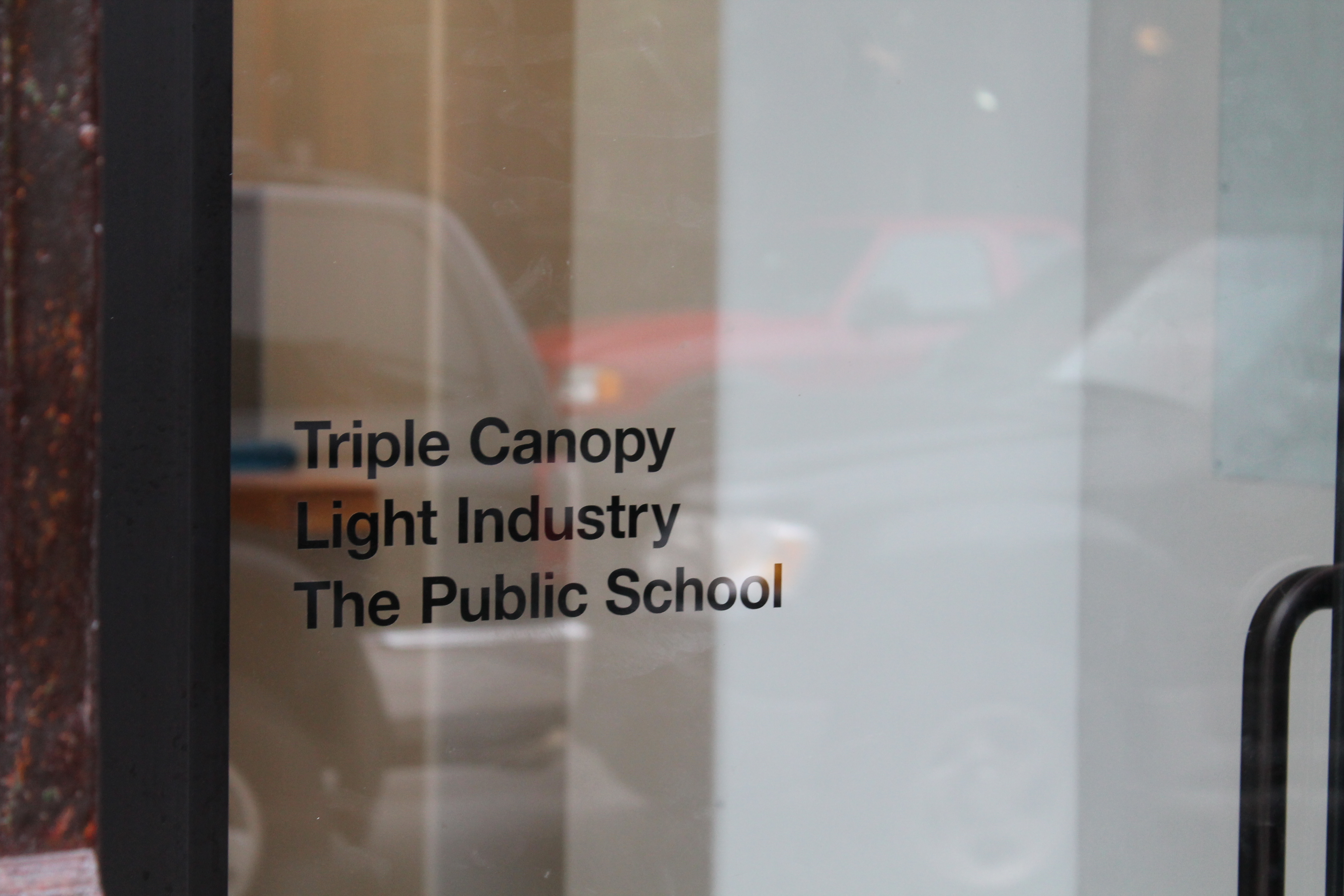
The entrance:

LIght Industy-doorway

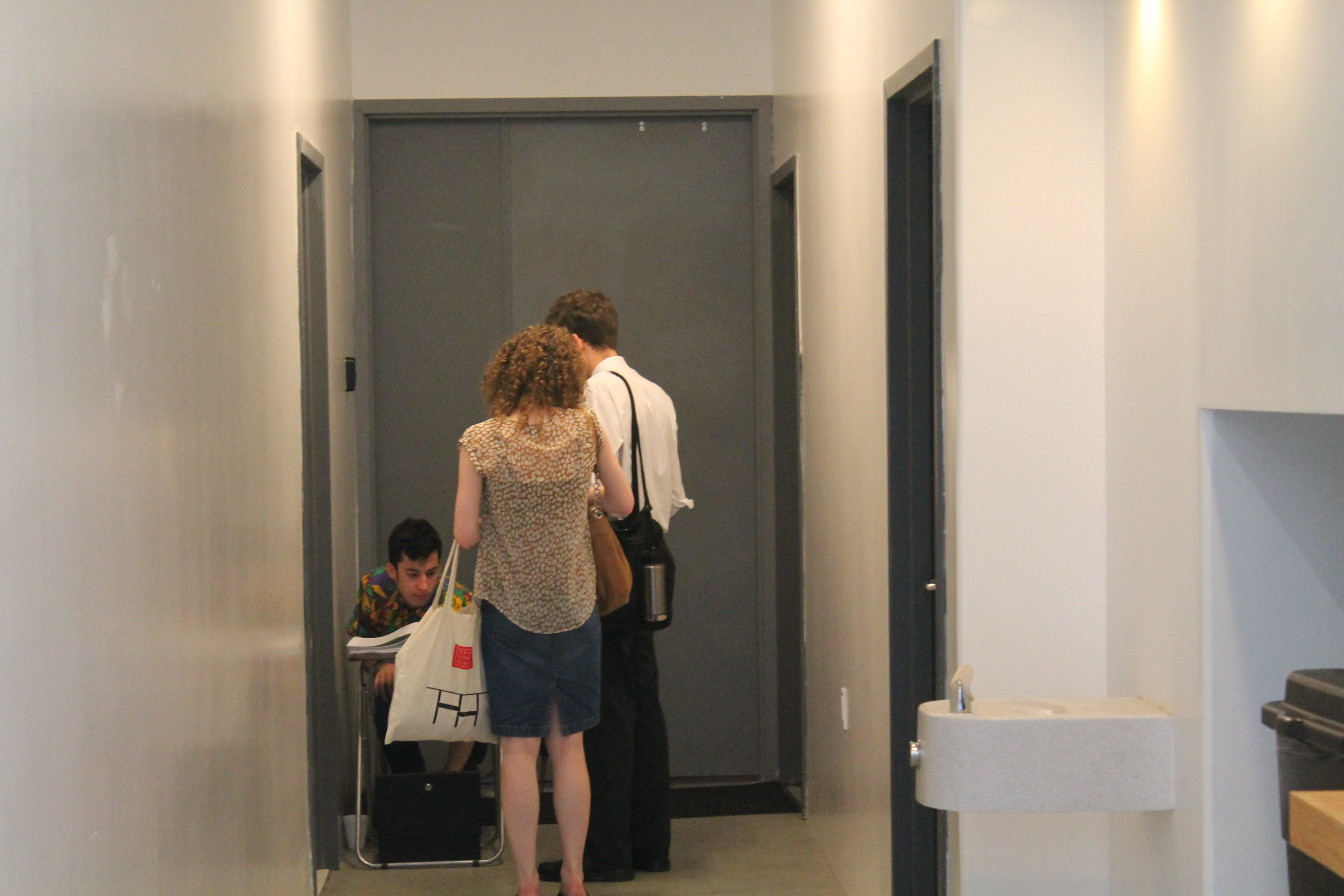
The ticket line:
Ticketline

The screening room:
screeningroom
The curators:

Thomas Beard and Ed Halter

Thomas Beard and Ed Halter

Some of the audience:

Julie Talens & Linda Hoaglund

Julie Talen & Linda Hoaglund

I showed the following films:

Our Union (1947)
Time to Act (1948)
The Investigators (1948)
A People’s Convention (1948)
People Congressman: Vito Marcantonio (1948)

Here is the Light Industry announcement:


Light Industry
Thursday, June 27, 2013 at 7:30pm
Carl Marzani and Union Films, 1946-1953

155 Freeman Street, Brooklyn

Curated by Charles Musser

Received wisdom is that left-wing documentary filmmaking in the United States ended with the ill-timed release of Leo Hurwtiz and Paul Strand’s Native Land (1942)—not to be renewed until the rise of the New Left in the 1960s. Nothing could be further from the truth. Union Films was a radical, New York-based film collective that made over two dozen non-fiction films between 1946 and 1953. Its impresario, Carl Marzani, would ultimately spend three years in jail for his first anti-business motion picture, Deadline for Action (1946). Fighting back at every step, he twice took his case all the way to the Supreme Court, only to lose the decision by one vote. When not in the courts, he was making films.

Tonight’s program of Union Films productions begins with Our Union (1947), made for and about the United Electrical, Radio, and Machine Workers of America (UE), which funded many of the collective’s projects. The Investigators (1948) captures a remarkable piece of street theater featuring actor Hershel Benardi, who would later be blacklisted, and written by Abel Meeropol, best known today for penning the lyrics and music for Billie Holiday’s “Strange Fruit.” Many Union Films efforts were concerned with winning elections. This includes People’s Congressman (1948), a campaign film for Vito Marcantonio, who ran on the American Labor Party ticket in East Harlem—and won. It is narrated by Paul Robeson, who appears briefly in the film. Marzani and his collaborator, director Max Glandbard, also made campaign films for Presidential candidate Henry Wallace of the Progressive Party. A People’s Convention (1948) celebrates the “New Party” convention in Philadelphia, and provides glimpses of Wallace, Robeson, and the young Pete Seeger.

The most daring and accomplished organization producing leftist documentaries in the United States during the immediate post-World War II era, Union Films has gone unmentioned in every general history of documentary as well as various accounts of left-wing filmmaking. Hopefully this, the first retrospective program devoted solely to the cinematic achievements of Union Films, will contribute to a new appreciation and a new historiography. – CM

Charles Musser teaches Film Studies and Documentary Filmmaking at Yale University, where he is currently Acting Chair of the Theater Studies Program. He worked for two years as First Assistant Editor on the Oscar-winning documentary about Vietnam, Hearts and Minds (1974) and has recently completed the nonfiction feature, Errol Morris: A Lightning Sketch (2013). His many books on early cinema include The Emergence of Cinema: The American Screen to 1907 (1990), which received the Jay Leyda Prize in Cinema Studies; the Theater Library Association Award for best book on motion pictures, radio and television; and the Katherine Singer Kovacs Prize for best book in Film, TV and Video Studies. He is currently completing the book Media Shifts: Transformations in Audio-Visual Media and the US Presidential Elections of 1892/1896, 1948/1952 and 2004/2008.

Tickets – $7, available at door.

Please note: seating is limited. First-come, first-served. Box office opens at 7pm.

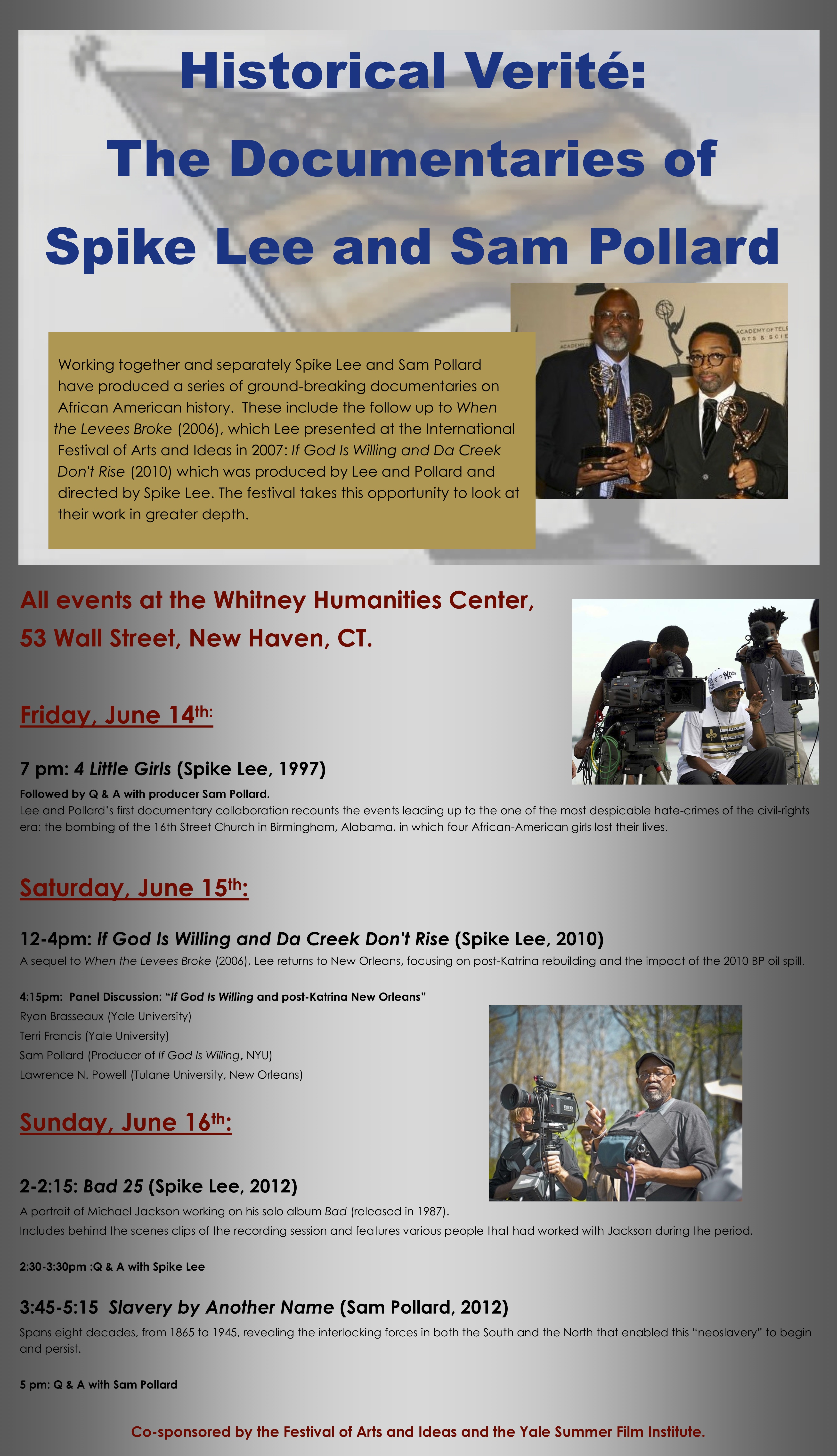
Historical Verité: The Documentaries of Spike Lee and Sam Pollard

Posted by chamus on June 20, 2013
Posted in: Uncategorized. Tagged: Bad 25, documentary, Historical Verité, If God is Willing and da Creek Don't Rise, International Festival of Arts and Ideas, Sam Pollard, Slavery by Another Name, Spike Lee, Tony Sudol, Yale Summer Film Institute, Yale University. Leave a Comment

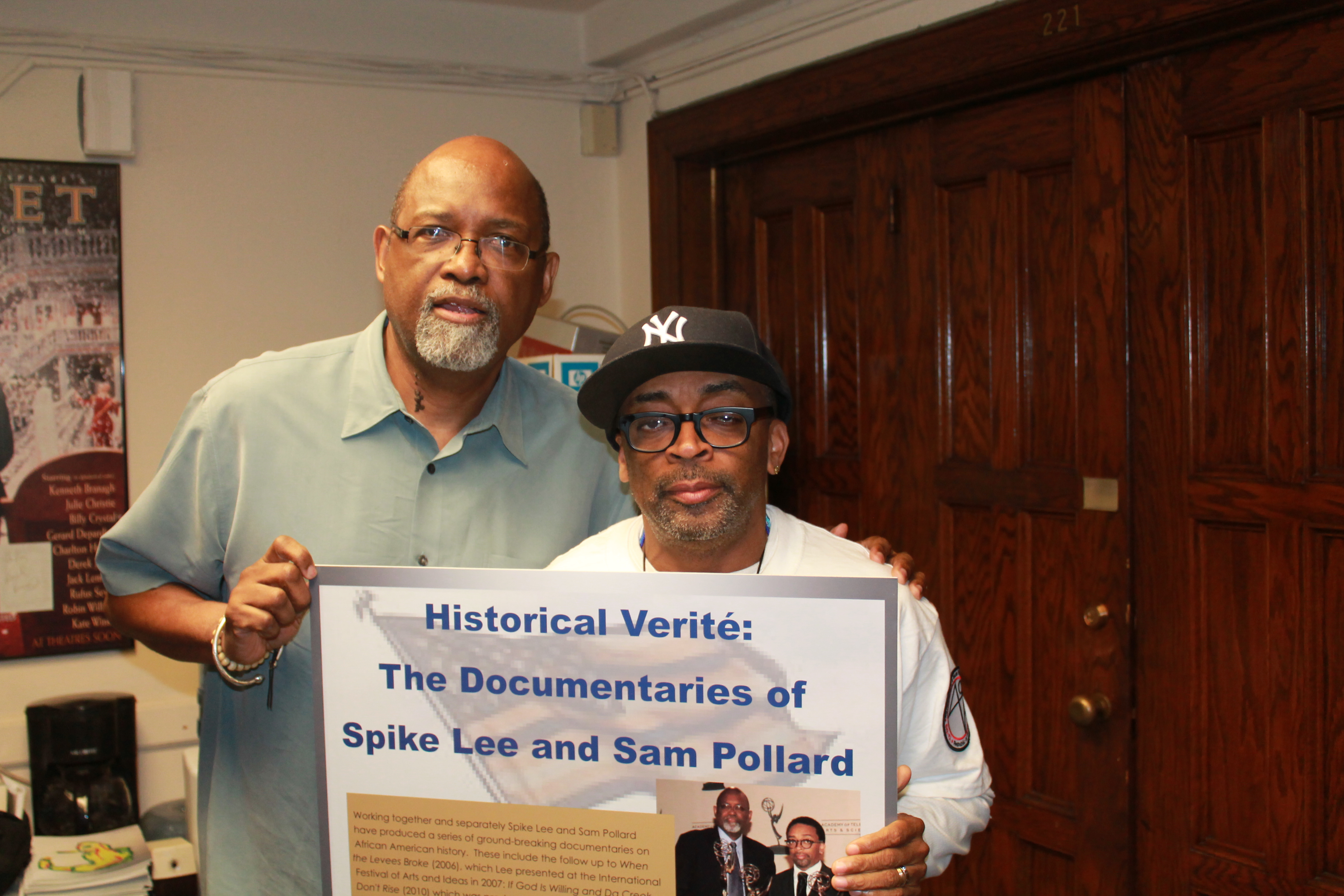
Historical Verité: The Documentaries of Spike Lee and Sam Pollard was a rewarding, intense––and sometimes tense–weekend of screenings and events.  There were several compelling reasons for its programming.  First we could show the sequel to When The Levees Broke (2006) which Spike Lee presented at the Festival in 2007–the first year of my collaboration with the International Festival of Arts and Ideas.  Spike had filled the house–indeed as many people were turned away as got in.  Attendance at Festival programs in subsequent years had been decent, but Spike connected with New Haven audiences in a special way.  And yet, we obviously did not want to repeat ourselves.  For quite a few years I have been interested in the collaboration between Spike and Sam Pollard.  Sam had served as Spike’s editor on many of his fiction feature films since Mo’ Better Blues (1990), but they also had produced several documentaries together, on which Spike acted as director and Sam as editor. This duo is also interesting because, unlike Ismail Merchant and James Ivory (or the Maysles Brothers) they have often go their separate ways.  That is, Sam is an accomplished director in his own right.

The program did several things.  First Spike is commonly presented as a singular force––and his many critics use that distinctive voice, as a way to marginalize (and even demonize) him.  This programming moved in the opposite direction by resituating him as part of a larger community of African American filmmakers working in documentary.  Correspondingly, it provided a platform that put Sam on an equal footing with Spike when he is still seen too often as “Spike’s editor.”  So we showed their first collaboration –4 Little Girls (1997)–– and their most recent–– If God is Willing and da Creek Don’t Rise (2010).  And we also showed their most recent independently made documentaries: Lee’s Bad 25 (2012) and Pollard’s Slavery By Another Name (2012).

Lee&Pollardwposter

Although Sam introduced the opening film and was still present to take questions and answers after the final one,  Spike came up specifically to show Bad 25––bringing the DVD of that film along with him.  People were lining up outside the auditorium as early as 10 am on Saturday eager to see both Spike and his Michael Jackson documentary.  Ultimately we had a standing room only crowd with a few late arrivals turned away. Meanwhile projectionist Tony Sudol was a nervous wreck because he had nothing to show until Spike arrived–-and we were a little nervous about that as well (it was Father’s Day after all).  For all of the other films, Tony had played the DVDs a couple of times during the week to make sure everything would go smoothly.  This time he was flying blind, and there were two moments when he must have had a near heart attack as the DVD of Bad 25 momentarily froze. But only momentarily.

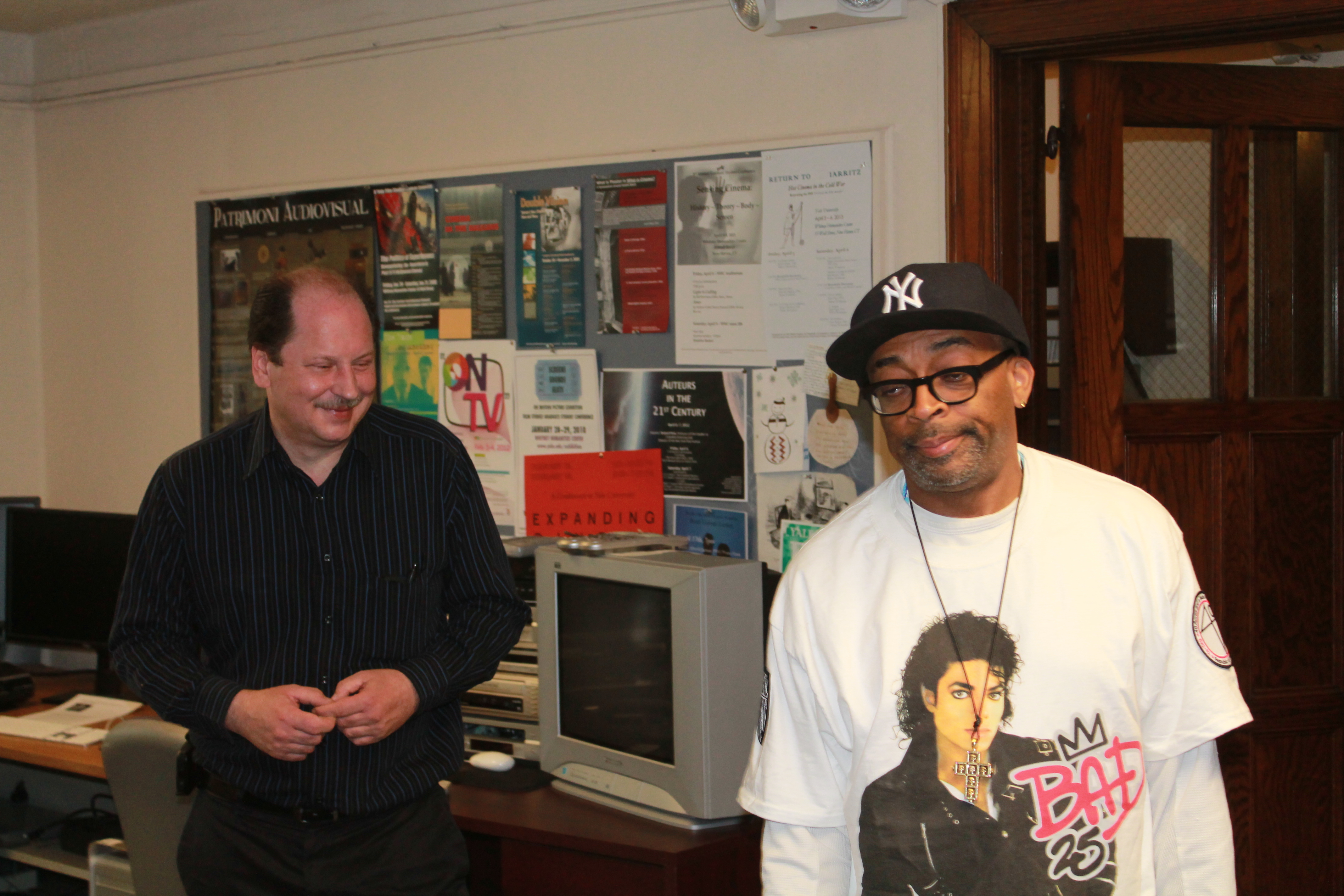
Tony Sudol and Spike Lee

Tony Sudol and Spike Lee


Of course, everything worked out in the end: given all the factors involved, it went pretty smoothly.


***

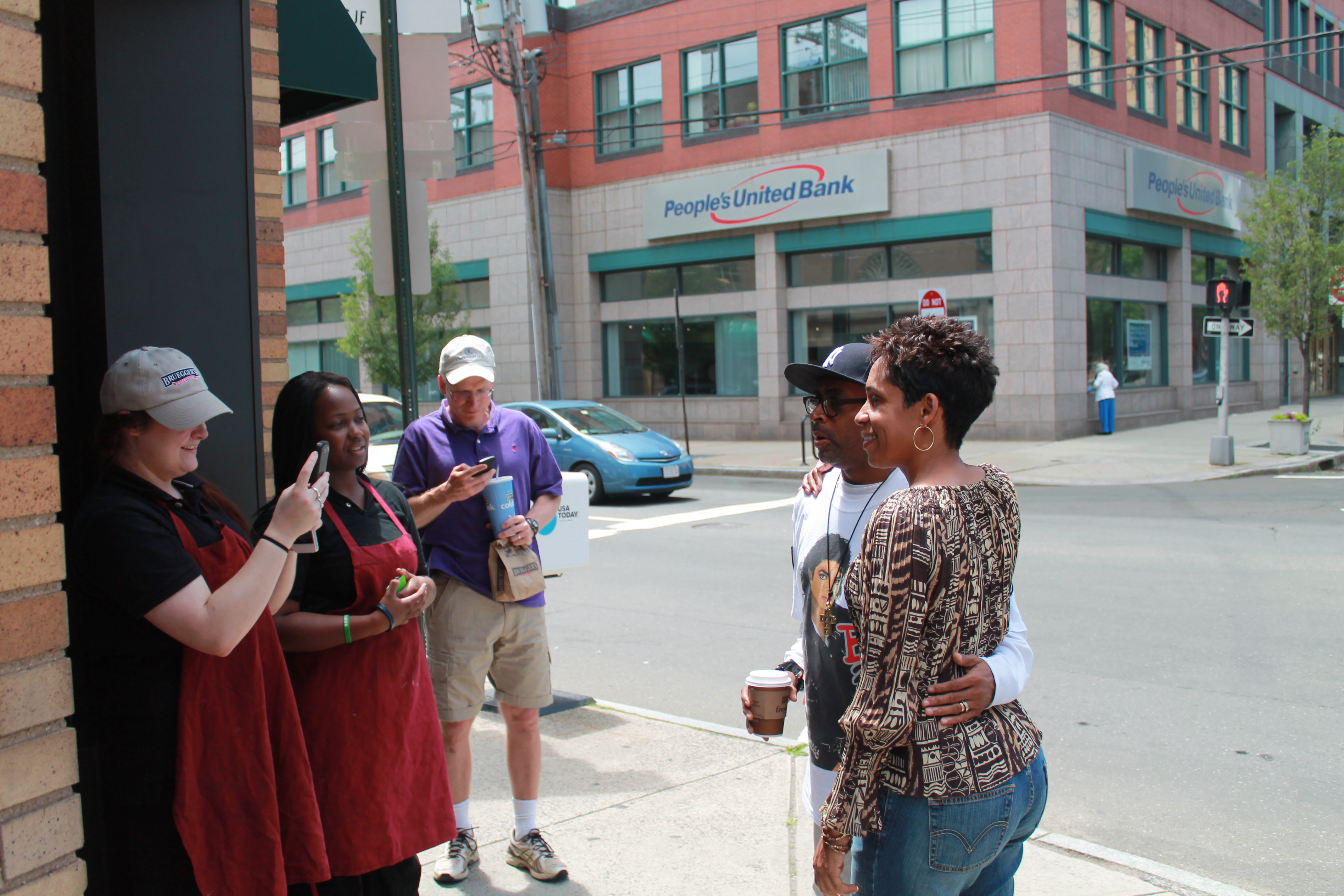
While Tony did his last minute checks, I took Spike to get a cup of coffee at the local coffee shop. There were two choices and he wanted to go for the one that was across the street.

LeeonStreet


LeeonStreet2

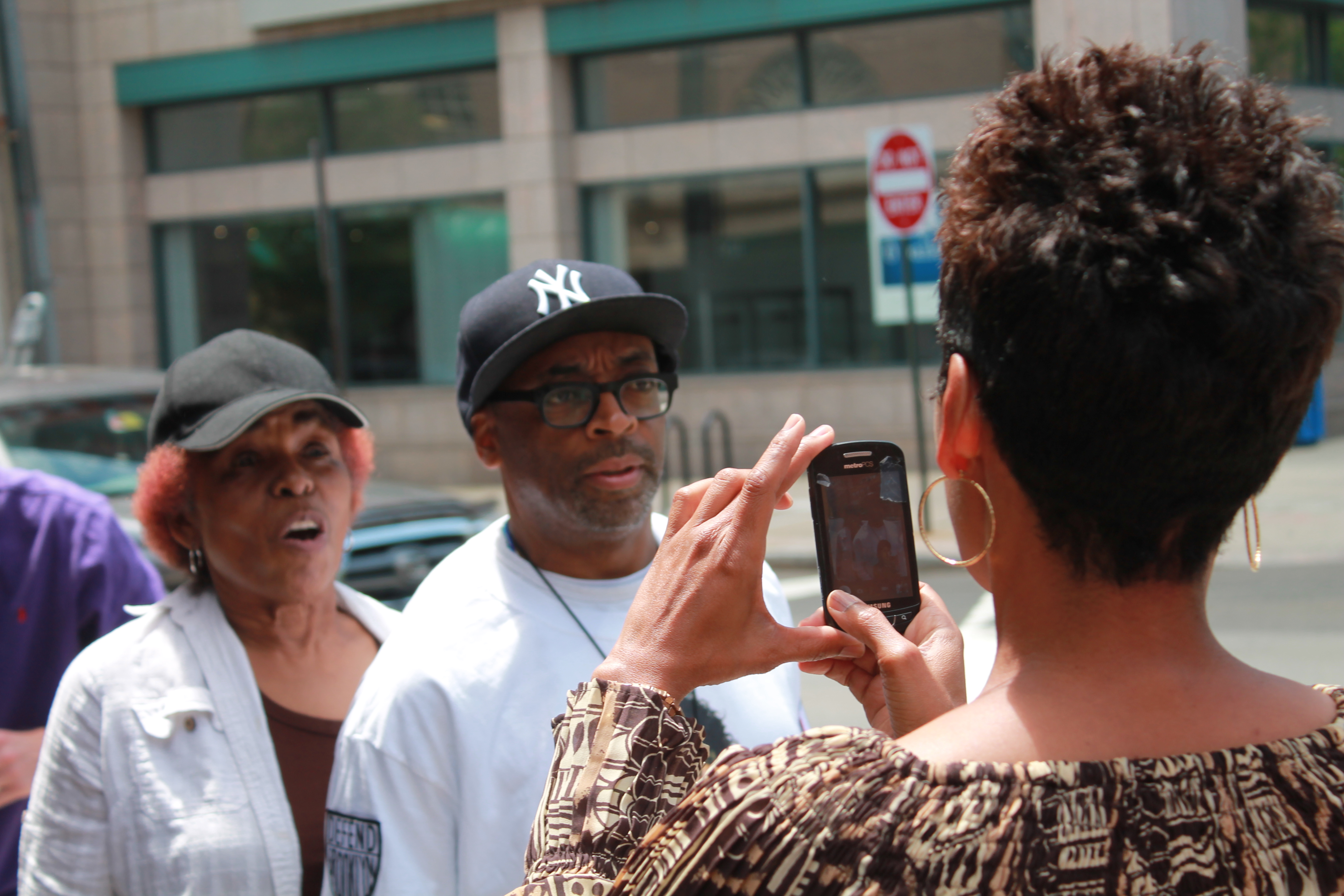
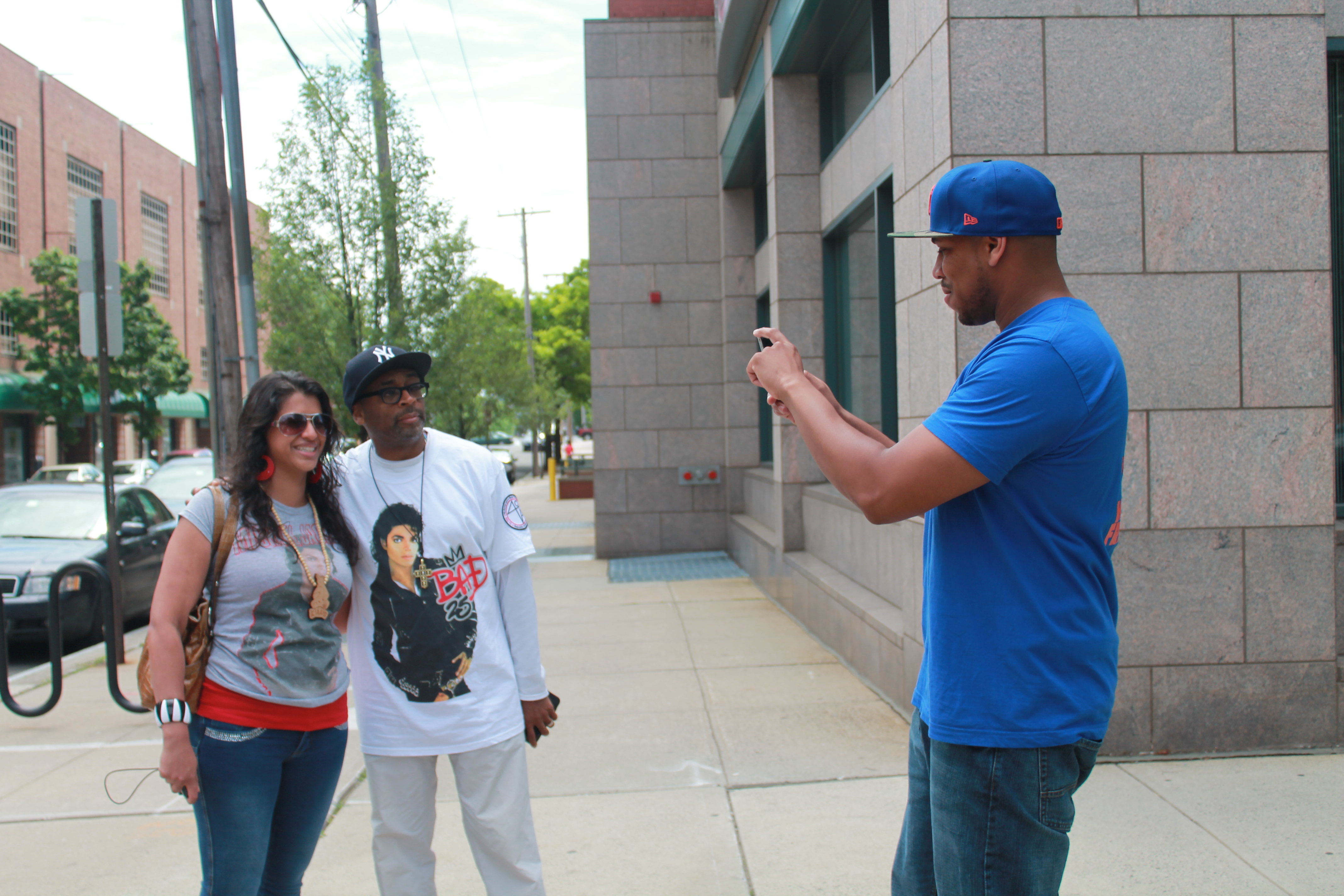
His fans quickly popped out of several local storefronts and began to ask for photo ops.  They hadn’t even known he was coming.  At least one of them promptly dropped whatever she was doing and went to see the film. If I had taken Spike for a stroll through the New Haven green, we Photo Ops

probably could have filled the auditorium for some hypothetical second show.


***

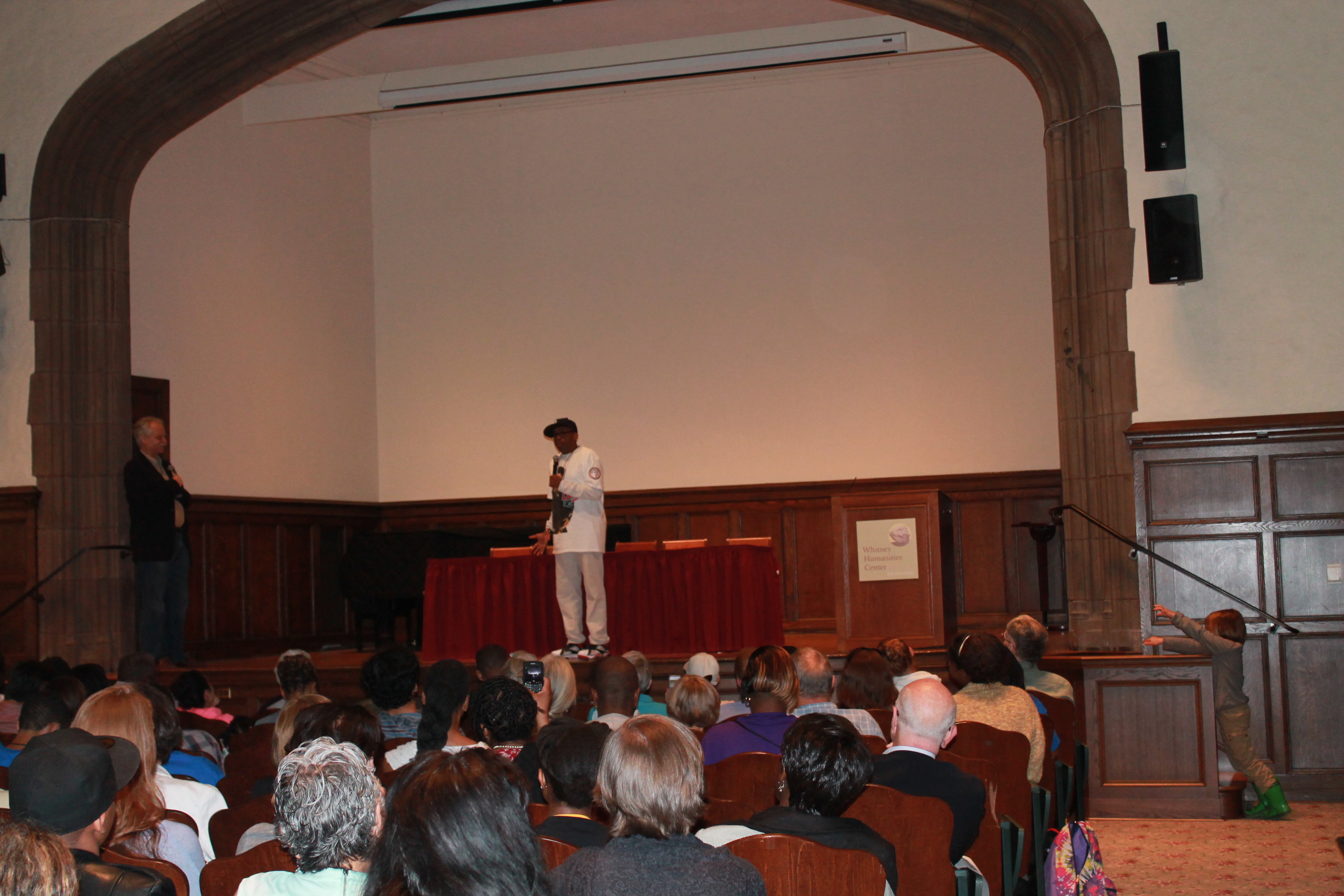
After the screening of Bad 25, Spike discussed the film, how he came to work with Michael Jackson, and his conviction that Jackson was one of the greatest writers, singers, and performers with incredible discipline.  In fact, my six-year old son John Carlos sat through the documentary (but not the Q & A–you can see him on the right edge of the stage in the photo below); When John Carlos got home, he discovered Michael Jackson videos on YouTube and began to practice a whole new set of dance moves.  SpikeonStage

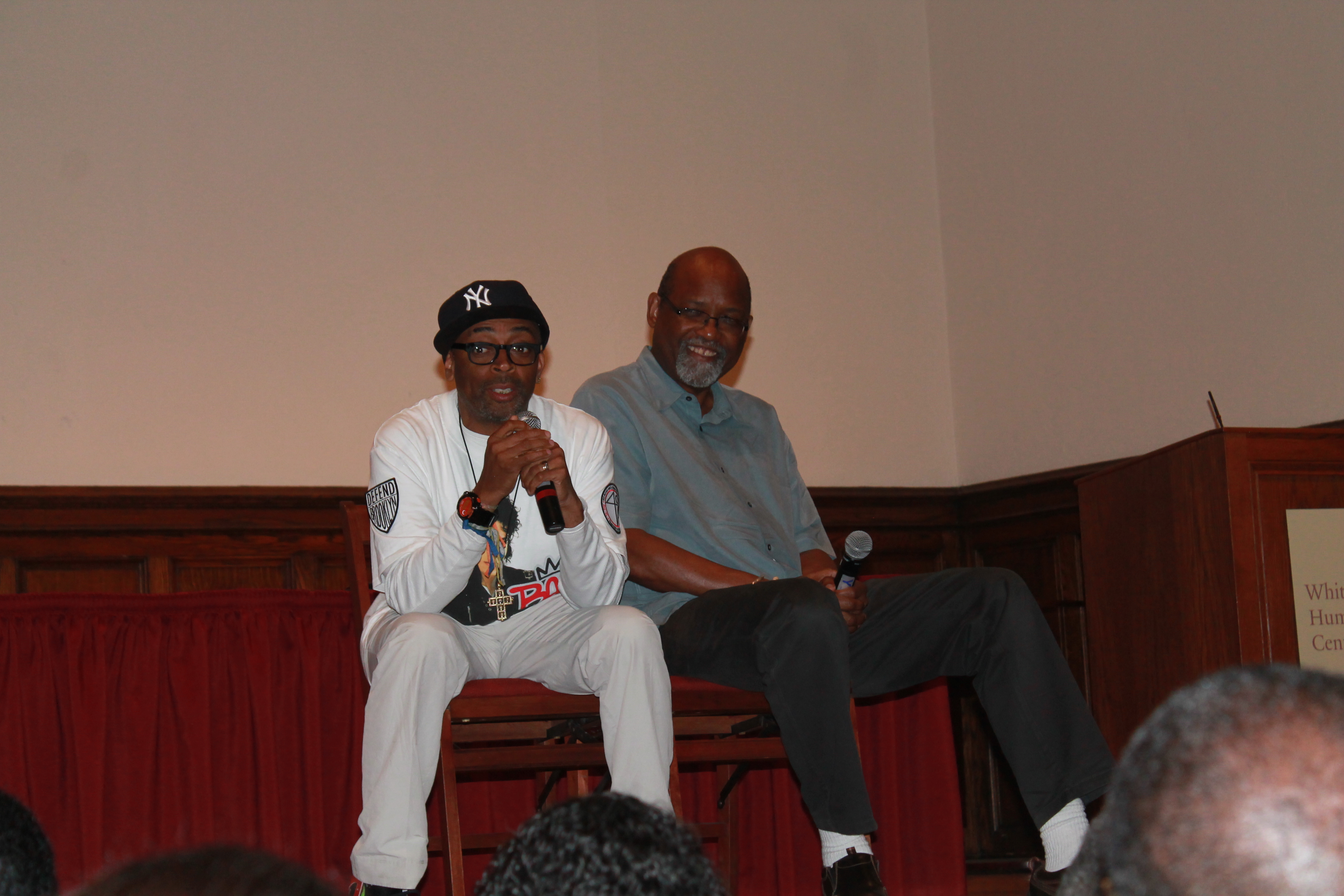
After a few remarks about the changing nature of New York City and the gentrification of Bedford-Stuyvesant by white urban professionals, Spike was joined by Sam on stage.

Spike Lee and Sam Pollard discuss their collaborative working relationship

Spike Lee and Sam Pollard discuss their collaborative working relationship

Framing the documentaries under the rubric “Historical Verité” provided the weekend’s crucial intellectual insight.  These films and the filmmakers share a common goal: to reveal aspects of American history and American culture that have been hidden, repressed.  Bad 25 insists that viewers look at Jackson in a way that differs from the tabloid scandal sheets.  Slavery By Another Name forces us to recognize that slavery did not end in the United States with the Emancipation Proclamation as we have been taught in school. It persisted in a variety of forms up until World War II. And in their sweeping epic, When the Levees Broke and If God is Willing and da Creek Don’t Rise give us a more complete and so more truthful understanding of the struggles which have faced New Orleans and its inhabitants since Katrina.

When writing these kinds of commentaries, journalists customarily provide “full disclosures” and here are mine.  I met Sam Pollard in 1975 when we were both employed by Victor Kanefsky.  We worked on separate projects in adjoining editing booths.  I was cutting a medical film of some kind; who knows what Sam was doing.  Kanefsky became an influential figure in Sam’s professional life, but I was just passing through.  Nevertheless Sam and I hung out together, sometimes with my girlfriend Alexis Krasilovsky.  And as usually happens in the film business, we lost touch–for at least two decades–until our paths once again began to intersect.  He was teaching at NYU’s  Tisch School of the Arts, where I had gotten my Ph.D. and had also done some teaching.  But our first reunion may have been on the streets of New Haven when he came up to do some research at the Beinecke Library.  I was also doing some writing on African American cinema, particularly the documentaries of William Greaves and Paul Robeson as well as the silent films of Oscar Micheaux.  We Sam&Charlieatdinnerwere pleased to discover that our professional lives were more in sync than we had any reason to expect.  A couple of years ago he was a guest in my course on Digital Documentary and the Internet.
Spike and I also had had some intersections.  My documentary Before the Nickelodeon: The Early Cinema of Edwin S. Porter (1982) was showing at the Berlin Film Festival the same year as Joe’s Bed-Stuy Barbershop (1982).  And the film’s distributor, First Run Features was then run by Barry Brown, Spike’s other editor (he edited Bad 25). Spike worked there to make ends meet and we occasionally saw each other.  Perhaps more importantly for me, my first published writing on black cinema was a on Do The Right Thing (1989) for Cineaste.  When I submitted a review that characterized the picture as having the best use of film dialectics since Musser&LeeEisenstein’s October, Cineaste decided to publish a round table discussion of the film with a reduced version of my review among an array of other commentaries. And, of course, whenever I went to see subsequent Spike Lee films, I’d usually see Sam Pollard’s name in the end credits.  So bringing them together on the same stage in this way was personally satisfying.  I hoped others would find it to be rewarding as well.  In the end, this occasion provided me with a better sense of Sam’s career and one broader insight.  Over the weekend, we discussed other black documentary filmmakers who shared the same “historical verité” project, including  Saint Claire Bourne, William Greaves, and Bill Miles.

Our Weekend Festival of Documentaries has become an regular part of the International Festival of Arts and Idea and is made possible not only by the its Programming Director Cathy Edwards and Executive Director Mary Lou Aleskie but by Yale Summer Session and its Dean, William Whobrey.  Of course if their support makes it possible in theory, many more people make it possible in practice, including Film Studies administrator Katherine Germano, projectionist Tony Sudol and the Festival staff which handles the front of the house while Nick Forster, Joshn Glick and Threese Serana gave added support.

Dinner with Sam at Zafra

Dinner with Sam at Zafra

PollardtalkingaboutSlaveryBy

Threesefilming

BlackPantheratLee:Pollardevent

Samwfans


Spike Lee & Sam Pollard Coming to New Haven: The Poster

Posted by chamus on June 17, 2013
Posted in: Uncategorized. Leave a Comment

hverite2

Documentary Film Workshop: End of the Year Screenings

Posted by chamus on June 17, 2013
Posted in: Uncategorized. Tagged: Andrey Tolstoy, Charles Musser, Documentary Film Workshop, Eunju Namkung, Francesco Casetti, J. D. Connor, Marie-Threse Maeder, Max Tellini, multi-modal scholarship, Yale. Leave a Comment

This year’s iteration of Documentary Film Workshop had its own particular challenges.  One of the students, Deno Blackburn, had been a real leader.  He was not only the first to start filming his project on a jobs program but he helped many of classmates by acting as their cinematographer.  In the spring, however, he was burdened by serious eyes problems which left unable to view and edit his footage for extended periods.   Another classmate in the Art School’s MFA program ended up integrating her documentary material into an art installation.  It was an impressive achievement but not within the normal mandate of the course.  And so it continued.  With a shorter reading period and exam week, students had difficulty finding the concentrated time in the editing room that was needed to complete their films, and our final class screening came after many students had departed for the summer.

seniordocnight2013

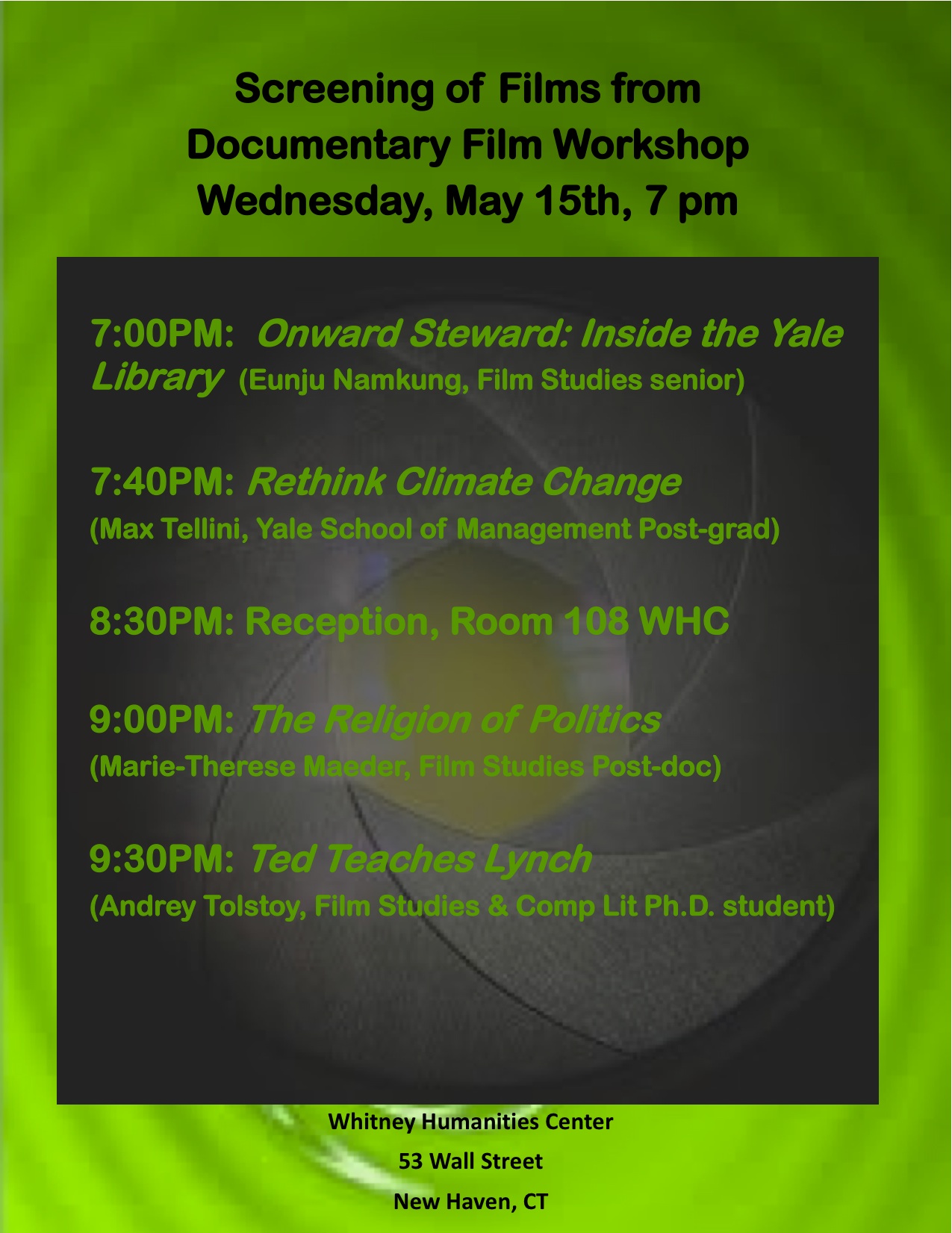
Nevertheless, we screened four completed documentaries on the evening of May 15th with a celebratory reception between the first two and the last two films.

Eunju Namkung and J.D. Connor (Director of Undergraduate Studies)

Eunju Namkung and J.D. Connor (Director of Undergraduate Studies)

Eunju Namkung started the evening with Onward Steward: Inside the Yale Library.  The Yale Library, under its recently appointed head Susan Gibbons, has been moving aggressively into new areas such as the adoption of scan and deliver.  (One result: users have fewer reasons to go to the library itself.)  Eunju interviewed a number of key figures, and the results illuminated the debate over the library’s future.  She seemed always to be in the right place at the right time–the secret to documentary filmmaking–and got the goods. Eunju is planning to stream her documentary on line very shortly. When that happens, I’ll post a link here.

From its title, one might expect that Max Tellini’s Rethink Climate Change was made by someone from the School of Forestry and Environmental Studies, but Max was at Yale as a post-grad in the School of Management. Moreover, his documentary challenges the mindset of MBA programs.  He shot much of the film in Hong Kong and Beijing, learning as he went along. I am still amazed that he could make this 60-minute documentary on a miniscule budget when twenty years ago it would have easily cost $250,000.  The wonders of the digital. Max displayed a perseverance and determination that was very impressive.

Francesco Casetti offers Max Tellini some advice after the screening of Rethink Climate Change.

Francesco Casetti offers Max Tellini some advice after the screening of Rethink Climate Change.

And then we paused for some refreshments…Reception***

Marie-Therese Maeder was a visiting post-doc from University of Zurich.  She came to research issues of media and religion and to take Documentary Film Workshop.  When she arrived MT wanted to audit my fall course on Media and US Presidential Elections, 1892-2012 instead.  In fact, I urged her to do both, and the excellent result was The Religion of Politics: An Investigation into the 2012 US Presidential Election. MT interviewed a local Catholic priest, the pastor of a Black Protestant church and a Mormon bishop.  Perhaps because she was a foreigner, those interviewed were remarkably frank with their opinions! The intensity of a campaign also has much to do with their statements as well.

      Marie Therese was only here for the fall semester, but her film was not completed until February or March.  Our screening was the first opportunity for students in the class to see what she achieved.

Marie-Therese Maeder and her son Levin in the US to investigate religion and the media

Marie-Therese Maeder and her son Levin in the US to investigate religion and the media

The evening ended with Andrey Tolstoy’s remarkable documentary Ted Teaches Lynch.  To say that the film is “about” Ted Perry, Andrey’s undergraduate film professor at Middlebury College, misses the point.  Ted may be the focus or perhaps more accurately the starting point, but Andrey’s documentary is about the experience of film viewing––particularly viewing David Lynch’s films––and what that experience can mean.  Francesco Casetti, the Director of Graduate Studies for Film Studies, had not hidden his skepticism about Andrey’s undertaking, but by the end of the evening he had been convinced that this had been a productive endeavor.

Francesco (the skeptical DGS) and Andrey

Francesco (the skeptical DGS) and Andrey

Indeed, if all goes as planned, Andrey will serve as a Teaching Assistant next year for the class.  And the suggestion was Prof Casetti’s (thanks Franceasco!)

Andrey Tolstoy & Charlie Musser: a teaching team for the fall.

Andrey Tolstoy & Charlie Musser: a teaching team for this coming fall.

Graduate students and post-docs such as Marie-Therese, Max and Andrey are engaged in efforts of documentary scholarship that complement their written work.  We are increasingly in an era of multi-modal scholarship.  The process of filmmaking, which was difficult and expensive when I was a graduate student, has become much, much easier and less costly.  Energies can be focused much more on intellectual concerns.

Max Tellini, Eunju Namkung, Threese Serana, Charlie Musser, Andrey Tolstoy.

After the screening: Max Tellini, Eunju Namkung, Maria Threese Serana, Charlie Musser, Andrey Tolstoy.

Well while the students have been making their films, I have been working with my collaborator Threese Serana on a film of our own.  We can’t agree on a title yet:  I want  to call it Visa Wives while she wants to call it Filipino Wives.  Presumably what appears after the title is what counts.

And yes, we all occasionally got Marie-Therese and Maria-Threese confused.


Errol Morris and Chris Choy @ Yale

Posted by chamus on April 19, 2013
Posted in: Uncategorized. Tagged: Charles Musser, Chris Choy, documentary, Errol Morris, The Thin Blue Line, Who Killed Vincent Chin?. Leave a Comment

Have Errol Morris and Chris Choy ever met?  Their personal and cinematic styles are so extraordinarily different, it is almost hard to imagine; and yet they both made ground-breaking, innovative courtroom documentaries ca. 1988, which profoundly contributed to the revitalization of documentary practice in the United States: Chris’s Who Killed Vincent Chin? (1987, with Renee Tajima-Peña) and Errol’s The Thin Blue Line (1988).  Both films are audacious, inspirational and ultimately complementary.  On an obvious level, everyone agrees that Ronald Ebens killed Vincent Chin: there were numerous eyewitnesses and Ebens himself confessed.   For that crime, he received nothing more than probation.  If the immediate answer to the film’s title is obvious, a search for deeper answers is far more troubling.  In contrast, Randall Adams was convicted of murdering a police officer and faced death until The Thin Blue Line effectively proved that Adams was innocent and identified the actual killer. Yin and Yang.  I wrote about both these films in an essay: “Film Truth, Documentary and the Law: Justice at the Margins,” University of San Francisco Law Review 30:4 (Summer 1996), 963-984. (At present it seems to be available on line here.)

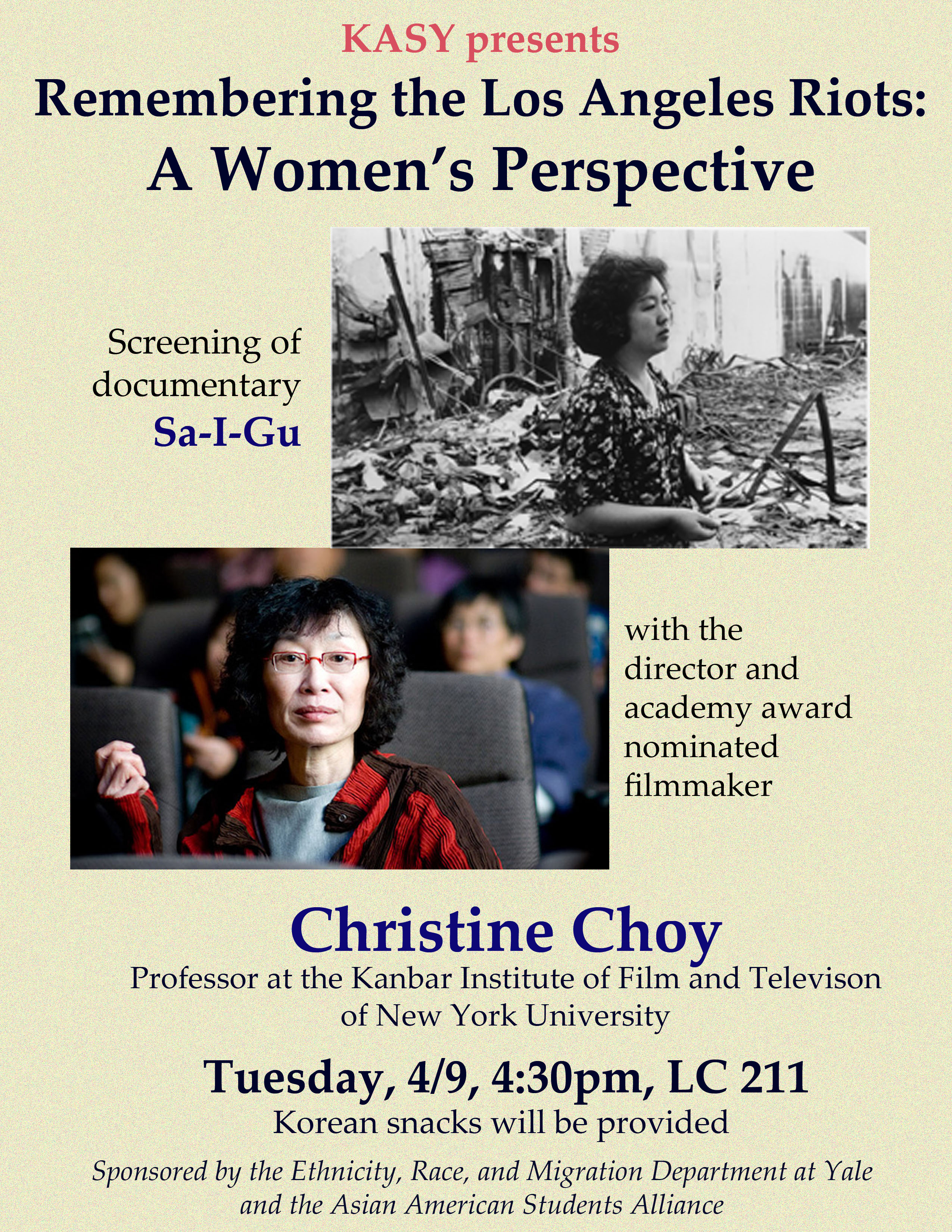
I can’t take any credit for this, but a mere eight days separated their recent visits to Yale.  Chris showed her documentary Sa-I-Gu (1993) about the experience of Korean women (mostly small business owners) during the 1992 Los Angeles Riots/Rebellion that was sparked by the Rodney King trial–-and excerpts of forthcoming effort that re-examines that upheaval some 20 years later. Sa-I-Gu shares a recurrent theme with her other documentaries: Asian Americans have to stop acting like a model minority and stand up for their rights!   For his presentation at the Art School, Errol returned to The Thin Blue Line and the noir films of the 1940s and early 1950s that inspired him.

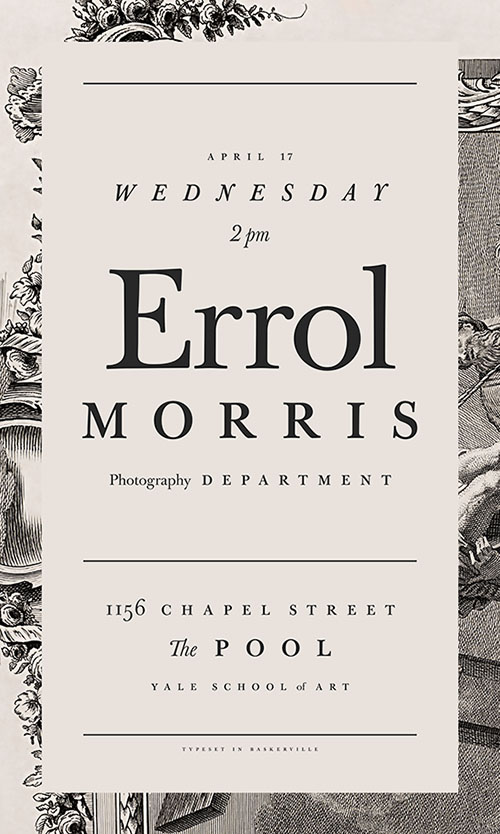
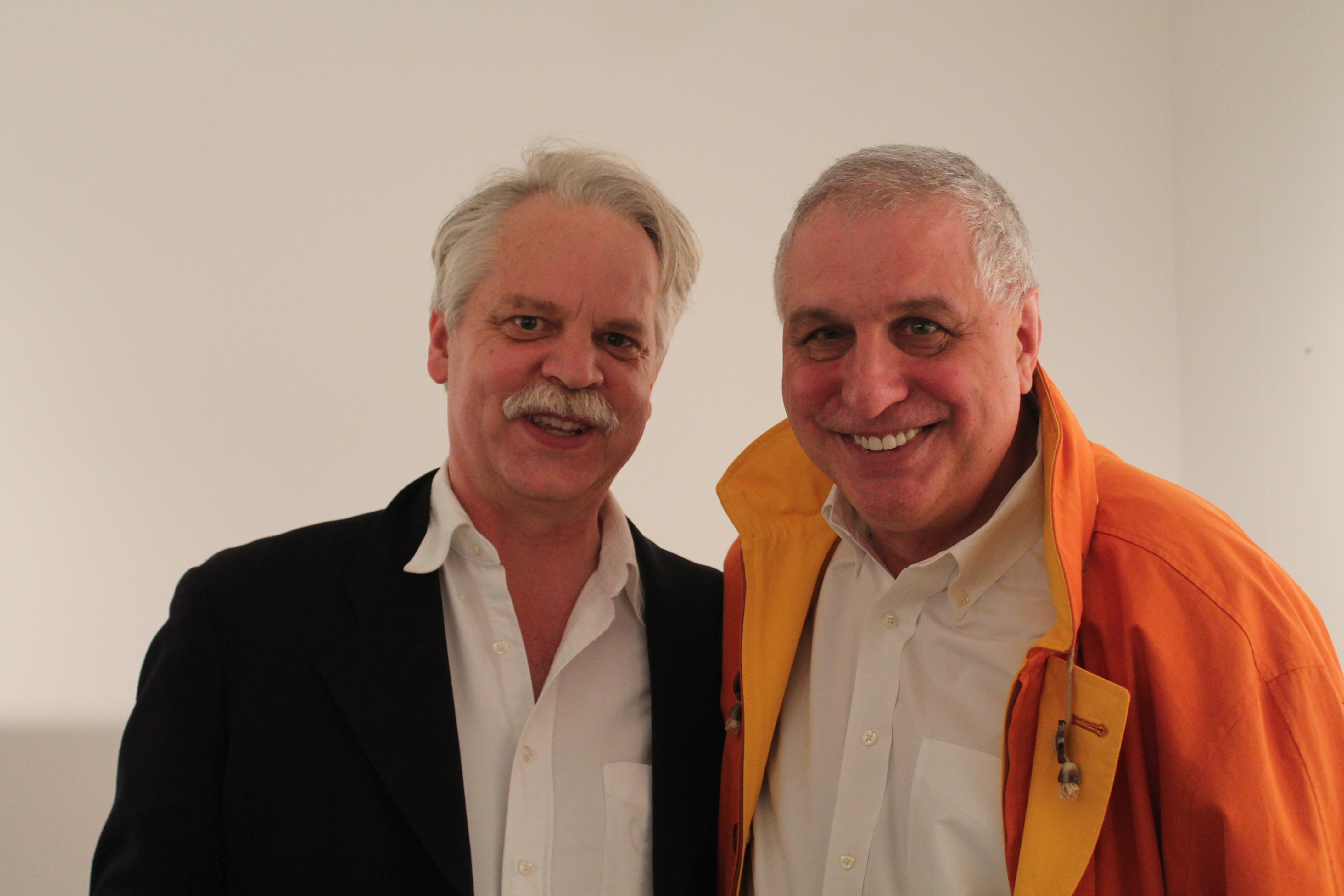
One thing for sure.  Until very recently I avoided those posed portraits of eager scholar and famous filmmaker.  They have always seemed slightly tacky.  I’ve known both Errol and Chris for more than 20 years but never requested a photo op from either one.  Obviously, that has just changed.  The public diary, narcissistic ruminations and inevitable self-promotion of this website is certainly one explanation.  But it also has something to do with the rapid passage of time and being ready to document at least one instance in our associations.  So somewhat shamelessly here they are–along with the posters for Chris and Errol’s visits:

photo by Victoria Chu

photo by Victoria Chu

Christine_Choy_flyer


****
MorrisatYaleposterwith Chris Choy


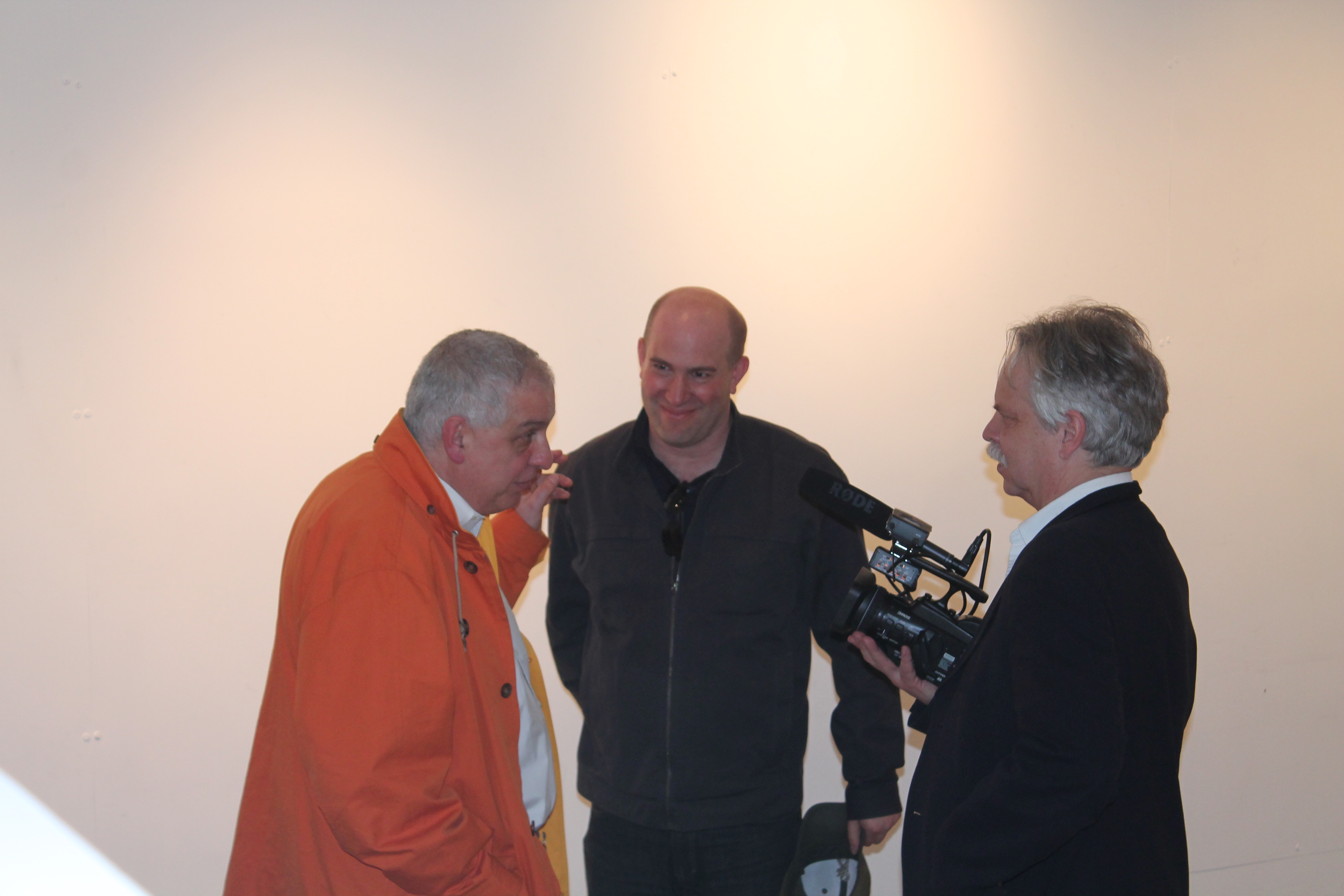
As readers of my website know, I have been working on a documentary: Errol Morris: A Lightning Sketch (2013).  It’s been shown as a work in progress at several universities and even a few odd classes largely devoted to documentary.  It all came about because my own failed efforts to get Errol down to Yale. Fate had something else in mind: a backdoor documentary. Carina Tautu and I went up to his Cambridge offices to record a conversation with Errol and bring it back down to show at a festival of his films, which I programmed.  The rest, as they say, is history–or friendly persistence on my side and a certain graciousness on Errol’s.  Since our visit, he has made two appearance on the Yale campus– under someone else’s auspices.  Once again this has all been to the good. I haven’t had to worry about hosting and both times showed up at his events with video camera in hand.  My goal has simply been to have some kind of lasting record of his speculations on cinema and the nature of our universe.  In fact, Errol asked his hosts at the Art School if someone could record his conversation as he was walking into the “pool.”  So I quickly solved that problem. I could easily begin to see this as one of my responsibilities.

Morris,??,Musserwcamera

Among the various high points of his talk, Errol shared his “Fuck You Theory of Art” with the MFA art students, where he had a ready audience.  In a way, many of the filmmakers that have fascinated me practice this in some shape or form. Chaplin–for sure.  Oscar Micheaux–certainly. No filmmaker has ever made a film that said “Fuck You” to his star more than Micheaux did to Paul Robeson in Body and Soul (1925). And in a different way, much could be said about Ernst Lubitsch and Lady Windermere’s Fan, released in the same month. On this particular occasion, Morris focused on Johann Sebastian Bach’s The Passion of our Lord Jesus Christ according to the Evangelist Matthew. EM sees himself as being in this tradition: certainly it is crucial for understanding many of his individual films as well as his body of work as a whole.  One should emphasize perhaps that the other side of this “Fuck You” approach is incredible rigor and discipline.

Well if Errol will let me, I will post that section of his talk sometime in the future.

Shelley Stamp Visits My Film Historiography class

Posted by chamus on April 19, 2013
Posted in: Uncategorized. Tagged: Alice Guy Blaché, Andrew Vielkind, Andrey Tolstoy, Charles Musser, Film History, Jorge Cuéllar, Kirsty Dootson, Lois Weber, Luca Peretti, Mal Ahern, Nick Forster, Sean Strader, Shelley Stamp, Viktoria Paranyuk, Yale Film Studies Program. Leave a Comment

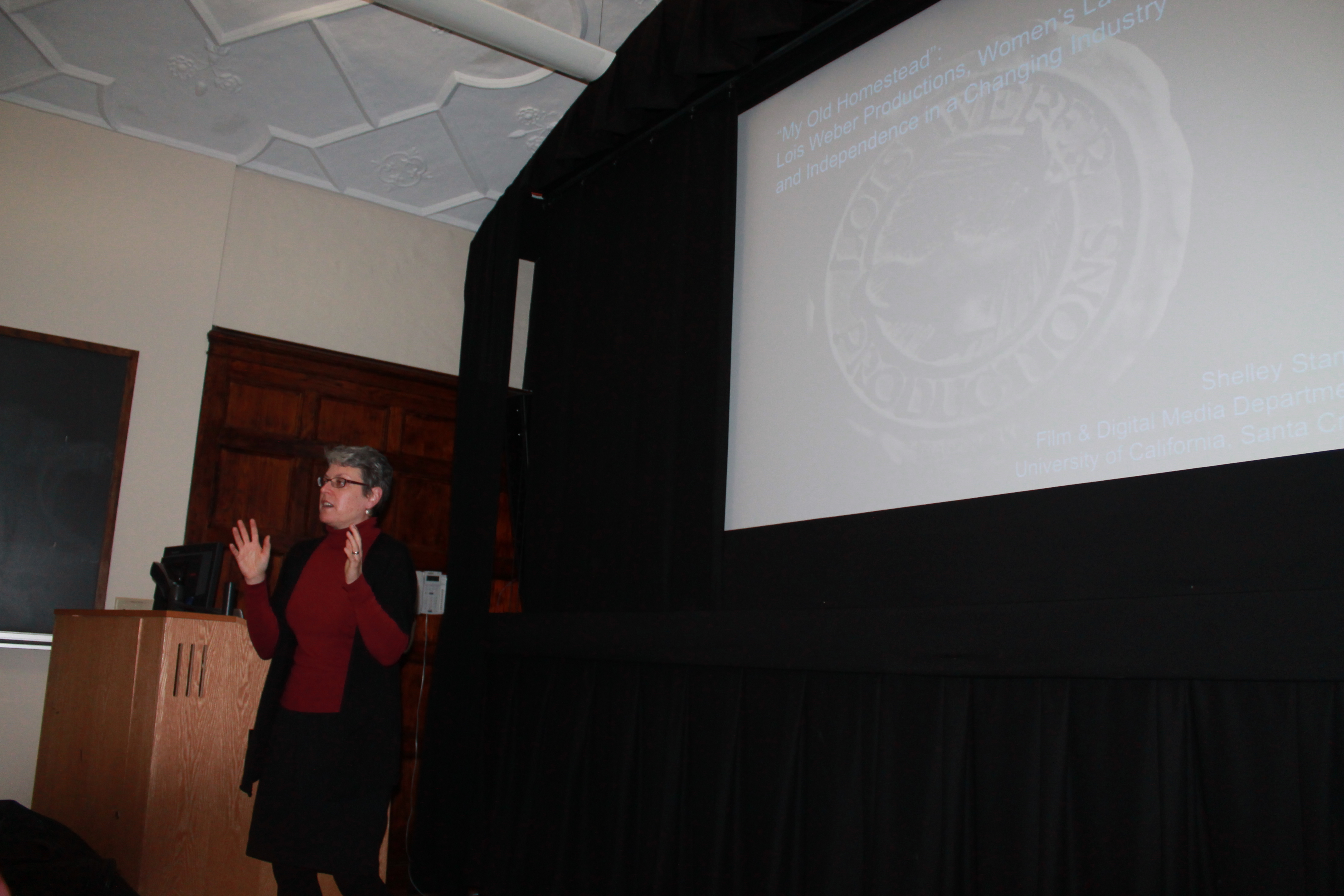
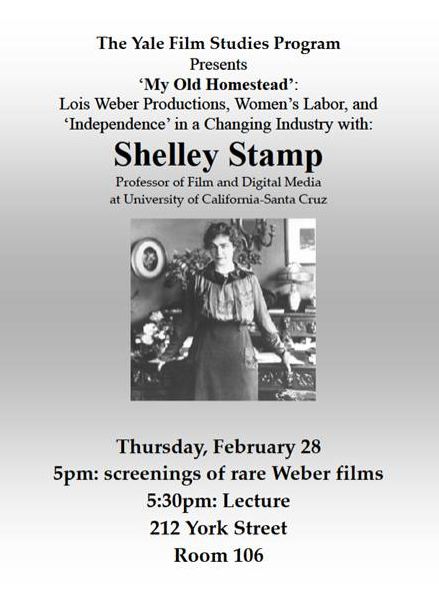
Every other year I teach a required graduate course: Film 603, Historical Methods in Film Study, which focuses on the history of American cinema to 1920–roughly from the beginnings of commercial projection to the establishment of the vertically integrated studio system that constitutes what is generally called the Classical Hollywood Cinema: from the Vitascope to Cecil B. DeMille and Oscar Micheaux.  I regularly devote one week to the films of Lois Weber (Suspense, 1913; Shoes, 1916) and Alice Guy Blaché (A House Divided, 1913, Matrimonial Speed Limit, 1913)–as well as to the writings of Shelley Stamp (Movie Struck Girls: Women and Motion Picture Culture After the Nickelodeon, and a couple of her essays on Weber).  This year we were able to get Shelley to come in person:

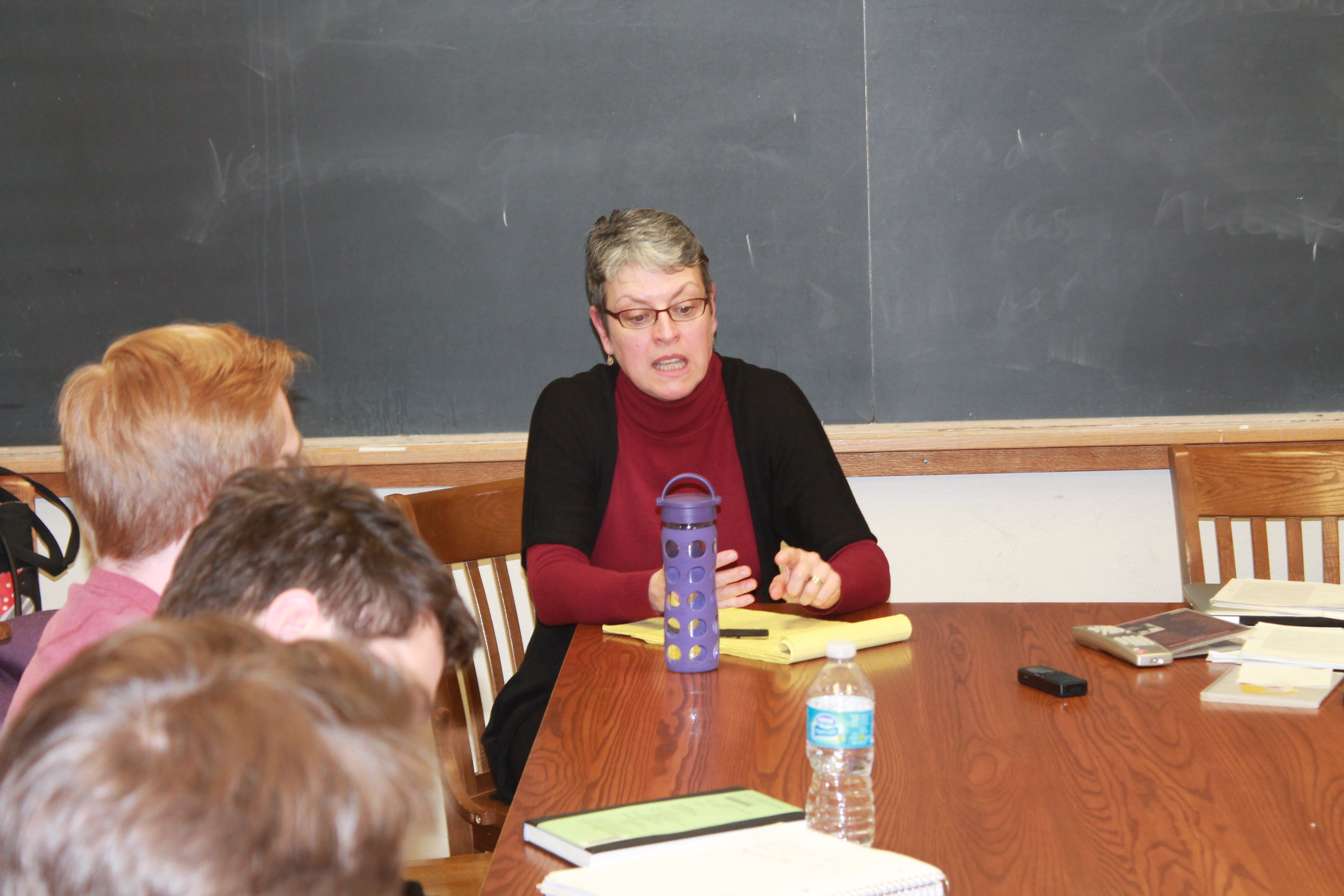
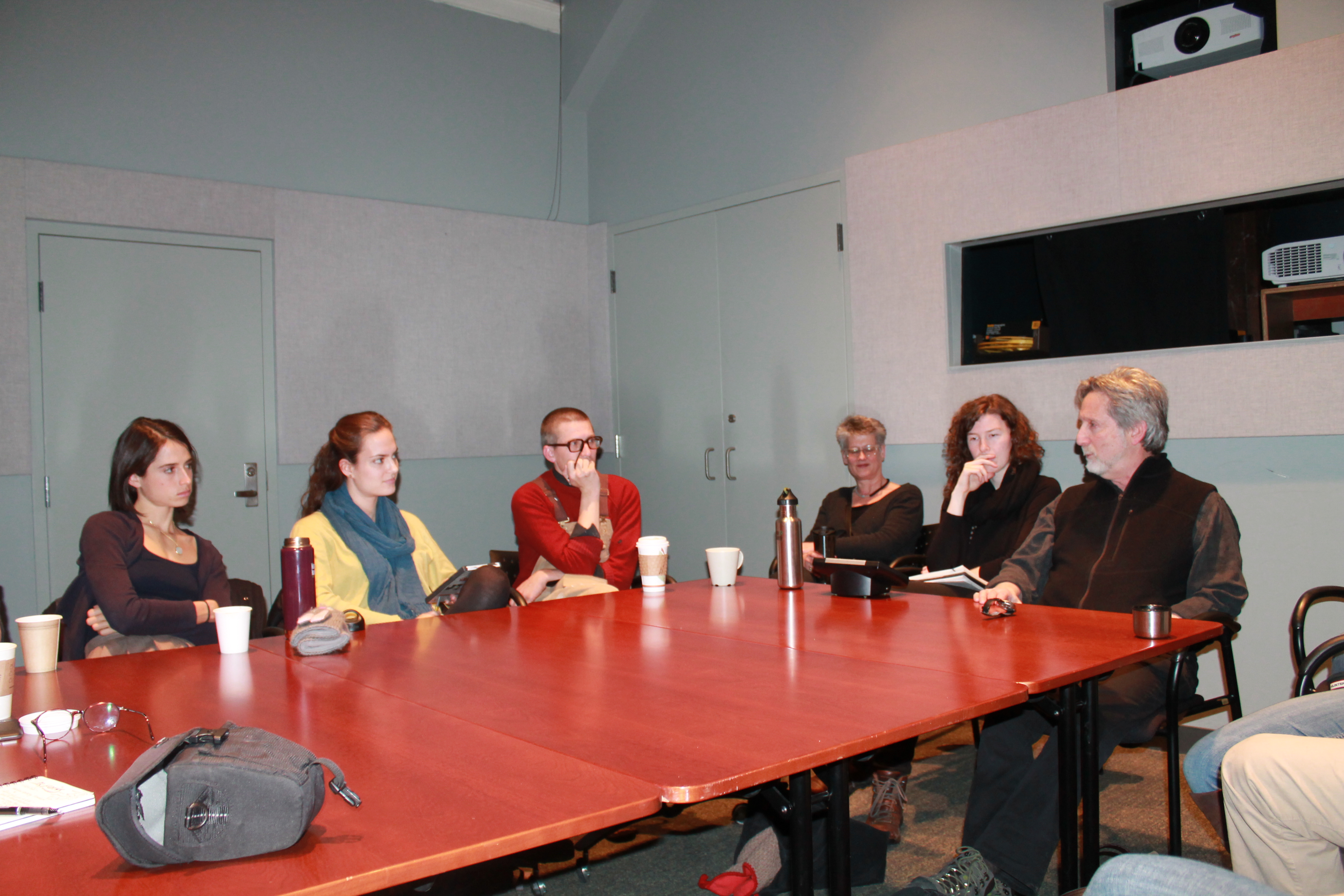
Shelley Stamp in my Yale classroom

Shelley Stamp in my Yale classroom

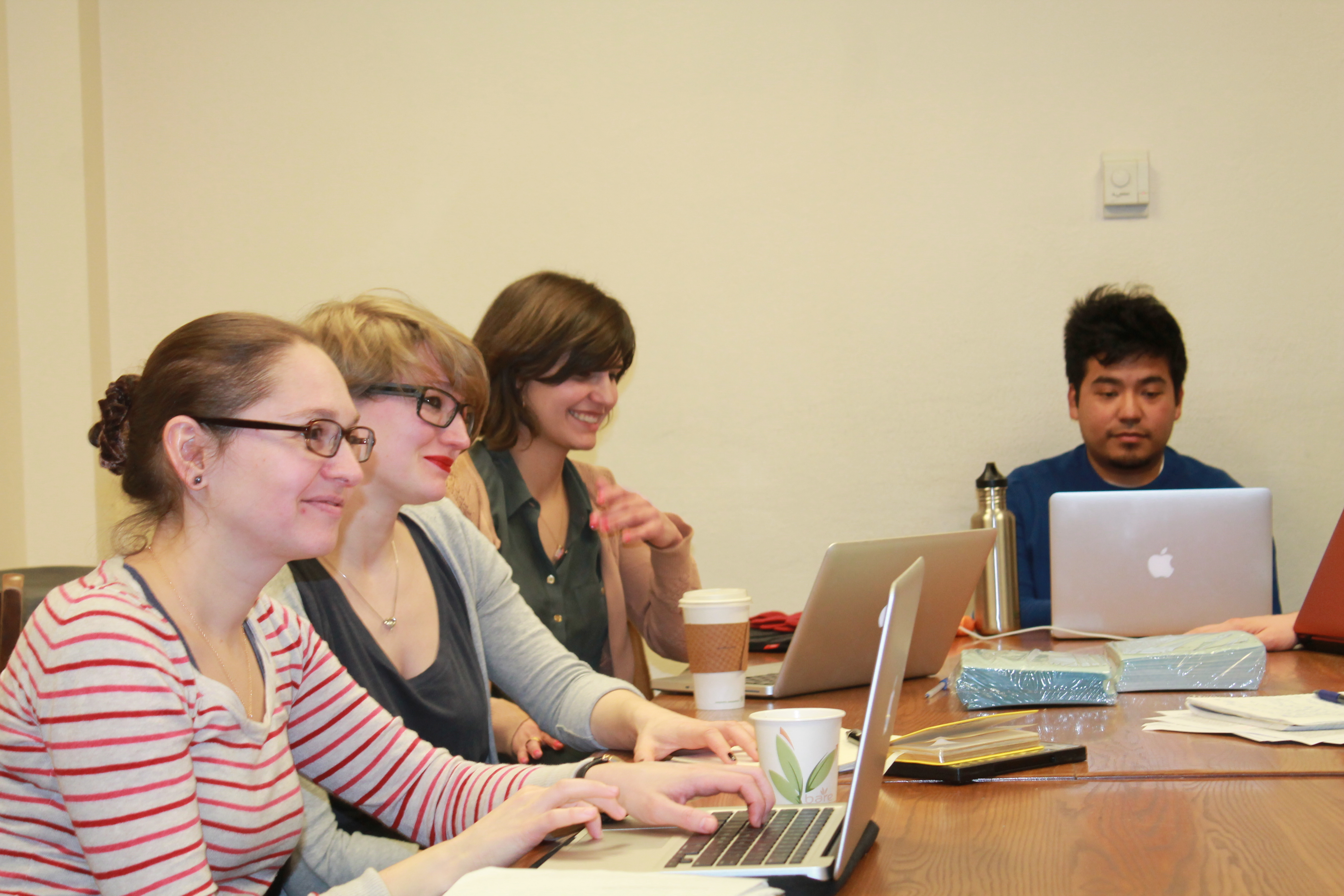
Viktoria Paranyuk, Kirsty Dootson, Mal Ahern, Jorge Cuéllar

Viktoria Paranyuk, Kirsty Dootson, Mal Ahern, Jorge Cuéllar

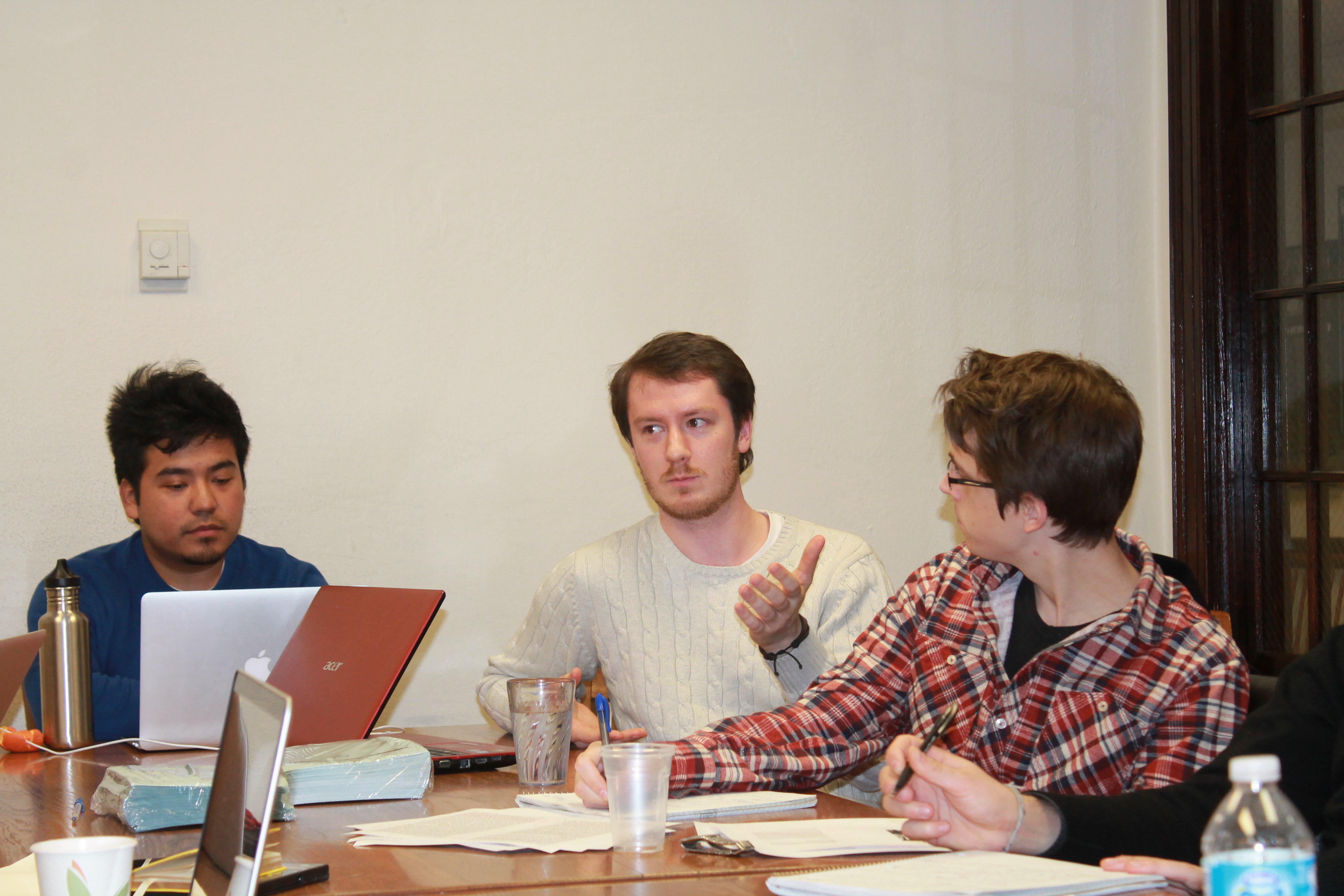
Jorge, Andrey Tolstoy, Nick Forster

Jorge, Andrey Tolstoy, Nick Forster

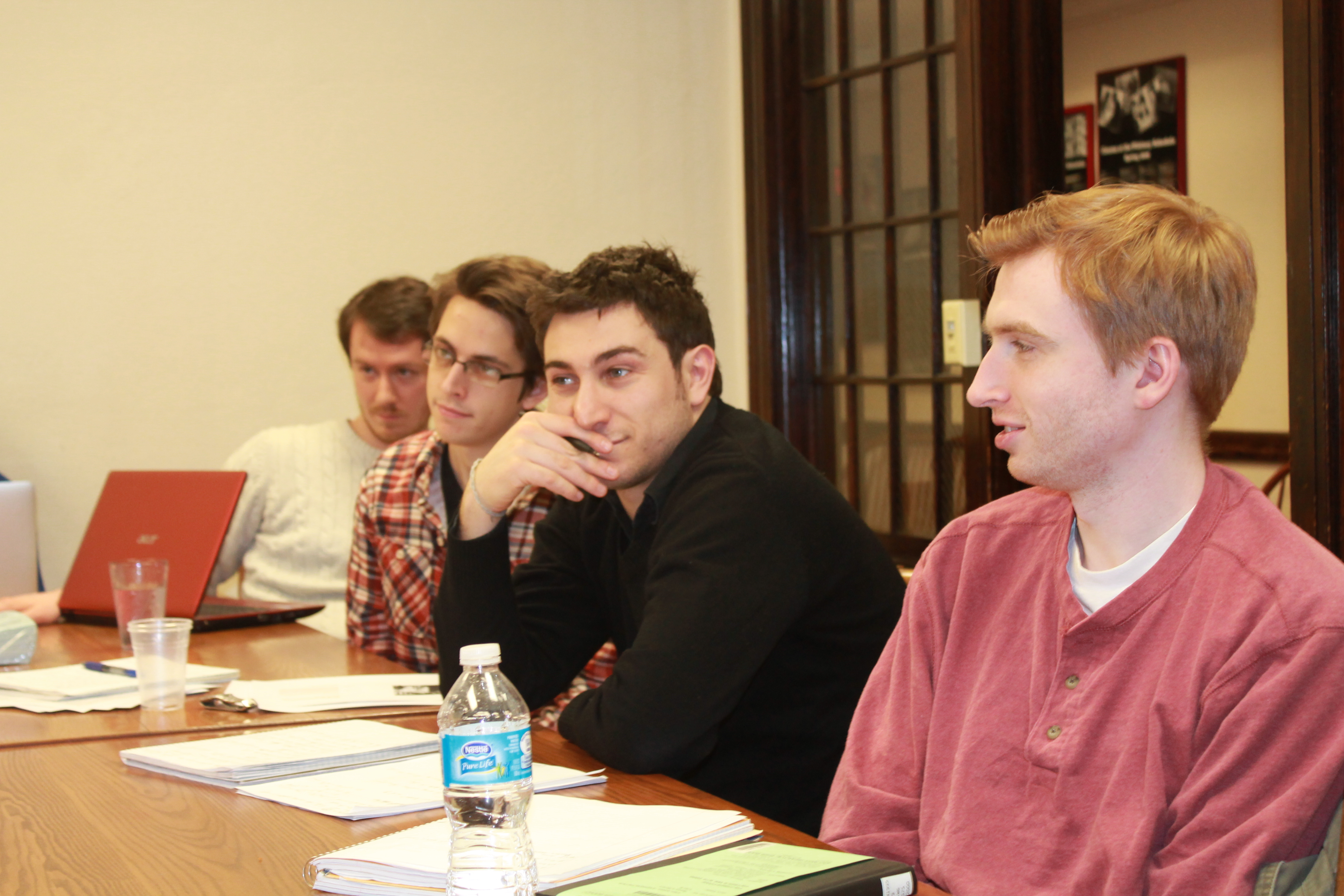
Andrey, Nick, Luca Peretti, Andrew Vielkind.  Outside the frame: Sean Strader

Andrey, Nick, Luca Peretti, Andrew Vielkind. Outside the frame: Sean Strader

Shelley and I have a special relationship that has become clearer over time.  It started at NYU in the Department of Cinema Studies, where we both got our Ph.D’s. I had essentially completed my degree by the time she arrived and stayed on to teach as an adjunct–not early cinema but documentary.  So we have never been in the same class room –until her visit documented in the above images.  If I was working on American early cinema up until about 1909 (when Edwin S. Porter and the Edison Manufacturing Company––the dual subjects of my dissertation––parted ways), her scholarship focused on the immediate post-1909 period.  Seemingly we were ships passing in the night.  Then, as Shelley began to research and write on Lois Weber, our connection became clearer.  Lois Weber and her husband Phillips Smalley worked with Porter after he left Edison––at the Rex.  As I studied Porter’s career, I came to realize that he almost always worked with a collaborator––whether George S. Fleming, G. M. Anderson, Wallace McCutcheon, J. Searle Dawley or eventually Hugh Ford. (He actively resisted the more hierarchical organizational structures of D.W. Griffith and Cecil B. DeMille.)   At Rex, Porter found collaborators in Smalley and/or Weber.  And when he left Rex in 1912, they stayed on and retained this collaborative manner of working.
As I began to write more about the American cinema of the 1910s, our ships soon came within easy hailing distance on a calm sunny day.  I eventually wrote about another husband-wife team of filmmakers: Herbert and Alice Guy Blaché.  The success and eventual breakdown of the Smalleys and the Blachés as filmmaking teams coincided very closely.  These couples were at their professional best between roughly 1912 and 1916, after which their relationships rapidly deteriorated.  Both marriages ended in divorce around 1922. However, Shelley’s and my historical approaches share something more than subject matter–it involves a theoretical or methodological orientation which is instinctive dialectical.

Let me reveal a small secret.  Typically I show students Traffic in Souls (Tucker, 1913) and have them read Lee Grieveson’s Policing Cinema, which views the 1910s as a period of increasing social and cultural regimentation–a narrowing of what is possible.   Lee finds the kinds of debates and state interventions around Traffic in Souls and other white slave films to be exemplary of this policing of cinema.  His approach is explicitly indebted to Michel Foucault. Now Lee is an outstanding researcher and I admire the force of his arguments.  Yet I find myself aligned with Shelley’s position when she remarks
Negotiating a place for female viewers within cinema’s imaginary topography was made all the more troubling by the vice pictures: their sexually frank subject matter was assumed to repulse women, yet observers could not ignore women’s evident attraction to the material.  The way that cinema enable a fictive remapping of a viewer’s relation to social space––although potentially liberating for women––was for the same reason threatening to any commentators.  Now an industry actively courting female patronage also had to consider the implications of female spectatorship.  Indeed, the white slave film controversy shows an industry grappling with the distinction between the characterization of cinema’s social audience and the various spectatorial positions that it offered (Movie Struck Girls, p 94).

This is the kind of film history (or media history) to which both me and my students should aspire. At a moment when the Woman’s Suffrage Movement was transforming the social and political landscape, cinema gave women virtual access (however diluted and sensationalized) to a formally inaccessible realm.

After our class meeting, Shelley screened a few hard-to-see Weber films and gave a public presentation:Shelleylectures


Shelley'sposter

Later we traded stories about something else we have in common: the ways that administration and family have retarded the completion of various book projects.


On the Road: Charlie, the traveling filmmaker

Posted by chamus on March 1, 2013
Posted in: Uncategorized. Tagged: Anne Petrone, Errol Morris, Harvard, Karen Schmeer, Rebecca Wexler, Robb Moss, The Same River Twice. Leave a Comment

I often post about the films and filmmakers I go to see as an audience member.  But sometimes I get to be the filmmaker and show my film.  It is only fair.  Of course, in the role of traveling showmen, we no longer traipse about with a reel or two of film.  One can no longer identify fellow filmmakers at the airport by the instantly recognizable 16mm film carrying case they surely haul onto the plane. Now we just slip a DVD into our briefcases (or in my case, Danish school bag).

I am just back from Harvard where I showed Errol Morris: A Lightning Sketch on February 25th in the Department of Visual and Environmental Studies.  It was for Robb Moss’ class, Documentary Workshop.

Robb Moss and his class, Documentary Workshop

Robb Moss and his class, Documentary Workshop

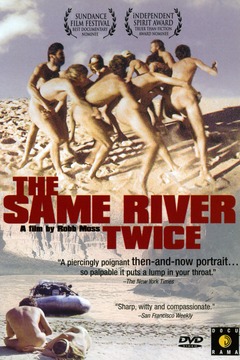
His students had seen two Errol Morris documentaries in preparation for my visit.  My homework assignment was to fill an increasingly embarrassing hole in my viewing knowledge: Moss’s Same River Twice (2003).
the-same-river-twice-1It returns to a group of friends he filmed river rafting in the 1970s, which resulted in Riverdogs (1982).  That material is the jumping off for his documentary as he catches up with these friends some 30 years later–as they reflect upon (and often struggle with) relationships, work, age and health. The film and the issues that it explores certainly engage me but the more distant past  of leisurely encounters with nature were remote.  I remember one summer in the 1970s, when I finally got outside the city for a day or so, my eyes ached from all the green. By the late 1970s I was spending my days in the editing room–or increasingly reading microfilm.  My river experiences, if you will, came earlier.  They were in the Outer Banks of North Carolina which I visited often, and where I worked as a commercial crabber and fisherman from the end of high school into college. (And where I did my first filming.)  But my stint on Hearts and Minds (1972-1974) put an end to that kind of exploration forever–replacing it with a new type of encounter. Perhaps I should finally return to Edenton.

(I suspect these encounters with nature are much rarer today.)

I found The Same River Twice poignant for another reason.  Several names in the credits were people I had come to know (directly and indirectly) through the making of A Lightning Sketch.  This included Ann Petrone, who appears in my film and is Errol’s producer/office manager.  But it was Karen Schmeer–the editor on Same River Twice––that struck home most poignantly.  Karen Schmeer was killed in a horrendous hit and run auto accident in January 2010 and her death was still reverberating through Errol Morris’s office when we filmed.  She was the editor on several of his films, notably The Fog of War (2003), which she was cutting while she was also cutting Same River Twice. (Amazing!) Her name and her contributions to Morris’s career came up several times and in the end, we dedicated A Lightning Sketch to her.

Kareen Schmeer

Kareen Schmeer

I didn’t know Karen, but I vividly remember reading about her death and the shock and sense of loss it cause.   As someone who still sees himself as a New York-based film editor–an identity I established for myself as an adult in my 20s and into my early 30s, I thought to all those times when the film itself continues to consume an editor’s thoughts.  One is in the film world much more than the real world.  There is a sense, too, that we New Yorkers act like we own the streets–which we do except when some crazed driver comes out of no where and creates death and mayhem.  Surprisingly, in the wake of my making the Morris bio, I have been meeting many of Karen Schmeer’s friends and colleagues and have been piecing together her life.  These included Robin Hessman (made of My Perestroika) and film critic and historian Gerald Peary, who made the documentary For Love of the Movies (2009).

A few more photos from my class visit.

Moss'DocumentaryWOrkshop4


Lucy Lindsey and Robb Moss

Teaching Assistant Lucy Lindsey and Robb Moss


DMoss'DocumentaryWOrkshop6


Moss'DocumentaryWOrkshop5


Robb’s class reminded me a lot of my own.  Roughly the same size.  Grads and undergrads, all sitting around a seminar table.  It is just that their table is made of mahogany while ours is definitely more downscale.  The fact of this symmetry only became apparent through the good offices of a young filmmaker and mutual friend whom Robb and I both mentored: Rebecca Wexler.  It is due to her good offices that we have a slowly evolving association that will hopefully take us in interesting directions. Thank you Rebecca.

***

This might be the place to add a few photos and remarks about a couple of other visits I made in the fall, when I was still recovering from having my camera stolen.


Posts navigation

← Older Entries
Newer Entries →